 China : Safety by City
- Beijing
- Changsha
- Chengdu
- Chongqing
- Dalian
- Guangxi Guilin
- Guangzhou
- Hangzhou
- Hong Kong
- Kunming
- Lhasa
- Macau
- Nanjing
- Qingdao
- Shanghai
- Shenzhen
- Suzhou
- Tianjin
- Tibet
- Wuhan
- Xiamen
- Xian
- Xinjiang
- Yangshuo
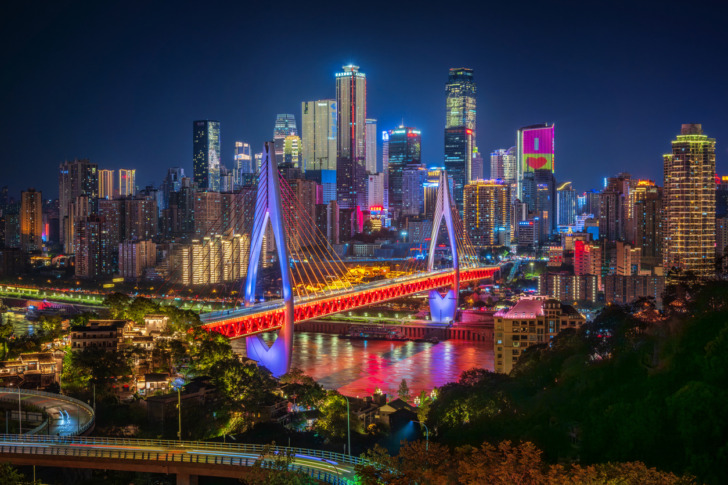
Chongqing is one of China’s largest and most visually distinctive cities, famous for its mountainous terrain, dramatic skyline, hot pot, rivers, elevated highways, monorails, and densely packed neighborhoods built across steep hills.
The municipality is home to more than 30 million people, although the continuous urban center accounts for only part of that enormous population.
For most travelers, Chongqing is a relatively safe destination.
Violent street crime involving tourists is uncommon, public transportation is extensive, and major sightseeing districts remain busy well into the evening.
The most significant risks are not conventional violent crime.
Extreme summer heat, flooding, landslides, steep streets, traffic, scams, and strict Chinese laws are more likely to affect visitors.
Chongqing experienced serious rain-related landslides in 2026, particularly in mountainous parts of the wider municipality.
Travelers heading beyond the central urban districts should therefore pay close attention to weather and geological hazard warnings during periods of heavy rain.
Warnings & Dangers in Chongqing

OVERALL RISK: LOW
Central Chongqing is generally safe for tourists. Violent robberies and assaults involving foreign visitors are uncommon, while major tourist districts contain large numbers of residents, businesses, police, surveillance cameras, and transportation options. Petty theft and scams remain possible. Travelers should also understand that mainland China currently carries an increased-caution travel advisory because of concerns involving the enforcement of local laws, detention, and exit restrictions. For an ordinary tourist following Chinese law, however, everyday street safety in Chongqing is generally good.

TRANSPORT & TAXIS RISK: LOW
Chongqing has an extensive metro and monorail network that is generally safe, inexpensive, and convenient. Taxis and app-based ride services are also widely available. Traffic is the greater concern. Chongqing’s complicated road network includes tunnels, bridges, elevated highways, steep roads, and multi-level intersections that can confuse even experienced visitors. Electric scooters and bicycles can approach quietly, so pedestrians should look carefully before crossing streets. Use official taxis or established ride-hailing services rather than accepting unsolicited rides.

PICKPOCKETS RISK: LOW
Pickpocketing is possible but is not a major problem compared with many large international cities. The greatest risk occurs in crowded metro stations, railway stations, shopping districts, markets, nightlife areas, and major tourist attractions. Keep wallets and phones secure around places such as Hongya Cave and Jiefangbei, particularly during holiday periods when pedestrian congestion can become extreme. Avoid leaving phones or bags unattended in restaurants.

NATURAL DISASTERS RISK: MEDIUM
Flooding and landslides are significant concerns across the wider Chongqing municipality. The region is mountainous and receives substantial seasonal rainfall. Heavy rain can trigger flash flooding, rockfalls, landslides, and transportation disruption. Several serious landslides occurred in Chongqing municipality during 2026, including deadly incidents in mountainous counties. Earthquakes are also possible in southwestern China. Central Chongqing is generally much easier to manage than remote mountain areas, but travelers should take weather warnings seriously.

MUGGING RISK: LOW
Muggings and armed street robberies targeting tourists are uncommon. Popular districts remain active late into the evening, and travelers can generally walk around central Chongqing comfortably. Normal precautions remain sensible. Avoid deserted locations late at night, particularly if intoxicated, and do not display large amounts of cash.

TERRORISM RISK: LOW
The risk of a terrorist incident specifically affecting tourists in Chongqing is low. Security checks are common at metro stations, railway stations, airports, and major attractions. Visitors should cooperate with security personnel and avoid photographing sensitive military or security facilities. Large demonstrations and political gatherings should also be avoided.

SCAMS RISK: MEDIUM
Scams are more realistic than violent crime. Be cautious if strangers suddenly become extremely friendly and invite you to a tea house, bar, private club, art exhibition, or particular restaurant. Inflated bills can result from situations where someone deliberately directs a foreign visitor to a cooperating business. Unofficial tours, counterfeit products, questionable transportation offers, and misleading prices can also occur. Confirm prices before accepting services and use established booking platforms or businesses.

WOMEN TRAVELERS RISK: LOW
Chongqing is generally comfortable for women traveling alone. Women routinely use the metro, walk through shopping districts, dine alone, and travel throughout central neighborhoods. Solo travelers should still use normal precautions around bars and nightlife areas. Keep control of drinks, avoid becoming heavily intoxicated around strangers, and use a reliable taxi or ride-hailing service when returning to accommodation late at night.

TAP WATER RISK: MEDIUM
Tap water in Chongqing is treated but is generally not recommended for visitors to drink directly from the faucet. Most residents boil tap water before drinking it. Bottled water is inexpensive and widely available, while hotels commonly provide drinking water. Boiled tap water is generally suitable for making tea or coffee.
Safest Places to Visit in Chongqing
Jiefangbei
Jiefangbei is one of Chongqing’s primary commercial and tourist districts.
Shopping centers, restaurants, hotels, pedestrian streets, metro stations, and nightlife venues keep the area extremely active throughout the day and evening.
Crime is generally low, although large crowds make basic precautions against pickpocketing worthwhile.
Hongya Cave
Hongya Cave is one of Chongqing’s most famous attractions, particularly after dark when the illuminated buildings overlooking the Jialing River attract enormous crowds.
The area is generally safe.
Crowding is the primary concern.
Pedestrian congestion can become intense during weekends and Chinese public holidays.
Keep children close and secure phones and wallets.
Chaotianmen
Chaotianmen sits near the point where the Yangtze and Jialing rivers meet.
The area includes river views, shopping, modern architecture, cruise facilities, and easy access to other central attractions.
It is heavily visited and generally safe during both daytime and evening hours.
Liziba
Liziba is famous for the Chongqing monorail that appears to pass directly through a residential building.
A designated viewing area allows visitors to watch and photograph the trains safely.
Traffic and crowds are the main concerns rather than crime.
Use pedestrian crossings and avoid stepping into roadways to take photographs.
Ciqikou Ancient Town
Ciqikou is a historic neighborhood known for traditional buildings, narrow streets, snacks, shops, tea houses, and restaurants.
It is generally safe but can become extremely crowded.
Watch your belongings in narrow pedestrian areas and be cautious around stairs and uneven surfaces.
Places to Avoid in Chongqing
Mountainous Areas During Heavy Rain
The wider Chongqing municipality covers an enormous mountainous region.
Heavy rainfall can trigger landslides, rockfalls, flash floods, and road closures.
Avoid hiking, rural road trips, and travel into mountainous districts when authorities have issued geological hazard or severe rain warnings.
Flooded Riverfront Areas
The Yangtze and Jialing rivers are defining features of Chongqing, but water levels can rise substantially during periods of heavy rainfall.
Stay away from closed riverfront paths, flooded stairways, embankments, and areas where authorities have installed barriers.
Never enter floodwater for photographs.
Restricted Government or Military Areas
Do not attempt to enter or photograph restricted government, military, police, or security facilities.
China applies strict rules around sensitive infrastructure.
If signs prohibit photography or access, follow them.
Remote Hiking Routes During Bad Weather
Chongqing municipality contains mountains, gorges, caves, forests, and rural scenic areas far beyond the downtown skyline.
Some destinations require long drives and extensive walking.
Avoid remote trails during storms, extreme heat, or periods of geological instability.
Unlicensed Entertainment Venues
Avoid questionable bars, clubs, massage businesses, or private entertainment venues promoted by strangers.
Apart from scams, visitors can expose themselves to legal problems by entering businesses engaged in prohibited activities.
Use established venues with clear pricing and good reputations.
Safety Tips for Traveling to Chongqing
- Prepare for extreme summer heat. Chongqing is famous for exceptionally hot and humid summers. Temperatures can approach or exceed 40°C during severe heatwaves. Drink plenty of water, limit strenuous afternoon activity, and use air-conditioned transportation when necessary.
- Take heavy rain warnings seriously. Chongqing’s mountainous geography creates genuine flood and landslide risks. Avoid mountain roads, riverbanks, hiking trails, and steep rural areas during severe rainfall.
- Use the metro whenever practical. Chongqing’s metro system avoids many of the city’s traffic problems and connects most major tourist districts. It is generally safe, inexpensive, and easier than navigating the city by car.
- Expect confusing navigation. Chongqing is built vertically. A location that appears nearby on a map may involve steep stairs, bridges, tunnels, elevators, or several levels of roads. Allow more walking time than the distance alone suggests.
- Protect belongings in crowded tourist areas. Hongya Cave, Jiefangbei, Ciqikou, railway stations, and other busy locations can become packed with people. Keep phones, wallets, and passports secure.
- Avoid unsolicited invitations. Be skeptical when strangers suddenly invite you to a specific tea house, bar, restaurant, or entertainment venue. Choose establishments yourself and check prices before ordering.
- Set up payments before your trip. Mobile payments dominate everyday life in China. Preparing Alipay, WeChat Pay, or another supported method before arriving can make restaurants, taxis, shops, and attractions considerably easier to use.
- Watch for scooters. Electric scooters can move quickly and quietly through streets and intersections. Look carefully before stepping into a roadway, even when pedestrian signals appear favorable.
- Respect Chinese laws carefully. Drug offenses, political demonstrations, unauthorized photography, public disorder, and other violations can result in severe penalties. Do not assume that rules or enforcement will resemble those in your home country.
- Carry water on long sightseeing days. Chongqing involves more climbing and walking than many visitors expect. Steep streets combined with high humidity can cause dehydration and exhaustion quickly.
So... How Safe Is Chongqing Really?
Chongqing is generally a safe city for ordinary tourists.
Despite its enormous population and visually chaotic urban environment, violent street crime is relatively uncommon.
Travelers can usually explore central districts, take public transportation, visit restaurants, walk around after dark, and use taxis without significant safety concerns.
Petty theft deserves some attention, particularly in enormous crowds around places such as Hongya Cave, Ciqikou, Jiefangbei, and railway stations.
Scams are another potential problem, especially when strangers attempt to direct visitors toward particular entertainment venues, tea houses, or restaurants.
The more unusual risks come from Chongqing itself.
The city is built across steep hills and river valleys.
Streets rise and fall sharply, staircases can seem endless, and different roads may sit directly above one another.
This creates greater risks of falls and exhaustion, particularly during rain or extreme summer heat.
Weather deserves serious attention.
Chongqing is one of China’s hottest major cities during summer, and prolonged periods of temperatures approaching or exceeding 40°C are possible.
Heavy rainfall creates another problem.
The wider municipality contains extensive mountains and steep river valleys that are vulnerable to flooding and landslides.
Serious landslide incidents during 2026 demonstrated how dangerous these conditions can become outside the dense central city.
Travelers exploring rural counties, gorges, mountains, or hiking areas should check conditions immediately before traveling rather than assuming weather in downtown Chongqing reflects conditions elsewhere.
China’s legal environment is another important consideration.
Foreign visitors should avoid political demonstrations, drugs, unauthorized photography of sensitive facilities, and activities that could attract unnecessary attention from authorities.
Current international travel guidance also warns about potentially arbitrary enforcement of laws and exit restrictions.
For an ordinary tourist who follows local laws, these issues are unlikely to affect a typical vacation.
Use the metro, stay hydrated, take weather warnings seriously, keep valuables secure in crowds, avoid obvious scams, and respect Chinese laws.
With those precautions, Chongqing is generally a safe and fascinating destination to explore.
How Does Chongqing Compare?
| City | Safety Index |
|---|---|
| Chongqing |
72 |
| Dalian |
79 |
| Guangxi Guilin |
76 |
| Xiamen |
82 |
| Changsha |
73 |
| Wuhan |
71 |
| Hangzhou |
78 |
 Karlovy Vary Karlovy Vary | 86 |
 Alamosa Alamosa | 85 |
 Rennes Rennes | 65 |
 Essaouira Essaouira | 79 |
| Anacortes | 82 |
| Chattanooga | 69 |
Useful Information

Visas
China’s entry requirements depend on nationality, length of stay, and purpose of travel. China has expanded visa-free entry arrangements for citizens of numerous countries, while travelers using other passports still require a visa before arrival. Policies have changed frequently in recent years, so travelers should confirm the specific requirements applying to their passport immediately before traveling.

Currency
China uses the renminbi, with the yuan commonly abbreviated as CNY or RMB. Chongqing is heavily oriented toward mobile payments. Alipay and WeChat Pay are widely used in restaurants, shops, taxis, vending machines, attractions, and even small businesses. Foreign visitors can use supported international cards with some Chinese payment services. Cash remains legal but is far less commonly used than digital payment.

Weather
Chongqing has hot, humid summers and relatively mild but damp winters. July and August are typically the hottest months, and severe heatwaves can push temperatures around or above 40°C. Spring and early summer bring substantial rainfall, while heavy storms can continue through the broader flood season. Autumn is generally one of the most comfortable periods for visiting. Winter temperatures are much milder than in northern China, but cloudy, damp conditions can make the weather feel colder than expected.

Airports
Chongqing Jiangbei International Airport is the city’s main airport and one of western China’s major aviation hubs. It handles extensive domestic service as well as international flights. The airport is connected to central Chongqing by metro, taxis, ride-hailing services, and road transportation. Travel times can vary substantially because of the size of the city and traffic conditions.

Travel Insurance
Travel insurance is recommended for international visitors. Useful coverage includes medical treatment, hospitalization, emergency evacuation, trip cancellation, transportation disruption, lost belongings, and weather-related delays. Travelers planning hiking, rafting, mountain excursions, or trips into remote parts of Chongqing municipality should make sure those activities are included in their coverage.
Chongqing Weather Averages (Temperatures)
Average High/Low Temperature
| Temperature / Month | Jan | Feb | Mar | Apr | May | Jun | Jul | Aug | Sep | Oct | Nov | Dec |
|---|---|---|---|---|---|---|---|---|---|---|---|---|
| High °C |
11 | 13 | 18 | 23 | 26 | 28 | 32 | 32 | 28 | 22 | 17 | 12 |
| Low °C |
5 | 6 | 10 | 15 | 18 | 22 | 25 | 24 | 21 | 16 | 11 | 6 |
| High °F |
52 | 55 | 64 | 73 | 79 | 82 | 90 | 90 | 82 | 72 | 63 | 54 |
| Low °F |
41 | 43 | 50 | 59 | 64 | 72 | 77 | 75 | 70 | 61 | 52 | 43 |
China - Safety by City
| City | Safety Index |
|---|---|
| Beijing | 75 |
| Changsha | 73 |
| Chengdu | 74 |
| Chongqing | 72 |
| Dalian | 79 |
| Guangxi Guilin | 76 |
| Guangzhou | 64 |
| Hangzhou | 78 |
| Hong Kong | 75 |
| Kunming | 74 |
| Lhasa | 72 |
| Macau | 85 |
| Nanjing | 78 |
| Qingdao | 80 |
| Shanghai | 70 |
| Shenzhen | 64 |
| Suzhou | 79 |
| Tianjin | 67 |
| Tibet | 87 |
| Wuhan | 71 |
| Xiamen | 82 |
| Xian | 73 |
| Xinjiang | 80 |
| Yangshuo | 77 |