 China : Safety by City
- Beijing
- Chengdu
- Dalian
- Guangxi Guilin
- Guangzhou
- Hangzhou
- Hong Kong
- Lhasa
- Macau
- Nanjing
- Qingdao
- Shanghai
- Shenzhen
- Suzhou
- Tianjin
- Tibet
- Xiamen
- Xian
- Xinjiang
- Yangshuo
Nanjing is the capital of Jiangsu Province and one of China’s most historically important cities.
Located along the Yangtze River, it combines ancient city walls, imperial tombs, temples, museums, lakes, universities, modern shopping districts, and a metropolitan population of several million people.
From a safety perspective, Nanjing is generally a low-risk destination for travelers.
Violent crime against foreign visitors is uncommon, public transportation is extensive, and the city’s major sightseeing districts are generally comfortable to explore during the day and evening.
Petty theft, traffic accidents, payment or taxi misunderstandings, summer heat, flooding, and occasional tourist scams are more realistic concerns.
Travelers should also remember that Chinese laws and enforcement practices can differ significantly from those in Western countries.
Carry identification, avoid political demonstrations, do not photograph sensitive government or military locations, and familiarize yourself with local rules before traveling.
With ordinary precautions, Nanjing is a safe and manageable destination for families, couples, solo travelers, and visitors exploring eastern China.
Warnings & Dangers in Nanjing

OVERALL RISK: LOW
Nanjing is generally a low-risk city for tourists. Serious violence involving foreign visitors is uncommon, and major sightseeing areas are heavily populated and well connected by public transportation. Petty theft and scams can occur, particularly around crowded transportation hubs and tourist attractions. Travelers should also be cautious when crossing roads because traffic can be less predictable than crime.

TRANSPORT & TAXIS RISK: LOW
Nanjing has an extensive metro system, buses, taxis, and app-based transportation services. The metro is generally one of the safest and easiest ways to move around the city. Stations are modern, extensively monitored, and connected to most major districts and attractions. Road traffic deserves more caution. Cars, scooters, bicycles, and electric motorcycles may approach from unexpected directions. Always look carefully before crossing, even when you believe you have the right of way.

PICKPOCKETS RISK: LOW
Pickpocketing is not an overwhelming problem, but it can occur in crowded locations. Busy metro stations, railway stations, shopping streets, markets, festivals, and major tourist attractions provide the best opportunities for opportunistic theft. Keep phones and wallets in secure pockets, close backpacks properly, and avoid leaving a bag unattended in restaurants or transportation terminals.

NATURAL DISASTERS RISK: MEDIUM
The most relevant natural hazards in Nanjing are extreme summer heat, heavy rainfall, flooding, thunderstorms, and occasional typhoon-related weather. Summer temperatures can rise well above 35°C, with high humidity making conditions feel even hotter. Heavy rain can cause localized flooding and transportation disruptions. Typhoons usually weaken before reaching Nanjing, but their remnants can still produce strong winds and intense rainfall.

MUGGING RISK: LOW
Muggings and violent street robberies are relatively uncommon in Nanjing. Travelers can generally walk through central districts during the evening without feeling unsafe. Normal precautions remain worthwhile around deserted streets or parks late at night. Avoid carrying unnecessary amounts of cash and keep expensive electronics discreet when you are not using them.

TERRORISM RISK: LOW
Nanjing has a low terrorism risk for ordinary travelers. Visitors are much more likely to encounter traffic problems, petty crime, weather disruptions, or misunderstandings of local rules than terrorism. Security can be extensive around transportation hubs, government buildings, and major public events, so cooperate with security checks and carry identification when required.

SCAMS RISK: LOW
Tourist scams can occur, particularly when strangers approach foreign visitors near popular attractions, shopping districts, or nightlife areas. Be cautious if someone you have just met enthusiastically invites you to a tea ceremony, private bar, art gallery, or expensive restaurant and insists on choosing the location. Confirm prices before accepting unfamiliar services and use established transportation and payment methods whenever possible.

WOMEN TRAVELERS RISK: LOW
Nanjing is generally a comfortable city for women traveling alone. Public transportation is heavily used throughout the day and evening, and major districts remain active after dark. Solo female travelers should still use normal precautions, including watching drinks in nightlife venues, avoiding isolated areas late at night, and using established transportation when returning to accommodation.

TAP WATER RISK: MEDIUM
Tap water in Nanjing is treated, but travelers are generally advised not to drink it directly from the tap without boiling or additional filtration. Hotels commonly provide kettles or bottled water, and bottled drinking water is inexpensive and widely available. Tap water is normally suitable for showering and brushing teeth, although travelers with particularly sensitive stomachs may prefer bottled water for drinking and oral care.
Safest Places to Visit in Nanjing
Xinjiekou
Xinjiekou is Nanjing’s major commercial center and one of the busiest areas in the city.
Shopping malls, restaurants, hotels, metro stations, and businesses keep the district active throughout the day and evening.
It is generally comfortable for visitors, although crowded shopping streets require normal awareness of phones, wallets, and bags.
Confucius Temple Area
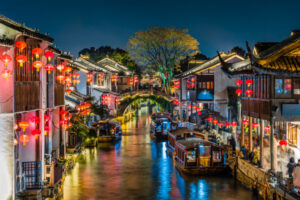
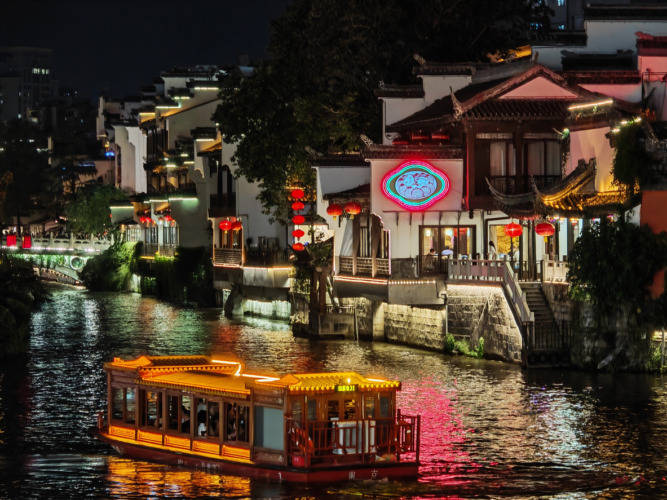
The Confucius Temple district, commonly associated with Fuzimiao and the Qinhuai River, is one of Nanjing’s most popular visitor areas.
Restaurants, shops, traditional architecture, river cruises, and evening lights attract large crowds.
The area is generally safe, but its popularity means travelers should watch belongings and confirm prices before buying souvenirs or booking boat rides.
Xuanwu Lake
Xuanwu Lake is one of Nanjing’s most pleasant public spaces and sits close to the historic city wall.
Walking paths, gardens, islands, and open lake views make it popular with both visitors and residents.
Daytime and early evening visits are generally comfortable.
During extreme summer heat, carry water and avoid spending long periods outdoors during the hottest part of the afternoon.
Sun Yat-sen Mausoleum Area
The Sun Yat-sen Mausoleum and surrounding Purple Mountain scenic area are among Nanjing’s best-known attractions.
The area is generally safe and heavily visited, particularly during weekends and holidays.
Wear comfortable footwear, carry water, and expect large crowds during peak travel periods.
Nanjing City Wall
Large surviving sections of Nanjing’s historic city wall provide excellent views and walking opportunities.
Established visitor sections are generally safe.
Watch for uneven surfaces, steep steps, and slippery conditions after rain.
Avoid attempting to access closed or unofficial sections simply to find a quieter viewpoint.
Places to Avoid in Nanjing
Unlicensed Taxis
Avoid drivers who approach you aggressively outside airports, railway stations, or tourist attractions and refuse to use an official fare system.
Use licensed taxis or established ride-hailing services instead.
Unofficial drivers may charge excessive prices or create unnecessary payment disputes.
Deserted Parks Late at Night
Nanjing is generally safe after dark, but there is little advantage to wandering through isolated parks or poorly illuminated riverside areas alone late at night.
Stick to busy streets and established nightlife or commercial areas when exploring after dark.
Sensitive Government or Military Areas
Do not enter restricted areas or photograph military installations, security facilities, government compounds, checkpoints, or other sensitive infrastructure.
China can enforce restrictions around these locations more strictly than many visitors expect.
Pay attention to signs and instructions from security personnel.
Crowded Transportation Hubs Without Securing Belongings
Nanjing South Railway Station and other major transportation hubs can become extremely busy.
These places are not inherently dangerous, but crowded conditions increase the possibility of losing luggage, wallets, phones, or travel documents.
Keep your bags close and allow extra time when navigating large stations.
Flooded Roads and Underpasses
Heavy summer rain can occasionally flood low-lying streets, tunnels, and pedestrian underpasses.
Do not attempt to walk or drive through deep floodwater simply because other people are doing so.
Wait for water levels to fall or use another route.
Safety Tips for Traveling to Nanjing
- Look Both Ways Before Crossing Every Road. Cars, bicycles, scooters, and electric motorcycles may approach quietly, and from directions travelers do not expect. Traffic awareness is one of the most important everyday safety habits in Nanjing.
- Keep Identification Accessible. Foreign travelers may occasionally be asked for identification at hotels, transportation facilities, or during security checks. Keep your passport secure while having an appropriate form of identification available when needed.
- Use the Metro Whenever Practical. Nanjing’s metro is extensive, modern, inexpensive, and generally safe. It often provides an easier option than navigating road traffic or explaining destinations to taxi drivers.
- Avoid Unofficial Transportation. At railway stations and major tourist attractions, ignore drivers offering unusually cheap private rides. Use licensed taxis, hotel transportation, or established ride-hailing platforms.
- Prepare for Extreme Summer Heat. July and August can become extremely hot and humid. Carry water, use sun protection, take indoor breaks, and avoid excessive outdoor activity during the hottest part of the afternoon.
- Be Cautious With Invitations From Strangers. Friendly conversation is not automatically suspicious, but unexpected invitations to tea houses, bars, private restaurants, or galleries can occasionally lead to inflated bills. Choose the venue yourself if you decide to accept.
- Secure Your Phone in Crowded Areas. Metro stations, shopping streets, temples, and major attractions can become extremely crowded. Keep your phone and wallet somewhere difficult for strangers to access.
- Do Not Photograph Sensitive Locations. Avoid photographing police activity, military facilities, restricted government buildings, or security checkpoints. When signs prohibit photography, take the restriction seriously.
- Prepare Your Phone Before Arriving. Some websites and online services commonly used outside China may not function normally. Download maps, hotel information, translation tools, transportation details, and important travel information before you need them.
- Learn Emergency Numbers. Police can be reached at 110, ambulance services at 120, and firefighters at 119. Save these numbers before beginning your trip.
So... How Safe Is Nanjing Really?
Nanjing is generally one of the easier major Chinese cities for international travelers from a personal-security perspective.
Visitors can usually explore historic areas, shopping districts, lakes, museums, temples, and restaurants without worrying excessively about violent crime.
Petty crime still exists, but the biggest everyday risks are often more mundane.
Traffic deserves particular attention.
Electric scooters can be surprisingly quiet, road-crossing habits may differ from what foreign travelers expect, and crowded intersections require concentration.
Weather is another consideration.
Summers can become extremely hot and humid, while intense rainfall may occasionally cause flooding and transportation disruptions.
Travelers also need to understand that safety in China includes respecting laws and regulations that may be enforced differently than at home.
Political demonstrations should be avoided, restricted locations should not be photographed, and visitors should cooperate with security checks.
Scams occasionally target foreigners, particularly around popular sightseeing districts.
Unexpected invitations to expensive tea houses or entertainment venues deserve caution, although this is not something most visitors will necessarily encounter.
Public transportation is a major advantage.
Nanjing’s metro makes it possible to reach many attractions without relying heavily on taxis or private vehicles.
For most travelers, Nanjing is a low-risk destination.
Keep your belongings secure, pay attention to traffic, prepare for seasonal weather, respect local laws, and use established transportation, and you can explore the city comfortably.
How Does Nanjing Compare?
| City | Safety Index |
|---|---|
| Nanjing |
78 |
| Xian |
73 |
| Lhasa |
72 |
| Suzhou |
79 |
| Guangxi Guilin |
76 |
| Yangshuo |
77 |
| Shanghai |
70 |
 Bratislava Bratislava | 75 |
 Cao Bang Cao Bang | 78 |
 Puerto Princesa Puerto Princesa | 77 |
 Saltillo Saltillo | 70 |
 Merced Merced | 92 |
 Aswan Aswan | 68 |
Useful Information

Visas
China's visa and visa-free transit rules depend on nationality, passport type, route, and length of stay. Some travelers can enter China without a traditional tourist visa under specific visa-free policies, while others still need to obtain a visa before departure. Check the rules applying to your passport and itinerary before booking your trip.

Currency
China uses the renminbi, with the yuan abbreviated as CNY or RMB. Mobile payments are extremely common, while cash is accepted less frequently than many travelers expect. International visitors can often connect eligible foreign bank cards to major Chinese payment platforms. Carrying a modest amount of cash remains useful as a backup.

Weather
Nanjing experiences four distinct seasons. Summers are hot, humid, and frequently above 30°C, with occasional temperatures exceeding 35°C. Winters are cold and damp, although heavy snow is uncommon. Spring and autumn generally provide the most comfortable sightseeing conditions. Heavy summer rainfall can occasionally produce localized flooding.

Airports
Nanjing Lukou International Airport is the city's main airport and is located roughly 35 kilometers south of central Nanjing. Metro services connect the airport with the city, while taxis and other transportation options are also available. Nanjing South Railway Station provides extensive high-speed rail connections to cities including Shanghai, Hangzhou, Beijing, Suzhou, and Wuhan.

Travel Insurance
Travel insurance is worth considering for Nanjing, particularly for international visitors whose domestic health coverage does not apply in China. Coverage for emergency medical treatment, hospitalization, cancellations, baggage issues, and travel disruptions can be useful. Travelers with existing medical conditions should also carry sufficient medication and documentation for their trip.
Nanjing Weather Averages (Temperatures)
Average High/Low Temperature
| Temperature / Month | Jan | Feb | Mar | Apr | May | Jun | Jul | Aug | Sep | Oct | Nov | Dec |
|---|---|---|---|---|---|---|---|---|---|---|---|---|
| High °C |
7 | 9 | 13 | 20 | 26 | 29 | 31 | 31 | 27 | 22 | 15 | 9 |
| Low °C |
-1 | 1 | 6 | 12 | 17 | 22 | 25 | 24 | 19 | 13 | 6 | 1 |
| High °F |
45 | 48 | 55 | 68 | 79 | 84 | 88 | 88 | 81 | 72 | 59 | 48 |
| Low °F |
30 | 34 | 43 | 54 | 63 | 72 | 77 | 75 | 66 | 55 | 43 | 34 |
China - Safety by City
| City | Safety Index |
|---|---|
| Beijing | 75 |
| Chengdu | 74 |
| Dalian | 79 |
| Guangxi Guilin | 76 |
| Guangzhou | 64 |
| Hangzhou | 78 |
| Hong Kong | 75 |
| Lhasa | 72 |
| Macau | 85 |
| Nanjing | 78 |
| Qingdao | 80 |
| Shanghai | 70 |
| Shenzhen | 64 |
| Suzhou | 79 |
| Tianjin | 67 |
| Tibet | 87 |
| Xiamen | 82 |
| Xian | 73 |
| Xinjiang | 80 |
| Yangshuo | 77 |