


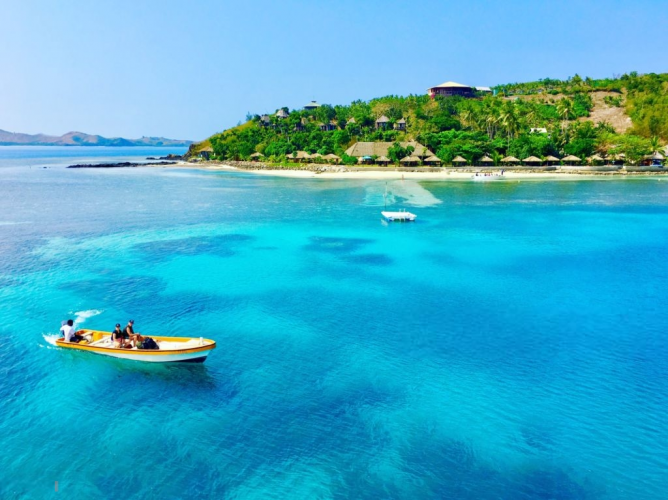
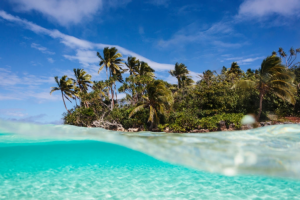
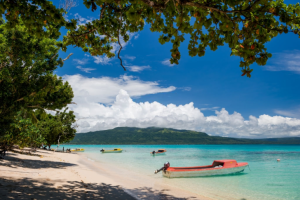
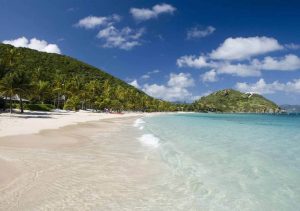
It’s likely been your screensaver at least once.
Fiji sits in the South Pacific, northeast of New Zealand and west of Tonga, and is made up of more than 300 islands, though only about 100 are inhabited.
The two main islands, Viti Levu and Vanua Levu, hold most of the population and serve as the country’s cultural and travel hubs.
Indigenous Fijians, Indo-Fijians, and smaller Pacific communities shape the culture here, along with a history of British colonial rule that ended in 1970.
Tourism today is a major part of Fiji’s economy.
In 2024, Fiji welcomed over 1.06 million visitors, its first year crossing the one million mark.
About 980,000 arrived by plane, and nearly 82,000 were cruise ship passengers.
Travelers come for warm weather, clear water, and a style of hospitality that feels genuinely welcoming rather than scripted.
Most visitors spend time snorkeling in coral gardens, relaxing at beach resorts, visiting small villages, and taking boat trips to nearby islands.
Fiji also draws divers, surfers, honeymooners, and families looking for a slower pace.
The appeal is simple: calm blue water, friendly communities, and days that feel unhurried.
In fact, the slow pace is one of the things you’ll need to prepare for if you’re used to life in the fast lane.
Plus, we have some other safety tips to make your trip to Fiji as fun as possible!
Warnings & Dangers in Fiji

OVERALL RISK: LOW
Fiji has an overall low risk, but there are some safety tips in specific places where you'll need to exercise more caution. We'll detail those as we go through this guide.

TRANSPORT & TAXIS RISK: MEDIUM
This is a medium risk, mostly because you should know that official taxis with yellow license plates should be used. Minibusses and other forms of public transportation can be dangerous. Renting a car is an option, but outside the cities, roads are in poor condition.

PICKPOCKETS RISK: MEDIUM
This is a medium risk, especially in larger cities and busy tourist spots. Don't bring valuables with you and hide signs of wealth when you're in public. Read the latest travel advisories to get updated information on petty crime in Fiji.

NATURAL DISASTERS RISK: MEDIUM
Natural disaster risk in Fiji mostly centers around the wet season from November to April. Cyclones can form in the region and bring strong winds, flooding, and travel disruptions. Even outside major storms, heavy rains can impact ferries and small flights. Landslides sometimes occur in hilly areas. Fiji is also in the Ring of Fire, meaning tsunamis and earthquakes are possible. Treat this as a medium risk.

MUGGING RISK: MEDIUM
Muggings aren't all that common, but a theft can quickly turn violent if you fight back. I would treat this as a medium risk in the cities, and when visiting Colo-I-Suva Forest Park.

TERRORISM RISK: LOW
The terrorism risk in Fiji is considered low. There are no current credible threats targeting travelers or tourism areas. Security forces maintain a visible presence in major towns and at transportation hubs. That said, it’s still smart to stay aware of your surroundings, avoid large political demonstrations, and follow local news or hotel staff guidance if something unusual is happening.

SCAMS RISK: LOW
Scams in Fiji tend to be low-level and more opportunistic than aggressive. The most common include inflated taxi fares, beach vendors overcharging, or friendly strangers offering “special prices” that aren’t actually special. Use official taxis, agree on prices before paying, and buy from reputable tour operators.

WOMEN TRAVELERS RISK: LOW
Fiji is generally welcoming to women travelers, and most visit without issues. The main concerns are the same as anywhere with busy tourist hubs: unwanted attention, catcalling, or pushy social advances in Nadi and Suva at night. Dress norms are more conservative in villages, so cover your shoulders and knees when visiting. Avoid isolated beaches alone after dark, stick to licensed taxis, and trust your instincts.

TAP WATER RISK: LOW
Tap water quality varies. In major hotels and some urban areas, treated water is generally safe, but many smaller islands and guesthouses rely on rain tanks or local sources that may not be filtered. To avoid stomach problems, drink bottled or boiled water and avoid ice unless you know the source. Most travelers carry a reusable bottle and refill from a trusted filtered supply when available.
Safest Places to Visit in Fiji
The official tourism website is www.fiji.travel.
Use the Fiji Guides section for practical information, like backpacking, getting around, or luxury options.
Fiji has more than 300 inhabited islands spread across several island groups, so choosing where to go usually comes down to how much time you have and what kind of trip you want.
Most visitors start on Viti Levu, the largest island.
This is where you’ll find Nadi, Suva, and the Coral Coast.
Popular activities include visiting Sigatoka Sand Dunes National Park, snorkeling at Beqa Lagoon, and cultural experiences in local villages.
The Mamanuca Islands, just offshore, are known for calm beaches, blue lagoons, and easy resort access.
They’re great for first-time visitors who want snorkeling, island-hopping, or relaxed all-inclusive stays.
Farther out, the Yasawa Islands offer quieter beaches, excellent snorkeling, and dramatic volcanic landscapes.
These are ideal for travelers who want fewer crowds and more natural scenery.
The Coral Coast and Pacific Harbour on Viti Levu are hub areas for diving, surfing, and adventure tours.
If you’re interested in cultural history, Levuka on Ovalau Island is a UNESCO-listed former capital with colonial-era architecture.
Places to Avoid in Fiji
Most travelers don’t run into major safety issues in Fiji, but a little awareness goes a long way.
The larger cities, especially Nadi and Suva, have higher rates of petty theft.
Keep bags zipped, avoid wandering around at night, and stick to well-lit, busy areas.
If someone is being overly friendly and persistent, trust your instincts and move on.
Colo-I-Suva Forest Park is beautiful, but it’s also known for opportunistic crime along trails and swimming spots.
If you visit, go with a guide or group, and avoid being there late in the day when it thins out.
Cyclone season runs from November to April, which doesn’t mean you can’t visit, but storms and flooding can disrupt ferries, small flights, and island transfers.
Keep plans flexible and monitor weather updates.
In village areas, avoid wearing swimsuits away from the beach and always ask before photographing people.
In the water, skip beaches with strong currents or no local guidance.
Fiji has plenty of calm, safe places to swim, so choose spots that the resort staff or locals recommend.
Overall, think in terms of timing and awareness rather than avoiding entire regions.
Fiji is friendly by nature, but being prepared helps you enjoy it fully.
Safety Tips for Traveling to Fiji
- The Fiji Police Force handles local law enforcement. For emergencies, dial 911. Response times vary, especially outside major towns. If you’re staying in a resort or on a remote island, staff are usually your fastest point of contact and can call for help or organize transport if needed.
- Fiji doesn’t have a universal push-alert system for emergencies or disasters. The best way to stay informed is to check local radio, follow the Fiji Meteorological Service, and listen to resort or tour briefings. If you’re traveling during cyclone season, stay in close contact with your hotel staff.
- Visitors can drive using their home country license, but driving conditions vary. Roads may be narrow or unlit at night, and rural areas can have roaming animals. If you’re not comfortable with that, rely on taxis or local drivers. Ferries and small planes are often used instead of long-distance car travel between islands.
- There are no required vaccines for entry, but routine travel vaccines like Hepatitis A and Typhoid are recommended. Dengue fever can occur, so pack strong mosquito repellent. If you take prescription medications, bring enough for your entire trip because pharmacies on small islands have limited stock.
- Fiji has three official languages: Fijian, Hindi, and English. English is widely spoken in tourism, so communication is usually easy. You’ll also hear “Bula” everywhere. It means hello, welcome, and good spirit all rolled together. Use it often.
- Internet is available in most hotels and towns, but speed varies, and outages can happen. Remote islands might have limited or no service. If you’ll be traveling off the main islands, having access to a VHF radio or satellite phone can be helpful. Check with your mobile carrier well before the trip to see if you’ll have coverage during your trip.
- Some beaches have warning flags to indicate water conditions. Red usually means dangerous currents and no swimming. Yellow means caution. Green means good conditions. Always ask local staff before entering the water because tides, coral, and currents change fast. Not every beach is supervised, so personal judgment matters.
- If you’re planning to scuba dive, do not fly for at least 24 hours afterward. Nitrogen bubbles in your bloodstream need time to clear. The nearest hyperbaric chambers are located in Australia or New Zealand, which is a long way to travel in an emergency. Follow dive safety guidelines strictly.
- Sundays in Fiji are quiet. Many shops and restaurants close or operate with limited hours. Plan meals, transport, and tours ahead of time for Sundays. Resorts usually serve food as normal, but village visits and markets will pause for church and family time.
- “Fiji time” is real. Things move slower. Meals take longer. Tours may not start exactly when scheduled. This is cultural, not poor service. Relax into it. If you try to rush it, you’ll just frustrate yourself. Consider it part of the experience rather than something to review negatively.
So... How Safe Is Fiji Really?
Governments like the United States issue travel advisories for other countries.
This scale covers four tiers, with one being the lowest and four being the highest.
Across the board, Fiji gets Level 1: Exercise Standard Precautions.
I always worry that Level 1 will make people stop reading and think, “This place is safe! Let’s go!”
However, when you dig a little deeper into those advisories, there’s a more accurate picture.
The biggest issues in Fiji aren’t unique, with petty and violent crime being a problem.
However, it’s not prevalent enough to warrant a higher risk level.
That said, it’s the bigger urban areas like Nadi and Suva that come with the greatest crime risks.
Most will be crimes of opportunity.
Follow standard guidance like keeping your stuff secure, leaving valuables at home, and not walking around unknown neighborhoods at night alone.
That also goes for any beach after dark.
Use extra caution if you’re visiting Colo-I-Suva Forest Park.
Not only are there reports of violent robberies on the paths, but there’s no law enforcement there to keep criminals away.
Beyond common sense and situational awareness, the greatest risks are completely in your control.
That includes sticking to adventurous activities that match your physical abilities and sticking with trained tour guides who know the landscape.
Fiji really can be a paradise, but you can’t put safety aside when visiting.
How Does Fiji Compare?
| Country | Safety Index |
|---|---|
 Fiji Fiji | 70 |
 Czech Republic Czech Republic | 88 |
 San Marino San Marino | 86 |
 Bonaire Bonaire | 80 |
 Angola Angola | 48 |
 Ghana Ghana | 73 |
 Italy Italy | 77 |
 Finland Finland | 86 |
 Algeria Algeria | 44 |
Useful Information

Visas
Most travelers do not need a visa before arrival in Fiji if they are visiting for tourism. You’ll just need a valid passport, proof of onward travel, and sometimes a hotel reservation. Stays are typically granted for up to four months. Always double-check current requirements, because rules can shift with little notice.

Currency
Fiji uses the Fijian dollar. ATMs are common in larger towns and at the airport, though smaller islands and resorts may be cash-only. Credit cards work at most hotels and tour operators, but expect occasional connection issues. Bring some cash for markets, taxis, and remote areas.

Weather
Fiji has a tropical climate with warm temperatures year-round. The dry season from May to October is the most comfortable, with lower humidity. The wet season runs from November to April and can bring heavy rain and occasional cyclones.

Airports
Most travelers arrive through Nadi International Airport on Viti Levu. Suva’s Nausori Airport handles regional flights and connections to smaller islands. Travel between islands often involves small planes or ferries, so expect timetable changes due to weather. Leave room in your schedule for adjustments.

Travel Insurance
Travel insurance is important here. Many resorts and islands are remote, and medical evacuation can be expensive if something goes wrong. Choose a policy that covers medical care, evacuation, trip interruption, and lost luggage. It’s a simple precaution that helps you relax and enjoy the trip.
Fiji Weather Averages (Temperatures)
Average High/Low Temperature
| Temperature / Month | Jan | Feb | Mar | Apr | May | Jun | Jul | Aug | Sep | Oct | Nov | Dec |
|---|---|---|---|---|---|---|---|---|---|---|---|---|
| High °C |
31 | 31 | 31 | 30 | 29 | 29 | 28 | 28 | 29 | 30 | 31 | 31 |
| Low °C |
23 | 23 | 23 | 22 | 20 | 19 | 18 | 18 | 19 | 20 | 21 | 22 |
| High °F |
88 | 88 | 88 | 86 | 84 | 84 | 82 | 82 | 84 | 86 | 88 | 88 |
| Low °F |
73 | 73 | 73 | 72 | 68 | 66 | 64 | 64 | 66 | 68 | 70 | 72 |












You have forgotten to tell people about the new taxes
Fiji is not safe
Fiji was safe place 30-40 years ago, people were very friendly but not any more. I used to go to Fiji every year until about 8 years ago, crime, prostitution, cheating hotels, petrol stations, corrupt police officers and so on and on. I would never go there again.
Safe for a visit
Fiji is safer than most people talk about in recent years, it’s just an exaggeration by the media like they do on most things, am I right?
Safe and gorgeous views
I never wear fancy jewelry on the street when traveling, no matter the country of destination. It’s safer, wiser and it also gives me peace of mind. Fiji is our soul island, we always come back eager for more. The only potential threat I could warn you about is the myriad of creatures that are not a common recurrence for a classic NYer like me.
I am retiring there...
I fee far safer there than I in any American city. Lovely people and landscape ….
Fiji sounds like such a welcoming place the safety info made me feel way more confident booking a trip. Between the friendly locals and low crime notes, I’d love to explore those islands without too much worry.
The water there is just incredible, you could spend hours just floating around!
Guess it’s hard to believe a place that looks like a screensaver could actually be a real vacation spot. But hey, who wouldn’t want to spend their days lazing around while trying to remember what a clock looks like?
It’s interesting how the laid-back vibe of Fiji really shifts your perspective once you’re there; I found myself just soaking in the moments rather than rushing around. Snorkeling in those coral gardens felt like stepping into another world, and the warmth of the locals made everything even more special.
Not sure how everyone finds Fiji so charming; it felt a bit too laid-back for my taste, like I was waiting for something to happen that never did.
Never thought a place could slow me down like that; after a morning snorkeling the coral gardens I kept catching myself smiling for no reason.
You really feel the slower pace when the evening breeze off the bay cools the sand and someone starts singing from a nearby village, and for a minute everything just settles down.
I visited last year and while the water was stunning, the slow pace sometimes made me wonder if I was stuck in a never-ending holiday mode that got a bit tiring.
Spent a lazy afternoon snorkeling there once and swear the colors underwater are brighter than anything back home.