


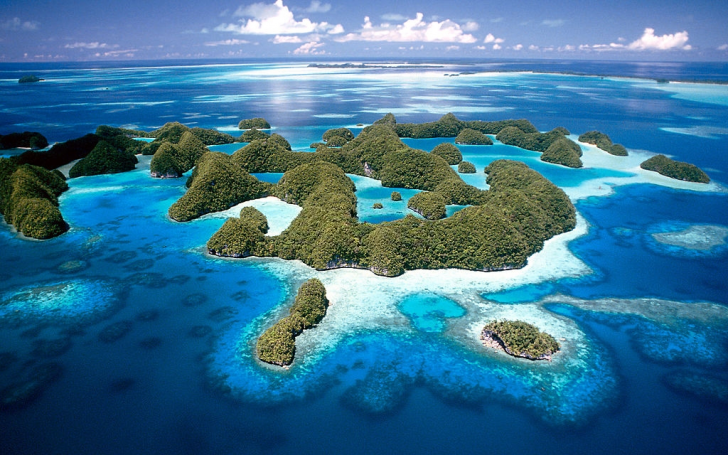
Palau feels like a place the modern world somehow forgot to overbook.
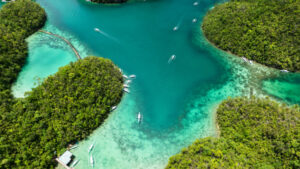
This island nation sits in the western Pacific, east of the Philippines and north of Indonesia, made up of more than 300 islands scattered across brilliant blue water.
Most travelers stay in Koror, the compact hub near the famous Rock Islands, while the larger island of Babeldaob holds forests, waterfalls, and much of the country’s interior life.
Palau’s story is layered.
Long inhabited by Micronesian peoples, it later passed through Spanish, German, and Japanese control before becoming a U.S.-administered territory after World War II.
The country gained full independence in 1994, and traces of each era remain in language, infrastructure, and the many wartime relics still visible on land and underwater.
About 56,000 visitors come each year, drawn less by nightlife or resorts and more by what feels untouched.
Palau is known for world-class diving, dramatic limestone islands, clear lagoons, and an unusually strong commitment to environmental protection.
It is quiet without being empty, adventurous without being chaotic.
The vibe is simple, respectful, and deeply connected to the ocean.
Palau does not sell spectacles.
It offers space, water, history, and the rare feeling of being somewhere that still belongs more to nature than to tourism.
Warnings & Dangers in Palau

OVERALL RISK: LOW
The risk in Palau is low, with low crime rates and plenty of options for adventurous souls across the archipelago. That said, we do have specific safety tips to give you throughout this article.

TRANSPORT & TAXIS RISK: LOW
Most people get around Palau's landscape by private drivers, and some adventures require additional flights or ferry rides. Rideshare and taxi services aren't available in Palau. You can rent a car, but relying on a driver is your safest bet. The risk is low all around.

PICKPOCKETS RISK: LOW
Petty theft is rare, but not unheard of. Use common sense and protect your stuff, but know that of all the risks, this is one of the lowest. Before booking a tour, ask where your private property will be stored, such as while diving.

NATURAL DISASTERS RISK: MEDIUM
Palau’s natural disaster risk is medium. The main concerns are tropical storms, heavy rain, and rough seas, especially during the wetter months from June through October. Typhoons are uncommon but possible. Flooding, flight delays, and power disruptions can result from storms.

MUGGING RISK: LOW
Violent crime is even more rare than petty theft, but you'll still want to use standard safety precautions. Sticking with tour guides is your best way to have a safe experience.

TERRORISM RISK: LOW
This is a low risk, with the basic "terrorism can happen anywhere at any time" in most government advisories. The wilderness risks are far greater in Palau than terrorist activity. As always, be vigilant and report suspicious activities.

SCAMS RISK: LOW
Most of the scams reported out of Palau are technology-based, like financial scams for people across the world. A tourist faces a low risk of a scam, but know that the tourism industry might not be regulated to the safety extent you'd expect in such an adventurous location.

WOMEN TRAVELERS RISK: LOW
Palau is generally safe for women, with low crime and a welcoming local culture. The bigger risk comes from isolation and adventure activities. Diving, hiking, and kayaking alone can be dangerous due to currents, terrain, and limited rescue options. Stick with groups or licensed guides, and let someone know your plans before heading out.

TAP WATER RISK: MEDIUM
Palau’s tap water is not the villain, but it is not your best travel companion either. Treat this as a medium risk. Treatment standards vary by location, and what locals tolerate can still upset a visitor’s stomach. For drinking, brushing teeth, and ice, bottled or properly filtered water is the safer call. Save the tap for showers, not hydration.
Safest Places to Visit in Palau
The Palau Visitors Authority runs the website pristineparadisepalau.com, giving visitors an official place to get the safest and most updated travel information.
I recommend starting with the section for Travelers’ Tips to get practical help.
Most visitors base themselves in Koror, the main hub with hotels, restaurants, and dive shops.
Koror is about 30 minutes from the airport in Babeldaob, but the islands are connected by roads.
Just offshore is the Rock Islands Southern Lagoon, a protected maze of limestone islands that defines Palau’s image.
This is where you will find world-class snorkeling, kayaking, and boat tours, plus stops like Jellyfish Lake, Big Drop-Off, and hidden beaches accessible only by water.
North of Koror, on Babeldaob, Palau’s largest island, the pace changes.
This is where you go for waterfalls, jungle hikes, and WWII sites.
Ngardmau Waterfall is the country’s most famous hike, while scattered bunkers and airstrips tell the story of the island’s wartime past.
Airai, near the international airport, is also known for cultural villages and traditional meeting houses.
For divers, Palau is a heavyweight.
Blue Corner, German Channel, and Peleliu Wall sit offshore and are known globally for strong currents, reef sharks, and dramatic drop-offs.
Peleliu Island, south of Koror, adds major WWII history alongside diving and quiet village life.
If you want something calmer, Kayangel Atoll in the far north offers beaches, fishing, and simple island living, though getting there requires planning.
Places to Avoid in Palau
Palau gets solid safety ratings across the board, with no dangerous parts of the country or communities to avoid.
That said, some safety steps can help you have a more enjoyable trip.
Look into the unexploded ordnances that litter the island and its waters.
These are dangerous and should be avoided, though it’s not always clear where they are.
You’ll also need a good understanding of local laws, like possible overnight curfews in tourist areas and the illegal nature of firearms.
We’ll address the biggest safety concerns and unique rules in the next section
Safety Tips for Traveling to Palau
- Palau’s law enforcement is handled by the Bureau of Public Safety. For emergencies, dial 911 from most phones. Response is generally reliable in Koror and nearby areas, but it is still a small island nation with limited resources. For medical emergencies, serious cases may require evacuation to Guam, so having insurance and a plan matters.
- In parts of Palau, including Koror, Airai, and Ngarchelong, traditional leaders may enforce a community curfew between midnight and 5 a.m. Police can uphold it. This is not about tourists getting in trouble for fun. It is about respecting local customs and community rules. If you are out late, be low-key and follow guidance from your hotel.
- Palau tracks storms and major weather through the Palau National Weather Service in partnership with NOAA. Official advisories are posted by the National Emergency Management Office (NEMO). Check forecasts daily during storm season and follow local guidance. Weather can shift quickly in the Pacific, and flights or boat trips can change with little notice.
- You can drive in Palau with a valid foreign license, though an International Driving Permit is recommended. Roads are mostly paved around Koror, but lighting can be limited and signage minimal. Drive slowly, especially at night. Many visitors choose taxis or hotel transport instead of renting, which is often easier and less stressful.
- No special vaccines are required for entry, but routine travel immunizations should be current. Mosquito-borne illnesses exist, so pack repellent and lightweight coverage. Medical facilities are limited for serious issues, which makes prevention important.
- Palauan and English are both official languages, and English is widely spoken in hotels, shops, and dive operations. You will not struggle to communicate. Still, this is a small island culture where courtesy is critical.
- Saltwater crocodiles do exist in parts of Palau, even if there are no signs warning you. That means swimming in mangroves, estuaries, or unfamiliar inland waters is a bad idea. Stick to known swimming areas, follow local advice, and never assume a quiet-looking waterway is safe just because it looks calm and inviting.
- Palau’s jellyfish lakes are famous and generally safe to visit when conditions are right, but they are still natural environments. Stings are usually mild, but sensitivities vary. Follow operator rules, avoid sunscreen that can harm the ecosystem, and do not touch wildlife. This is about protecting both you and one of Palau’s most fragile attractions.
- The sun here is intense, even when you spend most of the day in the water. Use reef-safe sunscreen, wear a rash guard, and reapply often. Sunburn happens fast in the tropics and can ruin a trip. Palau takes environmental protection seriously, so your skin care choices also need to respect the reefs. Using sunscreen that isn’t reef-friendly is a crime.
- Be aware that unexploded ordnance from World War II may still exist in some hiking areas or underwater. Do not touch anything unfamiliar. If you see something suspicious, leave it alone and report it.
So... How Safe Is Palau Really?
Palau has the lowest possible advisory level from the United States, the United Kingdom, Canada, and Australia.
The Level 1 risk means you should exercise standard precautions.
However, it’s important to read the entirety of travel advisories for the most updated information.
While petty and violent crime aren’t a concern here, there are factors like unexploded ordnance and saltwater crocodiles that won’t come with much warning beyond statements like this.
With all the adventurous and wild activities, it’s going to pique the interest of many travelers.
However, you have to remember that the tourism industry regulations are lax and inconsistent.
Do due diligence on any vendor before booking.
Visitors here should feel comfortable in remote areas, island hopping, and self-rescue.
This article covers some of the more unique safety concerns, and hopefully, you’re now better prepared for a trip to this archipelago getaway!
How Does Palau Compare?
| Country | Safety Index |
|---|---|
 Palau Palau | 80 |
 Russia Russia | 34 |
 San Marino San Marino | 86 |
 Switzerland Switzerland | 89 |
 Cameroon Cameroon | 36 |
 Guyana Guyana | 43 |
 Azerbaijan Azerbaijan | 51 |
 Rwanda Rwanda | 52 |
 Saint Kitts and Nevis Saint Kitts and Nevis | 70 |
Useful Information

Visas
Most travelers can enter Palau visa-free for 30 days on arrival, with a valid passport and onward ticket. Extensions are possible if you want to stay longer. You will also complete a Palau Pledge on entry, committing to responsible tourism. Always double-check entry rules, especially if traveling through another country.

Currency
Palau uses the U.S. dollar, which keeps things simple for American travelers. Credit cards are accepted at many hotels and dive shops, but cash is still important for small businesses, local eateries, and outer islands. ATMs are limited, so bring enough cash for a few days rather than assuming easy withdrawals.

Weather
Palau is warm and humid year-round, with temperatures usually in the 80s. Rain is possible any month, but the wetter season runs roughly from June through October. Typhoons are rare, but storms can disrupt flights. Lightweight clothing, reef-safe sunscreen, and flexibility with plans will make your trip far more comfortable.

Airports
All international flights arrive at Roman Tmetuchl International Airport in Koror, Palau’s main hub. Most travelers connect through Guam, Manila, Taipei, or Seoul. The airport is small and efficient, but flight schedules are limited, so delays happen.

Travel Insurance
Travel insurance is not legally required, but it is strongly recommended. Medical care is limited, and serious injuries often mean evacuation to Guam or the Philippines at high cost. Make sure your policy covers medical evacuation, trip delays, and adventure activities like diving and snorkeling, which are major reasons people visit Palau. Sometimes there can be a fine line between traditional tourist activities and "adventure tourism," which requires a separate or additional policy.
Palau Weather Averages (Temperatures)
Average High/Low Temperature
| Temperature / Month | Jan | Feb | Mar | Apr | May | Jun | Jul | Aug | Sep | Oct | Nov | Dec |
|---|---|---|---|---|---|---|---|---|---|---|---|---|
| High °C |
31 | 31 | 31 | 31 | 31 | 31 | 31 | 31 | 31 | 31 | 31 | 31 |
| Low °C |
24 | 24 | 24 | 24 | 25 | 24 | 24 | 24 | 25 | 24 | 24 | 24 |
| High °F |
88 | 88 | 88 | 88 | 88 | 88 | 88 | 88 | 88 | 88 | 88 | 88 |
| Low °F |
75 | 75 | 75 | 75 | 77 | 75 | 75 | 75 | 77 | 75 | 75 | 75 |












Like it!
Very safe huh? Like it! 🙂 This was very good
This dream safety spotlight made Palau feel like a dream destination world class diving, clear lagoons, and a calm vibe while giving realistic cautions about tropical storms, limited medical care, animal risks, and staying prepared. The mix of natural beauty and practical advice was reassuring before travel.
Did you feel that sense of timelessness when you were there? It seems like a hidden gem where nature still takes the lead.
Palau’s peaceful vibe and untouched landscapes make it feel like a unique escape from the usual tourist crowds.
Paddling the Rock Islands at sunrise, when the fishermen slip out and the water goes glassy blue, had me grinning like an idiot.
Did you get that ridiculous calm paddling around the Rock Islands with the lagoon water so clear you can see the coral like it’s in a fishbowl?
Spent a day snorkeling around those limestone islands and honestly, the silence underwater felt like a secret the whole world forgot to share with tourists.
So you’re telling me this place is basically the opposite of a crowded tourist trap, but does the snorkeling live up to all this untouched paradise hype or what?
Swimming near the Rock Islands, I was amazed by how clear the water was and how calm everything felt compared to other tropical spots I’ve been to.
Never thought I’d find a spot where you can swim near WWII wrecks and still feel like you’re the only one around.