


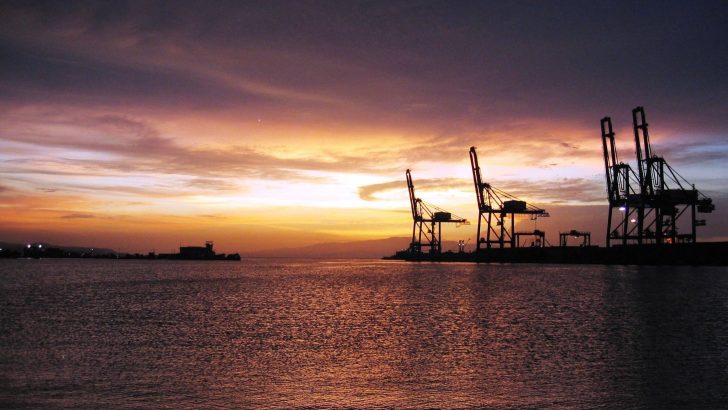
Like a whole continent squeezed into one pocket-sized country, Djibouti packs salt lakes, volcanoes, coral reefs, and deserts into one unforgettable stretch of the Horn of Africa.
It borders Eritrea, Ethiopia, and the Gulf of Aden, basically sitting at one of the world’s most strategic crossroads.
The country’s story runs deep.
Home to the Afar and Issa people for thousands of years, Djibouti became a French colony in the 1800s and gained independence in 1977.
Its mix of African, Arab, and French influences still shows up in everything from food to architecture.
Geographically, Djibouti is dramatic.
Lake Assal, Africa’s lowest point, sits about 509 feet below sea level, surrounded by shimmering salt flats and volcanic rock.
The country’s highest point, Mount Mousa Ali, rises roughly 6,650 feet at the border with Ethiopia and Eritrea.
In between, you’ll find rugged canyons, black lava fields, and a coastline that turns into a scuba diver’s dream.
Tourism here is still in its early stages of development, which is part of the charm.
Fewer than 100,000 people visited in 2024, meaning you can hike, dive, and explore without the crowds.
Infrastructure is improving, but it’s still geared more toward adventure travelers than casual tourists.
The upside?
It’s one of the more stable and secure countries in East Africa, with steady governance and a strong international presence that helps maintain calm.
Djibouti may not be a mainstream vacation spot yet, and we do need to talk about some safety risks.
But for the right type of traveler, there’s a lot to consider when exploring this African country.
Warnings & Dangers in Djibouti

OVERALL RISK: MEDIUM
Djibouti is generally a medium-risk destination. The concerns stem from terrorism, but there are landscape and weather issues we'll discuss.

TRANSPORT & TAXIS RISK: MEDIUM
The medium risk stems from details in the government advisories, particularly when it comes to unsafe public transportation. Even taxis aren't considered very safe. Stick to private car bookings or hotel shuttles. Renting a car is an option, but outside of Djibouti City, you'll find poor infrastructure and more risks.

PICKPOCKETS RISK: MEDIUM
Pickpocketing is a moderate risk, mostly in Djibouti City’s busy markets or at the port. Keep valuables out of sight and use crossbody bags or money belts. Crowded minibus taxis are prime spots for sneaky hands, so stay aware of your surroundings.

NATURAL DISASTERS RISK: MEDIUM
The country faces a medium risk of natural events like droughts, occasional earthquakes, and rare flash floods. Djibouti’s position in the Great Rift Valley makes tremors possible but seldom severe. Heat and dehydration are the bigger everyday risks—pack water like it’s gold.

MUGGING RISK: LOW
Muggings are relatively rare, making this a low-risk concern. Most incidents involve opportunity rather than aggression. Stick to well-lit areas, especially after dark, and avoid showing cash or phones openly.

TERRORISM RISK: MEDIUM
Terrorism remains a moderate risk due to Djibouti’s role in regional military operations. Security is strong in major areas, but travelers should avoid large gatherings and stay updated through local advisories.

SCAMS RISK: LOW
Scams are a low risk, typically involving overcharging or fake guides. However, do your due diligence when choosing a tour guide and never make decisions based on the lowest price. Locals are generally friendly and helpful, but a healthy dose of skepticism keeps your wallet happier.

WOMEN TRAVELERS RISK: MEDIUM
Djibouti is moderately safe for women travelers. Street harassment is uncommon but not unheard of, especially in crowded areas. Dress modestly, particularly in rural or conservative regions, and consider hiring local guides for solo adventures.

TAP WATER RISK: HIGH
Tap water carries a high risk of contamination, especially outside major hotels. Stick to bottled or filtered water for drinking and brushing teeth. Ice cubes and salads washed in tap water can also be questionable. It's better to be cautious than queasy.
Safest Places to Visit in Djibouti
The Djibouti National Tourism Agency doesn’t always come up in search results, and that’s why we want to give you the correct website: guide.visitdjibouti.dj.
It’s listed in English and French.
Given how unevenly regulated the tourism industry is, this website is your best starting point when planning tours or trips.
The capital, Djibouti City, is the base for most travelers, with lively markets, French-Arabic fusion food, and easy access to beaches like Khor Ambado and Arta Plage.
From there, day trips take you into the desert, forest, and sea, all within a few hours’ drive.
To the west lies Lake Assal, a glistening salt lake sitting more than 500 meters below sea level, surrounded by crusted salt flats and lava fields from ancient eruptions.
A little farther, the otherworldly Lake Abbe is dotted with limestone chimneys that vent steam into the air.
It’s a favorite spot for photographers and fans of the surreal.
Head north, and you’ll find the green side of Djibouti in Day Forest National Park, one of the only remaining patches of forest in the Horn of Africa.
The Goda Mountains here offer hiking trails, cooler air, and sweeping views that contrast sharply with the country’s arid plains.
The highest peak is 6,650 feet above sea level.
Offshore, the Gulf of Tadjoura is the place to dive or snorkel with whale sharks, explore coral reefs, or take a boat to Moucha and Maskali islands for some seriously underrated beaches.
The Grand Bara Desert in the south flips the script again, with wind-blown dunes and mirage-filled horizons that feel straight out of a movie.
Places to Avoid in Djibouti
Government advisories warn travelers to avoid border regions with Eritrea, Ethiopia, and Somalia due to sporadic armed tensions, smuggling activity, and landmines in remote desert zones.
The northern Obock region near the Red Sea can be particularly unstable.
Stick to Djibouti City, Tadjoura, and established tourist routes around Lake Assal and the Gulf of Tadjoura.
Independent travel in desert or border areas should only be done with a licensed local guide and a 4×4 convoy.
Cell service and help are scarce.
Djibouti’s summer heat is no joke.
From June through September, temperatures often soar past 110°F.
It’s mostly dry desert heat, but coastal areas around the capital and the Gulf can feel muggy due to humidity from the Red Sea.
Heat exhaustion and dehydration are real risks, so plan outdoor activities early in the morning, drink water constantly, and limit exposure during peak afternoon hours.
Safety Tips for Traveling to Djibouti
- The Djibouti National Police handle local law enforcement. For emergencies, dial 17 for police, 18 for fire, and 19 for medical help. Keep these numbers handy since operators may not always speak English. For faster assistance, your hotel or guide can often relay details to authorities on your behalf.
- Djibouti doesn’t have a robust public alert system like the U.S. or the EU. Stay informed through local radio, embassy updates, and international apps like the Red Cross Emergency App or Google Crisis Map. If you’re near coastal or volcanic regions, ask hotel staff about current safety notices or evacuation routes.
- Foreigners can drive in Djibouti with a valid international driver’s permit and their home country license. Roads in Djibouti City are paved but chaotic; outside the city, expect rough dirt tracks and erratic signage. A 4×4 is essential for desert travel, and driving after dark is strongly discouraged.
- A yellow fever vaccination is required if you’re arriving from a country with transmission risk. Routine vaccines like hepatitis A, typhoid, and tetanus are recommended. Malaria risk is low in Djibouti City but higher in rural areas. Bring mosquito repellent and talk to your doctor about preventive medication.
- The official languages are French and Arabic, but many locals, especially in tourism or business, speak at least some English. You’ll get further with a few French phrases. Signage is mostly in French, and menus often include English translations at hotels or expat-friendly spots.
- Djibouti is a conservative Muslim country, so dress modestly out of respect. Lightweight long sleeves and pants are ideal for both sun and cultural comfort. Women don’t need to cover their hair, but skimpy clothing will attract unwanted attention, especially outside tourist zones or beach resorts.
- Carry a photocopy of your passport and visa at all times. Leave the originals locked safely at your hotel. Local police sometimes conduct ID checks, and having a copy avoids unnecessary stress or delays. If driving, keep your license and permit with you, too.
- Avoid taking photos of government or military buildings, airports, bridges, and mosques. It’s taken seriously here, and violators can face fines, equipment confiscation, or even detention. Always ask before photographing people; locals may view unsolicited photos as intrusive or disrespectful.
- Cell service is your best bet in Djibouti. Buy a Djibouti Telecom SIM card for your unlocked phone. Bring your passport to register it. Coverage is solid in the capital but unreliable elsewhere. Don’t count on Wi-Fi or landlines in rural areas, especially during outages.
- Same-sex relationships aren’t illegal, but public affection or discussion of LGBTQ+ topics is taboo. Travelers should keep relationships private and avoid displays that could be interpreted as “offensive to public morals.” Discretion keeps you safe and avoids misunderstandings.
So... How Safe Is Djibouti Really?
We’ll start by looking at the government advisories for Djibouti, which are generally ranked on a scale of Level 1 to Level 4.
One is the lowest, while four is the highest.
The United States, Canada, and Australia list Djibouti as Level 2, which means exercise increased caution.
The threat of terrorism is the main reason why the level has increased.
The United Kingdom advises against all travel to the Djibouti-Eritrea border, and the other governments follow suit, raising the risk to a Level 3 in this region.
Australia also adds the border with Somalia as a Level 4: Do Not Travel.
While the risk of terrorism should be considered, it’s also worth noting that as of late 2025, there hasn’t been an incident of terrorism since 2014.
However, the threat remains.
At the same time, government advisories are really the only source of any safety concerns.
Experienced travelers who respect local customs generally report positive experiences there.
While it’s important to take terrorism concerns seriously, it’s also necessary to focus on the wild, extreme, and rugged nature of this country.
You can’t control the risk of terrorism, but you can take safety steps by booking with trusted tour guides and remaining vigilant during your trip.
Avoid the hottest parts of summer and always have an exit strategy
How Does Djibouti Compare?
| Country | Safety Index |
|---|---|
 Djibouti Djibouti | 38 |
 Tuvalu Tuvalu | 89 |
 Turkmenistan Turkmenistan | 42 |
 Armenia Armenia | 60 |
 Nicaragua Nicaragua | 46 |
 Mauritius Mauritius | 80 |
 Azerbaijan Azerbaijan | 51 |
 Comoros Comoros | 56 |
 Algeria Algeria | 44 |
Useful Information

Visas
Most visitors need a visa to enter Djibouti, but it’s simple to get. Apply online for an eVisa before your trip. It usually processes within a few days. Entry requirements vary slightly by nationality, so double-check your passport validity and whether you need additional paperwork for business or extended stays.

Currency
Djibouti uses the Djiboutian franc (DJF), which is pegged to the U.S. dollar, keeping prices relatively stable. U.S. dollars are widely accepted, but it’s smart to carry smaller franc notes for taxis and markets. ATMs are available in Djibouti City, though cash is still king outside major hotels.

Weather
Expect heat—real, unbothered desert heat. Temperatures often top 100°F in summer, with slightly cooler, breezier months from November to February. Coastal areas stay humid, while inland regions like Lake Assal feel like another planet. Pack light, breathable clothing, and hydrate like it’s your job.

Airports
Djibouti-Ambouli International Airport (JIB) is the main gateway, about four miles from the capital. It’s small but efficient, serving flights from Addis Ababa, Istanbul, Dubai, and Paris. Facilities are basic, so don’t expect luxury lounges, but immigration is usually quick, and taxis are easy to find outside arrivals.

Travel Insurance
Don’t skip travel insurance here. Medical facilities are limited, and emergency evacuation can be pricey. Make sure your plan covers health, cancellations, and lost gear, especially if you’re diving, trekking, or heading to remote areas. It’s a small cost for peace of mind in a rugged destination.
Djibouti Weather Averages (Temperatures)
Average High/Low Temperature
| Temperature / Month | Jan | Feb | Mar | Apr | May | Jun | Jul | Aug | Sep | Oct | Nov | Dec |
|---|---|---|---|---|---|---|---|---|---|---|---|---|
| High °C |
29 | 29 | 31 | 32 | 35 | 39 | 41 | 41 | 37 | 33 | 31 | 30 |
| Low °C |
21 | 22 | 24 | 25 | 27 | 29 | 31 | 30 | 29 | 26 | 24 | 22 |
| High °F |
84 | 84 | 88 | 90 | 95 | 102 | 106 | 106 | 99 | 91 | 88 | 86 |
| Low °F |
70 | 72 | 75 | 77 | 81 | 84 | 88 | 86 | 84 | 79 | 75 | 72 |












I didn’t know Djibouti was so popular
Djibouti is a beautiful country, go and see it for yourselves.
Um excuse me but you made Djibouti look like some dangerous place when it isn’t. I’ve lived there my whole life and the things you just mentioned are rare. The people there are nice and polite ( well the majority ). Ah and the earthquates and seismic activity thing is ABSOLUTELY false, there aren’t almost any of those and if it is then they are very weak to the point where we don’t feel anything.
So in conclusion, please either do some profound investigations about the facts or don’t write these kind of articles as it gives quite a negative view of this beautiful country.
Thank you for your comment in reference to the information presented about Djibouti.
My husband just got a job offer in this country, and I’m doing some research of the area to see if it would be somewhere we would like to live. After reading the above article, I was really questioning this place’s safety. Your comment helps to clear some doubt. Thank you for your insight.
A lovely surprise
Djibouti is a less known African country that has plenty of good things to offer. I would just outline a few of them like Lake Assal or the Khor Ambado beach. The Day Forest National Park is a great place to visit plus if you like water make sure to do the Dolphins Excursions as they are special.
I didn’t realize Djibouti had such a wild mix of landscapes; hiking through those rugged canyons must feel like stepping into a whole different world!
I’m not sure how easy it really is to get around there, even with the infrastructure improving; it seems like it could still be a bit of a hassle for anyone just looking to kick back and relax.
Exploring Djibouti feels like stepping into a real-life adventure book with all those landscapes packed in!
Reading this makes me think of that first blast of hot, salty air when you step out by Lake Assal and realize you’ve basically got this wild, otherworldly place almost to yourself.
Reading about Djibouti feels like discovering a hidden gem where you can dive into rich culture and nature without the usual tourist hustle, and that mix of African, Arab, and French influences sounds like a true adventure for the senses!
Never expected to feel that small standing on the salt flats at Lake Assal, about 509 feet below sea level, the silence there actually made the whole place feel ancient.
After trudging the blinding salt flats at Lake Assal and feeling grit in my teeth, are the safety warnings mostly about sketchy outskirts and remote treks, or are there real, everyday concerns even in towns where all those international bases keep things calm?
Sure, it’s “off the beaten path” until you get salt crust from Lake Assal flaking out of your shoes and realise the scuba spots are incredible while the rest of the place still kinda runs on improvisation.
When you were there, did you get that weird giddy buzz from the salty wind off Lake Assal hitting your face and the salt flats looking like someone spilled glitter?
Did you find the salt flats around Lake Assal as otherworldly as I did, or was it more the quiet vibe from having so few tourists?
Sure, because nothing screams vacation goals like scrambling over volcanic rocks and hoping you don’t run into any unplanned wildlife.