


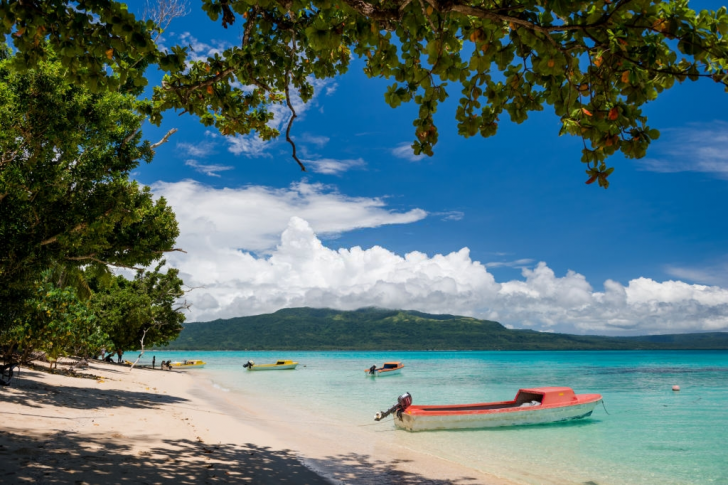
Vanuatu is made up of more than 80 islands scattered across the South Pacific, forming one of the most geographically diverse nations in Oceania.
It sits east of Australia, north of New Zealand, and west of Fiji, perched along major tectonic fault lines that shape both its dramatic landscapes and its daily life.
The islands were originally settled by Melanesian peoples thousands of years ago, followed by European exploration in the 1600s.
For much of the 20th century, Vanuatu was jointly governed by Britain and France in one of history’s strangest colonial arrangements.
It finally gained independence in 1980, forging a national identity deeply rooted in tradition, community, and connection to the land.
Today, roughly 100,000 travelers visit each year, most arriving from Australia and New Zealand.
That modest number is part of the appeal.
Vanuatu delivers a raw, unplugged version of island life where jungle roads replace highways, village markets replace malls, and traditions remain central to daily routines.
Travelers can expect a slower pace, warm hospitality, and landscapes that feel largely untouched by mass tourism.
Infrastructure can be basic, schedules flexible, and comfort levels variable, but the reward is authenticity.
Vanuatu isn’t built for luxury crowds or whirlwind itineraries.
It’s built for travelers who want adventure, connection, and a deeper sense of place far from polished resort culture.
Warnings & Dangers in Vanuatu

OVERALL RISK: LOW
The risk is low overall in Vanuatu, but there's one category where the risk is high, and we encourage you to keep reading to learn more about that.

TRANSPORT & TAXIS RISK: LOW
This is a low risk, with plenty of options for visitors. Taxis, buses, and minibuses provide reliable transportation. Look to the tourism website for the best options. Definitely use caution when booking a boat operator to get between islands. You should expect them to produce a safety certificate before you board.

PICKPOCKETS RISK: LOW
Most of the travel advisories agree that this is a low risk in Vanuatu. While petty crime can happen, it's more a crime of opportunity than an ongoing risk. Don't leave bags unattended at the beach, and store valuables in a hotel room safe.

NATURAL DISASTERS RISK: HIGH
This is the high risk, and it's a doozy. Vanuatu sits directly along the Pacific Ring of Fire and within a major cyclone corridor. The country regularly experiences earthquakes, volcanic eruptions, tsunamis, cyclones, flooding, and landslides. It's known as one of the most dangerous weather regions in the world.

MUGGING RISK: LOW
Another low risk here, as violent crime against tourists is uncommon. Keep that risk low by not walking around at night alone and by keeping your valuables out of sight.

TERRORISM RISK: LOW
Neither the United States nor Canada mentions terrorism as a risk in Vanuatu, but the UK does mention the general "it can happen anywhere" message. That means it's a low risk. You should be far more concerned about the weather forecast.

SCAMS RISK: LOW
This is a low risk, but I encourage you to only use the tour operators and transportation mentioned by the tourism website. This will help you get the safest options while also having a way to report incidents back to the government.

WOMEN TRAVELERS RISK: LOW
Women travelers in Vanuatu generally face a low violent crime risk, but harassment, unwanted attention, and occasional assault cases do occur, particularly in urban areas and after dark. Cultural norms are conservative, so modest dress helps reduce attention. Avoid isolated beaches at night, use trusted transport, and stay aware in nightlife settings, especially when alcohol is involved.

TAP WATER RISK: MEDIUM
Tap water in Vanuatu is not consistently safe for drinking, even in Port Vila. Treatment standards vary by island, and contamination risks rise after heavy rain or storms. Travelers should stick to sealed bottled water for drinking and brushing teeth, avoid ice from unknown sources, and use caution with raw produce washed in local water.
Safest Places to Visit in Vanuatu
The Vanuatu Tourism Office runs the official travel website vanuatu.travel.
Stick with this site for trip planning since the tourism industry isn’t always well-regulated.
You want to ensure you get vetted guides and itinerary options.
Vanuatu spreads its magic across six island regions, each delivering its own version of adventure, culture, and postcard-worthy scenery.
Shefa Province, anchored by Efate and the capital Port Vila, is where most trips begin.
Think reef snorkeling, waterfall hikes, lagoon cruises, cultural villages, and lively waterfront dining.
Nearby Shepherd Islands add quieter beaches and traditional village life.
Sanma Province, centered on Espiritu Santo, is a favorite for divers and beach lovers.
Champagne Beach and Port Olry regularly rank among the South Pacific’s best, while offshore shipwrecks, coral reefs, and blue holes create world-class snorkeling and diving.
Inland, jungle trails and waterfalls add balance.
Tafea Province brings drama.
Tanna Island is home to Mount Yasur, one of the world’s most accessible active volcanoes, along with black-sand beaches, coastal caves, and traditional kastom villages.
Aneityum delivers brilliant reefs and warm springs, while Erromango offers remote waterfalls and jungle exploration.
Malampa Province showcases Vanuatu’s wild side. Ambrym’s lava lakes, Malekula’s tribal culture, and Paama’s quiet coastlines offer deeply immersive travel for those willing to venture farther.
Penama Province highlights rugged beauty, from Pentecost’s iconic land diving rituals to Ambae’s volcanic lakes and Maewo’s rainforests and waterfalls.
Torba Province, the northernmost region, feels wonderfully untouched, with coral reefs, volcanic peaks, and island villages where tourism barely exists.
Places to Avoid in Vanuatu
While there aren’t dangerous parts of the country or specific places to avoid, there are some safety tips you need to know.
Several volcanic areas in Vanuatu are periodically restricted or closed due to activity levels.
- Mount Yasur on Tanna Island is usually accessible but can shut down with little notice.
- Ambae and Ambrym islands experience frequent eruptions, gas emissions, and ashfall, leading to travel restrictions and evacuations.
Always check local guidance before visiting, as conditions change quickly and access is tightly controlled.
The Vanuatu Meteorology & Geo-hazards Department will always have a volcano risk level posted on its website.
While you don’t have to avoid the country between November and April, you should know this is cyclone season, and things can go sideways fast.
Safety Tips for Traveling to Vanuatu
- Emergency services in Vanuatu are limited, especially outside Port Vila. Dial 112 for police, ambulance, and fire services. Response times can be slow, and resources are stretched across many islands. Hotels and resorts often coordinate emergency help more effectively.
- Vanuatu does not use a nationwide emergency alert system for travelers. Cyclones, earthquakes, and volcanic events are announced through local radio, hotel notices, government briefings, and embassy alerts. Bookmark the Vanuatu Meteorology & Geo-hazards Department’s website, but you might not always have an internet connection in more remote regions.
- Foreigners can drive with a valid home license, but renting a car or scooter comes with risks. Road conditions are poor, signage is minimal, and accidents are common. Vehicle theft and opportunistic crime occur, especially in urban areas. Hiring drivers, using hotel transfers, or booking tours reduces risk and eliminates unnecessary stress.
- No vaccines are required for entry, but hepatitis A, hepatitis B, typhoid, and routine immunizations are strongly recommended. Dengue and Zika are present, and malaria risk exists in the outer islands. Pack insect repellent and consult a travel clinic before departure, especially for longer stays or rural travel.
- Vanuatu has three official languages: Bislama, English, and French. English is widely understood in tourist areas, hotels, and government offices. In rural villages, Bislama dominates. Communication is generally easy, but the internet and mobile service can be spotty, especially outside Port Vila and Luganville.
- Same-sex relationships are criminalized under local law, though prosecutions are rare. Social attitudes remain conservative, especially in rural communities. Public displays of affection, regardless of orientation, are generally discouraged. LGBTQ+ travelers should remain discreet, respect local customs, and avoid drawing attention to personal relationships in public settings.
- Vanuatu offers incredible diving, but medical support is limited. The nearest hyperbaric chamber may be hours away by air. Never dive alone, stick with licensed operators, follow depth and time limits, and avoid risky dives. Conservative dive profiles and solid travel insurance with evacuation coverage are essential for safety.
- Sharks are present around many islands, particularly near Espiritu Santo and Malekula. Attacks are rare, but caution is still warranted. Always ask locals about current water conditions, avoid swimming at dawn or dusk, and stay out of the water if fishing activity is nearby. Local knowledge is your best safety tool.
- Land ownership is deeply important in Vanuatu. Many beaches, trails, and villages sit on private land. Entry often requires a small access fee paid directly to landowners. Wandering off marked paths without permission can lead to uncomfortable confrontations. When in doubt, ask first and respect local rules and customs.
- Boat travel between islands is irregular and sometimes poorly regulated. Vessels may lack safety equipment or proper certification. Before boarding, ask about life jackets, weather conditions, and the boat’s maintenance. Rough seas are common, and schedules change often.
So... How Safe Is Vanuatu Really?
Vanuatu gets the lowest possible travel advisory level from the United States, Canada, and Australia.
That’s a Level 1: Exercise Standard Precautions.
What that means is that major issues like high crime rates, terrorism risks, and civil unrest are low.
While that’s reassuring, the real takeaway here is knowing about the things you can’t always control or be prepared for.
For example, the weather here can be extreme.
In fact, the United States’ travel advisory reads, in part, “The United Nations University Institute for Environment and Human Security (UNU-EHS) has consistently ranked Vanuatu number one on the World Risk Index for its many different types of natural disasters and its difficulties in recovering from them. ”
Risks include:
- Cyclones
- Landslides
- Flooding
- Volcanoes
- Earthquakes
Then there are things you can control, like the risk factor in activities like diving.
While there is an official tourism agency that can help with guidance, safety standards aren’t always up to the standards you’d expect them to be.
You should feel confident, not careless, about planning a trip to this island nation.
How Does Vanuatu Compare?
| Country | Safety Index |
|---|---|
 Vanuatu Vanuatu | 70 |
 Tuvalu Tuvalu | 89 |
 Australia Australia | 86 |
 Tajikistan Tajikistan | 38 |
 Liberia Liberia | 45 |
 Turkey Turkey | 45 |
 Greenland Greenland | 80 |
 Bolivia Bolivia | 57 |
 Uganda Uganda | 49 |
Useful Information

Visas
Vanuatu keeps visas simple for most travelers. Citizens from the U.S., Canada, UK, EU countries, Australia, and New Zealand typically receive visa-free entry for stays up to 30 days. Passport validity of at least six months and proof of onward travel are required. Entry rules are relaxed, but overstays are taken seriously.

Currency
Vanuatu uses the ni-Vanuatu vatu (VUV). Cash is widely used, especially outside Port Vila and Luganville. ATMs are available but unreliable, and credit cards are accepted mainly at larger hotels and resorts. Carry small bills, plan ahead for cash access, and avoid assuming island hopping comes with convenient banking.

Weather
Vanuatu has a tropical climate with warm temperatures year-round. The dry season runs from May to October, offering cooler, breezier days. November through April brings heat, humidity, heavy rain, and cyclone risk. Weather can shift quickly, so flexibility is essential, especially during the wet season.

Airports
Bauerfield International Airport in Port Vila is the main international gateway, with limited regional flights to Santo-Pekoa International Airport on Espiritu Santo. Domestic flights connect the outer islands, but schedules change often, and delays are common.

Travel Insurance
Travel insurance is essential in Vanuatu. Medical facilities are limited, evacuation is expensive, and inter-island travel depends heavily on weather. Coverage should include medical treatment, emergency evacuation, and trip interruption. Those planning higher-risk activities should consider adventure insurance.
Vanuatu Weather Averages (Temperatures)
Average High/Low Temperature
| Temperature / Month | Jan | Feb | Mar | Apr | May | Jun | Jul | Aug | Sep | Oct | Nov | Dec |
|---|---|---|---|---|---|---|---|---|---|---|---|---|
| High °C |
30 | 30 | 29 | 29 | 28 | 27 | 26 | 26 | 27 | 28 | 29 | 30 |
| Low °C |
24 | 24 | 24 | 23 | 22 | 21 | 21 | 21 | 22 | 22 | 23 | 24 |
| High °F |
86 | 86 | 84 | 84 | 82 | 81 | 79 | 79 | 81 | 82 | 84 | 86 |
| Low °F |
75 | 75 | 75 | 73 | 72 | 70 | 70 | 70 | 72 | 72 | 73 | 75 |
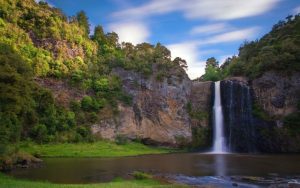












Amazing! 10 stars!
Vanuatu was like heaven on earth for me! It was a spectacular experience from the moment I first arrived on this island country. This place is the perfect spot to unwind and recharge your batteries especially after this horrible pandemic that doesn’t seem to want to end in some areas.
Here are 3 of my favorite spots from Vanuatu (at the moment as this can change as I get a chance to visit more when I visit again):
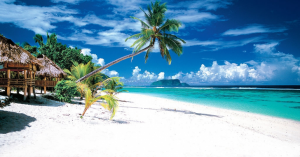
Champagne Beach is without question one of the best beaches in the whole, wide world. White sands as far as the eye can see, clean, blue water plus the rainforest background – I mean, what more can you ask for? Here there is underwater volcanic activity which makes the ocean fizzle when there’s a low tide and this is why the beach is called Champagne.
I got a chance to do some snorkeling in Tanna’s Blue Cave and it was great. I highly recommend it to anyone who is a snorkeling fan. The blue cave is pretty much inaccessible except for a narrow sea channel. It’s not a place for someone who doesn’t like tight spaces, that’s for sure. But the whole experience was amazing for me and I can’t wait to go there again when we come back to Vanuatu.
There’s also the Black Magic Island of Ambrym to visit. But this is not for everyone. You need to prepare yourself for the trip and know that most of Ambrym’s volcano tours can go for 3+ days. You were warned! The terrain is rough and you absolutely need a guide to do this. You can stay in bungalows as there are no hotels here.
Of course there are other amazing places waiting to be explored and you should research Vanuatu before coming here and pick the spots you like better.
Spent a few days on those jungle roads and laughed at myself for getting lost, but the village markets and slow pace left me oddly peaceful.
Unplugged paradise, right up until the bumpy jungle roads and sticky humidity turn your plans into a survival story.
The 6am market with taro piled high and that coconut smell makes you slow down and actually enjoy the morning.
Authenticity’s fun until you’re stuck on a bumpy jungle road with wet socks and no clue when the next ferry will show up.
Sure, if you’re into dodging potholes bigger than your suitcase and calling it an “authentic adventure,” Vanuatu’s got you covered with jungle roads that really put your suspension to the test.
Did you find it tricky to get around on those jungle roads or was it kind of part of the adventure? The slower pace sounds refreshing but a bit challenging too.