


 Cambodia : Safety by City
Cambodia draws travelers with its temples, yes, but there’s more to it than ancient ruins.
This Southeast Asian country, positioned between Thailand, Vietnam, and Laos, has a complex history, resilient people, and a raw, unpolished charm that still feels adventurous.
Once the heart of the powerful Khmer Empire, Cambodia was home to one of the most advanced civilizations in Asia.
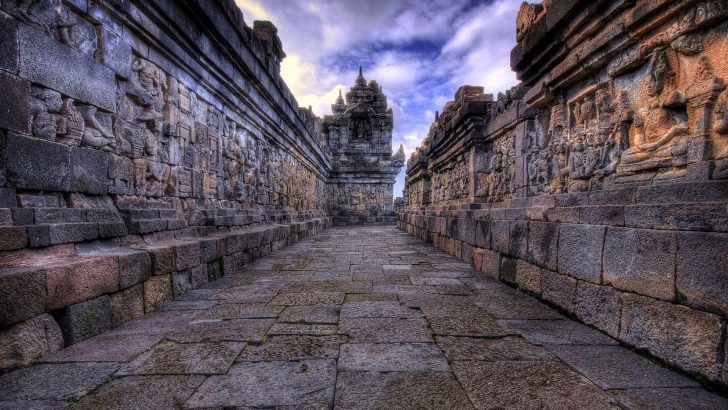
Its legacy still stands in the form of Angkor Wat, a 12th-century marvel and one of the most photographed places on the planet.
But the country’s modern story is more sobering.
The brutal Khmer Rouge regime in the 1970s left deep scars, and the country has spent the decades since rebuilding its infrastructure, economy, and identity.
Despite the challenges, over 6.7 million people visited Cambodia in 2024.
Most come for the temples in Siem Reap, the chaotic energy of Phnom Penh, and the beaches near Kampot and Kep.
Others are drawn to eco-adventures in the jungles of Mondulkiri or the floating villages on Tonlé Sap Lake.
There’s also a growing interest in Cambodia’s cuisine, which is often overlooked but full of unique, bold flavors.
Whether you’re after history, nature, food, or just a place that feels different from everywhere else, Cambodia offers all of it, often on the same day.
However, before you book the trip, we have certain safety risks to discuss.
Warnings & Dangers in Cambodia

OVERALL RISK: LOW
Cambodia is a low-risk destination, but some aspects are solidly in the medium-risk category. Experienced travelers won't balk at the risks here, but first-timers should use extra caution.

TRANSPORT & TAXIS RISK: MEDIUM
Getting around comes with a medium risk. Roads are chaotic, drivers don’t follow many rules, and helmets aren’t always included with scooters. Use rideshare apps when possible, and avoid hopping into random taxis or tuk-tuks without confirming a price or destination first.

PICKPOCKETS RISK: HIGH
Pickpocketing is a high risk, especially in Phnom Penh, Siem Reap, and touristy areas. Phone and bag snatching from moving scooters is a real problem. Keep your stuff zipped, crossbody bags in front, and don’t walk distracted, especially at night or in markets.

NATURAL DISASTERS RISK: MEDIUM
If you're there during the rainy season, it's a medium risk. While Cambodia generally escapes typhoons or earthquakes, the flooding from the season's deluge of rain can cause real problems.

MUGGING RISK: MEDIUM
Muggings are a medium risk, with most involving quick grabs rather than violence. Don’t walk alone after dark, especially in quiet or poorly lit areas. Avoid showing off phones or cash, and don’t carry anything you’re not willing to lose.

TERRORISM RISK: LOW
Cambodia is considered low risk for terrorism. There’s no recent history of attacks targeting tourists or public areas. Still, stay aware during large gatherings or events, and follow local news in case tensions flare near the Thai border or during major holidays. Read your country's travel advisory for the latest guidance on this concern.

SCAMS RISK: HIGH
Scams are a high risk, and they come in all shapes—card games, fake charities, rigged taxi meters, or someone trying to sell you a sob story. If something seems weird or too helpful, walk away. Even beggars here could be pickpockets in disguise.

WOMEN TRAVELERS RISK: MEDIUM
Solo female travelers face a medium risk. Harassment is usually verbal, not physical, but it’s still uncomfortable. Dressing modestly helps in rural areas. Stick with groups at night, book legit accommodations, and don’t leave drinks unattended. Most women travel safely, but it pays to stay sharp.

TAP WATER RISK: HIGH
Drinking tap water is a high risk. Even locals often boil it. Stick to bottled or filtered water for everything, even brushing your teeth. Ice in touristy spots is usually fine, but when in doubt, skip it. Waterborne illness is a quick way to ruin a trip.
Safest Places to Visit in Cambodia
TourismCambodia.com is the official tourism website for the country.
Use the Trip Planner section to get more practical, helpful, and updated guidance.
Cambodia’s most iconic site is Angkor Wat, the massive 12th-century temple complex outside Siem Reap.
It’s the largest religious structure in the world and a symbol of the country, even appearing on the flag.
The surrounding Angkor Archaeological Park includes dozens of ruins like Ta Prohm, where tree roots overtake ancient stone, and Bayon, known for its giant carved faces.
A multi-day pass is worth it.
In Phnom Penh, the capital, the Royal Palace and Silver Pagoda offer a look at the modern Cambodian monarchy, while the Tuol Sleng Genocide Museum and Killing Fields memorial provide essential context for the country’s tragic past under the Khmer Rouge.
Tonlé Sap Lake, Southeast Asia’s largest freshwater lake, is home to floating villages and seasonal biodiversity.
Tours offer a look at rural life and shifting water patterns that shape the country’s food supply.
Coastal Cambodia includes beach towns like Kampot and Kep—quieter alternatives to Sihanoukville, which has become overdeveloped and notorious for crime.
Kampot is also a gateway to Bokor National Park, known for its ghost-town feel and views from the old French hill station.
In the northeast, Mondulkiri and Ratanakiri offer dense jungle, waterfalls, and ethical elephant sanctuaries.
These areas are less visited but growing in popularity for ecotourism and adventure travel.
Get a trusted guide to help you navigate this off-grid region.
Places to Avoid in Cambodia
Cambodia is generally safe for travelers, but there are places you should avoid or treat with extra caution.
Sihanoukville and its Special Economic Zone have been linked to serious crimes like human trafficking and scam operations targeting foreigners.
Phnom Penh sees a spike in petty crime, especially near the riverfront and during the November Water Festival, when crowds swell into the millions.
Pickpocketing, bag snatching, and scams are more common than ever, so steer clear of dense areas if you can.
Remote regions of Battambang, Banteay Meanchey, Pailin, and parts of Siem Reap and Kampong Thom may still have landmines, especially off the beaten path.
Stick to marked trails.
Better yet, only go with a guide.
Lastly, tensions at the Thai-Cambodian border occasionally flare up.
Check travel advisories and local news before planning any border crossings.
Safety Tips for Traveling to Cambodia
- Cambodia has a national police force (dial 117) and tourist police in places like Siem Reap and Phnom Penh. You can also call 119 for an ambulance or 118 for fire. Save these in your phone before you land. Tourist police often speak some English and can help if something goes sideways.
- Cambodia doesn’t have a formal alert system, but you can get updates by registering with your embassy. Local officials use Facebook and Telegram to post about floods, road closures, or political events.
- If you want to drive legally, you’ll need a Cambodian license. Some travelers convert their home license when they arrive. Scooters under 125cc are often overlooked, but your insurance may not cover you without a proper license. Bottom line: rent only if you’re confident on two wheels and know what you’re risking.
- Don’t travel at night unless you have to. Roads can be dark, badly maintained, and full of unpredictable drivers or animals. Accidents are way more likely after sundown. Whether it’s a bus ride or a tuk-tuk, daytime is the safer bet.
- You’ll want hepatitis A and typhoid shots before your trip. Hep B, rabies, and Japanese encephalitis are smart if you’re staying longer or heading into rural areas. You don’t need a yellow fever card unless you’re coming from a country where that’s a thing. Always double-check with a travel clinic before you go.
- Khmer is the official language. In touristy spots, you’ll get by with English just fine. Outside the main cities? Not so much. Download Google Translate or have a few basic phrases ready to make life easier. Don’t expect every tuk-tuk driver or vendor to understand you without help.
- Passport theft is common, so don’t carry the real thing unless you absolutely have to. Leave it locked up and carry a clear colored copy of your ID page and visa instead. That’s enough to show police or buy bus tickets without risking your trip getting derailed.
- If someone invites you to join a friendly card game, walk away. It’s almost always a scam to rope tourists into fake bets or staged losses. Don’t worry about being rude. Just decline and move on.
- Same-sex relationships aren’t illegal, but same-sex marriage isn’t recognized. Big cities are more relaxed, but outside those areas, LGBTQ+ Cambodians still deal with discrimination. Public displays of affection, even for straight couples, aren’t really part of the culture. Be low-key.
- Cambodia doesn’t mess around when it comes to the monarchy. You can go to prison for saying anything negative about the King, even online. That includes social posts, memes, or jokes. Just don’t go there. It’s not worth the risk. Laws can be interpreted loosely here, and your embassy won’t always be able to help if you get in a bind.
So... How Safe Is Cambodia Really?
Cambodia comes with elevated travel advisories, specifically in certain regions.
Most countries rank the safety of another country on a four-tiered scale.
Level 1 is the lowest, meaning you should exercise standard precautions.
Level 4 means avoiding all travel to that country or region.
For Cambodia, the United States lists the country (as a whole) at Level 1.
However, Phnom Penh is Level 2 (increased precautions) because of crime concerns.
Canada puts the entire country at Level 2: Exercise a High Degree of Caution.
The reason? Concerns about the increase in petty crime.
Plus, Canadian authorities also note the tension along the Cambodia-Thailand border.
Australia’s advisory is Level 1: Exercise Normal Safety Precautions.
However, this is a great example of why you need to read the entire report.
The additional details mention the border dispute, deadly cases of blue flu, and loose interpretation of local laws.
While the general vibe seems safe enough, you also don’t want to make yourself a target.
Leave flashy jewelry at home, don’t carry large sums of cash, and keep your technology in your pocket.
How Does Cambodia Compare?
| Country | Safety Index |
|---|---|
| Cambodia | 68 |
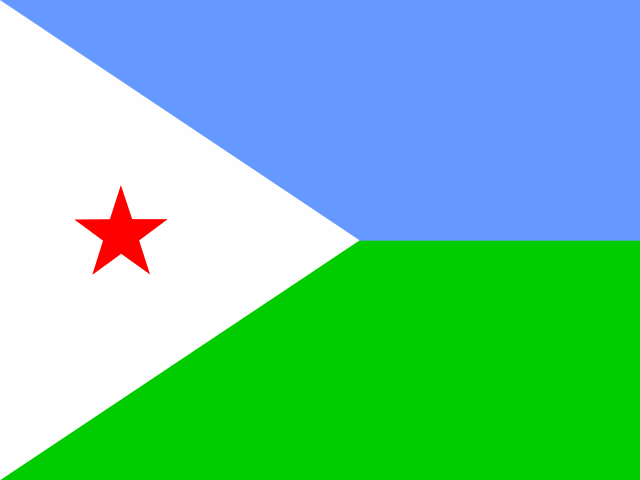 Djibouti Djibouti | 38 |
 Sierra Leone Sierra Leone | 50 |
 Tonga Tonga | 70 |
 France France | 70 |
 Estonia Estonia | 82 |
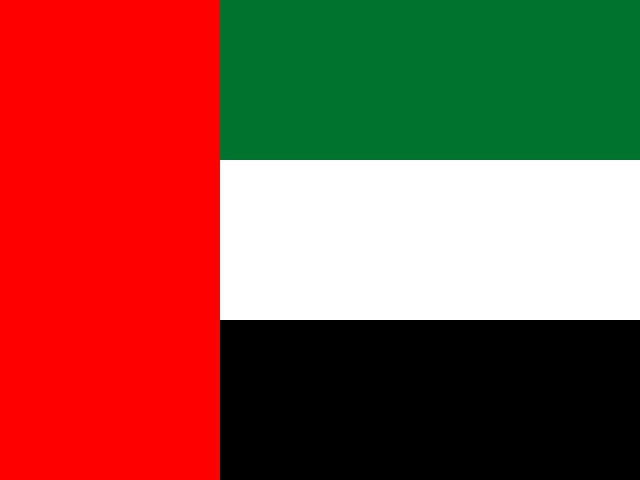 United Arab Emirates United Arab Emirates | 79 |
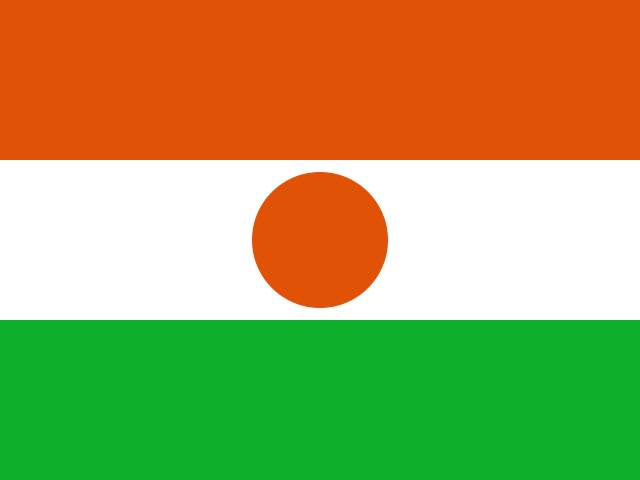 Niger Niger | 37 |
 Belarus Belarus | 62 |
Useful Information

Visas
Most travelers need a visa. You can get one online ahead of time (called an e-Visa) or grab one on arrival at major airports. It’s around $30–$36 and good for 30 days. You’ll need a passport with at least six months left. New in 2025: Fill out an e-arrival card online before you land.

Currency
Cambodia technically uses the riel, but U.S. dollars are what most people actually spend. ATMs give out dollars, and prices are usually listed on them. Bring small bills, because change might come back in riel. Due to the risk of counterfeit U.S. bills, try to get cash from a teller where you can check the money to see if it's legit.

Weather
It’s hot and tropical year-round. The dry season (November to April) is your best bet for travel, with sunny skies and lower humidity. The rainy season hits hard from May through October, especially in the afternoons. Temperatures usually sit between the high 70s and mid-90s Fahrenheit.

Airports
There are three main airports: Phnom Penh (PNH), Siem Reap (SAI), and Sihanoukville (KOS). All handle international flights, but Siem Reap is your go-to for temple tourism. These airports are modern enough, and you’ll get through faster if your visa and e-arrival form are already handled.

Travel Insurance
Not required, but you'll want it. Between scooter crashes, food poisoning, and random tropical bugs, stuff happens. Make sure your plan includes medical care and evacuation. It’s not expensive, and it could save you thousands if things go sideways.
Cambodia Weather Averages (Temperatures)
Average High/Low Temperature
| Temperature / Month | Jan | Feb | Mar | Apr | May | Jun | Jul | Aug | Sep | Oct | Nov | Dec |
|---|---|---|---|---|---|---|---|---|---|---|---|---|
| High °C |
31 | 33 | 35 | 36 | 34 | 33 | 32 | 32 | 32 | 31 | 31 | 30 |
| Low °C |
22 | 23 | 25 | 26 | 25 | 25 | 25 | 25 | 25 | 24 | 23 | 22 |
| High °F |
88 | 91 | 95 | 97 | 93 | 91 | 90 | 90 | 90 | 88 | 88 | 86 |
| Low °F |
72 | 73 | 77 | 79 | 77 | 77 | 77 | 77 | 77 | 75 | 73 | 72 |
Cambodia - Safety by City
| City | Safety Index |
|---|---|
| Phnom Penh | 60 |
| Siem Reap | 63 |
| Sihanoukville | 55 |












amazing
Beautiful nation, tragic history, underrated. Go sometime for your own sake and learn about the history.
Great destination
Perhaps the writer needs to actually visit Cambodia, it’s by far one of the safest countries I’ve lived in. It is not risky to travel around, nor are there ever tsunamis. Petty theft is a small issue but violent crime is rare on foreigners. Its a great place to visit on your holidays
Couldn’t agree more. Just visited Cambodia (Aug 2022) as a solo traveller and absolutely loved it. I even biked through villages along the river and Tonle Sap in Siem Reap with no issues . In fact I was welcomed by all the locals
Hi Abdul, do you have any blog or something related to your trip. I am planning my trip to Cambodia with my bicycle. Cheers mate
They’re really friendly and somehow safe for foreigner. Also, there are many vlogger make videos in Cambodia as well. Cheers
Safe and must go country in the world
I have been there I found pretty safe ! Of course you need to be careful in Phnom penh ( capital ) at night ( it is a poor country . And in Siem riep . It is safe just be smart ok !! Lovely place to visit ( it is very emotional and sad the history) but it is a must go country. The south is lovely as well. A lot of mosquitos ( repellents is a must take) food it is ok ( South Asia food) don’t eat salads) and ENJOY 😉
Scambodia
Live there one year,every scam in the book,Get asked for weed and girls every second
The Cambodia safety overview gave me a grounded sense of risk like pickpockets, scams, and chaotic traffic before planning my trip and reminded me to double check official advisories, especially around border zones. It felt honest and practical rather than sugar coated.
I never expected to find such a mix of history and adventure in one place, but Cambodia’s vibe is like nothing I’ve ever experienced, especially the wildness of the jungles and the delicious food that just keeps surprising me.
After slogging through Phnom Penh traffic in the midday heat and feeling a bit shaken, do you reckon the safety cautions are mostly for first-timers or something everyone should actually worry about?
Around here, sunrise at Angkor is less postcard-perfect and more sweaty, noisy, and oddly joyful when a vendor hands you warm sticky rice that makes the whole morning feel like an adventure.
Can’t help grinning when a tuk tuk driver zips through the narrow streets, the air thick with grilled fish and lemongrass and Tonlé Sap turning this weird pink at sunset.
Phnom Penh’s street food spots caught me off guard with how fiery some dishes were, definitely not what I expected.
Have you noticed if the chaotic vibe in Phnom Penh ever feels overwhelming, or does it somehow add to the adventure like that unexpected street food stall that just hits the spot?