


 Cambodia : Safety by City
Cambodia - safety as a country
If you are a traveler seeking the raw and unfiltered sensations of Southeast Asia, then Phnom Penh is an excellent choice.
It sits at the Chaktomuk, Four Faces, which is the confluence of the Mekong, Tonle Sap, and Bassac rivers.
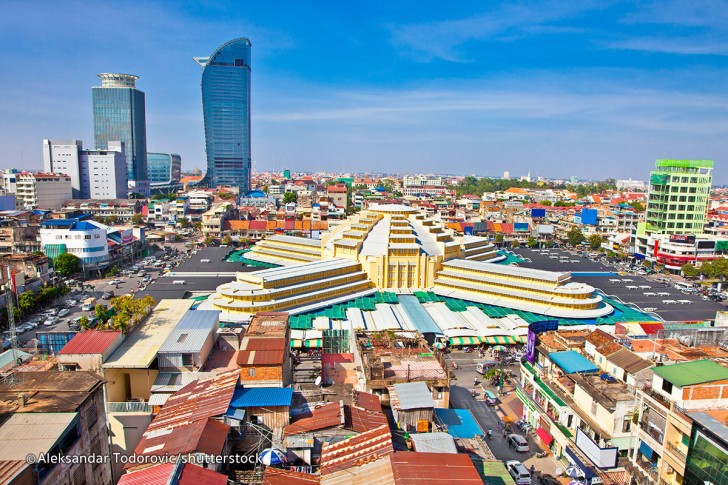
Phnom Penh is Cambodia’s capital city and a dizzying blend of French charm and modern architecture.
It is a place that mixes history with the current culture of a bustling metropolis.
From the glistening golden spires of the Royal Palace to the somber Killing Fields, Phnom Penh is a city well worth seeing.
Is it possible to do so safely, though?
Warnings & Dangers in Phnom Penh

OVERALL RISK: MEDIUM
Phnom Penh is primarily safe for travelers with a few caveats. It is riskier than neighboring cities such as Hanoi or Bangkok, but violence against tourists is rare. However, there is a high rate of petty theft there. The chaotic city traffic is another significant risk factor. A visit to Phnom Penh requires situational awareness and adherence to specific local rules, especially at night.

TRANSPORT & TAXIS RISK: MEDIUM
Traffic is a major concern in Phnom Penh. Road rules are not a priority. Residents treat them more like suggestions than laws. Savvy travelers will take advantage of the rise in ride-hailing apps such as Grab or PassApp. It is important to use this approach to get around the city and avoid hailing a random tuk-tuk or taxi, where overcharging is customary. The ride-hailing approach ensures fixed fees and journey tracking.

PICKPOCKETS RISK: HIGH
This is the most significant problem tourists face in Phnom Penh. Thieves on motorbikes grab bags and phones as they ride through heavy tourist areas, such as Riverside. They move fast, and a traveler could lose their belongings in seconds. They will pull a bag right off someone’s body while the person is distracted, looking at a map or sightseeing.

NATURAL DISASTERS RISK: MEDIUM
Phnom Penh does not see earthquakes or volcanoes, but seasonal flooding is a concern. From May to October is the monsoon season in Cambodia. These stones bring heavy rain and flash floods that turn streets into rivers within minutes. The floods are not typically life-threatening, but they can ruin the trip. They also increase the risk of waterborne diseases for those who choose to wade through the water.

MUGGING RISK: MEDIUM
Muggings, while not common, do happen in Phnom Penh, especially at night. Most incidents are similar to pickpocketing. The thieves use a snatch-and-go process to steal from tourists. If there is resistance, though, it can get violent. People in this region can be desperate, so this is how they survive. Travelers should avoid walking through the city alone after midnight. If you must, stick to the well-lit main roads or take a Grab instead.

TERRORISM RISK: LOW
Cambodia has no recent history of terrorist attacks that target tourists or civilian residents. The political climate in the area is stable, although there are some border tensions with neighboring Thailand in the north. These issues are strictly military confrontations and do not translate into acts of terror.

SCAMS RISK: HIGH
Scans are rampant in this part of Cambodia. They can range from friendly locals wanting to engage travelers in a card game to orphans asking for money or powdered milk. They take the milk back to the store and split the profit with the vendor. Tuk-tuk drivers are notorious for telling tourists that certain locations are closed and taking them to shops where they earn a commission on sales. Travelers walking the streets of Phnom Penh should learn to say "no, thank you" and move on.

WOMEN TRAVELERS RISK: MEDIUM
Phnom Penh tends to be a favorite destination for women traveling solo, and many have a good experience there. There may be some catcalling, and the driver may try to negotiate for higher fares. Anyone traveling alone must stay vigilant at night, though. Use only reputable ride-sharing apps for transportation and avoid walking alone. Women should not leave drinks unattended, as drink spiking can occur in the more dodgy bars in the Riverside area.

TAP WATER RISK: HIGH
The city of Phnom Penh does try to have a system to make the water drinkable, but the aging pipes are a hazard. The water is not safe to drink, even in most hotels. Plan on using bottled water for drinking. It is safe for showering and brushing your teeth. When you purchase water, ensure the bottle's seal is intact. Travelers should only consume bottled, filtered, or boiled water.
Safest Places to Visit in Phnom Penh
The safest places for travelers in Phnom Penh are the most developed areas.
For example, Boeing Keng Kang 1 (BKK) is the top expat hub, full of high-end cafés and embassies, and most buildings have 24-hour security.
The area is also well-lit and walkable.
The Riverside, known as Sisowath Quay in Cambodia, is safe to tour during the day because the crowds are large and there is a significant police presence.
This is where tourists see the Royal Palace and the National Museum.
Toul Tom Poung, which is the Russian market area, has a community feel that many enjoy.
This is a region frequented by pickpockets, so monitor your belongings.
There are police around, which adds to the safety.
Places to Avoid in Phnom Penh
There are some areas you should avoid at night in Phnom Penh.
For example, tourists should avoid the unlit alleys behind the Central Market (Psar Thmei) at night and the area around Wat Phnom.
They tend to be magnets for drug users and petty criminals.
Also, the Stung Meanchey district isn’t set up for tourism.
This is a poor area of the city, so if travelers do go there, they should have a local guide.
After 11:00 PM, the side streets of Riserside, like Street 136, can be hotspots for scams and pickpocketing.
The main strip is okay at night, though.
Safety Tips for Traveling to Phnom Penh
- Always use ride-hailing apps for getting around the city: These companies provide a digital trail that includes the driver’s identity and fixed pricing.
- Follow the crossbody rule for bags: If you carry a bag, always wear it across your body. If you put it on your shoulder, a pickpocket can easily ride by on a scooter and pull it off. Use a hidden money belt or your front pocket instead.
- Don’t use your phone in an open area: Especially, avoid using it near the edge of a sidewalk. Thieves can drive by and grab it out of your hand. If you need to take out your phone, step inside a shop, or turn your back to the road to prevent this kind of drive-by theft.
- Be aware when in a Tuk-Tuk: It is easy to sit back and relax when riding in a tuk-tuk, but you should remain alert and aware of the risk of theft. Place any bags on the floor and hold them between your feet. Also, don’t use your phone while riding.
- Dress modestly while visiting Temples and the Royal Palace: A modest dress would mean covering your knees and shoulders. This not only shows respect for the locals, but it also helps you blend in so you don’t look like a tourist.
- Don’t play card games: A friendly local might walk up to you and invite you to play. They can be quite persuasive, but you should say, “No, thank you,” and walk away.
- Watch your drink when out: You should never leave a drink unattended. This is a good general rule when traveling anywhere.
- Carry small change: Keep small denominations within easy reach. For instance, you’ll want $1 or $5 in USD or 10,000 Riel handy, so you don’t have to pull out a large amount of cash while in public.
- Ignore the “closed” attractions warnings from drivers: If they tell you a major attraction like the Killing Fields is closed, check for yourself. They will often offer to take you somewhere else instead. Some shops will pay drivers commissions if they bring in tourists.
- Stay hydrated while out: The heat can be a bit much in Phnom Penh. You should always have water with you. If you are using a reusable bottle, refill it only from the large blue filtered water jugs found in hotels and guesthouses.
So... How Safe Is Phnom Penh Really?
Statistically, Phnom Penh is safer than many cities when it comes to violent crime.
However, it is a city with a high rate of opportunistic crime.
Many reported incidents that involve tourists are bag snatching.
The government is making an effort to increase the presence of police to help bring those rates down.
The goal is to stabilize the main thoroughfares and bring in more tourists to this region.
The safety in Phnom Penh is not passive.
Travelers need to remain vigilant to avoid problems like theft and scams.
They should avoid walking the streets wearing high-value items and carrying phones.
They must take an active role in their safety.
Tourists should always be aware of their surroundings, secure their belongings, and use some common sense as they enjoy the sites of Phnom Penh.
How Does Phnom Penh Compare?
| City | Safety Index |
|---|---|
| Phnom Penh |
60 |
| Kampong Cham |
70 |
| Kampong Thom |
67 |
| Kratie |
71 |
| Banlung |
64 |
| Kampot |
76 |
| Sihanoukville |
55 |
 Boone Boone | 82 |
| Cave City | 84 |
 Lille Lille | 56 |
 Leipzig Leipzig | 78 |
| Romeoville | 82 |
 Kairouan Medina Kairouan Medina | 52 |
Useful Information

Visas
Most countries can obtain a 30-day Tourist Visa (TYPE T) when they arrive at the Phnom Penh International Airport for a reasonable fee. Travelers will need their passports to be valid for 6 months before travel and must include a photo. They can also apply for an e-Visa online through the government portal to save time. Fill out the e-Arrival Card within seven days of landing in Phnom Penh.

Currency
Cambodia accepts both the US dollar (USD) and the Cambodian Riel (KHR). The ATMs in Phnom Penh dispense US currency. Any US bills that travelers use in the city must be pristine, though. There can be no tears in the currency. Even a small tear will result in the vendor rejecting the bill.

Weather
The weather in Phnom Penh is hot all year round. What they call the cool season, Nov–Feb, brings temperatures down to about 25 degrees Celsius (77 degrees Fahrenheit). This is the best time to visit. The hot season runs from Mar to May, and temperatures soar to 40 degrees Celsius (104 degrees Fahrenheit). The rainy season in Cambodia is from Jun to Oct. This means there will likely be heavy afternoon showers. Whatever the season, the best option is to pack light and breathable cotton clothing and a sturdy rain poncho.

Airports
Phnom Penh International Airport (PNH) was once the main gateway to the city. It is about 10 km from the city center. There is a new airport that is now operating in the area–Techo International (TIA). Now, TIA handles most international flights. TIA is around 30 km from the city center. Travelers should check their flights carefully to ensure they know which one they are flying into. The best way to get from the airport to a hotel is to use a ride-hailing app such as Grab. That will mean a fixed price and allow you to avoid scams. Avoid the unofficial taxis that tend to hover around the airport exits. If you want to hire a cab, go to the registered taxi stand. There is a new airport that is now operating in the area–Techo International (TIA). Now, TIA handles most international flights. Travelers should check their flights carefully to ensure they know which one they are flying into.

Travel Insurance
Travelers should have insurance when visiting Cambodia. The medical facilities are below international standards, so medical emergencies typically require evacuation, which is costly. The policy should cover theft of high-value electronics and medical evacuation. Keep a digital copy of your policy on your phone along with an emergency contact number.
Phnom Penh Weather Averages (Temperatures)
Average High/Low Temperature
| Temperature / Month | Jan | Feb | Mar | Apr | May | Jun | Jul | Aug | Sep | Oct | Nov | Dec |
|---|---|---|---|---|---|---|---|---|---|---|---|---|
| High °C |
31 | 33 | 35 | 35 | 34 | 32 | 32 | 32 | 31 | 30 | 30 | 30 |
| Low °C |
21 | 22 | 24 | 25 | 25 | 25 | 25 | 25 | 24 | 24 | 23 | 22 |
| High °F |
88 | 91 | 95 | 95 | 93 | 90 | 90 | 90 | 88 | 86 | 86 | 86 |
| Low °F |
70 | 72 | 75 | 77 | 77 | 77 | 77 | 77 | 75 | 75 | 73 | 72 |
Cambodia - Safety by City
| City | Safety Index |
|---|---|
| Banlung | 64 |
| Battambang | 70 |
| Kampong Cham | 70 |
| Kampong Thom | 67 |
| Kampot | 76 |
| Kep | 78 |
| Kratie | 71 |
| Phnom Penh | 60 |
| Siem Reap | 63 |
| Sihanoukville | 55 |












Cambodia is beautiful but unless you are experienced in travel, I would suggest only going as a group to visit and not going anywhere with fewer than 4 people. Women should never be alone, especially not at night. You put yourself more at risk. Locals know how to spot people who are inexperienced travelers.
Great for backpackers
If you are a backpacker, you would love to visit Phnom Penh! A lot of digital nomads as well swear by this place. Its affordable and a lot of budget options available if you are particular on that. Food is cheap, you will be able to get 3 meals at $10 total, so much more savings if you choose to cook your own food at the place you rent in if you plan on staying a bit longer. I would definitely recommend a visit to Phnom Penh.
I spent a year teaching Biology at an International School in PP and absolutely loved the place. The people of fascinating, the culture is so interesting and the sites are incredible. My journey was life changing for me. It is made of hard working people and a belief in family. Above all, it is very inexpensive place live and travel. I felt safe the entire time I lived there. Common sense has to be the top of your behavior.
There’s something so mesmerizing about wandering through the streets and soaking in the blend of history and vibrant life all around.
The traffic and heat made me flinch at first, but sitting by the river with a cold beer at sunset and the palace spires glowing made me feel oddly peaceful.
I got sweaty walking the riverfront and felt a bit shaken at the Killing Fields, so do you think it’s safe and realistic to pack the Royal Palace and the memorial sites into one day if I stick to busier streets?
Wandering the riverfront at dawn with sticky humidity clinging to my shirt, those golden palace spires felt almost unreal and yet the memory of the Killing Fields still makes my chest tighten.
Did the humid heat make the Royal Palace’s golden spires feel almost surreal to you too, and do you have any tips for staying safe walking the riverfront after dark?