


 Burkina Faso : Safety by City
You don’t stumble into Burkina Faso by accident.
This small West African country, landlocked between Mali, Niger, and Ghana, has a name that translates to “Land of Honest People.”
Its past is marked by French colonial rule, independence in 1960, and a rebranding in 1984 that reflected national pride.
Since then, however, politics have been anything but stable.
Coups and extremist violence continue to shape its present, leaving daily life and infrastructure strained.
Even with these challenges, roughly 120,000 travelers make their way here each year.
They’re drawn to Ouagadougou’s thriving arts scene, where film and music festivals spotlight a cultural heartbeat that never quiets.
Beyond the capital, the landscapes shift from dusty Sahel plains to greener savannas dotted with wildlife reserves and elephant herds.
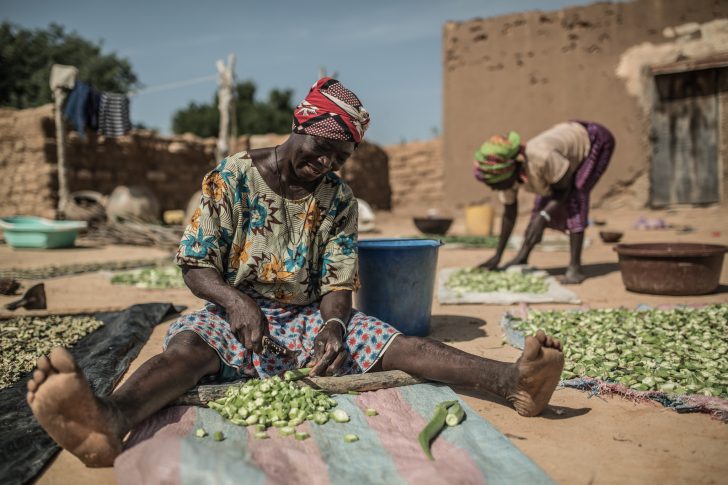
Villages showcase mud-brick homes that feel timeless, while colorful markets remind visitors how central community is to daily rhythm.
Still, government advisories almost universally say “don’t go.”
Burkina Faso holds undeniable cultural richness and natural beauty, but until stability improves, it remains a destination better studied than booked.
What’s so dangerous about Burka Faso?
Let’s get into it.
Warnings & Dangers in Burkina Faso

OVERALL RISK: HIGH
The risk is high here, as detailed in numerous government advisories. The risks are real, too, such as terrorism, kidnapping, and crime. In fact, it's so dangerous that a good chunk of the country is under a state of emergency.

TRANSPORT & TAXIS RISK: HIGH
This is also a high risk. Buses and green taxis are too dangerous to consider, from roadside robbery risks to passengers being kidnapped in packed taxis. Only yellow taxi cab services should be considered. Renting a car isn't the best idea. Roads are packed with everything from buses to donkey carts, while criminals on mopeds weave between traffic looking for something to steal. Roads aren't in great condition either.

PICKPOCKETS RISK: HIGH
The risk of petty theft is high, and Burkina Faso is so dangerous that some might say you'd be lucky to get away with "only" being pickpocketed. Don't show signs of wealth, keep your belongings well hidden, and expect to be targeted if you're a Westerner.

NATURAL DISASTERS RISK: MEDIUM
Burkina Faso’s natural disaster risk is medium, with drought and flooding being the main threats. Unpredictable rainfall often leads to crop failures, water shortages, or sudden flash floods, especially in cities like Ouagadougou. While hurricanes, earthquakes, and volcanoes aren’t concerns, limited infrastructure makes even minor weather extremes more disruptive for residents and travelers.

MUGGING RISK: HIGH
This is another high risk, and you should know that ATMs are one of the top targets for armed robbers. Criminals operate in groups and will go as far as to set up a fake roadblock or open fire on vehicles to scare the occupants into handing over money.

TERRORISM RISK: HIGH
The risk of terrorism is high, and not just from outside sources. Terrorists are known to operate throughout Burkina Faso. Even with the local police and security forces, the terrorists aren't being reigned in.

SCAMS RISK: HIGH
Scam risk in Burkina Faso is fairly high, mostly due to weak regulation and poverty-driven opportunism. Advance-fee fraud and fake investment offers often originate online, while visitors on the ground may encounter inflated prices, unofficial “fees,” or counterfeit goods. The lack of consistent oversight means scams can be creative and persistent.

WOMEN TRAVELERS RISK: MEDIUM
Women travelers face elevated risks in Burkina Faso, largely tied to the country’s overall instability. Harassment in markets or crowded areas happens often, and the threat of armed groups adds another layer of concern. Solo female travel is strongly discouraged, but then again, so is all travel to this country.

TAP WATER RISK: HIGH
Tap water in Burkina Faso is unsafe to drink, with contamination risks from bacteria, parasites, and poor infrastructure. Even locals often rely on treated or bottled water when possible. Travelers should avoid using tap water for brushing teeth, ice, or washing produce. Bottled or boiled water is the only reliable option to reduce health risks.
Safest Places to Visit in Burkina Faso
The only information you should consider is from the Burkinabe National Tourist Office.
Its website is www.ontb.bf.
However, the guidance of your government advisory should always outrank anything on a tourism website.
As an example of the risks here, even the tourism website has nothing listed for things to see in the East region.
The Sahel region, one of the riskier areas in a high-risk country, only has one.
That leaves West and Central Burkina Faso with the bulk of the travel listing.
Of course, we don’t recommend you visit this country at all, but if you insist on going, here are some of the top draws.
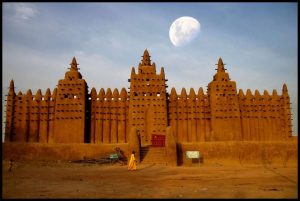
Bobo-Dioulasso, the country’s second city, is known for its lively music scene, traditional markets, and the mud-built Grande Mosquée, a striking example of Sudano-Sahelian architecture.
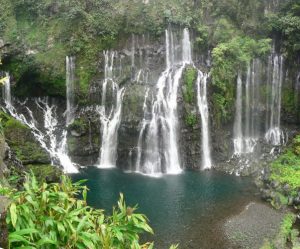
The nearby Koro village offers insight into traditional lifestyles, while natural sites like the Cascades de Karfiguéla waterfall and the Domes de Fabedougou rock formations give travelers a glimpse of Burkina Faso’s rugged beauty.
In the Central region, Ouagadougou takes center stage.
The capital is promoted for its arts festivals, the National Museum, and artisan markets where textiles, masks, and crafts are sold.
It’s also the hub for cultural events such as FESPACO, Africa’s largest film festival.
A short distance from the city, the sacred crocodiles of Bazoulé are another unusual listing.
Places to Avoid in Burkina Faso
Government advisories from the United States, the United Kingdom, Australia, and Canada, just to name a few, all recommend that you do not travel to the entire country of Burkina Faso.
Even if you do get to the country safely, you might be stuck inside due to a state of emergency.
That includes the following locations, according to the U.S. Travel Advisory:
- The entire Saheland East regions
- The provinces of Kossi and Sourou (Boucle de Mouhoun region)
- The province of Kenedougou (Hauts Bassins region)
- The province of Loroum (North region)
- The province of Koulpelogo (Center-East region)
The government also bans its employees from traveling at night to the Balkiui and Rayongo neighborhoods of Ouagadougou.
It is wise to follow suit.
Safety Tips for Traveling to Burkina Faso
- Law enforcement in Burkina Faso is handled by the National Police (Police Nationale) in cities and the Gendarmerie in rural areas. Both have limited resources, and response times may be slow. For emergencies, you can dial 17 for police and 18 for fire services, though English is rarely spoken, and service reliability is inconsistent.
- There’s no reliable nationwide alert system for travelers. The best way to receive disaster or security updates is by enrolling in your embassy’s alert program, such as the U.S. STEP service. Local radio and word-of-mouth are also common sources, but language barriers and limited infrastructure make them less dependable for foreign visitors.
- Foreign nationals must carry an International Driving Permit (IDP) along with their valid home license. Driving is challenging due to poor road conditions, limited signage, and erratic local traffic habits. Police checkpoints are frequent, and corruption is sometimes reported. Travelers are strongly advised against self-driving and should consider vetted drivers instead.
- A yellow fever vaccination certificate is mandatory for entry into Burkina Faso. Additional vaccines like typhoid, hepatitis A and B, and meningitis are strongly recommended, especially for extended stays or rural travel. Malaria prophylaxis is essential, as transmission is widespread year-round.
- French is the official language, used in government, police, and most education. More than 60 indigenous languages, such as Mooré and Dioula, are widely spoken. English is not commonly understood, even in the capital.
- Because protests and emergency declarations can shut down movement with little warning, travelers should always be ready to shelter in place. Stock extra bottled water, non-perishable food, and necessary medications. A backup power source or flashlight is useful, as electricity is not always reliable.
- Violent crime and armed attacks are far more common after dark. To reduce your risk, plan to be in a secure, trusted location well before sunset. Restaurants, hotels, and events should be limited to daylight hours. Even short walks outside at night are strongly discouraged for both locals and visitors.
- Burglary is a problem in cities and towns, often targeting travelers. Always check and secure locks on doors and windows when indoors. If your lodging doesn’t provide sturdy locks, bring portable door or window security devices. Most criminals want to avoid confrontation, so good precautions reduce the risk of being targeted.
- Thieves in Burkina Faso mostly target valuables that are easy to snatch and resell, especially mobile phones, cash, and jewelry. To avoid becoming a target, keep items hidden, use cross-body bags, and limit public phone use. Avoid displaying expensive cameras or electronics, particularly in crowded markets, transport hubs, or at night.
- Same-sex relationships are not criminalized in Burkina Faso, but social acceptance is low. Harassment and threats against LGB individuals occur, and the government does not recognize same-sex unions or officially support LGB organizations. Discretion is advised, especially outside the capital, where societal conservatism is stronger.
So... How Safe Is Burkina Faso Really?
Burkina Faso is not safe in any sense of the word.
Government advisories adamantly encourage travelers to avoid this country.
Burkina Faso comes with Level 4: Avoid All Travel warnings, which is the highest risk level possible.
Canada states, “Avoid all travel to Burkina Faso due to the threat of terrorism, the risk of kidnapping, and the unstable political situation.”
The United States advisory says, “Do not travel to Burkina Faso for any reason due to terrorism, crime, and kidnapping.”
Even the FCDO from the United Kingdom exclaims, “FCDO advises against all travel to Burkina Faso.
This is due to the threat of terrorist attacks and terrorist kidnappings, and the unstable political situation in the country.”
Australia chimes in with, “We continue to advise do not travel to Burkina Faso due to the dangerous security situation and the high threat of terrorism, kidnapping, and violent crime.”
On top of all that, the risk goes beyond the typical dangers of being a crime victim.
Westerns are often targeted for petty or violent crimes.
It’s assumed you have valuables or cash, even with exceptional efforts to hide signs of wealth.
Then there’s the possibility that your government won’t even be able to help you if you get into trouble.
Even local police and militia don’t stand much of a chance against terrorist groups.
Nothing in Burina Faso is worth risking your life to see.
How Does Burkina Faso Compare?
| Country | Safety Index |
|---|---|
| Burkina Faso | 41 |
 Tuvalu Tuvalu | 89 |
 Mozambique Mozambique | 46 |
 Japan Japan | 89 |
 Comoros Comoros | 56 |
 Democratic Republic of the Congo Democratic Republic of the Congo | 21 |
 Malawi Malawi | 53 |
 Maldives Maldives | 46 |
 Sweden Sweden | 83 |
Useful Information

Visas
Most travelers need a visa to enter Burkina Faso, which can be obtained through embassies, consulates, or on arrival at Ouagadougou airport. Requirements include a valid passport, completed forms, and proof of yellow fever vaccination. Processing times and fees vary, so check with the nearest Burkinabé diplomatic mission before traveling. Expect anyone you talk to about this to strongly suggest you change your plans.

Currency
The official currency is the West African CFA franc (XOF), shared with several neighboring countries. ATMs are available in major cities like Ouagadougou and Bobo-Dioulasso, but unreliable elsewhere. Expect criminals to lie in wait around ATMs to steal your cash. Credit cards are rarely accepted.

Weather
Burkina Faso has a hot, dry climate with two main seasons. November to May is dry, with dusty Harmattan winds, while June to October brings the rainy season and heavy storms. Temperatures can top 100°F (40°C), making hydration critical. Flooding during rains and extreme heat during the dry season can both disrupt travel.

Airports
Ouagadougou International Airport is the main gateway, offering limited regional and international flights. Bobo-Dioulasso also has a smaller international airport with fewer connections. Facilities are basic compared to global standards, and delays are common. Due to security conditions, check advisories and flight updates frequently before making travel arrangements.

Travel Insurance
Comprehensive travel insurance is essential for Burkina Faso, covering medical evacuation, trip interruptions, and theft. Local healthcare facilities are extremely limited, so evacuation to another country may be required in emergencies. However, getting insurance for a trip here will be a challenge. Most policies exclude high-risk destinations.
Burkina Faso Weather Averages (Temperatures)
Average High/Low Temperature
| Temperature / Month | Jan | Feb | Mar | Apr | May | Jun | Jul | Aug | Sep | Oct | Nov | Dec |
|---|---|---|---|---|---|---|---|---|---|---|---|---|
| High °C |
33 | 36 | 38 | 40 | 39 | 35 | 32 | 31 | 32 | 35 | 36 | 34 |
| Low °C |
17 | 20 | 24 | 27 | 26 | 25 | 23 | 23 | 24 | 25 | 21 | 18 |
| High °F |
91 | 97 | 100 | 104 | 102 | 95 | 90 | 88 | 90 | 95 | 97 | 93 |
| Low °F |
63 | 68 | 75 | 81 | 79 | 77 | 73 | 73 | 75 | 77 | 70 | 64 |
Burkina Faso - Safety by City
| City | Safety Index |
|---|---|
| Banfora | 31 |
| Bobo-Dioulasso | 35 |
| Gaoua | 25 |
| Koudougou | 34 |
| Ouagadougou | 38 |
| Ouahigouya | 18 |












not updated
The FCO advise against all but essential travel to the rest of Burkina Faso, including the capital Ouagadougou. In June 2019, Burkina Faso passed a law criminalising the dissemination of information about terrorist attacks and security forces that could undermine public order or the conduct of security operations.
What does this mean? I had been to Burkina Faso once several years ago and I hadn’t heard anything about this. I keep tabs on locations I visit just because I have had experiences in them. This is the first time I am actually hearing about this. While Burkina Faso is certainly not the safest area, when I went (roughly 15 years ago), I enjoyed my experiences.
Not That Safe
I Would Not Go To Burkina Faso
Burkina Faso Is Dangerous Do NOT Schedule A Flight To Ouagadougou
Kinshasa,Accra,Algers,Luanda Is Safe Ouagadougou Is Not Safe
Much good
Real enjoy visit Burkina Faso. Much fun.
One Of The Worst Countries Ever. I Would Rather Be In The Southern Half Of Africa Rather Than The Northern Half.
It’s amazing how a place with so much beauty and culture can be overshadowed by its challenges; the markets and music must be a real feast for the senses!
I was really struck by how vibrant the culture is despite everything going on; the colors and sounds in the markets will stay with me long after leaving.
Oh sure, after getting dust caked under my sandals in a mud-brick village and dancing to drums so loud my ears buzzed, I left wondering if the stubborn warmth and music are worth always looking over your shoulder.
Being at Ouagadougou’s film and music festivals and then wandering the colorful market left me thrilled by the art but quietly uneasy because of those don’t go advisories.
Stopped by a film night in Ouagadougou and couldn’t believe how the drumming gave me goosebumps, though the checkpoints on the way out made me a little jumpy.
Yeah, nothing like dodging checkpoints and power outages just to catch a music festival in Ouaga.