


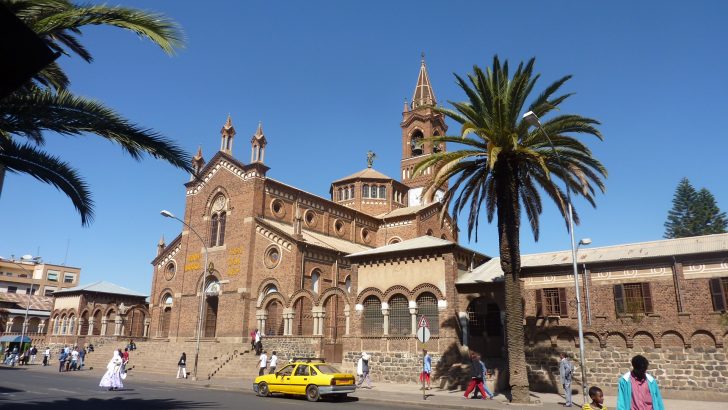
Eritrea is an African country not known for tourism.
In fact, tourist statistics aren’t even available recently.
Less than 150,000 people visit each year, and there are plenty of risks to know before you even think about booking a trip.
Eritrea sits on Africa’s northeast coast along the Red Sea, bordered by Sudan, Ethiopia, and Djibouti.
It’s a strikingly beautiful yet tightly controlled country that often baffles travelers with its contradictions.
Once an Italian colony and later annexed by Ethiopia, Eritrea fought one of the longest wars for independence in modern history, finally achieving sovereignty in 1993.
That victory came at a cost: a deep distrust of outside powers that still defines its government today.
Travelers can visit, but movement outside the capital, Asmara, generally requires permits or authorized guides.
Bureaucracy is thick, and rules shift often.
While the capital’s modernist architecture, Red Sea coastline, and mountainous highlands are undeniably compelling, the country’s isolation keeps it well off the usual tourist circuit.
Eritrea’s landscapes swing from coastal deserts to high plateau towns frozen in time, shaped by a mix of African, Arab, and Italian influences.
It’s a fascinating mix of cultures and climates, but one that operates behind a curtain of government control.
While some Reddit threads claim it feels surprisingly safe, official advisories tell a more sobering story, citing restrictions, detentions, and border risks.
For most travelers, the challenge isn’t danger in the streets but the hurdles that come with entering and exploring such a guarded nation.
Warnings & Dangers in Eritrea

OVERALL RISK: MEDIUM
There's a medium risk in Eritrea, not just for the larger risks like random detainment, but also for the strict rules about visiting here. It's hard to get to, hard to get around, and a lot of things can go wrong that might prevent you from leaving. This is a place for experienced travelers only.

TRANSPORT & TAXIS RISK: MEDIUM
This is another medium risk. Public transportation includes buses and taxis, but buses can be crowded and dangerous. Stick to taxis, agree to a fare for the route, and don't deviate, and consider paying more to avoid other passengers from being picked up during your ride. Renting a car is nearly impossible. The best bet is to let your tour guide help plan private transportation.

PICKPOCKETS RISK: LOW
Street crime isn't that common, but the low risk doesn't mean you should let your guard down. You might feel the area is more intimidating with the number of locals carrying weapons. However, of all the risks, pickpocketing is one you can minimize through standard security measures.

NATURAL DISASTERS RISK: LOW
Eritrea’s main natural disaster risks include drought, occasional flooding, and seasonal dust storms, especially in coastal and lowland areas. Earthquakes are rare but possible due to its location along the Red Sea Rift. The country isn’t in a tropical cyclone zone, so hurricanes aren’t a concern. The risk is low, but don't skip checking the weather forecast daily.

MUGGING RISK: LOW
Like petty crime, violent crime isn't your biggest concern. Muggings do happen, but not with a frequency that should set off a red flag. The one thing to be aware of is that tourists are targeted for these infrequent crimes. Do your best to blend in.

TERRORISM RISK: MEDIUM
Terrorism in Eritrea is considered a medium risk. While attacks inside the country are rare, regional instability and militant activity in nearby areas can create potential threats. Westerners could be viewed as targets of opportunity in the event of unrest or cross-border violence.

SCAMS RISK: MEDIUM
Scams in Eritrea are a medium risk, though they tend to be less aggressive than in other parts of Africa. Common issues involve inflated prices, fake permits, or “guides” offering unauthorized tours. Credit card fraud is rare simply because cards aren’t widely used. If you are scammed, you'll have little help to figure out how to get your money back.

WOMEN TRAVELERS RISK: LOW
Eritrea is relatively conservative, and solo female travelers should dress modestly and stay aware of local norms. Street harassment is uncommon but not unheard of, especially in rural areas. Traveling with a guide outside Asmara adds safety and reduces unwanted attention. Hotels and public spaces are generally safe, but always register your movements and keep evening outings low-key.

TAP WATER RISK: MEDIUM
Tap water in Eritrea isn’t considered safe to drink. Contamination and inconsistent treatment make bottled or filtered water the better choice. Use sealed water for drinking and brushing your teeth, and avoid ice.
Safest Places to Visit in Eritrea
It’s tricky to find legit tourism websites for Eritrea.
We recommend you start with the Ministry of Tourism website, which has more practical information than places to visit.
Locations outside of Asmara require a permit and/or a tour guide.
We’ll tell you about the things to do here, but please note that each activity beyond Asmara will have specific requirements.
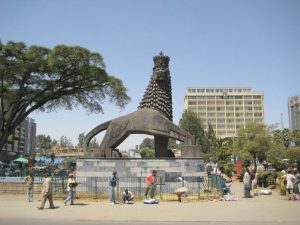
In Asmara, explore the UNESCO-listed modernist architecture, the vintage Fiat Tagliero building, and the lively markets.
Visit the National Museum of Eritrea, then relax in Italian-style cafés or catch a film at an art deco cinema.
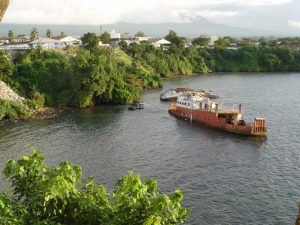
Head east to Massawa, a coastal city with Ottoman-era ruins, coral-stone buildings, and Red Sea diving.
From there, trips to the Dahlak Islands offer pristine beaches, snorkeling, and remote island escapes.
South of Asmara, the Debub region features the archaeological ruins of Qohaito and sweeping highland views.
To the west, Gash-Setit National Park draws wildlife enthusiasts with rare species and vast savannas.
In the north, Nakfa and the surrounding mountains are rich in independence history and dramatic landscapes.
Places to Avoid in Eritrea
Avoid Eritrea’s border areas with Ethiopia, Sudan, and Djibouti, where tensions, landmines, and military activity make travel unpredictable.
Most government advisories list the border areas as “Do Not Travel.”
The western and southern regions are especially restricted, and you’ll need official permits to go anywhere outside Asmara.
The southern Red Sea coast and remote desert zones are also risky due to poor infrastructure and limited communication.
Travelers are strongly advised to stay out of all conflict or security zones and never attempt to cross borders on foot or by local transport.
Even if things look calm online, conditions can change quickly, and getting stuck without permission to move or leave the country can turn into a nightmare.
If you want to explore beyond the capital, book through a licensed guide or operator who can handle the paperwork and knows where travel is actually allowed.
Safety Tips for Traveling to Eritrea
- Local police fall under the Ministry of Justice, but response times can be slow. If you need help, dial 127 for police or 114 for an ambulance, though English may not always be understood. Keep contact info for your embassy or consular office handy, since local emergency services aren’t always reliable or quick to respond.
- Eritrea doesn’t have a public emergency alert system. News of disasters or major events spreads mostly through local radio or word of mouth. Internet and phone access are limited, so check in with your embassy regularly for updates. If you’re traveling outside Asmara, make sure someone knows your route and return date.
- Foreigners can’t legally drive in Eritrea without a local driver’s license. International permits and foreign licenses aren’t recognized. To get a local license, you’ll need to apply through the Ministry of Transport in Asmara, present your valid home-country license, and complete local paperwork, though approvals aren’t guaranteed. Most visitors skip the hassle and hire licensed local drivers instead, which is safer and far less stressful.
- There are no mandatory vaccines for Eritrea, but routine immunizations should be up-to-date. Health agencies recommend hepatitis A and B, typhoid, and yellow fever for certain travelers. Malaria risk is low in Asmara but higher in coastal and lowland areas. Bring prescription medications with you, since pharmacies are limited and often understocked.
- Tigrinya is the official language, but Arabic, Tigre, and English are also used. English speakers can usually get by in hotels, airports, and tourist offices, though it’s less common in rural areas. Learning a few basic greetings in Tigrinya goes a long way toward making friendly connections.
- Photography laws are strict. Never photograph military sites, government buildings, or officials. Locals can also take offense to being photographed without consent, and authorities may confiscate your camera or phone if they think you crossed a line. When in doubt, ask first or skip the shot entirely.
- Getting a SIM card in Eritrea is nearly impossible for foreigners, and even locals deal with poor service. SIMs require government approval, and mobile data barely functions. Roaming often fails, leaving travelers without service for long stretches. Bring printed reservations and emergency contacts, since you can’t count on your phone to work.
- Eritrea is extremely security-conscious, and foreigners already stand out. Drawing attention, whether through flashy clothes, loud behavior, or political talk, can invite scrutiny. Stay polite, dress modestly, and avoid criticizing the government or photographing officials. The less notice you attract, the smoother your trip will be.
- Same-sex relationships are illegal in Eritrea and can result in jail time. There are no protections for LGBTQ travelers, and hotels don’t allow same-gender guests to share a bed. Discretion is essential, as public discussion of sexuality is taboo. Couples should avoid public affection and book separate accommodations if necessary.
- Homemade alcohol in Eritrea can be dangerous. Drinks like suwa or areki are sometimes brewed with methanol, which can cause blindness or death. Stick to sealed, commercial beverages and avoid anything poured from an unmarked bottle.
So... How Safe Is Eritrea Really?
There are four levels that other governments use to determine the safety ranking of a particular country.
One is the lowest level, and four is the highest.
To start with, no country lists any part of Eritrea at Level 1.
The United States puts it at Level 2, which means increased caution is required.
However, Canada and Australia start the risk at Level 3, meaning people should avoid unnecessary travel.
The United Kingdom, along with Canada and Australia, has advised that the areas near bordering countries are at Level 4: Do Not Travel.
While I’ve never seen the United States have such a difference in risk levels, the wording of the advisory meets all the key points of the others.
Risks include detainment without reason, minimal to no help from your home country if something goes sideways, and landmines in remote areas.
The strict travel limitations, unstable political climate, and infrastructure issues will make planning and enjoying a trip here challenging.
It’s also worth noting that the risk of piracy in the Red Sea is real.
Read any travel advisory before considering a trip by water from the coast of Eritrea.
This country isn’t for casual travelers, and even experienced tourists might want to find a safer African country to visit.
While street crime isn’t your biggest concern, the variables we’ve talked about make it a riskier situation than most people would be comfortable with.
How Does Eritrea Compare?
| Country | Safety Index |
|---|---|
 Eritrea Eritrea | 32 |
 Brunei Brunei | 80 |
 Sweden Sweden | 83 |
 Anguilla Anguilla | 70 |
 Belize Belize | 43 |
 Serbia Serbia | 77 |
 North Macedonia North Macedonia | 55 |
 Kazakhstan Kazakhstan | 72 |
 Honduras Honduras | 49 |
Useful Information

Visas
You can’t wing it here. Travelers need a visa before arriving in Eritrea, and that process isn’t fast. Applications usually require a photo, itinerary, and sometimes an in-country sponsor. Processing can take weeks, so plan ahead. Once you’re in, you’ll also need separate permits to leave Asmara or visit specific regions, so flexibility is key.

Currency
Eritrea’s currency is the nakfa, and you can’t exchange it outside the country. Bring crisp U.S. dollars for exchange at authorized banks or hotels. Credit cards and ATMs are nearly useless here, so cash is the only currency you'll be able to use. Keep your receipts, since the government can ask for proof of where your money came from when you leave. You will not be allowed to take more than 1,000 nakfa out of the country.

Weather
Eritrea’s weather swings from breezy highlands to sweltering coastlines. Asmara usually sits in the 60s to 70s Fahrenheit with mild rain from June through September. Down by the Red Sea, it’s a whole different story. Expect triple digits and dry heat. Pack layers and hydrate often.

Airports
Asmara International Airport is the country’s main point of entry, and flights are limited. Expect thorough checks, paperwork, and a slower pace all around. Once you land, you’ll need special permission to go beyond the capital, and internal flights are rare. Most travelers stick to organized tours to keep things moving.

Travel Insurance
This isn’t a place to skip travel insurance. Medical care is limited, and evacuation costs can skyrocket quickly. Choose a policy that covers medical transport, cancellations, and trip interruptions. A solid plan can make the difference between an adventure story and a bureaucratic nightmare. Keep in mind that most policies will be voided if you travel to high-risk areas.
Eritrea Weather Averages (Temperatures)
Average High/Low Temperature
| Temperature / Month | Jan | Feb | Mar | Apr | May | Jun | Jul | Aug | Sep | Oct | Nov | Dec |
|---|---|---|---|---|---|---|---|---|---|---|---|---|
| High °C |
22 | 23 | 24 | 25 | 25 | 24 | 22 | 21 | 23 | 22 | 21 | 21 |
| Low °C |
9 | 10 | 12 | 13 | 15 | 15 | 14 | 14 | 13 | 12 | 11 | 9 |
| High °F |
72 | 73 | 75 | 77 | 77 | 75 | 72 | 70 | 73 | 72 | 70 | 70 |
| Low °F |
48 | 50 | 54 | 55 | 59 | 59 | 57 | 57 | 55 | 54 | 52 | 48 |












Lovely country and very friendly people.
Kinda Safe
Eritrea Is Kinda Safe
safe!
eritrea is very safe I had literally no issues everyone is friendly and helpful
novel says thank u for your concern and for your personality
great
it is very safe as it had many bad rumors abt it but it can be said safer than most of its surrounding countries
This isn’t true at all. Eritrea is one of the safest countries in Africa. The people are very friendly there, they wouldn’t even care if you’re a tourist or not, as long as you keep respectful. Of course it’s advicable to take precautions at all time but issues like terrorism, burglary, assaults etc. aren’t common. But cities/regions that border to Ethiopia, Sudan and generally at the border are adviced not to travel to. I want to keep discret so visit other travel advisors that ACUTALLY GIVE REAL precautions.
It can be said Eritrea is one of the safest country in Africa if not in the world. Crime is rare, woman can walk alone at midnight, friendly and quite modest people. Unfortunately the countries image is portrayed by media for political reason unfairly negative.
Thank you for your honesty, that’s exactly what they do a lot of false media that brain wash this world unfortunately but I am so amazed to still have people believe on the media entirely???? in this day and age.
Good and friendly
eritrea is very safe no problem I had over there and people wad friendly and helpful too plus I went to other cites around eritrea too
So your suggestion seems ok,…but why is that 2stars?
What I read is some...
What I read is some of what they telling to the trustees is wrong I’m Eritrean my self I’m 50 years old what I read is Eritrea is commonly hit by natural disasters like flooding, earthquakes and volcanic activity, while every three to five years, it also suffers a drought that destroys all the crops, kills livestock and causes considerable material In Eritrea natural disasters earthquake or volcano flooding every 3 to 5 years no I never see it in my country few years go yes it happened around the read see volcanic yes. But the rest. They just giving wrong advice to the tourist of course border problems I believe that the rest the country the safest country in Africa rich natural recourse oil gas gold. Potash the Eritrean currency in Africa number 9 the strongest currency call Nakfa. This is just white media
Do not lie about Eritrea
The safest Place is Eritrea, this is not true at all. TERRORISM risk, really? you should speak based on an experience please. none of it is true
What are you saying? Eritrea isnt safe and terrorism is common ,please be more considerate about your statments .And stop stating false facts. For i it is one of the safest countries in the world period
eritrea is safe and the people is very nice
what did to you happend brother, who rubbed your money just dont lie our Problem is still the dictator but Eritrea is safe come on ,truth is truth
Scary place
Sadly I must disagree with most of the above comments. The truth is that although Eritrea is a barren but beautiful country it’s population are extremely violent against whitey. If visiting any of its cultural wastelands it is best to black up for your own protection. The Eritrean currency is useful as toilet roll but not much else and it is customary to tip the local witch doctors by leaving them a little bag of local organically grown heroin. Not a great place to visit but still better than Nigeria.
Safest Country in Africa is Eritrea
Are you for real, what you have just described must be Lagos and most of Nigeria.. yes I have been to Nigeria but you can not compare to Eritrea. Eritrea is the cleanest and most beautiful country in Africa.. Nigeria was the most unsafe place that required us to have security just step outside. Please keep your lies and comments to yourself.
You sound you have it all made up, are you sure you’re talking about Eritrea and it’s people?
Eritrea is a very safe Place to visit and enjoy natural diversities. It’s a good spot to visit too. The media knows Nothing or has done a very small range research. It’s located in strategic position in Africa, and this gives some one to go and enjoy there. We Eritrean have a saying that goes like “Mriay Mieman eyu”( Some one has to see it, to believe it).
I lived in Africa, Europe, South America and now living in North America for many, many years. Recently, I went to Eritrea, my motherland, and stayed there for 6 years, and visited almost 90% of the country. I was in Eritrea when the greatest leader of Ethiopia visited Eritrea and when the border between Eritrea and Ethiopia opened. I visited Tigray for a few days since I worked there when I was young. In general, all the bad comments regarding Eritrea are completely false. Eritrean is the safest country in the world. I am talking according to my long travel experiences in the world. Where did you see police without a gun if the country is not safe? Where did you see people work in the factories and others walk after midnight? Anybody who wants to visit Eritrea, I guarantee you you will enjoy its beautiful Asmara streets, beautiful Massawa and Asab beaches, its cafe latte, beautiful and very, very honest and humble society, people who get out of their way to help you. I enjoyed my stay there and I assure you I will visit it every year from now on. ENJOY IT, you will not regret it at all.
Not advised to explore on your own
We’ve followed the travel guidelines avoiding peripheral areas thus everything was perfectly safe. I honestly don’t understand how people dare to explore a new country willy nilly, with no guide or know-how, this is asking for trouble, pure and simple.
ERITREAN,ETHIOPIAN "PRIDE OF AFRICA".
I have not been to Eritrea,but I would love to visit there one day and maybe invest and buy a house.Honestly,Eritrea and Ethiopia are the pride of Africa.
Eritrea is the most safest countries in Africa.
Eritrea is the most safest countries in Africa. But the western media are blackmailing the countries image for political issues. The people didn’t care and have no admire on people comes from Europe, America or Asia.
Women can move from place to place any time without scare. And there is no any reports of terrorist attacks for the past three decades.
Asmara is the capital city of Eritrea having around 800 thousand living. And many tourists believe; the city is much safest from many European capital cities.
very hot, safe and nice country
If so safe, why so many Eritrean refugees in Izrael, all over Europe? Yesterday clashes between pro and anti government immigrants in Germany, it doesn’t sound well.
eritrea is safe because there are many soldiers like novel
Clean, safe, poor.
Been there twice and in my experience the country is completely different from the politically motivated narrative. Asmara is clean and safe – I’ve gone walking alone in the days and evenings with absolutely no concerns. The people are wonderful – polite, warm and genuine. Stunning scenery. Neat Italian architecture in both Asmara and Massawa. Use a little common sense and stay away from border areas, otherwise this country is great.
The Eritrea travel safety breakdown hits hard with honest warnings about permits, landmines near borders, and strict rules around movements and photos. It gave me a real sense of red tape and risk useful if you’re seriously weighting whether to go.
Navigating around Eritrea was like stepping into a time capsule, but figuring out the rules felt like trying to solve a puzzle with half the pieces missing.
Visiting Eritrea sounds intriguing, but I can’t shake the feeling that the beautiful landscapes come with a hefty dose of red tape and uncertainty. It seems like you might spend more time navigating permits than actually enjoying the sights.
Eritrea sounds like a hidden gem with its mix of landscapes and cultures, but I can’t help but wonder how tricky it must be to get around with all those permits and changing rules.
Walking past Asmara’s modernist buildings felt oddly cinematic, but the long waits at permit offices left me tense and a bit on edge.
Tried wandering around Asmara once and man, the architecture is wild but getting a permit felt like trying to crack a secret code.
Can’t believe how surreal it felt wandering around Asmara’s streets, like stepping back into a different era with those old Italian buildings, but also feeling this weird tension under the surface that you can’t quite shake off.
So, after waiting forever for permits and dealing with the constant rule changes, how exactly did you manage to actually enjoy the striking landscapes without losing your mind?