


 Ethiopia : Safety by City
Ethiopia isn’t just where human history started; it’s a place that still feels ancient, raw, and wildly alive.
Set in the Horn of Africa, it stretches from jagged mountain ranges to vast plateaus and down to one of the hottest places on Earth.
It was never colonized like the rest of Africa, and its empire held strong for centuries under its own kings.
More than two million people visited in 2024, not for beaches or resorts, but for the kind of travel that sticks with you.
You’ll find churches carved straight into stone in Lalibela, castle complexes in Gondar, and towering obelisks in Axum.
The Simien Mountains offer jaw-dropping views and encounters with gelada monkeys.
Lake Tana, source of the Blue Nile, is ringed with ancient monasteries still in use today.
And then there’s the Danakil Depression, a place of lava lakes, salt flats, and acid pools that looks like another planet.
Ethiopia gives you extremes in scenery, history, and experience.
But it’s not a place to wing it.
Regional instability, internet blackouts, and travel restrictions can complicate even a simple plan.
Before you go chasing those views, we need to talk about how to stay safe while you’re there.
Warnings & Dangers in Ethiopia

OVERALL RISK: HIGH
Ethiopia is high-risk for many travelers due to political instability, sporadic violence, and limited infrastructure in rural areas. Most visits to major tourist sites are uneventful, but plans can fall apart quickly if unrest breaks out. This is not a place for spontaneous travel.

TRANSPORT & TAXIS RISK: MEDIUM
Risk is medium to high. Roads are unpredictable, and local driving habits are erratic. Taxis are available in cities, but many aren’t metered. Use hotel-arranged drivers or rideshare apps where available. Avoid minibuses or shared vans unless you know the route. Outside cities, road quality drops fast, especially in the rainy season.

PICKPOCKETS RISK: MEDIUM
Pickpocketing is a medium risk, especially in busy areas like bus stations, open-air markets, and large religious gatherings. Theft tends to be opportunistic, not violent. Don’t keep valuables in back pockets, and use a crossbody bag with zippers. Be especially alert in Addis Ababa and when moving through crowded places.

NATURAL DISASTERS RISK: MEDIUM
Natural disasters aren’t frequent, but weather still plays a role in safety. Flash floods and landslides can happen in the rainy season, and some remote areas become inaccessible. Earthquakes are rare but not unheard of. Road washouts and delays from storms are more common than major disasters, so plan for interruptions.

MUGGING RISK: MEDIUM
Mugging is a medium risk in urban areas, particularly after dark. It’s not as widespread as in some other countries, but it does happen. Avoid walking alone at night, especially in poorly lit neighborhoods. Keep flashy items out of sight.

TERRORISM RISK: MEDIUM
Terrorism risk in Ethiopia is medium and shouldn’t be ignored. Al-Shabaab and ISIS have had a presence in the region, and Ethiopian authorities have disrupted plots targeting Addis Ababa. Stay alert, especially in the capital.

SCAMS RISK: MEDIUM
Scams in Ethiopia are a medium risk and often involve overcharging, fake tour guides, or emotional appeals for help. While many locals are genuinely friendly, giving money to beggars, especially from your vehicle, is discouraged and may be illegal in some areas. It can also make you a target for pickpockets.

WOMEN TRAVELERS RISK: MEDIUM
The risk for solo women travelers is medium to high. Harassment and unwanted attention are common, particularly outside tourist-heavy areas. Dress modestly, avoid walking alone at night, and use trusted guides or drivers when exploring beyond the main sites. Traveling with a group or a male companion generally reduces unwanted attention.

TAP WATER RISK: HIGH
Tap water is not safe to drink in most of Ethiopia. Stick to bottled or filtered water, including for brushing your teeth. Rural areas may have little to no water treatment, and shortages are common. Always carry a backup bottle and consider bringing purification tablets.
Safest Places to Visit in Ethiopia
The Ministry of Tourism runs the official website for visitors at visitethiopia.travel.
Look for that copyright at the bottom of the website to make sure you’re in the right place.
Addis Ababa is a common starting point, home to the National Museum where you can see “Lucy,” the famous early hominid fossil.
The sprawling Merkato is one of the largest open-air markets in Africa and offers a look at everyday commerce, crafts, and culture.
In the north, Lalibela is famous for its 12th-century rock-hewn churches, carved directly into the mountainside.
It’s one of Ethiopia’s most visited UNESCO World Heritage Sites.
Bahir Dar is another traveler’s favorite, offering access to Lake Tana’s island monasteries and the nearby Blue Nile Falls, awe-inspiring after the rainy season.
Gondar draws visitors with its well-preserved royal castles and churches, sometimes called the “Camelot of Africa.”
For its natural beauty, the Simien Mountains offer dramatic cliffs, unique wildlife, and hiking routes suited for various skill levels.
If you’re interested in Ethiopia’s religious traditions, Axum is home to ancient stelae and churches believed by some to house the Ark of the Covenant.
If you’re wondering whether the Danakil Depression is safe, the answer isn’t simple.
The landscape is surreal—lava lakes, acid pools, salt flats—but the region has a history of attacks on tourists, including in 2007, 2012, and 2017.
Armed escorts are now required, and independent travel is banned.
Only consider this if you plan to go with a trusted, well-established tour group.
Places to Avoid in Ethiopia
While there might be “safer” parts of Ethiopia to visit, there really isn’t a safe area there.
In fact, the list of places to avoid (Level 4: Do Not Travel Warning) is hefty.
Given the complexity of risks, I’m just going to put here exactly how the United States State Department lists the risks in the places to avoid.
- Tigray Region and the border with Eritrea due to sporadic violent conflict, civil unrest, and crime.
- Afar-Tigray border areas due to sporadic violent conflict, civil unrest, and crime.
- The Amhara Region due to sporadic violent conflict and civil unrest.
- Gambella and Benishangul Gumuz Regions due to crime, kidnapping, ethnically motivated violence, and sporadic violent conflict.
- Oromia Region – Specific areas due to sporadic violent conflict, civil unrest, and ethnically motivated violence.
- Southern Nations and National People (SNNP) Region due to sporadic violent conflict, civil unrest, and ethnically motivated violence.
- Border area with Somalia due to terrorism, kidnapping, and landmines.
- Border areas with Sudan and South Sudan due to crime, kidnapping, civil unrest, and sporadic violent conflict.
- Border areas with Kenya due to the potential for terrorism and ethnically motivated violence.
Don’t worry about mapping that all out.
Look at the US travel advisory or the UK’s Foreign Development and Commonwealth Office websites for a map that shows the Level 3: Reconsider Travel and Level 4: Avoid All Travel regions.
Safety Tips for Traveling to Ethiopia
- Police presence is limited outside city centers, and there’s no dedicated tourism police. In Addis Ababa, you can call 991 for emergencies, but response time and English fluency may be limited. In rural areas, help may not be available. If something serious happens, contact your embassy directly.
- There’s no reliable emergency alert system in Ethiopia. During crises, internet and mobile services may be restricted or shut down entirely. To stay informed, sign up for your embassy’s traveler program and follow local news. Always keep hotel staff or guides in the loop about your plans in case you need help quickly.
- To legally drive in Ethiopia, you’ll need an Ethiopian driver’s license, which requires an authenticated copy of your home country’s license. International Driving Permits are not accepted. Roads are rough, signage is inconsistent, and traffic laws are loosely followed. Using a cell phone while driving is illegal, and seat belts are required.
- Amharic is the official language, and while some people speak English in tourist areas, it’s not guaranteed. Most signage outside Addis Ababa is in local languages only. If you’re heading off the main tourist path, a local guide who speaks the regional language can make a big difference.
- Unrest can break out without warning and often turns violent. If that happens, the government may cut off mobile data, social media, and internet access. You might not be able to reach anyone, including emergency contacts.
- Avoiding protests is standard advice, but in Ethiopia, it’s critical. Demonstrations here can escalate fast, and being a foreigner in the wrong place at the wrong time can lead to questioning or worse. Steer clear of crowds and check with your hotel or driver daily for updates on security conditions.
- Water, fuel, and power outages are common, even in major cities. Bring a flashlight or headlamp, a backup power bank, and purification tablets or a water filter. Don’t assume fuel will be available in rural areas. Pack for unpredictability, and don’t count on constant access to basics.
- Cell service is widespread but unstable. To use a local SIM, you’ll need to register your phone with Ethiopian authorities, either at the airport or an Ethio Telecom shop. Unregistered phones won’t work. Landlines aren’t a thing here, so don’t assume your hotel has a backup line.
- You cannot legally visit refugee camps without formal approval from both UNHCR and the Ethiopian government. Unauthorized visits could result in detention or deportation. These areas are off-limits for a reason. Don’t treat them like tourist stops, and avoid photographing camps or their surroundings.
- Same-sex relationships are illegal in Ethiopia and can result in arrest or imprisonment. Public expression is extremely risky, and many LGBTQ+ individuals face serious stigma, surveillance, and threats. There are no anti-discrimination protections, and foreign visitors have been detained or questioned. If you’re LGBTQ+, take serious precautions and travel quietly.
So... How Safe Is Ethiopia Really?
Ethiopia comes with a slew of travel risks, as noted in the government advisories from the United States, United Kingdom, Canada, and Australia.
On a four-tiered scale, they all rank Ethiopia at Level 3: Avoid All But Essential Travel.
That said, there are a lot of places that rise to Level 4: Avoid All Travel.
We noted that list earlier in this article.
In fact, the only part of the country that comes with a Level 2: Exercise Increase Precautions is Addis Ababa.
The United States advisory states, “The security situation in Addis Ababa is stable.
However, there is sporadic violent conflict and civil unrest in other areas of Ethiopia, and the security situation may deteriorate without warning.”
Australia’s alert mentions that “Petty crime, particularly pickpocketing, is common in Addis Ababa.
Foreigners may be targets.”
As for Canada’s alert, it states that, “Traffic accidents are a regular occurrence, especially in Addis Ababa and on the Addis Ababa–Djibouti road.”
Bottom line:
There are a lot of risks in Ethiopia, and only a very small portion is anywhere near safe for visitors.
Yet, nearly two million people visited in 2024.
Hopefully, we’ve prepared you a little bit for your planned trip or helped you make a calculated decision.
How Does Ethiopia Compare?
| Country | Safety Index |
|---|---|
| Ethiopia | 41 |
 Afghanistan Afghanistan | 14 |
 Italy Italy | 77 |
 Sierra Leone Sierra Leone | 50 |
 Monaco Monaco | 88 |
 Cambodia Cambodia | 68 |
 Aruba Aruba | 90 |
 Nepal Nepal | 59 |
 Ukraine Ukraine | 30 |
Useful Information

Visas
Most travelers need a visa to enter Ethiopia, but it’s pretty straightforward. You can apply online for an eVisa or get one on arrival at Addis Ababa Bole International Airport. Just make sure your passport is valid for at least six months. Overstaying your visa, even by a day, can lead to fines or detention.

Currency
Ethiopia uses the birr (ETB), and it's a cash-heavy economy. Credit cards aren’t widely accepted outside major hotels or upscale businesses in Addis Ababa. ATMs are hit or miss, so bring enough cash and exchange it at official banks. Don’t change money on the street. It’s illegal and can land you in trouble.

Weather
Ethiopia’s weather depends a lot on altitude. Addis Ababa stays mild year-round, while the lowlands can get brutally hot. The rainy season usually runs from June to September, and roads outside cities can become impassable. Pack for both sun and rain, and always check the regional forecast before heading out to remote areas.

Airports
Most travelers fly into Addis Ababa Bole International Airport. Allow extra time for security and don’t count on strong Wi-Fi or consistent food options in the terminals. Look at regional flight restrictions before traveling. As of this publication, the airports in Tigray and Afar aren't accepting foreign nationals.

Travel Insurance
We strongly recommend travel insurance for Ethiopia. Medical care is limited outside major cities, and evacuation could be necessary in an emergency. Look for coverage that includes political unrest, canceled flights, and high-altitude illness if you’re hiking. Without insurance, you’ll pay cash upfront for even basic care.
Ethiopia Weather Averages (Temperatures)
Average High/Low Temperature
| Temperature / Month | Jan | Feb | Mar | Apr | May | Jun | Jul | Aug | Sep | Oct | Nov | Dec |
|---|---|---|---|---|---|---|---|---|---|---|---|---|
| High °C |
24 | 24 | 25 | 24 | 25 | 23 | 21 | 21 | 22 | 23 | 23 | 23 |
| Low °C |
8 | 9 | 10 | 11 | 11 | 10 | 10 | 10 | 10 | 9 | 7 | 7 |
| High °F |
75 | 75 | 77 | 75 | 77 | 73 | 70 | 70 | 72 | 73 | 73 | 73 |
| Low °F |
46 | 48 | 50 | 52 | 52 | 50 | 50 | 50 | 50 | 48 | 45 | 45 |
Ethiopia - Safety by City
| City | Safety Index |
|---|---|
| Addis Ababa | 55 |













Very safe
This page is full of lies. Ethiopia is a gem and one of the best and safest country’s in Africa and the world. Its rich with culture and so many tribes and traditions. And if your a nature bro Ethiopia is the place to go. the lion is there national animal for crying out loud. but is Ethiopia safe? Yes. I wouldn’t recommend using transportation or walking alone at night. i also think females should take extra precautions but rape and other sexual crimes arent too high. and of course like every place in Africa Caucasian travelers may be subject to things like being scammed more or paying more for stuff, the whole shabam. but its not like there going to kill white people, the problems not that big. overall Ethiopia is pretty safe for tourists. Have a great time in the land of origins!
Useful facts about Ethiopia:
The main language is Amharic. they also speak a lot of Italian.
The main religion is Christianity and Rasta
it has a population of 105 million making it the second most populated country in Africa
Its landlocked
Its bigger than Spain and France combined aka Its damn huge.
Safe for African standards/Unsafe for European standards
@TravelEnthusiast
Dude, calm down! This article said: “Ethiopia is not that dangerous of a country.”
Why are people always go into full on aggression mode when it comes to “defending” African countries? Is it your lack of self-esteem?
Also, you say Ethiopia is safe overall but in the next sentence you write “I wouldn’t recommend using transportation or walking alone at night.” Can you see your own hypocrisy, TravelEnthusiast? There are LOTS of countries in Europe where you can do all these things without having to fear any kind of crime…..believe it or not.
So please stop acting like it’s the same kind of mess all over the planet……it is NOT!!! Get your facts straight. Africa is behind…..very far behind. And it’s NOT the white men’s fault anymore. The last “evil” white man has left Africa like 60 years ago! Plenty of time to get your sh*t together. Don’t you think?
Ethiopa is a safe country in Africa but a dangerous country compared to European standards.
Very true
I agreed 👍
At least... it's not Aleppo
You know what, at least it’s better than Aleppo. I got shot in Aleppo for looking like a Government Employee. If it’s safer than Aleppo I’ll hop on over. Unfortunately I can’t ever get the real experience when I’m in other countries due to the fact that the ONR now assigns a security detail to Researchers.
I agree...but...
60 years? France was kicked out of Chad, Mali, & Bakina Faso this year 2025. Eastern Congo, one of the resource richest areas in the world, is full of Western military. Djibouti is an armed camp of Western military bases. Your ignorance is only surpassed by your racist attitude, but than again you are admittedly an EvilWhiteMan and I can only hope it’s true that you, EvilWhiteMan, left Africa 60 years ago.
Subjectivity
I visited Ethiopia from March through April 2021. I visited my fiancee and did not encounter anyone picking pocketing. I was both indoors and outdoors events while in Addis Abba. People were friendly and welcoming, so I am not saying there were no crimes that I personally witness. Also, when I read the article on Ethiopia, it appeared that the author was describing most of the United States’ urban areas and some rural. Level 4 for travel may be due to the coronavirus. I’m not sure blaming a Country’s entire people for some bad apples. American is full of bad apples from top to bottom just like other nations.
Ethiopia is not safe place today, we must work hard to make Ethiopia safe.
Ethiopia Is Very Safe
Safe Very Safe
bad
ethiopia is one of the most riskiest country to visit with high rate of stealing and robbery and rape so u can’t walk around the city with ur smart phone on ur hand and the police are so reckless and even work with thieves and hajickers most of the times and if u one call for emergency on the night they will not be there to save u
Reply to a tourist.
It is clear you have not been to many African countries. Try traveling around in Cameroon. You will be harrassed for bribes by the police constantly. Or go to Egypt and you will be robbed any time you stop. Or try traveling in Mali, Chad or the Congos. You will be robbed for your socks. South Africa once was safe, but today with years of corrupt government that is corrupt even for African standards, you are not safe to travel anymore.
Ethiopia is very safe compared to most other places in Africa. The police are actually helpful.
yup its good, this page isnt truthfull
ethiopia is a good place to visit, travel can be costly but ethiopian airlines are generally good. Lots of culture and it didn’t get raped by the europeans so yeah. would recommend on any traveller to-do list. Not such a good place for families to go.
I agree and if traveling with small children, the city is not a good area. There’s alot of beggers, and people have a tendency to touch your children which can be alarming.
Also, traveling by local taxi with children isn’t advisable.
Very safe
From the articles i have read so far, to what i have seen, Ethiopia is one of the safest countries in the world for tourists. There has never been attacks from the locals toward any foreigner, plus i could guarantee you the terror risk is zero not only that in one of the latest Forbes articles Ethiopia was one of The 7 Countries Have Potential To Become Major Tourist Destinations In A Post-Covid World.
No one
I have lived in Addis Abeba for 6 years and those years were really scary as a girl.
I recommend that you are extra on guard since it is not safe especially for women.
Like it sates in the article careful and do not trust people easily.
It is kind of like the USA.
Untrue comparison
US isn’t scary. I’m a black female raised here and have lived in several states my entire life. Not comparable…
Terrible
Walmart vision of the USA.
I have lived there for 6 years as a girl and it was scary.
I love Ethiopia.
I’ve been to Ethiopia several times and got the vaccine for the sole reason of returning again. It is rich in beauty and culture and has “emerged” a great deal in the past decade. There is a lot to see in and around Addis alone. Recommendations: base yourself out of a good guesthouse, hire a personal driver who can also act as a translator… usually provided by your guesthouse. Dress simply, hold on to your phone and ask your doctor about meds for altitude sickness to help you acclimate, as the elevation is over 7,000 feet above sea level. Like most countries, just be wise about where and when you travel.
ok
It’s great in diversity, but a bit risky
Update Photo
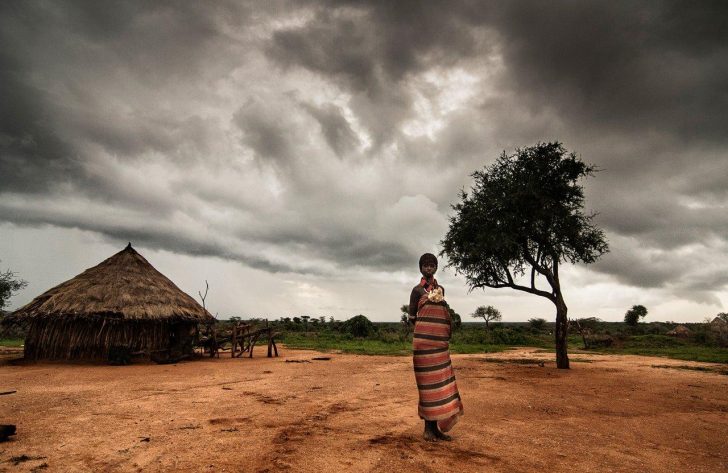
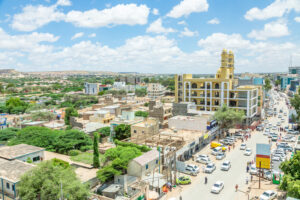
Hi, Can you please post a recent photo of the booming capital Addis Ababa instead of some random, isolated village? Thanks
Would go back in a heartbeat
We had a tour package for Ethiopia so everything was arranged and already established. We didn’t witness any unpleasant accidents for the whole seven days we stayed there. The villages visited were mainly untouched ones, with very little signs of civilization. It’s such an amazingly beautiful country with proud and hardworking people.
Some areas are quite safe
No matter where I’m traveling I do my best to maintain at least the same level of awareness as I do back home. I can’t understand those people who walk around with a camera in their hands totally unaware of their surroundings.
Addis Ababa along with other bigger cities are generally safe, as long as you don’t get off the beaten path. Still, petty theft and mugging are a frequent ingredient from all the warnings I kept getting but lucky for me, I didn’t experience either of these.
This would be a destination perfect for solo traveling or a couple’s trip. I don’t think families with small kids would have enough activities to keep them entertained plus there’s the safety issue involved.
If you’re the loner type I am sorry to disappoint you but you will be approached quite a lot by various individuals offering to carry your bag, change currency, offer directions, sell you all kinds of trinkets, the list is endless. Say no, no matter how tempted you might be.
One of the things that impressed me most is their airline, Ethiopian Airlines, they were extremely professional and they always seem to have great prices.
Their political system is somewhat challenged and there always seems to be some kind of civil unrest. Checking travel recommendations in your country is a must, you don’t want to end up in the middle of a huge conflict and be stranded for weeks.
I would think this is common sense but I saw so many travelers wearing expensive jewelry that I got to the conclusion that people don’t necessarily think of this: leave your jewelry at home, you are there to explore a new country, to learn about its history, not to flash your jewelry and potentially end up being robbed.
For me this was a great place to visit and had zero issues but this doesn’t mean I would rank it as safe.
Happy travels to Addis Ababa
Sun, June 12, 2022
I agree 💯 percent with the written article. Be especially careful of pick pockets and teenage boys, who might grab your arm to distract you wile the younger try to adventure into your pocket while concealing his hand under a old dirty magazine. Some thievery is comical! However, never flaunt nor leave your mobile phone openly or you’ll noticed that it has magically vanished. (the ole hand under the server tray trick 😜🖐️).
People who are offended by these warnings are the same people who are out to catch you off guard and steal from you, so don’t entertain them by replying to their comments.
I’ve lived in Ethiopia for 4 -1/2 years and know Bole, Hayahulet, Gerji, St. Gabriel, Ayat, Jemo, & Lebu areas very well. Lastly, be careful where you drink ☕ coffee. Never ever ever from any street vendors, nor small shops. I’m African American from Hawaii and my Ethiopian wife and children are habasha.
Not Safe
Ethiopia is not safe place today, we must work hard to make Ethiopia safe.
Reading about Ethiopia made me see how different travel there is compared to Europe or Asia. The emphasis on unpredictable unrest, tricky roads, and limited emergency service was sobering, and honestly helped me rethink when and where I’d plan to go.
So, are we just supposed to ignore the part where you might need a survival guide to navigate this “ancient and alive” wonderland?
The morning coffee and church incense in Lalibela made me tear up, that quiet at dawn is something I’ll never forget.
Around here the Lalibela churches really do feel like stepping into another era, but the frequent blackouts and random checkpoints made me keep one eye on safety instead of just soaking it all in.
Can’t believe how the Danakil heat makes the salt flats look like another planet and left me with a dry, metallic taste in my mouth for hours.
The feeling of standing among those ancient rock churches in Lalibela is something I can’t shake, like time just paused for a moment.
I’ve been there and while the history and landscapes really hit you, the spotty internet and sudden restrictions made it way harder to just enjoy or plan anything on the fly.
Sure, because who doesn’t want to plan a trip where you might have zero internet and some unexpected travel bans, all while sweating through one of the hottest places on Earth?