


 Slovakia : Safety by City
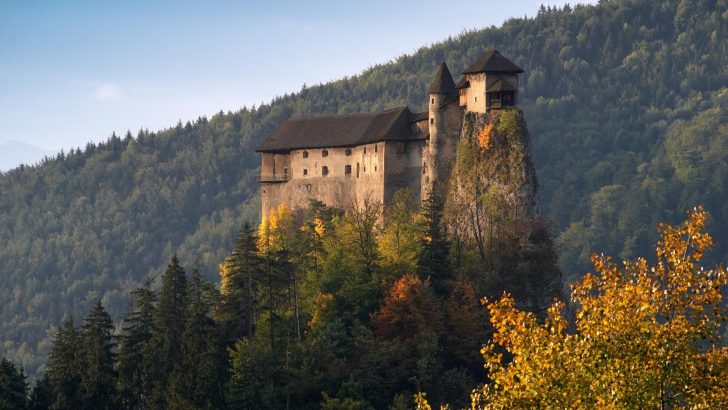
Slovakia feels like a fairy tale with mountains, castles, quiet towns, and deep forests.
Right in the middle of Europe, Slovakia borders Austria, Hungary, Poland, Ukraine, and the Czech Republic.
It’s easy to get to and even easier to overlook, which makes discovering it feel like you’re in on something others missed.
The High Tatras are the big-ticket draw, but dig deeper, and you’ll find Gothic cathedrals, underground ice caves, and wooden churches that have survived centuries without fanfare.
Medieval towns like Banská Štiavnica and Levoča look like film sets but are very much rooted in ancient history.
Slovakia’s been shaped by everyone but itself—Hungarians, Habsburgs, Soviets—but became its own country in 1993.
Since then, it’s been writing its own story, quietly. No drama, just progress.
Tourism is climbing back to pre-pandemic numbers, with nearly six million visitors in 2024.
They come for the hiking, the history, the wine, the wild landscapes, and they leave realizing this place is more than a stopover.
Warnings & Dangers in Slovakia

OVERALL RISK: LOW
Slovakia is a safe and stable country for tourists, with low crime rates and reliable infrastructure. Most visits are trouble-free, and violent crime is rare.

TRANSPORT & TAXIS RISK: LOW
Public transportation is efficient and safe. Buses and trains are the most common ways to get around. Taxis are generally safe, though it's better to use official apps or ask your hotel to call one. Some drivers near tourist areas might overcharge.

PICKPOCKETS RISK: MEDIUM
You won’t be constantly harassed, but pickpocketing does happen in crowded spots like train stations or city centers, especially in Bratislava. Treat this as a medium risk. Thieves sometimes work in groups or use distractions. Don't put it past them to use children in their petty crime.

NATURAL DISASTERS RISK: LOW
Slovakia doesn’t deal with major earthquakes or extreme weather. Flooding and landslides can happen in spring or after heavy rain in mountainous areas, but it’s nothing regular tourists need to stress about unless you’re heading deep into nature.

MUGGING RISK: LOW
Muggings are rare, especially in tourist areas. Solo travelers shouldn’t feel paranoid walking around cities, even after dark. That said, avoid obviously drunk crowds or deserted areas late at night, as you would anywhere.

TERRORISM RISK: LOW
Slovakia comes with the standard terrorism warnings you'd find in any average European country. While the risk is low, you shouldn't let your guard down.

SCAMS RISK: LOW
Most scams are low-level: inflated taxi fares, unofficial tour guides, or someone trying to sell you junk in a tourist zone. If it feels sketchy or too good to be true, trust your gut and walk away.

WOMEN TRAVELERS RISK: LOW
Slovakia is very safe for solo female travelers. Catcalling is rare, and harassment is uncommon. Stick to well-lit streets at night and watch your drinks like you would anywhere. Don't take food, drinks, gum, cigarettes, or anything else from strangers.

TAP WATER RISK: LOW
You can drink the tap water without a second thought. It’s clean, safe, and tastes good in most regions. No need to waste money on bottled water unless you're hiking and want to carry extra.
Safest Places to Visit in Slovakia
The official website for this region is slovakia.travel.
This site is supported by the Ministry of Tourism of the Slovak Republic and the European Union.
You’ll find plenty of helpful information under the Travel Essentials header, including mobile apps that help you experience the best of Slovakia.
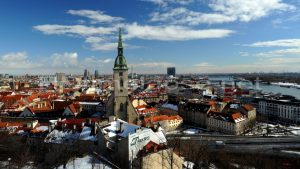
Its western region, home to the capital Bratislava, offers a mix of history and modern culture.
Bratislava Castle, Devin Castle ruins, and the Danubiana Meulensteen Art Museum are highlights.
Wine lovers should explore the Small Carpathian Wine Route.
Central Slovakia is rich in UNESCO sites and mountain terrain.
The medieval mining town of Banská Štiavnica is a standout, as is the wooden articular church in Hronsek.
The Low Tatras National Park is perfect for hiking, skiing, or just admiring alpine landscapes without the crowds you’ll find in the High Tatras.
Northern Slovakia features the High Tatras, a dramatic mountain range ideal for outdoor adventurers.
The region also includes the charming town of Levoča and nearby Spiš Castle—both UNESCO-listed.
If you’re into folk architecture, the open-air museum in Zuberec is worth a stop.
Slovakia’s “Wolf Mountains” refer to the Poloniny National Park in the far northeast, part of the Carpathians.
It’s one of the most remote and least disturbed ecosystems in Europe.
Eastern Slovakia sees fewer tourists but still offers key cultural stops.
Košice, the second-largest city, has a Gothic cathedral, a vibrant arts scene, and the nearby Slovak Paradise National Park.
Tokaj wine country is also in this region.
Southern Slovakia, along the Hungarian border, has thermal spas and castles, including the fairytale-like Bojnice Castle.
The “Dead Sea of Europe” is a nickname for the salt lake near Solivar.
It’s not an actual sea, but the high salinity and mineral content let you float effortlessly.
Places to Avoid in Slovakia
There aren’t any truly dangerous places in Slovakia, but like anywhere, use extra caution in crowded areas.
Tourist spots, train stations, and buses can attract pickpockets, some of whom work in teams or even use children as distractions.
Keep your wits about you, especially in Old Town Bratislava.
Also, don’t confuse Slovakia with Slovenia or the long-defunct Czechoslovakia.
Slovakia and the Czech Republic split peacefully in 1993.
Most high-altitude trails in the High Tatras shut down from November 1 to June 15.
Snow, ice, and avalanche risk make it dangerous.
Stick to lower trails or winter sports zones if you’re visiting during those months, and save the peaks for summer.
Trails like Rysy, Skalnaté Pleso, and Téryho chata get packed in July and August.
Weekdays are better, or head out early to beat the crowds.
Safety Tips for Traveling to Slovakia
- You can call the police or emergency services in Slovakia by dialing 112. It’s the general emergency number across Europe. If you specifically need the police, 158 also works. Response times in cities are decent, and most officers speak basic English.
- Slovakia doesn’t have a national English-language alert system. There’s no official app or SMS service for tourists, so you’ll need to rely on embassy social media pages or check local news with a translation tool. For weather updates or natural hazards, the Slovak Hydrometeorological Institute (SHMÚ) is your go-to site.
- The CDC doesn’t mandate vaccines for Slovakia, but if you’re hiking or camping, consider the tick-borne encephalitis (TBE) vaccine. European health agencies do recommend it for outdoor travelers staying a while. Bring bug spray and do tick checks if you’re heading into nature.
- You need a digital highway pass to drive on Slovak motorways. It’s called an e-vignette, and it replaced the old dashboard sticker. Buy one online or at most gas stations. You’ll also need an International Driving Permit if your license isn’t from the EU. Police do check, and fines are real.
- Snow makes winter driving a serious challenge. From November to March, rural and mountain roads can get messy. Snowplows don’t always keep up. You’re legally required to use winter tires when roads are snowy, and in some places, snow chains too.
- Slovak is the official language, and English isn’t guaranteed. You’ll get by in bigger towns or tourist spots, but don’t count on English signs or fluent staff in remote areas. Learn a few Slovak basics, download a translation app, and don’t assume everyone will understand you.
- Some nightclubs in Slovakia, particularly in tourist areas, have ties to organized crime. Scams include spiked drinks, fake charges, and pushing victims to empty their bank accounts. If something feels off, leave. Stick to well-reviewed places and never go alone.
- Slovakia has a strict zero percent blood alcohol limit for drivers. The police take it seriously, and jail time is possible. Even public intoxication and rowdy behavior after 10 pm can get you in trouble with the police.
- If you’re traveling with any kind of prescription drugs, you’ll need a doctor’s note and only what’s needed for your stay. Slovakia is strict on this, especially for anything considered a controlled substance. Check their Ministry of Health site before packing.
- You need to carry your passport with you at all times. Digital copies don’t count. If the police stop you and you can’t produce your ID, you can get fined or held up. It’s totally normal to be asked for your passport, especially in train stations or during traffic stops. Just keep it safe and handy.
So... How Safe Is Slovakia Really?
Slovakia is one of the safer places you can visit in Europe right now.
Most government advisories, including those from the U.S. and Canada, say the same thing: take normal precautions, nothing extreme.
The biggest risks are the usual travel nuisances, such as pickpockets on public transport, someone trying to scam you at a bar, or an inflated cab fare if you don’t use an official ride.
There’s no major civil unrest, and violent crime is rare.
Terrorist threats exist in theory, like most places in Europe, but there’s nothing active or alarming.
Protests happen now and then, but even those have been relatively peaceful.
The nightlife is fun; just stay smart about your drink and who you’re talking to.
Don’t take any food, drinks, or other consumables like gum or cigarettes from strangers.
The declaration of an emergency due to foot and mouth disease is not something that should worry tourists.
It’s a livestock issue, not a people issue.
That said, don’t touch or interact with livestock or other impacted animals, even if they are on a farm.
Nothing in the travel advisories or recent headlines should give you pause about visiting Slovakia.
How Does Slovakia Compare?
| Country | Safety Index |
|---|---|
| Slovakia | 80 |
 Greece Greece | 73 |
 Morocco Morocco | 54 |
 Central African Republic Central African Republic | 32 |
 Brazil Brazil | 52 |
 Solomon Islands Solomon Islands | 70 |
 Angola Angola | 48 |
 United States United States | 68 |
 San Marino San Marino | 86 |
Useful Information

Visas
If you're from the U.S., Canada, the EU, or most of Europe, you don’t need a visa for short stays in Slovakia. You get 90 days in a 180-day period as part of the Schengen zone. Just make sure your passport isn’t about to expire. You'll need a six-month buffer period before it expires to get in and out of Slovakia.

Currency
Slovakia uses the euro, so if you're hopping over from another EU country, you're already set. Credit cards are widely accepted, but it’s smart to have some cash for smaller towns, local buses, or a random mountain hut café. ATMs are everywhere, and the exchange rates are usually fair.

Weather
Slovakia has four real seasons, and they don’t mess around. Winters can be snowy and cold, great for skiing. Summers are warm but not too hot, perfect for hiking. Spring and fall bring fewer tourists and mild temperatures. Pack layers no matter when you go, especially if you're heading into the mountains.

Airports
Bratislava has the main international airport, but it’s small and not super busy. Many travelers fly into Vienna instead. It’s just an hour away by bus or train. Košice in the east has a smaller airport too, mainly for regional flights. Both are easy to navigate.

Travel Insurance
Healthcare in Slovakia is decent and affordable, but if something goes sideways, you'll want coverage for emergencies, cancellations, or lost gear. If you're skiing, hiking, or doing anything adventurous, make sure your policy covers that too. You might need to get an adventure insurance policy for that.
Slovakia Weather Averages (Temperatures)
Average High/Low Temperature
| Temperature / Month | Jan | Feb | Mar | Apr | May | Jun | Jul | Aug | Sep | Oct | Nov | Dec |
|---|---|---|---|---|---|---|---|---|---|---|---|---|
| High °C |
2 | 5 | 10 | 15 | 21 | 24 | 27 | 27 | 22 | 15 | 8 | 3 |
| Low °C |
-4 | -3 | 1 | 5 | 10 | 13 | 15 | 15 | 11 | 6 | 2 | -2 |
| High °F |
36 | 41 | 50 | 59 | 70 | 75 | 81 | 81 | 72 | 59 | 46 | 37 |
| Low °F |
25 | 27 | 34 | 41 | 50 | 55 | 59 | 59 | 52 | 43 | 36 | 28 |
Slovakia - Safety by City
| City | Safety Index |
|---|---|
| Bratislava | 75 |





I went to slovakia and it was much warmer than these stats show. Also be prepared for people to stare if your person of color. Im black and a friend that i met there told me that someone of color isnt something usual in their country. So they dont judge you bc of your color, theyre just interested. Also they really are a bit racist towards brown people, but with brown people in slovakia its reasonable. For exmple this homeless brown lady stole my money. Its was only 50 cents so i let it go but it for sure upset me. There was also this kid (he was brown too) and he just harrased us (he was like 10). So yeah, 4/5
.
As stated before by other user – Stated Temperatures in summer months are far from the truth as they are average. In summer you can expect temperatures around 30-35 and sometimes it can get close to 40. Slovakia is not racist against people of color from other countries but they are definitely racist to one of their own minority.
If you visiting capital city, I would definitely recommend old town or restaurant in their UFO restaurant on Novy Most (New Bridge). Hight Tatras are beautiful no matter what time a year you visiting. I would also recommend Tomasovsky Vyhlad (Tomasovsky View) if you are on East side of Slovakia.
Will visit again in future
I spent 11 years in Sk living in BA..Was attacked twice by Skinhead types..both times in BA…Was all over the country many many times..and met wonderful people…some are still my best friends today albeit from afar..Try Fried cheese or chicken pr pork fried…and Briza Cheese..dishes..And a large population of beautiful girls and women live in SK..I actually married one and have been for 30 years..
Slovakia is great
I was born in Slovakia and lived here my entire life. I have a wife and 2 kids and we all live in my hometown of Brezno. very safe to live here, quiet and happy.
The best advice I can give for anyone coming to Slovakia is to pack warm clothes, in January it can be as cold as -3 celsius.
You have one thing wrong Czechia has much more pickpockets than Slovakia. And scammers as Czechia has much more tourists. But I think you’ll get beaten up more easily in Slovakia than in Czechia but the percentage is still low.
Great little gem of a country
Love Slovakia. I’m Canadian, but my parents are immigrants from Slovakia so our whole extended fam lives there and we would visit frequently. I now bring my Canadian husband and children there. Cities are safe (relatively), just be aware of pick pockets and distractions created by teams of pick pockets (example: woman trips and pretends to twist ankle. Her child cries and is in distress. While you are helping her and comforting child, your valuables get snatched). They will target tourists specifically for this bc locals are wise to it. But other than that there is nothing I would be afraid of. I mean…don’t go walking around in sketchy areas late at night, but the same applies for anywhere right?
Great night life, shopping, entertainment, but also nature/hiking etc.
Summers can get blistering dry hot – I’m talking up to 40, so get ready to feel the heat.
The racism that people are mentioning towards brown people are not particularly indicating all brown people as a rule. They’re biased against the Roma people, or “Cigani – Gypsies” as they call them. I’m not condoning this, just trying to explain the POV. Many locals are infuriated at the tax payer money that gets funneled into programs and welfare for those who are a marginalized minority. But those resources often times get squandered/misused & the majority of groups pick pocketing are still Roma. So it’s just a vicious cycle.
Slovakia looks like the kind of place I’d actually enjoy from castles to mountain hikes. The tips about local transport and safety made me feel more confident about planning a solo trip there someday.
Is it just me, or does it sound like Slovakia is the secret club that everyone’s finally starting to find the door to? I mean, who knew the place had so much going on beyond the High Tatras?
I get that Slovakia has this fairy tale vibe with the gorgeous mountains and all, but sometimes I wonder if it really gets the recognition it deserves, like that hidden gem you stumble upon but never want to share with others.
Stumbled into a tiny village near the High Tatras and the smell of wood smoke and fresh bread made me feel like I’d stepped into another century.
Does a short hike in the High Tatras, with that sharp pine smell and cold wind on your face, make anyone else just stop and grin?
Back from a foggy morning hike in the High Tatras with muddy boots and a grin, I still get that giddy feeling of having a secret spot most people miss.
Around here you can still stumble into a wooden church and feel that cool hush of centuries, which makes me wonder what those nearly six million visitors in 2024 actually noticed.
Have you ever wandered into Banská Štiavnica at dusk and felt the cobbles still warm under your shoes while the town hushes like it’s holding a secret?
Around here I still get that giddy feeling when the High Tatras peek through morning mist and the smell of pines hits you like a tiny surprise.
There’s something about wandering those quiet streets and catching that crisp mountain air that really stays with you longer than most trips.
Never thought I’d stumble into a town that feels like stepping back in time without even trying, and the quiet just made the whole visit way more relaxing than I expected.