


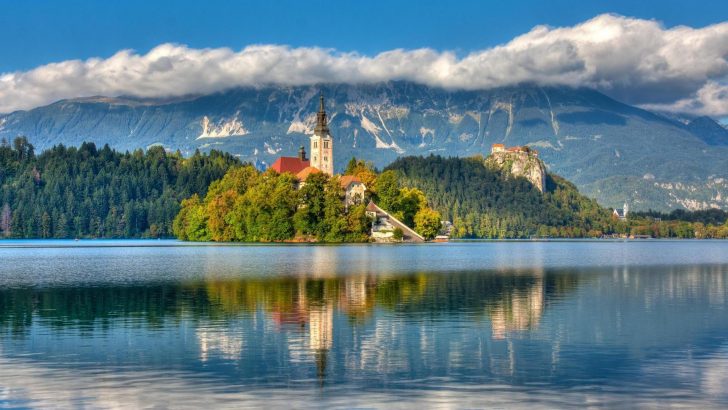
Slovenia manages to pack the Alps, vineyards, caves, forests, and a sliver of Adriatic coastline into a country roughly the size of New Jersey.
It sits at the crossroads of Central Europe, bordered by Italy, Austria, Hungary, and Croatia, and that location shapes everything from the food to the architecture.
Slovenia’s history reads like a highlight reel of European power shifts.
Roman roots gave way to centuries under the Habsburg Empire, followed by inclusion in Yugoslavia after World War I.
In 1991, Slovenia quietly and efficiently became the first republic to leave Yugoslavia, emerging as an independent nation with remarkably little turmoil.
That calm, practical streak still defines the country.
Tourism hit record levels in 2025, with more than seven million visitors.
Many arrived from neighboring countries, but Slovenia now pulls travelers from much farther afield.
The appeal is not flashy landmarks or mega resorts.
It is the emphasis on sustainability, green cities, alpine access, thermal spas, and outdoor experiences that feel curated without being overproduced.
Ljubljana regularly ranks among Europe’s greenest capitals.
Alpine Slovenia draws hikers and skiers.
The Karst delivers caves that look unreal.
If you are looking for a neat label, Slovenia will disappoint you.
Locals rarely embrace being called Balkan or Eastern European, and even “Central Europe” can feel too narrow.
Centuries of Alpine, Mediterranean, and Western European influence shaped a country that does not fit stereotypes.
Warnings & Dangers in Slovenia

OVERALL RISK: LOW
Slovenia comes with a low risk and a burgeoning tourism industry. All the while, the growth of tourism isn't cutting into the beauty or sustainability of this country.

TRANSPORT & TAXIS RISK: LOW
This is another low risk. Renting a car is easy; just be sure to get the third-party liability insurance. Also, check how to navigate the toll roads. Trains and buses between cities and around the country make travel easy. Taxis are also safe and abundant.

PICKPOCKETS RISK: LOW
This is a low risk, but use standard precautions in busy tourist areas. The risk is more about letting your guard down than being imminent. Also, don't leave items in plain sight in a rental car. Always lock your bike when parked, too.

NATURAL DISASTERS RISK: LOW
Slovenia faces relatively low natural disaster risk, but its varied terrain creates different regional concerns. Alpine areas see sudden storms, avalanches, and rockfalls. River valleys can flood after heavy rain, while karst regions experience sinkholes. Understanding regional risks matters when mountains, caves, and coastlines all sit within one country.

MUGGING RISK: LOW
This is another low risk, with violent crime being quite rare in Slovenia. It's more likely that your lodging will be subject to a burglary if you leave valuables out or doors unlocked. Common sense goes a long way here.

TERRORISM RISK: LOW
Aside from the standard "terrorism can happen anywhere at anytime," the risk is low. As with any European country, use vigilance and report suspicious activity.

SCAMS RISK: LOW
Slovenia has a low scam risk compared to much of Europe, but a few situations deserve caution. Inflated bar bills at certain nightlife venues, especially so-called gentlemen’s clubs, are the most common complaint. Occasional overcharging by unofficial taxis and fake parking “helpers” happens in busy areas. Stick to licensed services and clear pricing.

WOMEN TRAVELERS RISK: LOW
Slovenia is considered very safe for women travelers, including those traveling solo. Violent crime is rare, and harassment levels are low compared to many European destinations. Normal precautions still apply at night and around nightlife districts. Trust your instincts, watch drinks in bars, and use licensed taxis to keep risk minimal.

TAP WATER RISK: LOW
Slovenia has some of the safest tap water in Europe, and it is drinkable nationwide. Mountain spring systems supply much of the country, including major cities. In rural areas and older buildings, plumbing may affect taste but not safety. Bottled water is optional, not necessary, unless a local advisory is posted.
Safest Places to Visit in Slovenia
The Slovenia Tourist Board runs the official travel website slovenia.info.
Use the “Plan Your Trip” header to get updated practical information.
To help you plan your Slovenia itinerary, we’ll break down the top places to see and things to buy by region as the Slovenia Tourist Board does.
- Alpine Slovenia
Alpine Slovenia is where the country shows off.
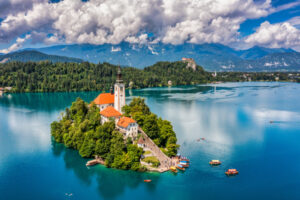
Lake Bled delivers the famous island church moment, while nearby Lake Bohinj feels wilder and less choreographed.
Triglav National Park anchors the region with serious hiking, alpine lakes, and Julian Alps views that feel almost excessive.
Kranjska Gora adds ski-town energy year-round, even if you never touch snow.
- Ljubljana and Central Slovenia
Ljubljana keeps things easy and walkable.
The riverfront is lined with cafés, the castle watches over everything, and the vibe stays relaxed even in peak season.
Central Slovenia also includes places like Kamnik and Velika Planina, where herdsmen’s huts and high meadows give a quick escape into traditional mountain life without going fully remote.
- Thermal Pannonian Slovenia
Eastern Slovenia feels quieter and proudly local.
Maribor is home to the World’s Oldest Vine, officially over 400 years old and still producing grapes.
Ptuj adds medieval streets and a hilltop castle, while spa towns like Moravske Toplice lean into thermal pools and wellness culture.
Vineyards stretch across soft hills, making this a food and wine sweet spot.
- Mediterranean and Karst Slovenia
The Karst region brings caves like Postojna and Škocjan, where underground rivers carve out massive chambers.
Above ground, wine cellars hide in limestone villages.
Along the coast, Piran delivers Venetian architecture, salt pans, and Adriatic sunsets.
It is compact seaside charm, not resort overload, which fits Slovenia’s overall personality perfectly.
Places to Avoid in Slovenia
There is no real “avoid this place” list for Slovenia.
Government advisories consistently rate it low risk.
That said, a few situational and seasonal hazards are worth knowing so you do not get caught off guard.
Mountain areas in Alpine Slovenia demand respect.
The weather can flip fast in the Julian Alps, even in summer.
Afternoon storms, fog, and sudden temperature drops catch unprepared hikers every year.
Winter brings real driving challenges.
Snow and ice affect alpine passes and secondary roads, and tire rules are enforced.
Rental cars usually comply, but do not assume.
Check conditions before heading to higher elevations.
Flooding can happen after heavy rain, especially in river valleys and karst regions where water moves unpredictably underground.
This is more common in late spring and fall.
It is usually localized, but road closures can disrupt plans.
Along the short Adriatic coast, summer crowds can strain parking and narrow streets, particularly in Piran.
It is not unsafe, just chaotic.
Safety Tips for Traveling to Slovenia
- Police services in Slovenia are professional and generally responsive. For any emergency, dial 112. That connects you to medical, fire, or police help nationwide. Operators usually speak English, especially in cities and tourist areas.
- Slovenia uses a national emergency alert system that sends warnings by text message to mobile phones connected to local networks. Alerts cover floods, severe storms, fires, and major incidents. You do not need to sign up if your phone has roaming enabled.
- Foreign nationals can drive with a valid home country license. An International Driving Permit is recommended, especially if your license is not in English. Road rules are strictly enforced, including speed limits. For real-time road conditions in English, check the Automobile Association of Slovenia or the Traffic Information Center for Public Roads, or call 01 530 5300.
- Slovenia requires a highway vignette for passenger vehicles and motorcycles using highways. This toll system works through a sticker or electronic version tied to your vehicle. Driving without one leads to steep fines and catches many visitors off guard. You can buy vignettes at major gas stations in Slovenia or online before driving on highways.
- No special vaccinations are required to enter Slovenia. Routine travel vaccines should be up to date. If you plan to hike, camp, or spend time in forested areas, tick-borne encephalitis vaccination is often recommended, as ticks are common.
- Slovenian is the official language, but English is widely spoken, especially by younger residents and anyone working in tourism. You will have little trouble communicating in hotels, restaurants, transit hubs, and tour companies. In rural areas, English may be more limited, though people are usually patient and willing to help with basic communication.
- Exercise caution at so-called gentlemen’s clubs, particularly in city centers. Some establishments have a history of presenting foreign visitors with inflated bar bills and using intimidation when customers refuse to pay. These situations can escalate quickly. If prices are unclear or staff pressure you to enter, trust your instincts and leave before ordering anything.
- Public demonstrations happen occasionally, most often in central Ljubljana near Congress Square and government buildings. While many are peaceful, crowds can become confrontational without much warning. Some protests have included anti-U.S. sentiment. Avoid demonstrations entirely, follow police instructions, and reroute if you encounter large gatherings during your visit.
- Slovenia’s mountain huts are a big part of the hiking culture. They offer simple meals, shelter, and overnight beds in alpine areas. Some huts accept cards, but many are cash-only. Reservations are smart in peak season. Conditions can be rustic, but huts provide safety, local food, and a place to regroup during long hikes.
- Slovenian law allows store inspectors to ask for your receipt as you exit a business. If you cannot show it, you may be fined, even if you paid. This surprises many visitors. Keep receipts handy until you leave the store area, especially in larger shops and supermarkets where inspections are more common.
So... How Safe Is Slovenia Really?
When it comes to government safety ratings, Slovenia is about as safe as it gets.
The United States, Canada, and Australia list Slovenia at Level 1: Exercise Standard Precautions.
Level 1 is the lowest level on a four-tiered scale.
Crime rates are low across the board.
The tourism industry, from the coastline to the mountains, is relatively well-regulated.
We found out that 2025 was a record-breaking tourism year, with more than seven million tourists visiting.
Even with the growing tourism sector, leaders are still focused on sustainable growth and protecting the landscapes from mass tourism.
As MSc Maja Pak Olaj, Director of the Slovenian Tourist Board, stated, “We are entering 2026 with ambition, but also responsibility – with a clear focus on more demanding guests, dispersal of visitor flows, digital transformation and long-term resilience of the sector, in close cooperation with all tourism stakeholders in Slovenia.”
The Minister of the Economy, Tourism and Sport, Matjaž Han, punctuated that point, saying, “We are committed to advancing sustainable tourism, developing year-round offers and products that help distribute visitor flows more evenly.
Our vision is a form of tourism that is inclusive and respectful toward both our environment and our people.
We embrace technology – but never at the expense of human warmth, a handshake, or a kind word.”
Slovenia is not only safe to visit today, but the blueprint is in place to keep it that way for generations to come.
How Does Slovenia Compare?
| Country | Safety Index |
|---|---|
 Slovenia Slovenia | 87 |
 Italy Italy | 77 |
 Suriname Suriname | 62 |
 Equatorial Guinea Equatorial Guinea | 48 |
 Tonga Tonga | 70 |
 Syria Syria | 10 |
 Latvia Latvia | 80 |
 Tunisia Tunisia | 53 |
 Honduras Honduras | 49 |
Useful Information

Visas
If you hold a U.S., Canadian, UK, Australian, or most EU passport, visiting Slovenia is refreshingly easy. You can stay up to 90 days within the Schengen Area without a visa. Your passport needs to be valid for at least three months beyond departure, with space for stamps. Border checks are usually quick and low drama.

Currency
Slovenia uses the euro, which keeps money math simple if you are hopping around Europe. Credit cards are widely accepted in cities, hotels, and tourist areas. Small mountain towns and local markets still love cash. ATMs are common and reliable, and prices generally feel fair compared to Western Europe, especially for food and public transport.

Weather
Slovenia punches above its weight on climate variety. Summers are warm but not brutal, winters bring real snow in the Alps, and spring and fall feel made for hiking and café hopping. Coastal areas near the Adriatic stay milder. The weather can change quickly in the mountains. Pack layers.

Airports
Most international travelers arrive at Ljubljana Jože Pučnik Airport, about 25 minutes from the capital. It is small, efficient, and easy to navigate. There are also limited flights into Maribor and seasonal options near the coast. Many visitors mix air travel with trains or drives from Italy, Austria, or Croatia.

Travel Insurance
Travel insurance is not required, but it is a smart move. Healthcare is excellent, yet non-EU visitors pay out of pocket without coverage. Insurance also helps with trip delays, lost luggage, and adventure activities like skiing or canyoning. If you plan to explore the Alps or caves, look for an adventure insurance policy to cover higher-risk activities.
Slovenia Weather Averages (Temperatures)
Average High/Low Temperature
| Temperature / Month | Jan | Feb | Mar | Apr | May | Jun | Jul | Aug | Sep | Oct | Nov | Dec |
|---|---|---|---|---|---|---|---|---|---|---|---|---|
| High °C |
3 | 3 | 8 | 12 | 18 | 22 | 25 | 25 | 20 | 13 | 7 | 3 |
| Low °C |
-2 | -2 | 0 | 3 | 7 | 11 | 13 | 13 | 9 | 5 | 1 | -2 |
| High °F |
37 | 37 | 46 | 54 | 64 | 72 | 77 | 77 | 68 | 55 | 45 | 37 |
| Low °F |
28 | 28 | 32 | 37 | 45 | 52 | 55 | 55 | 48 | 41 | 34 | 28 |
Slovenia - Safety by City
| City | Safety Index |
|---|---|
| Lake Bled | 89 |
| Ljubljana | 77 |












Central europe, get your Geography right
Please note its CENTRAL not Eastern Europe and it is one of the safest countries in the world.
Exactly, not Eastern Europe, as it never was, not geographically seen, neither politically. All though the schooling and mainstream media system from the most Western countries are teaching and preaching, even in today’s time that Slovenia is a part of the Eastern Europe.
Exactly. Slovenia is Central Europe and also the 8th safest country in the world, according to the Global Peace Index 2019.
Its central-east Europe but crime is on the rise.
Very safe
I’ve been to Slovenia 12 times and haven’t witnessed any crime whatsoever. The people are really friendly and it is very safe.
Lol if anything’s a scam it’s this site. How can Slovenia be safest eastern europe country if its located in central Europe?
I'm a black from Nigeria, I'm a trailer driver love to Work in Slovenia
Is it safe for black’s
It`s safe, you shouldnt worry
Its safe, you shouldnt worry. You might get a few stares just because there arent that many black people in the entire region (Croatia, Slovenia, Serbia, Bosnia etc), but none of it is ill-intended.
Honestly i live there and people can be weirded out by people of the other race, because they dont live there, but someone wont call you a slur if you walk down the street. Its like most european countries.
Omg Is Safe
I will go there with me and my son
The fact that the kidnapping thing is on medium is just insane, like I’ve lived here my whole intire life and I’ve never heard of a person that was kidnapped, exept for it being on the news once, to be fair my grandmas house has been broken into once so i guess you can count that but other than that no one that i know has ever experienced crime ever which makes sence, since the whole country is bassicly alps and hills and fields… with mostly suburban towns in between so you know don’t worry for everyone that thinks you’ll get kidnapped.
Slovenia is not Eastern Europe. And it is not one of the safest countries in Eastern Europe, it is one of the most safe countries in the world.
Nice country, but keep up your guard
Been to Slovenia numerous times. It’s overall a very safe country and very beautiful aswell.
The only thing I have to say here is that we once had a very unpleasant experience with a cop, when I was driving on the highway with my mother (I’m a female and was only 19 years old at that time). He pulled us over and made up some traffic violation I did not commit. In the end he pushed my mom to pay him 500€!! to let us go. (Since I had forgotten my passport and had only my drivers license with me, he threatend to imprison me, if we didn’t pay – don’t know if that was just made up but it made us give him the money..)
I don’t know if this was just bad luck or if it happens regularly in Slovenia, but still be cautious and don’t allow policemen to mess with you in foreign countries..
In general this would not be true for Slovenia. Police is not corrupted, nor are they prone to overusing their power at any time in my opinion. A very very bad luck for you in this case, I would say.
well it is safe but stay out of celje people there are crazy and gangs and stuff i almost got beat up and i heard random gun shots
I went to Slovenia this November and I had a TERRIBLE experience. I have been scammed by official taxis from the airport, I paid 65€ from the airport to Ljubljana!!! and this should not exceed 25€. Also, the first night someone STOLE my wallet while I was walking in the city center, and the police told me that it’s happening a lot in crowded areas. I had a very unpleasant time there. I do not recommend traveling there…
Reading this felt like planning my own trip through Ljubljana and Alps with a cautious friend whispering tips. It honestly balanced how safe Slovenia feels overall with real-world reminders to watch for pickpockets, secure you car, and be aware in transit hubs, all things I’d actually thing about packing for. While it highlights low violent crime and friendly vibes, warnings about taxis and watching belongings made it feel practical and trustworthy.
Slovenia has this unique vibe where you can feel the mix of cultures and influences all around you, especially the way the nature just seamlessly blends with the cities. Exploring the caves was surreal; it’s hard to believe those formations are real and not some kind of art installation.
So was the independence party in 1991 just a quiet gathering with coffee and pastries or what?
Slovenia really surprised me with how seamlessly it blends such diverse landscapes and cultures in such a small space; exploring those hidden caves was like stepping into another world.
It’s nice to hear all this praise, but I wonder if it really lives up to the hype when you visit.
There’s something magical about how Slovenia feels both familiar and completely unique at the same time.
Walking through Ljubljana’s parks at dusk after a day in the Karst caves made me oddly choked up at how quietly beautiful and practical everything feels.
Around here the cool cave air in the Karst actually calms you down faster than a thermal spa, and it still surprises me how few people notice it on weekdays.
Seven million visitors in 2025 is a lot, but after spending a day in the Karst caves I honestly thought the green-city hype was a little overblown.
Hiking in the Alps, wandering the vineyards until my legs ached, and then soaking in a thermal spa left me oddly peaceful, and Ljubljana’s green streets actually make the whole place feel gentle.
Been there, the Alps are stunning and the thermal spas actually work, but wandering Ljubljana’s green streets knowing Slovenia drew more than seven million visitors in 2025 made me feel oddly proud and a bit crowded.
Did you find the mix of Mediterranean and Alpine flavors in the food as refreshing as I did while wandering through Ljubljana’s markets?
I’ve been there and while the nature is stunning, sometimes the crowds in hotspots like Ljubljana make it hard to enjoy that “green” vibe they talk about.