


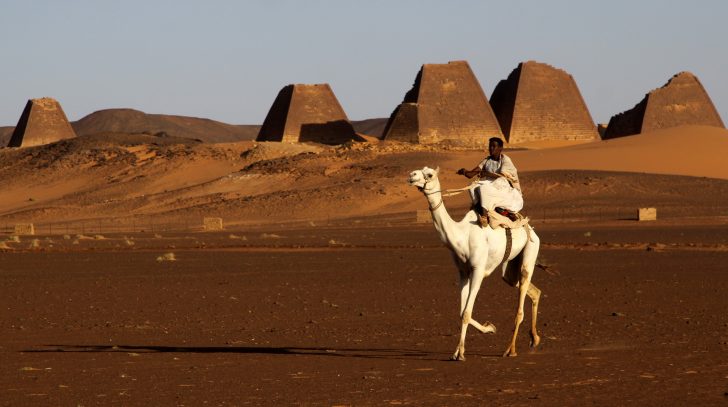
Sudan, once Africa’s largest country before South Sudan split in 2011, sits at a crossroads between North and sub-Saharan Africa, bordered by seven nations and the Red Sea.
Its history is as deep as the Nile, with ancient kingdoms like Kush leaving pyramids and temples still standing today.
Yet its modern era has been dominated by political turmoil, military coups, and civil wars.
The 2011 secession of South Sudan ended decades of conflict but left unresolved border disputes, resource battles, and ethnic tensions.
In April 2023, a brutal power struggle erupted between the Sudanese Armed Forces and the Rapid Support Forces, devastating cities and forcing millions to flee.
Armed groups, intercommunal violence, and economic collapse have created one of the world’s worst humanitarian crises.
Tourism, once a small but growing sector fueled by Sudan’s archaeological treasures and Red Sea diving, has nearly vanished.
International arrivals are scarce, not because Sudan lacks attractions, but because conflict has made travel unsafe for both foreigners and locals.
Even Sudanese citizens face displacement, food shortages, and danger in their communities.
Until stability returns, Sudan’s beauty remains largely unseen, overshadowed by the urgent fight for safety and survival.
Warnings & Dangers in Sudan

OVERALL RISK: HIGH
All risks in Susan are high. This country is extremely unsafe due to ongoing armed conflict, political instability, and widespread violence. Foreign governments advise against all travel. Dangers include active fighting, roadblocks, kidnappings, and severe limits on medical or consular help. Even areas that seem calm can become dangerous without warning, making tourism highly inadvisable.

TRANSPORT & TAXIS RISK: MEDIUM
Road travel is risky because of poor infrastructure, reckless driving, and armed checkpoints. Taxis are often unregulated, and vehicle conditions may be unsafe. Travel after dark increases the chance of accidents and security incidents. Domestic flights are limited, with unpredictable schedules and basic facilities.

PICKPOCKETS RISK: HIGH
Petty theft happens in markets, bus stations, and crowded areas, but the greater concern is violent crime. Foreigners may be targeted due to perceived wealth. Secure valuables, avoid displaying electronics or cash, and keep bags close in public spaces to reduce risk.

NATURAL DISASTERS RISK: MEDIUM
Flooding during the rainy season can block roads, damage infrastructure, and trigger outbreaks of waterborne disease. Sandstorms are common in dry months, reducing visibility and affecting travel. Rural areas may also hide landmines or unexploded ordnance from past conflicts, posing an added hazard.

MUGGING RISK: HIGH
Armed robberies occur in both urban and rural areas, sometimes during the day. Foreigners may be targeted, especially when traveling alone or at night. Criminals may use violence, and reporting incidents to the police often leads to little or no resolution.

TERRORISM RISK: HIGH
Armed groups operate in several regions, and terrorist attacks are possible in public spaces, government buildings, and transportation hubs. Political instability can create opportunities for extremist activity. Travelers can be caught in crossfire or targeted during coordinated assaults.

SCAMS RISK: MEDIUM
While large-scale scams are less common than violent crime, overcharging, fake permits, and currency exchange fraud do occur. Black market money changers may offer better rates but pose serious legal and safety risks. Always use reputable businesses and official channels.

WOMEN TRAVELERS RISK: MEDIUM
Women face harassment and cultural restrictions, particularly if traveling alone. Conservative dress is expected, and public spaces may be male-dominated. Legal protections are limited, and reporting harassment or assault may not result in justice. Using a trusted local guide can reduce exposure to risk.

TAP WATER RISK: HIGH
Tap water is unsafe to drink and can carry bacteria and parasites. Even locals often boil or filter their water. Stick to sealed bottled water for drinking and brushing teeth, and avoid ice in drinks to prevent illness.
Safest Places to Visit in Sudan
Sudan’s tourism industry is virtually nonexistent in an official capacity.
You won’t find a national tourism website, no centralized oversight, and almost no infrastructure geared toward visitors.
The sector is largely unregulated, and safety standards vary widely.
Those who do venture here almost always arrange their travel through specialized tour operators familiar with local conditions, security risks, and the permit system.
Independent travel is strongly discouraged, not only because of the ongoing conflict but also due to the complex web of permissions required for movement outside Khartoum.
While no part of Sudan can currently be considered safe, certain locations have historically drawn adventurous travelers.
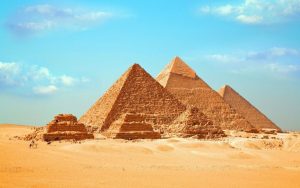
The ancient pyramids of Meroë, part of a UNESCO World Heritage Site, are among the country’s most famous landmarks.
Other archaeological treasures include the temples at Naga and Musawwarat es-Sufra.
In the east, the Red Sea coast once attracted divers to sites near Port Sudan, though instability has severely curtailed this.
The Nubian Desert offers striking landscapes and remnants of ancient civilizations, while the Nile itself provides both cultural and historical significance.
In the past, small-scale tourism focused on history, diving, and desert expeditions, but today, the realities of armed conflict, unpredictable security conditions, and limited consular assistance make even these trips high-risk.
For now, Sudan’s tourism potential remains overshadowed by the urgent need for safety and stability.
Places to Avoid in Sudan
Sudan as a whole is unsafe, but certain regions present distinct, severe risks.
The Darfur region remains volatile, with frequent clashes, militia violence, and banditry.
Southern Kordofan, Blue Nile, and Abyei see ongoing intercommunal conflict and armed group activity.
Eastern Sudan, especially Kassala, Gedaref, and Red Sea states, faces cross-border tensions with Ethiopia and Eritrea, human trafficking, and organized crime.
Borders with Chad, South Sudan, and the Central African Republic are dangerous due to armed groups and landmines.
Rural areas in these regions also contain unexploded ordnance, making off-road travel especially hazardous.
Safety Tips for Traveling to Sudan
- Sudan’s police operate under difficult conditions, and response times can be slow or nonexistent in conflict areas. You can call 999 for police, 777 for fire, and 998 for ambulance services, but language barriers and unreliable infrastructure mean help isn’t guaranteed. In many regions, outside assistance may never arrive.
- Travel outside greater Khartoum requires a Ministry of Tourism permit, usually arranged by a hotel or travel agent. A separate permit is needed for Darfur. Carry multiple copies, as being caught without documentation can result in detention. Consular help is very limited outside Khartoum.
- There is no reliable nationwide emergency alert system in Sudan, so most warnings come through local radio, word of mouth, or sporadic social media updates. If you must be in the country, arrange a trusted local contact to keep you informed, and follow your embassy’s social channels for security updates.
- Driving in Sudan requires an International Driving Permit along with a valid license from your home country. Road conditions are often poor, signage is minimal, and vehicles can be in bad shape. Driving at night is strongly discouraged due to both accident risks and security concerns.
- A yellow fever vaccination is mandatory if arriving from a country with a known transmission risk. Health authorities also recommend vaccines for hepatitis A and B, typhoid, meningitis, polio, and all routine shots. Malaria prevention is critical in many areas, so visit a travel clinic before departure.
- Arabic is the official language, and English is not widely spoken beyond some business and diplomatic settings. In rural areas, it can be impossible to find an English speaker. Hiring a trusted Arabic-speaking guide makes daily interactions and travel far easier.
- Protests in Sudan can turn violent without warning, even if they start peacefully. Security forces have used live ammunition, tear gas, and arbitrary detention on crowds. Foreigners can be caught in unrest simply by being nearby, so it’s safest to avoid all political gatherings.
- Carrying identification is essential, as police and military checkpoints are common. Keep your passport or a certified copy with visas and permits on hand. Failing to produce ID can lead to detention, so carry multiple copies and keep originals stored securely.
- Alcohol laws are inconsistently enforced and depend heavily on the situation. While it’s technically allowed for non-Muslims in certain private settings, public possession or consumption can cause serious legal trouble. Many travelers choose to avoid alcohol altogether to reduce risk.
- Homosexuality is not explicitly banned in Sudan, but sodomy is criminalized and can lead to prison sentences. While corporal and capital punishment for sodomy have been abolished, anti-LGB sentiment is common. There are no legal protections, so discretion is critical for LGB travelers.
So... How Safe Is Sudan Really?
The U.S., U.K., and Canada all have Sudan at their highest travel warning — Level 4, Do Not Travel. And they mean it.
This isn’t just “be careful” territory; it’s active conflict, armed groups, and unpredictable violence.
Fighting between military factions has turned cities like Khartoum into danger zones, with shelling, looting, and kidnappings happening alongside day-to-day life.
Roadblocks and checkpoints can pop up without warning, often run by armed groups.
Internet, electricity, and medical care are spotty at best.
Even if a place seems quiet when you arrive, things can shift quickly.
Foreigners have been targeted for ransom or propaganda, and evacuation is complicated and expensive.
Protests can quickly get out of control and leave you in danger or facing military officials with tear gas and weapons.
If you’re thinking tourism, this isn’t the time or place.
Unless you have a critical reason to be in Sudan and serious security arrangements in place, you’re better off staying out and staying safe.
As a final warning, there’s also a good chance that your government will have no ability to help you if you get stuck there or taken hostage.
If there’s any silver lining to be found, Khartoum International Airport is expected to open in October 2025.
If you’re reading this article after that date, please check the latest government advisories to see how tourism is progressing.
The risk levels could change at any time, but it’s also going to be a few years before it’s even thinkable that this is a safe and secure place to visit.
How Does Sudan Compare?
| Country | Safety Index |
|---|---|
 Sudan Sudan | 25 |
 South Africa South Africa | 48 |
 Cyprus Cyprus | 75 |
 Grenada Grenada | 80 |
 China China | 66 |
 Kazakhstan Kazakhstan | 72 |
 Philippines Philippines | 47 |
 Cameroon Cameroon | 36 |
 Mozambique Mozambique | 46 |
Useful Information

Visas
Most travelers need a visa to enter Sudan, and the process can be slow and bureaucratic. Applications often require security approval, detailed itineraries, and local sponsorship. Some countries have no Sudanese embassy, meaning you may need to apply in a neighboring country. Without a visa, entry is not possible.

Currency
Sudan uses the Sudanese pound (SDG), and cash is essential. ATMs are rare, often empty, and foreign cards rarely work. The exchange rate can differ dramatically between official banks and the black market.

Weather
Sudan’s climate ranges from scorching desert heat in the north to seasonal rains in the south. Summer temperatures often exceed 110°F (43°C), making outdoor activity difficult. Flooding during the rainy season can wash out roads and disrupt travel. Sandstorms are also common, affecting visibility and transportation.

Airports
Khartoum International Airport is the primary gateway, but it is small and can be chaotic. Flight schedules are frequently disrupted due to security issues or infrastructure problems. Facilities are basic, and security checks are strict. Regional airports exist but have limited services and inconsistent operations.

Travel Insurance
Comprehensive travel insurance is essential and should include medical evacuation, given Sudan’s limited healthcare infrastructure. Many providers exclude coverage for countries with active conflict. You'll have a hard time finding any carrier that will insure this trip.
Sudan Weather Averages (Temperatures)
Average High/Low Temperature
| Temperature / Month | Jan | Feb | Mar | Apr | May | Jun | Jul | Aug | Sep | Oct | Nov | Dec |
|---|---|---|---|---|---|---|---|---|---|---|---|---|
| High °C |
32 | 33 | 37 | 41 | 43 | 42 | 40 | 37 | 39 | 40 | 36 | 33 |
| Low °C |
16 | 16 | 20 | 24 | 27 | 28 | 26 | 25 | 26 | 26 | 22 | 18 |
| High °F |
90 | 91 | 99 | 106 | 109 | 108 | 104 | 99 | 102 | 104 | 97 | 91 |
| Low °F |
61 | 61 | 68 | 75 | 81 | 82 | 79 | 77 | 79 | 79 | 72 | 64 |









As the corrupt government has been terminated, most of the dangerous things you have mentioned would be from the past .
My advice if you would like to travel to Sudan, you should know a Sudanese citizen there to guide you. As you mentioned Sudanese people are extremely friendly and this the thing you should not miss when you go there
Sudan Is Not Safe
If You’re Going To Sudan Be Safe
I think this is outdated information because sudan is far different after the the great sudanese revolution.
hey! are you from sudan
It’s not safe
A hidden gem
Definitely worth visiting , great country great people but, you do need to take precautions , the east coast , river nile, khartoum, The pyramids and nobian mountains are among the best attractions specially the capital and portsudan , Life there is cheap and fun , 5 dollars a day can do wonders, people in Sudan are generally very kind , outgoing and humourous, seriously the like to laugh like I’ve never seen before and they give foreigners a lot of attention as well so , get ready for some invites for anything from drinks , dinners, football games ,wild hunting, parties, to even room accommodations so ya, I had a plast over there and if you ever go I hope you do too
Most hospitable people in Africa!
Who on earth wrote this rubbish article. I have been to Sudan many times, including the outlying regional areas (Kassalla, South Kordofan etc) and not even ONCE did I feel it was unsafe. The Sudanese are the most hospitable people i have EVER met and I have travelled all over the world, including many countries in Africa. Walking around Khartoum the only ‘mugging’ you will experience is people inviting you into their homes for tea or cold drink. And al of this was true even BEFORE the revolution.
yeah
the electricity there is very cheap so I might be exploiting that for profit
I have spent over 5 months in Khartoum and think it is a very welcoming country. Very poor but kind people.
Nice people.
Very friendly people. I have been here for more than 5 months (2021-22) and have had no issues. People are poor but friendly with foreigners.
Sudan have the most kindest and friendly people I’ve seen I stayed there 3 years and I really liked the ppl but their new government isn’t good at all the last government was good but idk why Sudanese ppl didn’t like them but I guess for a reason overall ppl there r so friendly and nice 😊
Terrible place; very hostile environment
war
There is an active large-scale war happening in the country. The capital has been a battlefield for more than 100 days now and there are deadly skirmishes happening in many other parts of the nation.
As of summer 2023, I do not recommend anybody to visit Sudan.
This was an eye opening reality check on Sudan beautiful history overshadowed by active conflict, civil unrest, and severe safety hazards. Detailed warnings about armed groups, kidnappings and minimal infrastructure really drove home why governments advice against all travel. It’s sobering rather than aspirational.
It’s wild to think that while the pyramids have stood for centuries, the people there can’t catch a break long enough to appreciate them without worrying about their next meal.
It’s heartbreaking to think about all the history and beauty in Sudan that so many people will never get to experience because of the turmoil; it feels like such a loss for the world.
So, is it safe to assume that the pyramids won’t be on anyone’s travel itinerary anytime soon, or are we just supposed to ignore the fact that everything’s a disaster?
I keep smiling at the memory of Nile sunsets and pyramid silhouettes, but my chest kinda tightens thinking how quiet the Red Sea dive spots must be now.
The quiet pyramids at Meroe and the bright Red Sea dives are the things I keep thinking about, and it honestly breaks my heart that people can’t see them right now.
Everyone frets about borders and headlines but the ridiculous tiny tea glasses and the way the Nile smells at dusk still make me grin.
Does anyone else get a tight feeling thinking about the dusty Nubian pyramids and the Khartoum markets that used to be full of life?
I tried visiting the pyramids a few years back and yeah, the history is incredible, but honestly, the ongoing conflicts made it hard to relax and enjoy the place.
Funny how a place with pyramids older than some countries we hear about every day can be stuck in a cycle where even visiting feels like a distant dream.