


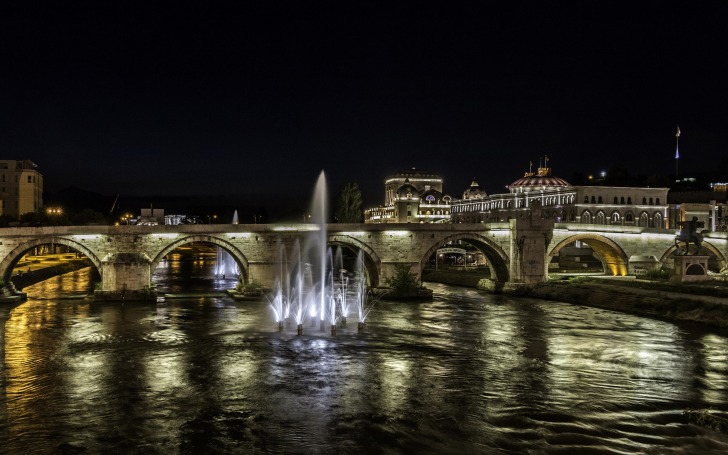
 North Macedonia : Safety by City
North Macedonia is home to one of Europe’s oldest lakes, Lake Ohrid, which is estimated to be more than one million years old and still crystal clear enough to swim in.
That alone hints at how much history and natural beauty are packed into a small country.
You will often hear it called Macedonia, and that is not entirely wrong.
The country officially became North Macedonia in 2019 to resolve a long-running name dispute with Greece, which has its own region called Macedonia.
Locally and casually, many people still say Macedonia.
In formal settings and on maps, North Macedonia is the correct name.
The region has been shaped by ancient kingdoms, Roman rule, Byzantine influence, and centuries under the Ottoman Empire.
After World War II, it became part of Yugoslavia and later gained independence in 1991.
That layered past shows up everywhere, from Roman ruins and Orthodox monasteries to mosques and old bazaars.
About 1.2 million people visit each year, mostly from nearby Balkan countries.
Those who come find lake towns, mountain parks, historic cities, wine regions, and traditions that feel deeply rooted but welcoming.
North Macedonia does not shout for attention, but once you notice it, the pull is real and hard to ignore.
Plus, you’ll be able to skip all those long touristy lines elsewhere in Europe during your visit.
Warnings & Dangers in North Macedonia

OVERALL RISK: LOW
There's a low risk in North Macedonia, and not a lot of crowded spaces you'll find elsewhere in Europe. Of course, that low risk comes with standard safety precautions.

TRANSPORT & TAXIS RISK: LOW
This is another low risk. Rental cars are an option if you have the right license, but be sure to adhere to the chain requirements for tires in winter. Public transportation isn't plentiful, but taxis are abundant. Just be sure you're using a verified company that has meters. Bring cash to pay for taxis.

PICKPOCKETS RISK: LOW
The risk here is low, but that is to say it's average for any destination. Crowded markets and tourist stops can be ripe for pickpockets if a crime of opportunity presents itself. Using standard safety precautions will go a long way.

NATURAL DISASTERS RISK: LOW
North Macedonia’s biggest natural disaster risks are flash floods, wildfires in dry months, and occasional earthquakes. Flooding can hit cities and river valleys after heavy rain. Summer heat makes wildfire danger real, especially in forests and hills. Earthquakes happen, but are usually of low magnitude. Nothing too concerning, so this is another low risk if you're paying attention to the weather forecasts.

MUGGING RISK: LOW
Violent crime generally isn't an issue in North Macedonia. Petty theft is the bigger concern. While there are organized crime syndicates, it's rare that a tourist would be exposed to that. Still, use standard precautions after dark and when traveling alone.

TERRORISM RISK: LOW
Most government advisories give the standard wording about terrorism being possible anywhere, but the risk is low here. There isn't a recent history of terrorist attacks, but bomb threats have been reported in recent years. The risk is low, but vigilance is always helpful.

SCAMS RISK: LOW
After reviewing all of the advisories, it seems the scams aren't all that common. One thing to be aware of is that thieves might use children as a distraction to steal from you or manipulate you.

WOMEN TRAVELERS RISK: LOW
Women face the same low risk as anyone else. Proper precautions should be taken when traveling solo, and you can always go with a registered tour guide to help increase your safety.

TAP WATER RISK: MEDIUM
You'll be safe drinking the water in Skopje, but outside the capital city, treat this as a medium risk and use bottled water. Even ice cubes should be assumed to be made out of tap water.
Safest Places to Visit in North Macedonia
The Agency for Promotion and Support of Tourism in North Macedonia runs the website tourismmacedonia.gov.mk.
That’s a great place to start to get tourism information.
For more activity-focused content, head to Macedoniatourism.com.
It’s also an easier website to translate into any language compared to the government site.
North Macedonia packs a lot of options into the country, so use that tourism website to get a deeper dive into each region and adventure path.
We’ll go through a quick overview here of the top activities and places to visit.
Skopje is the obvious starting point, mixing Ottoman-era architecture, modern museums, and the Old Bazaar, which is still very much alive.
Matka Canyon sits just outside the capital and offers hiking, kayaking, cave tours, and boat rides.
Lake Ohrid is the headline destination, known for its old town, historic churches, lakeside walks, swimming spots, and relaxed café scene.
Ohrid town pairs well with visits to Saint Naum, lakeside monasteries, and nearby beaches.
Bitola offers a more laid-back city feel with a long pedestrian street, Roman ruins at Heraclea Lyncestis, and access to Pelister National Park.
Pelister is popular for hiking, wildlife spotting, and alpine scenery.
Mavrovo National Park is the country’s outdoor playground, known for mountain views, winter skiing, summer hiking, and rural villages.
Krusevo sits high in the mountains and is tied to national history, paragliding, and scenic viewpoints.
Wine lovers often head to the Tikveš region for tastings, vineyard tours, and traditional food.
Across the country, you will also find thermal spas, small villages, local markets, mosques, monasteries, and archaeological sites.
Places to Avoid in North Macedonia
Recent travel advisories note that northern North Macedonia can see occasional ethnic and political tensions, mainly near the border with Kosovo and parts of southern Serbia.
This area sits north of Skopje and includes key road routes and border crossings.
The tension stems from long-standing ethnic Macedonian and ethnic Albanian issues, plus spillover concerns when regional politics heat up.
For travelers, this is more about awareness than alarm.
The overall risk level for North Macedonia has not increased, and most visits are trouble-free.
Issues tend to be localized and short-lived, not aimed at tourists.
What you may notice instead is a heavier police presence, protests you should avoid, or slower border processing.
Border crossings with Kosovo and Serbia are the most likely places for delays if tensions rise.
Build extra time into travel days, monitor local news, and avoid demonstrations.
It is a heads-up, not a red flag.
Safety Tips for Traveling to North Macedonia
- North Macedonia’s police are called the Ministry of Internal Affairs. For emergencies, dial 112, which works nationwide and connects you to police, fire, or medical services. Operators usually speak Macedonian, but English is often available, especially in larger cities. Response times are generally solid in urban areas and slower in rural or mountainous regions.
- There is no centralized tourist alert app, so travelers should rely on multiple sources. Enable emergency alerts on your phone, follow local news outlets, and check updates from your embassy. Weather-related events like floods or wildfires are usually reported quickly. Hotels and tour operators are also good sources for real-time local updates.
- Foreign visitors can drive using their home country license for short stays, but an International Driving Permit is strongly recommended. Police may ask for it during traffic stops. Check the latest rules before your trip. Carry your passport, vehicle registration, and insurance at all times. Roads range from modern highways to rough mountain routes, so defensive driving is smart.
- There are no mandatory vaccines for entry into North Macedonia. Routine vaccines should be up-to-date, including measles and tetanus. Some travelers choose hepatitis A coverage, especially if visiting rural areas or eating outside major cities. Tick-borne illnesses exist in warmer months, so use insect repellent when hiking or spending time outdoors.
- Macedonian is the official language, written in Cyrillic. Albanian is also widely spoken in parts of the country. English is common among younger people, tourism workers, and in Skopje and Ohrid. In rural areas, English may be limited, so translation apps can be surprisingly useful and appreciated.
- Much of North Macedonia is mountainous, with elevations that can exceed 8,000 feet. Altitude issues are usually mild but can affect some travelers. Drink water, pace yourself, and avoid heavy exertion on your first day. The weather can change fast at elevation, so bring layers even if the cities feel warm.
- Air pollution can be a real issue, especially in winter. Skopje and some valley cities experience poor air quality due to traffic, heating emissions, and geography. Risk is highest from November through February. On bad air days, limit outdoor activity, keep windows closed, and consider a mask if you have asthma or respiratory concerns.
- Same-sex relationships are legal, but social attitudes remain conservative. Same-sex marriage is not recognized, and openly gay friendly venues are limited. Reports of homophobic and transphobic language and occasional violence exist. Travelers should be cautious about public displays of affection.
- North Macedonia has strict rules about exporting antiques and culturally significant objects. Removing items like old coins, artifacts, or religious pieces without a permit can lead to serious penalties. If you plan to buy antiques or collectible items, confirm they have proper export documentation. Customs enforcement is real and not something to test.
- North Macedonia has strict rules about exporting antiques and culturally significant objects. Removing items like old coins, artifacts, or religious pieces without a permit can lead to serious penalties. If you plan to buy antiques or collectible items, confirm they have proper export documentation. Customs enforcement is real and not something to test.
So... How Safe Is North Macedonia Really?
Most countries rank travel advisories on a four-tiered scale, with one being the lowest and four being the highest.
North Macedonia gets the Level 1: Exercise Normal Precautions across the board.
That includes the United States, Australia, and Canada.
While there is an underbelly of organized crime and corruption across the Balkans, the biggest risks are the common types you’d face in any country, such as petty theft and crimes of opportunity.
While a low risk is always a positive sign, it’s still important to read the full travel advisories.
That’s because a low risk doesn’t mean no risk or that you can let your guard down.
The mountainous region can also bring weather risks, from rapidly deteriorating conditions on a hike to fog causing travel delays.
The benefits of visiting North Macedonia appear to outweigh the few risks that exist.
It’s a less-traveled corner of Europe with stunning views in every direction.
How Does North Macedonia Compare?
| Country | Safety Index |
|---|---|
| North Macedonia | 55 |
 Honduras Honduras | 49 |
 Papua New Guinea Papua New Guinea | 47 |
 Libya Libya | 21 |
 Finland Finland | 86 |
 Chile Chile | 79 |
 Zimbabwe Zimbabwe | 53 |
 Bangladesh Bangladesh | 49 |
 French Polynesia French Polynesia | 92 |
Useful Information

Visas
North Macedonia allows visa-free entry for many travelers, including U.S., Canadian, UK, EU, Australian, and New Zealand passport holders. You can usually stay up to 90 days within a 180-day period. Your passport should be valid for at least three months beyond departure. Always double-check check rules if entering from another Balkan country.

Currency
The official currency is the Macedonian denar, abbreviated MKD. Euros are sometimes accepted in tourist areas, but do not count on it. Cash is widely used, especially outside Skopje. ATMs are common in cities and towns. Credit cards work at hotels and larger restaurants, less so in rural areas.

Weather
North Macedonia has hot, dry summers and cold winters, especially in the mountains. July and August can feel intense, with temperatures regularly above 90°F. Spring and fall are the sweet spots, offering warm days and cooler nights. Winters bring snow in higher elevations, which matters if you plan to drive.

Airports
Most travelers arrive via Skopje International Airport, the country’s main hub with connections across Europe. A smaller airport in Ohrid serves seasonal and limited international flights, mostly in summer. From Skopje, it is easy to rent a car or use buses to reach other parts of the country.

Travel Insurance
Travel insurance is not legally required, but it is strongly recommended. Medical care is available, yet private clinics often expect upfront payment. Insurance helps cover medical treatment, trip delays, lost luggage, and emergency evacuation. If you plan to hike, drive, or visit rural areas, insurance becomes even more important.
North Macedonia Weather Averages (Temperatures)
Average High/Low Temperature
| Temperature / Month | Jan | Feb | Mar | Apr | May | Jun | Jul | Aug | Sep | Oct | Nov | Dec |
|---|---|---|---|---|---|---|---|---|---|---|---|---|
| High °C |
3 | 6 | 11 | 16 | 21 | 25 | 27 | 28 | 24 | 17 | 10 | 5 |
| Low °C |
-2 | -1 | 2 | 6 | 11 | 14 | 18 | 19 | 14 | 8 | 4 | 1 |
| High °F |
37 | 43 | 52 | 61 | 70 | 77 | 81 | 82 | 75 | 63 | 50 | 41 |
| Low °F |
28 | 30 | 36 | 43 | 52 | 57 | 64 | 66 | 57 | 46 | 39 | 34 |
North Macedonia - Safety by City
| City | Safety Index |
|---|---|
| Skopje | 77 |
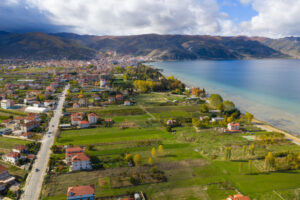
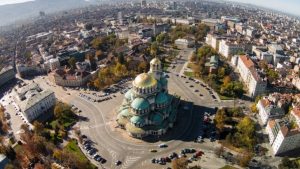












Much safer than 55
I don’t agree that Macedonia has high danger of natural disasters – not higher than any of the neighbouring countries for sure. The Mediterranean in general is an area prone to earthquakes and the flooding in 2016 is very exceptional (it only happened in 2016).
Taxi scams and pickpockets are also very limited (much less then in other tourist destinations). Avoid getting into “unofficial taxis” and you will be fine. Pickpocketing is present only around Skopje main square and old bazaar. The rest of the country is very safe (most people leave their mobile phones and wallets on the tables while having coffee outside and nothing ever happens).
So safe
Visited Macedonia and it is one of the safest countries I have ever been to with such friendly people highly recommend especially Ohrid lake.
The Republic of Macedonia- the pearl of the Balkans is one of the safest place I’ve ever been in my life and surely one of the safest countries in Europe. Safety index 55?!?! Highly disputable, I would say easily at least 85 as I don’t see any particular issue all over the country and especially in the capital Skopje.
Travel
Don’t go to Kosovo for a trip, return to Macedonia and then try to go to Serbia, as they often point blank just refuse entry if you have an illegal ‘Kosovo’ stamp in your passport.
Beautiful nature
I drove through Macedonia on my way from Greece to Hungary on a road trip with the family, and honestly and I was so surprised by how beautiful nature is there. Great views!
The name of the country is North Macedonia not Macedonia.
It’s Macedonia and always will be.
*Republic of Macedonia
Tell me you’re Greek without telling me you’re Greek
aa
All greeks are made from MACEDONIANS LOL
Our recent visit to Macedonia -June 2022
We had a great time in Macedonia. We chose it specifically because it wasnt a typical tourist trap although no doubt it is becoming one as more people start to discover it. Its people were extremely friendly and accommodating. Food and accommodation was less than 1/4 of the price in Australia eg we fed four of us on pizzas for around $6 Aus (warning their family size feeds around six people).
Accommodation is more than reasonable and we were never approached as tourists except when getting off the bus and people with lodgings would ask politely if we were interested in staying at their place.
Their ancient ruins were fantastic to visit with old Roman sites and churches.
In terms of safety, my wife and kids wondered around without me on numerous occasions and never felt threatened and never encountered would be ‘pickpocketers’.
Skopje and Lake Ohrid were my favorite but have been told that Bitola is another place that is also beautiful.
Overall, although we did bump into a number of tourists it is still alot better than a majority of the places we visited in Europe. Only advice is if you can, hire a car but a taxi is still quite cheap. And also avoid their hottest months as it can get to 40 degrees quite easily.
55 for Macedonia? More like 85
Macedonia is one of the safest countries in Europe. Because you don’t know how safe Yugoslavia is, you should know that the food is yummy, the people are awesome, and has a very nice government. He will always care for his people, no matter the consequences. I think Macedonia is safer than Croatia.
Fix visas, airport
(1) Please revise your section on visa. You should be sure your PASSPORT is valid for at least three months. (If you don’t know the difference between a passport and a visa, don’t write about travel.)
(2) As is the case in many countries, the Skopje airport at Petrovec is not close to the center of the city. It is about 20 miles from the center. There is a frequent bus to the center, at a cost of about three Euros per person, to the center. And taxi service to the center is fixed at a price of about 25 Euros (prominently displayed near the taxi stand.)
This North Macedonia safety report gave me a decent high-level look at travel risks and cultural context some practical stuff about cultural context some practical stuff about pickpockets, taxis, and transport. It felt a bit uneven, though parts learned more toward broad caution rather than real on the ground nuance, and without vivid details about places like Ohrid or Skopje’s Old Bazaar it didn’t quite paint a full picture of what a visitor might actually experience.
It’s wild to think a place can hold so much history and still feel so untouched; swimming in Lake Ohrid was like stepping back in time.
Swam in Lake Ohrid and could see the ancient stones under my feet, which made me feel oddly small and curious about what else is tucked into those old streets.
I jumped into Lake Ohrid at dusk and the water was so clear and oddly warm I laughed, kind of amazed at floating through what felt like a million years of history.
Who knew that swimming in crystal-clear Lake Ohrid at sunrise would feel so oddly timeless and make me forget my phone for an hour?
Did you find any spots around Lake Ohrid where the water feels warm enough for swimming even in cooler weather?
Jumping into Lake Ohrid felt like swimming through a time capsule, the water so clear it almost tricks you.