


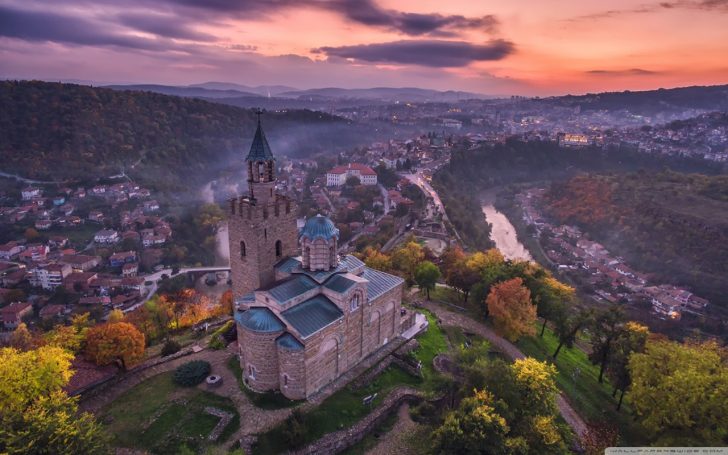
Bulgaria is the kind of place that surprises travelers who thought they’d seen Europe already.
Wedged in Southeastern Europe on the Balkan Peninsula, it shares borders with Greece, Turkey, Serbia, North Macedonia, Romania, and the Black Sea, making it both a crossroads and a destination in its own right.
The country’s history runs deep, from ancient Thracians and Romans to the rise and fall of empires that left behind fortresses, monasteries, and folklore still alive today.
Centuries of Ottoman rule shaped its food and traditions, while its place behind the Iron Curtain left a different mark on its cities and culture.
What you get now is a blend of old-world charm and modern edge, with Bulgaria carving its own path as part of the European Union and, more recently, the Schengen Area.
More than 13 million people visit Bulgaria each year for the same reason locals love it: variety.
It’s a land where you can ski in alpine resorts, sprawl on sunny beaches, wander through cobblestone towns, or join lively festivals that stretch long into the night.
Add affordable prices, hearty cuisine, and a reputation for hospitality, and you’ve got a country that doesn’t just attract tourists, it keeps them coming back.
Warnings & Dangers in Bulgaria

OVERALL RISK: LOW
There's a low overall risk in Bulgaria, but that's not a complete answer. Keep reading to learn about the areas that require a little more caution.

TRANSPORT & TAXIS RISK: MEDIUM
Transportation comes with a medium risk. First, renting a car means navigating aggressive drivers or exploring underdeveloped roads outside the major cities. Taxis are common, but have a habit of overcharging people. Sofia has a Metro system on top of public bus transportation.

PICKPOCKETS RISK: MEDIUM
This is a medium risk, but nothing that due diligence can't overcome. Pickpockets wait in busy tourist areas, including shopping districts, crowded markets, around ATMs, and in transportation hubs.

NATURAL DISASTERS RISK: LOW
Bulgaria’s main natural disaster risks come from earthquakes, flooding, and winter storms. The country sits on several fault lines, so tremors are possible though rarely severe. Heavy rains can trigger flash floods, especially in mountain valleys. Winters bring blizzards and icy roads that disrupt travel. Staying on top of the weather can keep the risk low.

MUGGING RISK: LOW
The risk of being mugged is low, as crooks here are more likely to pickpocket or burglarize than use force. However, casinos and nightclubs are known to have an underbelly of organized crime. While tourists aren't a target when violent crime happens, you don't want to get caught in the wrong place at the wrong time.

TERRORISM RISK: LOW
The standard blanket statement of "Terrorism can happen anywhere" applies to Bulgaria, but the risk is generally low. The United States, "The U.S. Department of State has assessed Sofia as being a LOW-threat location for terrorism."

SCAMS RISK: MEDIUM
This is a medium risk, but one that you can get ahead of by being skeptical of everyone. Scammers in Bulgaria often target tourists in busy areas. Common tricks include taxi drivers overcharging, restaurants slipping in hidden fees, and street touts pushing overpriced tours or goods.

WOMEN TRAVELERS RISK: LOW
Bulgaria is generally safe for women traveling, but standard precautions apply. Catcalling and unwanted attention can happen, especially at night or in bars. Petty crime is a bigger concern than violent crime, so keep bags close and avoid poorly lit areas.

TAP WATER RISK: LOW
Tap water in Bulgaria is officially safe to drink, especially in cities like Sofia and Plovdiv, where it meets EU standards. That said, some prefer bottled water due to occasional taste issues, old pipes, or rural supply problems. Stick to bottled water in rural areas.
Safest Places to Visit in Bulgaria
The official tourism website overseen by the Ministry of Tourism of the Republic of Bulgaria is visitbulgaria.com.
Bookmark the “Useful” section to get more practical information.
Sofia, the capital, comes with cultural notes along with a lively café culture.
You’ll find Roman ruins, onion-domed churches, and trendy neighborhoods all in the same walkable center.
Head east and you’re in Plovdiv, one of Europe’s oldest cities, where a Roman amphitheater still hosts concerts and the Old Town charms with cobblestone lanes and colorful houses.
For mountain escapes, the Rila and Pirin ranges are dotted with hiking trails and ski resorts like Bansko and Borovets.
The Rila Monastery, a UNESCO World Heritage site, sits tucked in the mountains and is as much about atmosphere as architecture.
Veliko Tarnovo, the medieval capital, clings to hillsides with fortress ruins that once anchored the Bulgarian Empire.
On the Black Sea coast, Varna and Burgas combine beach life with museums and nightlife, while Sozopol and Nessebar deliver cobbled streets, wooden houses, and ancient ruins right by the water.
Inland, the Rose Valley blooms every June, filling the air with fragrance and fueling the country’s perfume industry.
Wine lovers can head to Melnik or Thracian Valley vineyards, where boutique producers pour surprisingly good vintages.
For a taste of the wild, the Rhodope Mountains and Seven Rila Lakes offer dramatic scenery, while caves and waterfalls dot the countryside.
Places to Avoid in Bulgaria
After reading through the travel advisories from numerous countries, there doesn’t appear to be dangerous regions or bad parts of any particular city.
That said, it’s worth noting that the Canadian advisory suggests that rail services aren’t the best way to get around.
They stop short of saying that’s an infrastructure or criminal concern.
But inter-city buses are recommended.
Also, we’ll touch on this a few times in this article, but it’s important to punctuate that ATM risks are real here.
Sofia, Burgas, and Varna are known for having credit card skimming devices.
You’ll want to make every effort to use an ATM inside a bank.
Also, avoid visiting a restaurant or club without understanding the cost of everything you order before you drink or eat it.
Overcharging of tourists is common.
This is especially important at any resort near the Black Sea.
Safety Tips for Traveling to Bulgaria
- Police in Bulgaria fall under the Ministry of Interior. If you need urgent help, dial 112, the EU-wide emergency number, for police, fire, or ambulance. Operators usually speak English, though response times can vary in rural areas. It’s smart to know your location details before calling, since smaller towns may not have English-speaking responders on hand.
- Bulgaria doesn’t have a polished nationwide text alert system like some countries, but major warnings come through local news, government websites, and radio/TV. The U.S. Embassy can issue security alerts to citizens registered in the STEP program.
- Foreign visitors can drive in Bulgaria using a valid license from their home country for short stays, but an International Driving Permit (IDP) is strongly recommended and often required by rental agencies. Always carry your passport, car documents, and proof of insurance. Police checkpoints are common, and fines can be issued on the spot for violations.
- There are occasional reports of police soliciting small bribes at traffic stops. Refusing to pay might mean sitting through delays or added questions, but it usually doesn’t escalate beyond inconvenience. Knowing the correct fine amount and insisting on an official receipt can help you avoid paying extra “fees” that aren’t legitimate.
- Routine vaccines should be up-to-date, and the CDC notes chemoprophylaxis is recommended for all travelers to Bulgaria, even for short stays. Hepatitis A and B vaccines are also suggested due to food and water risks. Rabies prevention may be worth considering if you’ll be in rural areas or around stray animals, which are common in cities and villages.
- The official language is Bulgarian, written in the Cyrillic alphabet. English is common among younger people, in tourist areas, and at hotels, but don’t count on it everywhere. Learning a few basics or keeping a translation app handy helps, especially when reading road signs, bus routes, or menus outside the big cities.
- Card skimming is a known issue, especially in Sofia, Burgas, and Varna. Stick to ATMs inside banks rather than freestanding machines, shield your PIN, and monitor your statements closely. Avoid giving your credit card to a cashier out of sight. Carrying some cash reduces your reliance on potentially compromised machines in tourist areas.
- LGBTQ+ visitors may encounter cultural stigma, and public displays of affection can draw unwanted attention. Same-sex partners lack legal protections in areas like domestic violence, as Bulgarian law doesn’t recognize same-sex marriages. Few formal discrimination cases are filed, but harassment is possible.
- Air pollution spikes in winter when coal and wood heating dominate, especially in cities like Sofia. Smog and particulate levels can be high, aggravating asthma or other conditions. Travelers should check daily air quality indexes, limit outdoor activity on bad days, and consider bringing an N95-style mask (such as the ones used during COVID) if sensitive to pollution.
- Pharmacies in Bulgaria may sell medicines without a prescription, but counterfeit drugs are a risk. These can be the wrong strength or even harmful. Always buy from reputable, established pharmacies and ideally after consulting a doctor. Bring enough of your prescribed medications from home, in original containers, to avoid having to source them locally.
So... How Safe Is Bulgaria Really?
Bulgaria is, by and large, a safe country.
Starting by looking at travel advisories from other countries, the United States, Canada, the United Kingdom, and Australia all say basic safety precautions are all that is needed here.
For those that rank countries on a four-tiered scale, they all rank Bulgaria at the lowest level (Level 1).
Also, in one of the first of its kind I’ve seen in my years of research, the U.S. Department of State singles out Sofia, Bulgaria’s capital, as a low-threat location for terrorism against U.S. government interests.
That designation is tied to the embassy and official staff, but it’s a useful signal for everyday travelers too.
All that said, low risk isn’t “no risk.”
You’ll still need to watch out for pickpockets, con artists, and scammers.
Hopefully, you’re better informed now about the potential risks in Bulgaria.
However, you’ll see that overall, having common sense and situational awareness goes a long way toward having the safest experience possible in Bulgaria.
How Does Bulgaria Compare?
| Country | Safety Index |
|---|---|
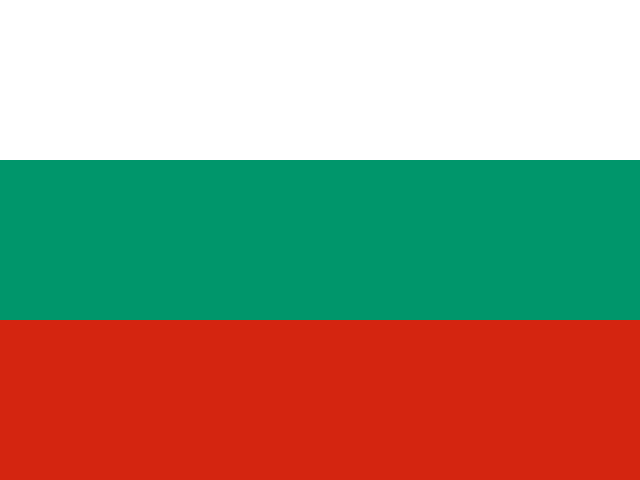 Bulgaria Bulgaria | 80 |
 Turkmenistan Turkmenistan | 42 |
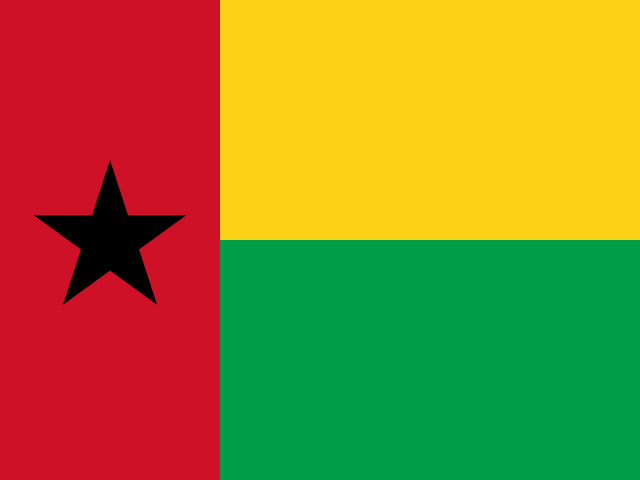 Guinea-Bissau Guinea-Bissau | 36 |
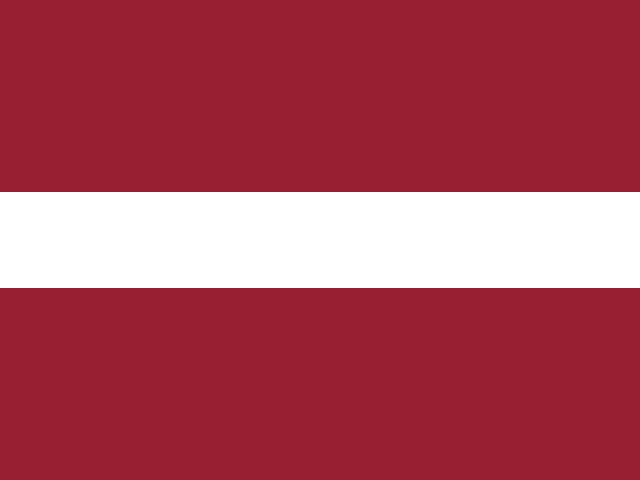 Latvia Latvia | 80 |
 Turkey Turkey | 45 |
 Bangladesh Bangladesh | 49 |
 Brazil Brazil | 52 |
 Sri Lanka Sri Lanka | 60 |
 United States United States | 68 |
Useful Information

Visas
As of January 2025, Bulgaria is part of the Schengen Area. That means U.S., UK, Canadian, and Australian passport holders can visit without a visa for up to 90 days within a 180-day period across all Schengen countries.

Currency
Bulgaria uses the lev (BGN), not the euro. ATMs are common, but come with the previously mentioned safety risks. With a large cash economy, you'll have to balance carrying cash without carrying too much that it makes you a potential target. Exchange rates in airports and hotels are usually poor, so plan to withdraw or change money at banks.

Weather
Bulgaria’s climate swings with the seasons. Summers can top 90°F (32°C) in Sofia and along the Black Sea coast, while winters bring snow and ski crowds in Bansko and Borovets. Spring and autumn are mild, but mountain regions are unpredictable, so pack layers. Always check the forecast, especially if hiking in rural or alpine areas.

Airports
The main international gateway is Sofia Airport (SOF), but Varna (VAR) and Burgas (BOJ) handle plenty of summer traffic to the Black Sea. Plovdiv (PDV) has regional flights. Budget airlines connect Bulgaria with Europe, while long-haul travelers usually connect via hubs like Istanbul, Vienna, or Frankfurt. Domestic travel is largely by train or bus.

Travel Insurance
Travel insurance isn’t mandatory for tourists, but it’s strongly recommended. Bulgaria’s healthcare system varies, and private clinics may expect upfront payment. Coverage for medical care, trip delays, and baggage loss is smart. If you plan outdoor activities like skiing or hiking, double-check that your policy includes adventure sports. EU visitors can also use EHIC/GHIC cards.
Bulgaria Weather Averages (Temperatures)
Average High/Low Temperature
| Temperature / Month | Jan | Feb | Mar | Apr | May | Jun | Jul | Aug | Sep | Oct | Nov | Dec |
|---|---|---|---|---|---|---|---|---|---|---|---|---|
| High °C |
5 | 6 | 12 | 17 | 22 | 26 | 29 | 29 | 25 | 20 | 13 | 8 |
| Low °C |
-2 | -1 | 2 | 8 | 13 | 17 | 19 | 19 | 15 | 9 | 5 | 1 |
| High °F |
41 | 43 | 54 | 63 | 72 | 79 | 84 | 84 | 77 | 68 | 55 | 46 |
| Low °F |
28 | 30 | 36 | 46 | 55 | 63 | 66 | 66 | 59 | 48 | 41 | 34 |
Bulgaria - Safety by City
| City | Safety Index |
|---|---|
| Bansko | 89 |
| Burgas | 86 |
| Nessebar | 90 |
| Plovdiv | 88 |
| Sofia | 70 |
| Varna | 84 |
| Veliko Tarnovo | 91 |












Worst place in europe
The dirtiest people on earth, they scam you on everything, the maffia runs everything in tourist places, taxis kidnapp you, hotel workers steal, in the market they threathen you to buy things they claim you ”broke”. I was at sunny beach and it was the worst week of my life
@David: “In every herd there is a dirt”.
It’s a pity you had your vacation ruined, but it’s also not fair and right to generalize the opinion for a hole country based only on a week spent in the drunkards’ paradise Sunny Beach!!! Maffia also runs the world, taxi drivers may charge you high everywhere in the world as well… Believe me, Bulgarians who want a vacation on the seaside do not go to Sunny Beach. And guess why, not because the hotel workers steal their belongings nor they have to pay for something that some else broke. They do not go there because of the scum coming from all over of Europe just to drink cheap (for their pocket) alcohol beyond unconsciousness in the noisy night clubs, and then do balconing on… the pavement.
If you want to see what is Bulgaria like, go to other places like Veliko Tarnovo, Rodopa and Rila mountains, and many others where you will be surprised to meet people from western EU countries who decided to make it their home. Because of the nature, because of the people.
Also avoid Sunny Beach
Just like people go to Amsterdam to get a crack, people (younger tourists) from all around Europe (and Russia) go to Sunny Beach to get wasted. As previous reviewer said, it is not fair stamping the whole country “bad” just because you landed consciously in the worst place. It is like going to Las Vegas and complaining there are slot machines everywhere. Sunny Beach is for alcohol, drinking and vomiting – in that regards, if that is what you wish, is a wonderful place.
As to the Bulgaria and safety, it is, indeed, relatively safe with pickpocketing and mugging being observed. Taxis, especially in Sofia, shall be carefully chosen around major transportation hubs (stations and airports) due to some lookalikes that charge way higher or go on longer routes to the destination.
And, of course, do not expect “safety” on places where drunkards are gathering (some “clubs” and, of course, Sunny Beach).
Sure thing!
If you are British and you went to Sunny Beach, I can understand why you broke things in shops and taxis kidnap you…Brits who visit Sunny Beach are normally such scum, they turn delusional the moment they see real beer!
Totally Agree with All the reviews, every country has its good & bad places, but anybody with any sense will do there homework , stay away from such areas, its not difficult!! However the same ethos applies to the last reviewer highlighting `British` ..Be balanced in your understanding, travelling will give you the best Experiences in life you will ever have.
A small jewel of Eastern Europe
Like it says in the article, Bulgaria is an interesting place to visit that is pretty safe and is not very crowded like other countries. The country has a lot of good things about it, from the low price, generally hospitable staff and people, fantastic beaches, great looking churches, etc. Yes, there are some pickpockets here and there, especially in Sofia and other bigger cities and in more crowded areas. Just be on the lookout for them and you will usually spot them and be able to avoid them with relative ease.
I’ve also heard of muggings so this is a possibility. Doesn’t happen too often and if you avoid badly lit areas and not travel alone at night, then you will be fine. Be careful about taxi drivers as they like to overcharge. Make sure to set the price in advance otherwise you will pay more. Also car theft is a thing here so be careful where you park it.
When I was here I particularly liked:
Krushuna Waterfalls. They are beautiful and easily accessible. You can even follow a pathway and find a cave which is the actual source of the waterfall.
Buzludzha Monument. A huge monument that reminds us of the Soviet era, this place is abandoned but still beautiful in its own way.
The Thracian Tomb of Sveshtari. Well preserved and only discovered in 1982, this tomb is unique in it’s combination of paintings and architecture.
Tsarevets Fortress. A beautiful place, a reminder of past times and wars, this fortress will take you on a ride into the past of Bulgaria.
Pirin National Park. Rare species live here and this park is one of the most beautiful I have personally seen. There’s fishing, hiking or cycling available.
Considering everything I’ve mentioned I don’t see any reason why you wouldn’t give this place a try. It’s usually cheaper than any alternative while offering comparable services and the staff in most hotels and restaurants is helpful and friendly.
Amazing!
Fantastic
Great place if you know where to go
If you are a young traveler looking to get drunk for cheap and go clubbing 24/7 Sunny Beach is your place, it’s filled with degenerates from all around the world. It is nothing but shady hotels, super loud music, fast food, and drug abuse. There is no culture to be seen, and it’s definitely not family-friendly.
If you are looking for a real vacation, great hotels, and an overall much better experience I would recommend places like Burgas, Varna, Pomorie, Kiten, Balchik, Nesebar, Golden Sands for beaches, and Pamporovo, Bansko for skiing and extreme sports.
If you want to experience life as it is, Sofia/Plovdiv will be your best bet. Your safest way of transportation in the capital will be the Metro, it’s clean, well lit with a ton of security. There are a lot of places to visit within a walking distance, museums, art galleries, historical monuments, cozy bars, and restaurants, hotels are also affordable (4+ *).
As with any other country, my best advice will be to use your common sense. Almost everyone from the young generation in Bulgaria speaks English.
The health crime, and scam warnings were solid and practical. A few sections felt overly general, so I paired this with official gov travel sites to rounds it out.
Did you find any hidden gems while you were there, like a cool restaurant or a festival that wasn’t on the usual tourist radar?
Stumbling upon a cozy little spot in Bulgaria feels like finding a hidden gem, especially when the food is both hearty and affordable!
What’s your favorite spot in Bulgaria that really captures that blend of history and modern vibe?
Stumbled into a midnight village festival, ate warm banitsa under strings of bulbs, and for a moment I actually felt like I’d found home.
The mix of mountains and coastline here really caught me off guard, and the shops in the old town have so much character.
Bulgaria’s mix of chilly mountain air and warm Black Sea breeze always caught me off guard, especially when I found myself craving banitsa right after skiing all morning.