


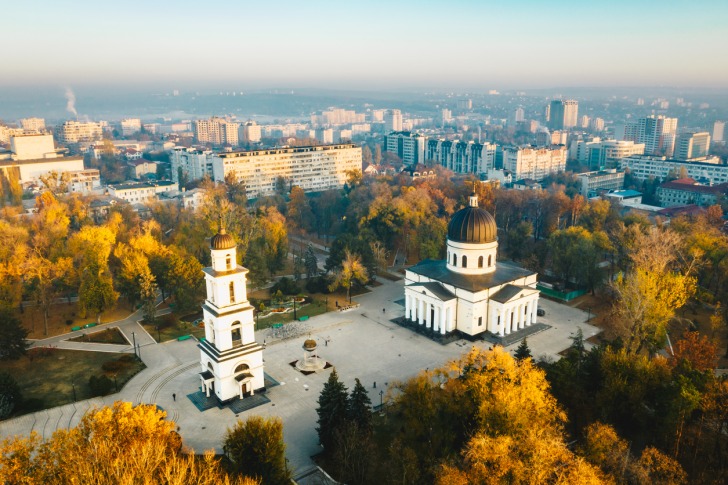
 Moldova : Safety by City
Moldova isn’t going to win any travel and tourism awards anytime soon, but approached the right way, it can make for a memorable trip to Eastern Europe.
Wedged between Romania and Ukraine, it’s a country many people can’t point to on a map and even fewer actually visit.
Moldova was part of the Soviet Union until 1991, when it declared independence during the USSR’s collapse.
The years since have been complicated.
The breakaway region of Transnistria declared independence in 1990.
Tensions escalated into a brief but bloody war in 1992, shortly after Moldova became independent.
Since then, Transnistria has operated as a de facto independent territory, with its own government, military, currency, and border checkpoints.
However, no country (including Russia) formally recognizes its independence.
Across the rest of Moldova, the economy still struggles, and the infrastructure reminds you that this isn’t Western Europe.
Since 2022, the ongoing war next door in Ukraine has raised tensions in the region, put Moldova on high alert, and renewed concerns about Russian influence.
This is one of the least-visited countries in the world.
In 2024, around 70,000 tourists made the trip to Moldova, which counts as a good year here.
It’s not packed, it’s not polished, and you’ll need to do some work to uncover what’s special.
But if you’re into wine, you’re in the right place.
The underground cellars at Mileștii Mici and Cricova are worth the trip alone.
Moldova is quiet, rural, and often overlooked.
It won’t dazzle you on arrival.
But slow down, ask questions, and stay a little longer than you planned.
The beauty here isn’t loud.
You have to sit with it.
Warnings & Dangers in Moldova

OVERALL RISK: MEDIUM
Moldova feels calm on the surface, but the ongoing Russia–Ukraine war nearby keeps things at a medium-risk level. It’s not an active conflict zone, but instability along the borders and in breakaway regions like Transnistria bump up government travel advisories.

TRANSPORT & TAXIS RISK: MEDIUM
Getting around carries a medium level of risk mostly due to inconsistent taxi services and variable road conditions. Stick with hotel-booked cars or ride apps, and avoid flagging down random drivers. Public transit is functional, but buses range from brand-new to barely holding it together. If you’re driving, be ready for potholes, aggressive traffic, and limited signage.

PICKPOCKETS RISK: MEDIUM
Pickpocketing is a medium risk, especially in crowded areas like markets, buses, or tourist zones. Thieves are subtle and fast, often working in groups. Skip ATMs on the street. They’re prime targets for card skimming. Use machines inside real banks. Keep valuables close and act like you’ve done this before, even if you haven’t.

NATURAL DISASTERS RISK: LOW
Low natural disaster risk is one of Moldova’s underrated perks. The region doesn’t deal with earthquakes, major floods, or extreme storms. Winters can be bitterly cold, and icy sidewalks are no joke, but that’s about it. If you’re packing anything for emergencies, make them boots with decent traction.

MUGGING RISK: LOW
Mugging is rare, making this a low-risk issue for most travelers. You’re more likely to face a padded bill or a subtle shakedown than any physical threat. Economic desperation exists, but violent street crime isn’t the norm. Don’t flaunt cash or valuables, and push back gently if something feels off.

TERRORISM RISK: MEDIUM
While Moldova isn’t on any major terror watchlists, the medium risk comes from geography. A few Russian missiles have already strayed across the border thanks to the Ukraine conflict. Protests can heat up quickly, especially in Chișinău. Stay clear of crowds, monitor local news, and leave political debates to the locals.

SCAMS RISK: HIGH
Scams and shady behavior are a high risk, unfortunately. Corruption isn’t subtle here—it shows up in taxis, restaurants, clubs, and even from officials angling for bribes. Some scams are small annoyances, others can feel threatening. Trust your instincts, double-check bills, and know that you’re not being paranoid.

WOMEN TRAVELERS RISK: MEDIUM
Moldova is a medium-risk destination for women, especially solo travelers. You’re not likely to face violence, but street harassment and outdated gender expectations are part of the travel landscape. Dressing more conservatively can cut down on unwanted attention, especially outside major cities. Stay in well-reviewed accommodations and avoid walking alone late at night.

TAP WATER RISK: MEDIUM
Tap water is a medium risk. In Chișinău, some people drink it, but most locals and travelers prefer bottled water. Outside the capital, pipes are older, and filtration can’t be trusted. Stay on the safe side and don't use the tap water unless you have proof that the water is up to your standards.
Safest Places to Visit in Moldova
The official tourism site is moldova.travel, but that doesn’t mean that it’s run solely by the Moldovan government.
It’s a public-private project supported by USAID, Sweden, and the UK as part of a broader effort to boost Moldova’s tourism sector.
The Natural Tourism Office of Moldova also has a website at turism.gov.md.
You’ll probably land in Chișinău, since that’s where the airport is.
The city makes a solid intro to Moldova.
It’s got wide streets, punchy architecture, and a mix of Soviet leftovers and café life.
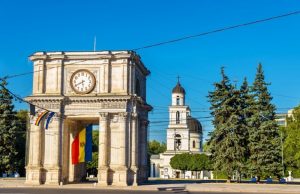
Check out the Triumphal Arch, the National Museum of History, and Cricova’s underground wine city just outside the capital.
The center of Moldova is where old villages and modern life crash into each other in the best way.
You’ve got Old Orhei, with ancient cave monasteries carved into cliffs, and Curchi Monastery, which looks like it was dropped out of a fairy tale.
Northern Moldova brings hills, orchards, and a slower pace.
Don’t skip Soroca Fortress.
It sits right on the Dniester River and makes you feel like you’ve stepped into a medieval movie set.
The region’s known for old monasteries, cozy villages, and legit homemade wine.
Southern Moldova is wine and farmland central.
This is where you’ll find Mileștii Mici, the largest wine cellar on Earth.
It’s a UNESCO record holder.
Gagauzia has its own vibe entirely.
The Gagauz people have their own language, culture, and traditions.
They’re big on hospitality, wine, and food that sticks with you
Places to Avoid in Moldova
Transnistria tops the list of places to avoid.
It’s a Russian-backed breakaway region with no international recognition, limited consular support, and an active Russian troop presence.
Laws differ from Moldova’s, and if things go sideways, your embassy likely can’t help.
Tensions remain high due to the ongoing Russia–Ukraine war.
Also, avoid areas near the Ukraine border, especially in the south, where missile debris has landed in the past.
Steer clear of large protests or political gatherings in Chișinău, which can turn volatile without warning.
Safety Tips for Traveling to Moldova
- To reach the police in Moldova, dial 112. That’s the national emergency number for police, fire, and medical help. English-speaking operators may not always be available, so keep your location and a few key phrases handy. If you’re near a hotel or embassy, ask them to call for you. Don’t count on fast response times in rural areas.
- Scams, extortion, and corruption are common, especially in the nightlife and casino industries. If someone pressures you for “protection money” or flashes authority, walk away and report it. The National Anticorruption Center takes anonymous tips 24/7 at 0 800 55555.
- Moldova doesn’t have a formal nationwide emergency alert system like the U.S. Amber or EU Alert, but local news sites and embassy pages are your best bet for real-time info. Some embassies send alerts via email or text if you register before your trip. Moldova’s Inspectoratul General pentru Situații de Urgență also posts on Facebook during emergencies.
- No special vaccines are required for Moldova, but routine ones, such as hepatitis A, tetanus, and MMR, should be up-to-date. Check with customs and the health agencies before you bring any prescription medication into the country.
- You can drive in Moldova with a valid foreign license for up to 90 days. Roads in Chișinău are manageable, but rural highways can be rough, poorly marked, and potholed to hell. Headlights are required 24/7 in winter. Locals often ignore traffic rules, and roadside corruption is real, so drive defensively.
- Romanian is the official language, though Russian is widely spoken too. English is hit or miss outside touristy zones. Expect confusion in shops, taxis, and rural areas. Download a translator app or carry key phrases. Locals might seem cold at first, but most will help if you ask politely. Don’t assume everyone speaks Russian; it’s a sensitive issue.
- Always have your passport or an official copy on you, especially near government buildings or during protests. Police may stop you without warning, and failure to show ID can mean big problems. If you’re uncomfortable carrying your actual passport, bring a colored copy along with a digital version stored securely on your phone.
- Chișinău’s main streets are decently lit, but once you wander outside the center, it’s flashlight time. Streetlights are unreliable, and sidewalks can disappear. If you’re staying out late, let someone know where you’re headed and skip the scenic shortcuts.
- While Moldova isn’t in a crisis, shortages do happen. Pharmacies and grocery stores occasionally run out of basics, especially outside the capital. Power outages and heating issues are more common in winter. Stock up on travel meds, toiletries, and snacks when you can, and don’t expect Western brands to be available everywhere.
- If you enter Moldova through Transnistria, meaning you skip official Moldovan border control, you’ll technically never have a Moldovan entry stamp. That becomes a problem fast. You could be fined, denied exit, or flagged for violating immigration rules. Always enter Moldova through an official border checkpoint first.
So... How Safe Is Moldova Really?
We start by looking at the travel advisories from the United States, the United Kingdom, Canada, and Australia.
Most countries use a four-tiered scale, with Level 1 being the lowest and Level 4 being the highest.
The U.S., Canada, and Australia put the entire country at Level 2: Exercise a High Degree of Caution.
All of those countries, plus the UK, mention non-essential travel or any travel to Transnistria should be avoided due to the ongoing conflict near the Ukraine border.
The risks are more about what could happen than imminent risks.
The problem is that things could go from bad to worse quickly.
Canada’s authorities write, “The Russian military invasion of Ukraine has increased political tensions in Moldova.
The security situation could deteriorate rapidly.”
The United States advisory adds, “There have been reports of debris from airborne projectiles landing in Moldova.
However, there is no indication that Moldova is being targeted in Russia’s war against Ukraine.
The Chișinău airport is operating normally, although there are no flights available to or from Belarus, Russia, or Ukraine.”
Looking at the advisory from the UK’s Foreign, Commonwealth, and Developing Officer, these additional risks are mentioned:
- FCDO’s ability to offer support (in Transinitria) is extremely limited.
- Managed power blackouts may occur.
- Updated information on the risks of being involved with illegal drugs, including cannabis.
At the same time, the tourism website for Moldova addresses the risks in a section titled “Current Situation in Moldova: Travel Safety and Security.”
It reads, in part, “The country does have an elevated level of alert to allow the government to respond to any changes, but currently the Moldovan government does not expect an attack on Moldova itself.”
The article does punctuate the guidance to avoid Transnistria at the time, noting that your safety cannot be guaranteed there.
It’s safe to say that as long as the Russia-Ukraine conflict continues, both Transnistria and Moldova carry elevated and unpredictable safety risks.
Keep an eye on the news and the updated travel advisories from your country.
How Does Moldova Compare?
| Country | Safety Index |
|---|---|
| Moldova | 67 |
 Nepal Nepal | 59 |
 United States United States | 68 |
 Mongolia Mongolia | 71 |
 Curacao Curacao | 80 |
 Ireland Ireland | 83 |
 United Arab Emirates United Arab Emirates | 79 |
 Japan Japan | 89 |
 Niger Niger | 37 |
Useful Information

Visas
Most travelers from the EU, U.S., Canada, and Australia can enter Moldova visa-free for up to 90 days in a 180-day period. If you need a visa, you can apply online. Transnistria has its own rules, but no formal checkpoints.

Currency
Moldova uses the Moldovan Leu (MDL). Credit cards work in cities, but cash is king in rural areas. Exchange bureaus are common and usually offer better rates than hotels. ATMs are easy to find, though stick to ones inside banks to avoid skimmers. Avoid accepting torn or heavily worn bills because they’re often rejected.

Weather
Moldova has a continental climate: hot summers, cold winters, and everything in between. July and August can hit the 90s°F (30s°C), while January often dips below freezing. Spring and fall are ideal for wine tourism and hiking. Pack layers due to weather swings, especially if you're venturing outside the capital.

Airports
Chișinău International Airport (KIV) is Moldova’s only major airport, with direct flights mostly from Europe and Turkey. It’s small but modern, with basic amenities. Don’t expect U.S.-style efficiency, and be patient during customs checks.

Travel Insurance
Travel insurance is a smart move in Moldova. While healthcare is available, the quality can vary widely, especially outside Chișinău. Look for a policy that covers medical emergencies, theft, trip delays, and political unrest, just in case. Some budget carriers may also require proof of insurance for entry, so double-check your airline’s policy. You might have trouble getting a policy if you plan to travel to Transnistria.
Moldova - Safety by City
| City | Safety Index |
|---|---|
| Chisinau | 72 |





Be careful and you'll be fine
A few friends and I traveled to Moldova last year to take in some of the scenery, food, and whatnot. We can handle ourselves fine, we aren’t small guys. With that being said, we ran into a number of issues with local drunks just as you mentioned. Some were just getting too personal and too “in your face” while others were actually trying to pick a fight. One of them said they specifically hated Americans. My one friend Joe, however… He got into an altercation. The local officials sided with us thankfully. Other than this, we had a fantastic time and recommend it to anyone.
Really excited to go here!
I have wanted to go to Moldova for several years now. I am making a point to visit all of Europe but I had been told to wait on going here a few years ago. If my biggest concern is friendly drunks, I think I can manage just fine! I have a long line of Irish blood in my heritage after all.
Moldova
I Will definitely go to Moldova.It is Safe!You should have put Low for Mugging. But Moldova is safe.
Not true
Compared to countries like America, Mexico, cities like Paris, Barcelona …. Moldova is probably the safest place of all.
The crime is extremely low. People don’t shoot left and right like in the USA and people here don’t own guns like in other countries where every family owns a gun, that says a lot about the country.
Omg! I am very sorry that you had that experience, it seems like you’ve visited another country, not Moldova. We never had problems there, it’s one of the safest places I’ve ever been.
My friend from Mexico was filming the kids on the street, she was shocked that they are going to school by themselves. The locals are so nice, the food is exceptional and of good quality. You described it as a cartel. It’s a post-soviet country, they are very conservative.
They won’t jump on you and smile if they don’t know you, they are very sincere. Once they get to know you, they will give you their house and their bed.
“Some tourists of other races have even reported being denied entrance into certain clubs and restaurants or harassment by the police. ”
This is really a rather silly observation, since almost all foreign tourists will be ‘of other races’ by definition. I suppose there may be some people of Moldovan origin who are visiting from abroad who wouldn’t be ‘of another race’, and I suppose Romanians are closely related enough to blend in.
Try to avoid this country (questionable rule of law)
If you are thinking about going to Moldova, I’d suggest that you avoid it.
Step 1. Border control.
Communication with the border control staff was very difficult, not because of a language barrier, but just because they didn’t care to answer our questions.
– After they collected the passports, they asked me to fill out a standard form (name, address, phone, etc.). After I filled it out, they said that I might be refused entry and did not explain why, but hinted that it was due to my citizenship (no, I’m not Russian, but even if I were, there are no laws that ban all citizens of any country from entering Moldova without adequate grounds);
– There were no more questions to me afterwards, and after half an hour, without my presence, they brought my passport back with a refusal stamp and documents. They did not respond to my questions about the reason for refusal, either just remaining silent or answering something like “you can read about it later in the internet.”
– Most flagrantly of all, they put different reasons for refusal in the documents they gave us and in my passport – and again, they refused to comment on this.
Just to note: I haven’t been to Moldova before and haven’t had any violations of laws anywhere else, and I had stamps from about 15 countries in my passport.
There was no obvious suggestion that they wanted a bribe, but I also can’t be sure that wasn’t the reason for all this.
Step 2. Appealing
By law, it’s possible to appeal that decision… in a court located in Moldova. When I wrote to the Border Police with a detailed description of the situation, they answered in a week without any word – only attaching a standard file where they claimed that the letter should be signed with an electronic signature… again, a Moldovan one.
I’m not complaining now – actually, I’m quite happy I didn’t end up going to this country, seeing how the rule of law functions there. I’d avoid dealing with it entirely.
its fine not much happened
Moldova sounds intriguing with its wine and history, but the warning on scams, regional tensions, and unpredictable safety made me think twice before booking anything. Good for research before planning.
I didn’t really know what to expect from Moldova, but once I took the time to explore, I found some hidden gems, especially the wine cellars. It’s a place that grows on you the longer you stay, and there’s something special about the quiet charm.
I had no idea Moldova had such amazing wine cellars; it totally surprised me how much history and charm is tucked away there.
Perfect, I spent an afternoon stuck behind a tractor on a muddy lane and then wandered into Mileștii Mici’s absurdly vast 2 km cellar where the wine tasting made me unreasonably teary, so yeah, quiet here sneaks up on you.
Funny, after wandering the underground cellars at Mileștii Mici and Cricova, the cool, dim air and quiet countryside left me oddly peaceful and a little humbled.