


 Georgia : Safety by City
Georgia the country, not the peach-scented U.S. state, sits where Europe and Asia meet, and it has spent centuries balancing those influences in a way that feels distinctly its own.
It’s located between the Black Sea and the Caucasus Mountains, which gives it everything from warm coastlines to snowy peaks and quiet wine valleys.
Its history stretches back to ancient kingdoms and early Christian traditions, then survived invasions, Soviet control, and a turbulent independence.
Tourism has grown quickly in recent years.
In 2024, about 5.1 million people visited Georgia, drawn by its scenery, food, and culture.
At the same time, there are regions that travelers cannot visit.
Parts of Abkhazia and South Ossetia remain occupied by Russian-backed forces, and these areas operate outside Georgian government control.
Beyond those restricted spots, the rest of the country is full of things that stay with you.
Mountain villages where stone towers stand against the sky.
Places where vineyards span the landscape.
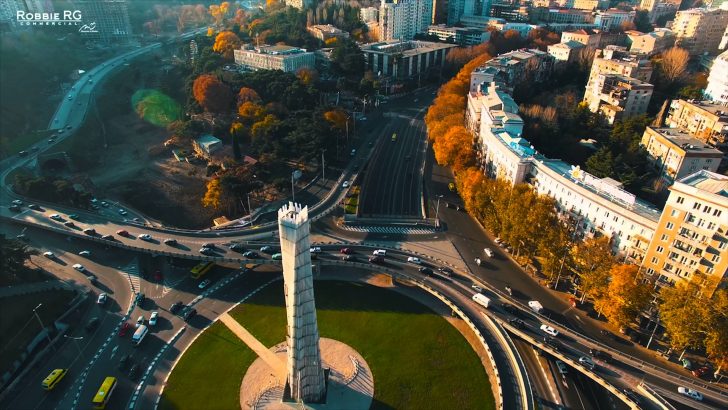
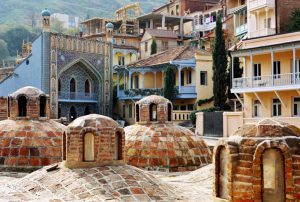
Lively cities like Tbilisi with wine bars, sulfur bathhouses, and street art tucked into alleyways.
Georgia offers distinct slices of hospitality, history, and scenery that feel personal rather than packaged
Warnings & Dangers in Georgia

OVERALL RISK: LOW
Most of Georgia is considered low risk for travelers. Tbilisi, Batumi, and other major destinations are generally safe. The exceptions are the regions of Abkhazia and South Ossetia, which are occupied territories and should be fully avoided. In cities, the vibe is friendly during the day, but the risk goes up after dark.

TRANSPORT & TAXIS RISK: MEDIUM
This lands at a medium risk. Roads can be rough, lighting is inconsistent, and local driving habits are, let’s say, bold. If you rent a car, stay alert and avoid mountain roads at night. Minibuses (marshrutkas) are common but can feel chaotic with fast driving and limited safety standards. Use registered taxis or ride apps in cities. It’s worth the small extra cost for more predictable safety.

PICKPOCKETS RISK: LOW
Pickpocketing is a low to moderate risk, especially in crowded areas like Old Tbilisi, markets, and busy public squares. It is usually opportunistic rather than aggressive. Keep bags zipped, avoid leaving phones on café tables, and stay aware in crowds. You don’t need to be paranoid. Just use normal city awareness, and you’ll likely be fine.

NATURAL DISASTERS RISK: MEDIUM
This is a medium risk due to Georgia’s landscape and climate. The country sits in a seismically active region, and earthquakes do happen. Landslides, flooding, and heavy snow are also possible, especially in the mountains. If your plans include trekking, remote drives, or winter travel, check conditions locally and listen to guides. In major cities, natural disaster risk is less of a day-to-day concern.

MUGGING RISK: LOW
Mugging is generally low risk in main tourist areas, especially during the day. Nighttime changes the calculation a bit. Isolated streets, parks, and underpasses become less ideal. Drink-related incidents can happen around nightlife spots if someone over-celebrates or gets careless with belongings. Stick to well-lit areas, use licensed cabs to get home, and avoid wandering alone after dark.

TERRORISM RISK: MEDIUM
This is considered medium, not because of active day-to-day danger, but because of Georgia’s geography and history. Its location near regions that have experienced extremist activity means authorities stay vigilant. In the past, some recruitment and transit routes passed through places like the Pankisi Gorge.

SCAMS RISK: MEDIUM
This is a low to moderate risk. Most scams are small-scale things like taxi overcharging, bar tabs that mysteriously grow, or someone offering “help” and expecting a tip. Unlicensed tour operators can also be hit-or-miss. Children might be used for begging and badgering to get money. Read the government warnings for more detailed scam information.

WOMEN TRAVELERS RISK: MEDIUM
This is a medium risk, especially for women traveling alone. Most of the time, you’ll meet genuinely kind people, but nightlife changes the tone. Reports of harassment, drink spiking, and romance scams are not rare. The culture can feel flirty and persistent, and alcohol intensifies it. Go out in pairs or groups, watch your drinks, and never let a friend walk or ride home alone. Staying together is your best safety strategy.

TAP WATER RISK: LOW
Tap water is considered safe to drink in Tbilisi and many urban areas, though taste and quality vary by neighborhood. Once you leave the big cities, the reliability drops. Old infrastructure, rural plumbing, and temporary contamination after storms make bottled water a safer choice outside urban centers. If your stomach is sensitive, stick to bottled or filtered water everywhere just to avoid downtime.
Safest Places to Visit in Georgia
The website “georgia.travel” is the official tourist site, hosted in part by the Georgian National Tourism Association.
Start there for the most trusted tour guides and attractions.
We’re going to give you a highlight of the top things to do and places to see there, but we will not mention any attractions in the places considered off-limits.
Skip to the next section for more information on those locations.
Let’s take the country of Georgia by regions:
- Ajara centers around Batumi, a lively coastal city on the Black Sea with a modern skyline, seaside promenade, and botanical garden overlooking the coast. Inland villages like Khulo offer mountain views, old stone bridges, and cable car rides across valleys.
- Racha-Lechkhumi & Kvemo Svaneti are quieter and known for hiking, trout streams, and traditional wine cellars.
- Oni and Ambrolauri offer access to mountain trails and family-run wineries producing Khvanchkara, one of Georgia’s signature wines.
- Samegrelo-Zemo Svaneti draws travelers for Mestia and Ushguli, both gateways to high alpine towers, glaciers, and the famous Chalaadi Glacier trail. This is one of the most scenic mountain regions in the country.
- Kakheti is Georgia’s wine heartland.
- Telavi and Sighnaghi are easy bases for winery visits, historic churches, and views over the Alazani Valley.
- Imereti includes Kutaisi, Gelati Monastery, and nearby caves like Prometheus and Sataplia. It blends urban and rural sightseeing well.
- Samtskhe-Javakheti features Vardzia’s rock-hewn cave city and the spa town of Borjomi.
- Mtskheta-Mtianeti includes the historic capital of Mtskheta and Kazbegi’s mountain scenery around Gergeti Trinity Church.
Places to Avoid in Georgia
A large portion of Georgia is safe to visit, according to government advisories.
However, avoid going out after dark.
That’s when risk levels go up.
Stick to tourist areas or with tour guides; this isn’t the kind of place where you want to roam the streets without knowing where you are going.
The serious places to avoid are listed at the highest possible government risk level: Abkhazia and South Ossetia.
These regions are occupied and operate outside Georgian government control.
There are armed checkpoints, no reliable law enforcement, no consular help, and a real risk of detention if something goes wrong.
Even getting close to the administrative boundary lines can lead to questioning or accidental crossing.
There is nothing here that justifies the risk for travelers.
The Pankisi Gorge, while home to ordinary families and beautiful scenery, has a history of extremist recruitment and sporadic tensions.
The U.S. government strongly recommends avoiding this region.
Be sure to read the customs laws before visiting, too.
Even bringing a pocketknife through immigration can land you in police custody.
Some people have been detained for bringing prescription drugs that aren’t allowed in Georgia.
Ignorance of the law is never an excuse for not following it.
Do your due diligence!
Safety Tips for Traveling to Georgia
- Georgia’s national emergency number is 112. This connects you to police, fire, and medical services. Operators can usually assist in English, especially in cities. Response times vary, especially outside major areas, so give clear details and location markers.
- Georgia does not have a centralized text alert system like some countries. Stay informed through local news, hotel staff, and official government channels. Many travelers use weather and earthquake alert apps when exploring mountain regions. If a protest or major disruption occurs, local businesses usually know before any formal announcement. Ask your hotel or host about current conditions when you arrive.
- The Mobile 112 app is worth downloading before you go. It lets you contact emergency services with one tap, and it automatically shares your location. The app is free and works on both Apple and Android phones. It offers English language support and is especially useful if you’re hiking or traveling in small towns where you may need help but cannot describe where you are.
- Foreign visitors can drive in Georgia with a valid driver’s license from home, although an International Driving Permit is recommended to avoid confusion. Road conditions can be unpredictable once you leave major highways. Drivers often take sharp mountain turns at high speeds.
- There are no mandatory vaccinations for entering Georgia. However, travelers often choose to be up to date on routine immunizations, plus Hepatitis A and B if eating street food or staying longer. Rural travelers may consider rabies precautions, especially if they’ll be around stray dogs.
- The official language is Georgian. English is common in Tbilisi, Batumi, and popular tourist towns but less so once you reach smaller villages. Learning a few simple phrases goes a long way. Signs in tourist areas often include English. If you get stuck, younger locals are usually your best bet for translation help.
- Mobile service in cities is strong, and SIM cards are cheap. In rural or mountain regions, expect weaker coverage. Free public Wi-Fi is everywhere, but it usually does not protect your data. Avoid logging into bank accounts or private apps while on public Wi-Fi. If you need to use it, a VPN adds a layer of protection.
- Same-sex relationships are legal in Georgia, but public acceptance varies. Recent laws have restricted LGBTQ expression and public events. Harassment and discrimination can occur, particularly outside major cities. LGBTQ travelers should use caution in nightlife settings and avoid public displays of affection.
- Georgia has several venomous snake species that are active roughly from March to October. Antivenom is not always available in remote areas. If you hike, wear closed shoes, watch where you step, and avoid tall grass or rock piles. Treat every snake as potentially dangerous and give it space. Seek medical help immediately if bitten.
- Never hike, ski, climb, or explore mountain regions alone. Weather changes quickly, and cell service can disappear without warning. If you’re injured or lost, a rescue response may take time, especially in remote areas. Going with a partner or licensed guide ensures someone can call for help if things go sideways. Safety in Georgia’s outdoors is mostly about not being alone when something unexpected happens.
So... How Safe Is Georgia Really?
Looking at the government advisories for Georgia reminds us why reading the entire report is important.
Overall, there’s a Level 1 risk, which is the lowest of a four-tiered scale.
That’s according to the United States, Canada, and Australia.
However, sections of the country are listed at Level 4: Do Not Travel.
It is worth noting that there’s conflicting information online.
Some reports say Tbilisi is among the safest cities in the world.
At the same time, Canada’s advisory puts the capital city at Level 2: Exercise a High Degree of Caution.
While petty crime and scams are the biggest inherent risks tourists can face, it’s the political and civil instability that can make things go sideways.
Use common sense; don’t go near protests or demonstrations.
Stick to tourist areas.
Don’t go walking around at night alone.
Don’t take drinks from strangers.
The same advice that holds for any country applies here, with an added element of unrest that you should pay attention to before and during your travels.
With more than five million visitors in 2024, you know there’s a robust tourism appeal.
You largely control how safe you are there by using standard precautions and common sense.
How Does Georgia Compare?
| Country | Safety Index |
|---|---|
| Georgia | 63 |
 South Sudan South Sudan | 10 |
 Guinea Guinea | 39 |
 Algeria Algeria | 44 |
 Russia Russia | 34 |
 Vietnam Vietnam | 77 |
 Portugal Portugal | 92 |
 Uganda Uganda | 49 |
 Guatemala Guatemala | 53 |
Useful Information

Visas
Most travelers don’t need a visa to visit Georgia, and many can stay up to a full year without paperwork. It’s surprisingly relaxed. Just make sure your passport isn’t close to expiring, and keep proof of where you’re staying. If you do need a visa, the online application is straightforward. Always double-check current rules before you go, since policies can shift.

Currency
Georgia uses the Georgian lari. Cash is still important outside the major cities, especially in mountain towns and smaller villages. ATMs are common in Tbilisi and Batumi, but don’t count on finding one easily in remote areas. Card payments are widely accepted in cities, though small shops and markets often prefer cash. Carry some lari before heading out for day trips.

Weather
The weather varies a lot depending on where you go. Tbilisi can feel very hot in summer and chilly in winter. The mountains are cooler and change quickly, which can catch travelers off guard. The Black Sea coast has a more humid, subtropical feel with frequent rain.

Airports
Most international arrivals land in Tbilisi International Airport, which is modern and easy to navigate. Batumi has another international airport serving the coast. Kutaisi’s airport is popular for budget flights, though it sits about three hours from Tbilisi.

Travel Insurance
Travel insurance is highly recommended in Georgia, especially if you plan to explore the mountains or drive outside major cities. If you’re hiking, skiing, or doing anything adventurous, make sure your policy covers rescue or evacuation. Keep in mind that most policies will be voided if you go in the Do Not Travel portions of the country.
Georgia Weather Averages (Temperatures)
Average High/Low Temperature
| Temperature / Month | Jan | Feb | Mar | Apr | May | Jun | Jul | Aug | Sep | Oct | Nov | Dec |
|---|---|---|---|---|---|---|---|---|---|---|---|---|
| High °C |
5 | 6 | 11 | 15 | 20 | 25 | 29 | 29 | 24 | 17 | 11 | 6 |
| Low °C |
-5 | -4 | -1 | 4 | 9 | 14 | 17 | 18 | 13 | 7 | 1 | -4 |
| High °F |
41 | 43 | 52 | 59 | 68 | 77 | 84 | 84 | 75 | 63 | 52 | 43 |
| Low °F |
23 | 25 | 30 | 39 | 48 | 57 | 63 | 64 | 55 | 45 | 34 | 25 |
Georgia - Safety by City
| City | Safety Index |
|---|---|
| Tbilisi | 78 |












Georgia is absolutely dangerous liar almost one of the most dangerous countries in da world.
It is officially recognized by many agencies and countries as one of the safest republics.Police presence is high and streets are safe.You are telling absolute lies
Will someone remove this review as i is not genuine?
terrible
I agree. No respect for pedestrians, crossing road on green light doesn’t guarantee your safety! No respect for foreigners, scams at exchange currency organizations, only change your money at banks! No respect for people, countless hungry stray dogs, cases of people being attacked by dogs because nobody cares about animals in this country!
youb lie
Crimes happen everywhere, including western Europe but in general, Georgia is one of the safest countries to visit in the world.
When do hurricanes hit Georgia? The U.S. state of Georgia, absolutely. Not the country. Never been here, however just needed to comment on this. I know three people who’ve been to Georgia and never experienced any travel issues.
georgia is a country, not georgia state.
Georgia (Georgian: საქართველო) is a country located in the Caucasus, at the intersection of Eastern Europe and Western Asia. It is bounded by the Black Sea to the west, by Russia to the north and east, by Turkey to the southwest, by Armenia to the south, and by Azerbaijan to the southeast. The country covers an area of 69,700 square kilometres (26,900 sq mi), and has a population of 3.7 million people (excluding the Russian-occupied Georgian territories). Georgia is a representative democracy governed as a unitary parliamentary republic. Tbilisi is its capital as well as its largest city, and is home to roughly a third of the Georgian population.
Very safe, welcoming country
Been there, people are very welcoming, friendly. Got shocked by warm welcome, initially got suspicious, as it would rarely happen in western country. Definitely recommend visiting Batumi, Mestia, ushba mountain region. Adventurious country with great fresh food everywhere.
Safe country in general
I have been to Georgia for in November 2021, and i can assure to everyone that the country is safe in general and it ranks in number 7 of the UN index for the lowest crimes in the world which indicates how safe is this former soviet country is now , and the high presence of the Police in its major cities streets is notable.
As an advice, I would encourage the tourists to avoid going to the Night clubs and strip clubs as the scam happens there when you try to leave the club you will be shocked by the expensive bill they will present it to you and if you refuse to pay then a gang of huge men will come toward you and start to threaten you of beating and rob you off, Other than that just be careful of public taxi drivers and use instead transfer applications such as Bolt and Yandex.
So and so for me
With things booming now between Russia and the rest of the world I wouldn’t go near Georgia until things settle down. My one and only experience with this country was rather flat but this was mostly because I had to stay two days in Tbilisi for a work-related meeting which left me with very little time to do some sightseeing. I’ve stayed at Courtyard by Mariott where the room service guy was rather unpleasant and grumpy but the rest of the personal staff was ok. The Old Town area felt gravely overcrowded, you could barely move around.
Excellent
I just got back from Georgia. I stayed in an apartment in Tbilisi. This is my second time coming. I spent about ten days traveling around the country and had no problems. The only inconvenience that can happen to you most often is the taxi transfer from the airport to Tbilisi. Taxi drivers are aggressive, annoying, they pull you by the sleeve and it often happens that they charge for the ride at multiple prices. I used the Bolt app so I didn’t have any problems. People are calm, kind … I’ll be back again.
what was the date of your travel?
Georgia is an amazing place. I have been traveling for seven years around the world. I have never felt such a warmth and love as I did in Georgia. People are so Genuine and so humble and welcoming, families are close and gather almost every day, it is a true example of how we should raise our kids to love and cherish family, these simple people will welcome strangers under their roof giving them shelter food, and a place to stay.
Safety? I could never walk at 2:00 am in the streets freely without fear, of being killed or robbed anywhere, including in my own city. Do we say the United States is safe? Please visit Georgia and make comments about safety afterwords. My only advice is not to disrespect their Religion and not to disrespect women!
Overall, yes there is good and bad everywhere, but honestly look around what is happening
in other countries. Statistics show that being killed kidnapped and raped in the USA is way higher than in Europe.
Dangerous
Very dangerous. Bad treatment of foreigners. Many scammers and criminals
unsafe for foreigners
I totally agree. they scam foreigners when exchanging currency. and police is covering those crimes
Thanks you all for your advice I’m from AFRICA. and wish to visit goergian.can anyone’s help me out?
Plenty of gorgeous scenery, welcoming crowds, and generally low crime around the main destinations like Tbilisi and Batumi,, but firm avoid zones near Abkhazia and South Ossetia. Practical tips on taxis, pickpockets, and mountain travel helped me picture staying aware without feeling scared just smart about where and when I wander
Exploring Tbilisi’s hidden corners and stumbling upon cozy wine bars is like finding little treasures everywhere you turn!
I didn’t expect to get goosebumps standing under the Caucasus while sipping homemade wine in a village square, it felt like stumbling into someone’s living history.
I walked the alleys of Tbilisi, soaked in a sulfur bathhouse that was almost too hot, and loved the wine bars, but knowing parts of the country are cut off by occupation left a strange, heavy feeling.
After getting my socks soaked in a surprise Tbilisi downpour and haggling over a bottle of qvevri wine that tasted like swamp water, are you seriously calling Georgia a calm, personal escape or were you just writing postcard copy?
Hit the vineyards and mountain roads, but Tbilisi’s sulfur baths are way hotter and smellier than people make them sound.
I never expected to fall for a wine valley so hard, especially after a day hiking those mountain trails that kicked my butt.
Did you find any spots in Tbilisi where the street art really caught your eye or made you stop for a bit?
This year 2026, a significant number of tourists have died under mysterious circumstances, and the government hasn’t paid enough attention especially if you’re traveling alone. This includes tourists from Australia, India, Russia, and Thailand, not to mention those who were attacked, like the Japanese tourist who was raped.
Those who haven’t encountered this are just lucky. Sure, every country has its idealistic views and its fair share of killers, but the real question is can the government actually protect us? Is the law strong enough, or does it make any sense? More importantly, will the government or police cover up the truth, or will they be transparent and fair? Or will they just claim ‘Section 115 case closed, suicide so the country keeps looking good?
Wherever you go, you have to be careful all the time. Sometimes, appearances can be deceptive.
I’ve been to Tbilisi and while the vibe in those old streets and bathhouses is cool, some parts felt way too touristy to really get the authentic feel they’re talking about.
Tbilisi’s sulfur baths smell exactly like you’d imagine, but hey, at least the wine bars are a nice distraction from that.
I checked out some of those mountain villages and while the towers do look cool, it felt a bit like stepping into a tourist postcard rather than really getting the local vibe, especially with how busy some spots have gotten lately.