


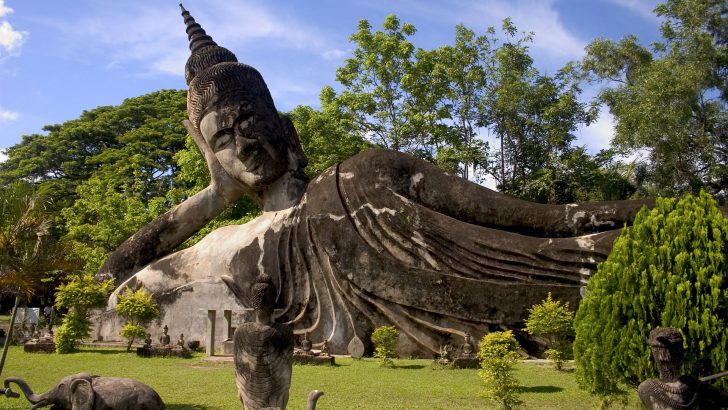
 Laos : Safety by City
Laos is the quiet kid at the Southeast Asia table, which is exactly the draw.
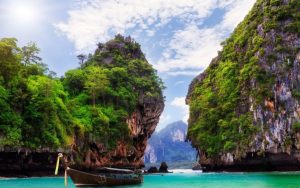
Jungle-wrapped mountains, blue-green waterfalls, saffron robes at sunrise, and towns that still feel human. It is not empty, though.
Tucked in mainland Southeast Asia, it borders Thailand, Vietnam, Cambodia, China, and Myanmar.
The country traces its roots to the Lan Xang kingdom, which later fell under French rule, gained independence in 1953, saw revolution in 1975, and now moves at a calm, steady pace.
So why do about four million people visit each year?
Culture and scenery stack up fast.
- Luang Prabang blends gilded temples, morning alms, and the teal pools of Kuang Si Falls.
- Vientiane pairs riverside sunsets with Pha That Luang and Patuxai.
- Vang Vieng swaps its old party image for caves, hot-air balloons, and limestone peaks.
- The Plain of Jars adds mystery.
- The Bolaven Plateau brings coffee farms and waterfalls.
- Down south, the 4,000 Islands slow life to bicycle speed, with river dolphins if you are lucky.
Traveling here feels personal.
Night markets serve grilled river fish and sticky rice.
River cruises drift between village life and forested banks.
Treks and community-run stays link you with local traditions.
With those traditions comes a slew of etiquette tips, visitor requirements, and social standards that might surprise you.
Warnings & Dangers in Laos

OVERALL RISK: MEDIUM
Laos is generally safe for visitors, with most issues being minor rather than life-threatening. The overall risk is medium, mainly due to road accidents, petty theft, and unexploded ordnance in rural areas. Knowing the risks here, from land mines to lax tourism regulations, will go a long way.

TRANSPORT & TAXIS RISK: MEDIUM
Transport safety in Laos is a medium risk. Roads are poorly maintained, drivers don’t always follow rules, and night travel is best avoided. Tuk-tuks and songthaews (shared trucks) are common but can be overpriced for foreigners. Licensed taxis are limited, so agree on fares upfront or use ride-hailing apps where available to cut down on scams.

PICKPOCKETS RISK: MEDIUM
Pickpocketing is a medium risk in Laos, especially in busy markets, bus stations, or tourist hubs like Vientiane and Luang Prabang. Petty thieves also target unattended bags and valuables left in vehicles. Snatch-and-grab thefts from passing motorcycles happen, particularly in cities. Incidents rise during Lao holidays.

NATURAL DISASTERS RISK: MEDIUM
Natural disasters are a medium risk. Laos sees heavy rains and flooding during the monsoon season from May to October, which can disrupt travel and damage rural infrastructure. Landslides occasionally block mountain roads. Earthquakes are less common but possible. Stay alert to local weather forecasts, especially if you’re planning river trips or visiting remote areas.

MUGGING RISK: LOW
Mugging is a low risk in Laos compared to other destinations. Violent crime against tourists is rare, and most reported incidents involve non-confrontational theft.

TERRORISM RISK: LOW
The terrorism risk in Laos is low. There have been no recent attacks targeting tourists or major urban centers. However, isolated clashes occasionally occur in Xaisomboun Province, which is why that area carries higher advisories. Sticking to recognized tourist spots greatly reduces any chance of exposure to political or armed violence.

SCAMS RISK: MEDIUM
Scams in Laos are a medium risk, mostly targeting tourists in busy areas. One common trick involves motorbike rentals: operators may stage a theft and then demand huge fees for the “stolen” bike. Never leave your passport as collateral, and use reputable agencies. Overcharging in markets or transport is common but usually minor if you negotiate politely.

WOMEN TRAVELERS RISK: MEDIUM
For women travelers, Laos is relatively safe, with a low to medium risk. Harassment is uncommon but not unheard of in nightlife areas. Dress modestly outside tourist zones to show respect for local culture and avoid unwanted attention.

TAP WATER RISK: HIGH
Tap water in Laos is a high risk for contamination. It is not safe to drink, even in major cities. Stick to bottled or filtered water, and use sealed bottles when possible. Brushing teeth with tap water is usually fine for short stays, but play it safe if you have a sensitive stomach.
Safest Places to Visit in Laos
The official tourism website is tourismlaos.org, which the Ministry of Information runs.
Look at the free download section to choose from an array of travel guides.
The capital, Vientiane, is a good starting point with landmarks like Pha That Luang, the country’s most important Buddhist stupa, and Patuxai, a war monument often compared to the Arc de Triomphe.
Luang Prabang is a UNESCO World Heritage city filled with golden temples, French colonial architecture, and the famous morning alms-giving ceremony.
Nearby, Kuang Si Falls draws travelers with turquoise pools perfect for a swim.
If you’re chasing adventure, head to Vang Vieng.
Once infamous for wild tubing, it’s now better known for hot-air ballooning, caving, hiking, and river kayaking through dramatic karst scenery.
The Plain of Jars in Xieng Khouang offers a unique archaeological mystery, with thousands of giant stone jars scattered across the countryside.
For nature lovers, the Bolaven Plateau is all about waterfalls, coffee plantations, and cooler mountain air.
Down south, Si Phan Don (the 4,000 Islands) on the Mekong is a laid-back river escape where you can spot rare Irrawaddy dolphins and cycle between villages.
Don Det and Don Khon are popular for their backpacker vibe, while Don Khong is quieter.
In Champasak Province, Vat Phou temple ruins give you a taste of Angkor-era history.
For more remote exploration, Nam Et-Phou Louey National Protected Area offers night safaris and a chance to support conservation efforts.
Places to Avoid in Laos
Xaisomboun Province is the one part of Laos that comes with a Level 3 advisory, which means “reconsider travel.”
In fact, the Canadian advisory lists it as Level 4: Avoid All Travel.
Armed clashes and unpredictable violence remain a real threat there, and even U.S. officials need special clearance to enter, so help is limited if something goes wrong.
Border areas with Burma carry their own risks, thanks to bandits, drug traffickers, and armed groups who operate outside the law.
On top of that, several provinces, including Savannakhet, Xieng Khouang, and Luang Prabang, still have large amounts of unexploded ordnance left from the Indochina War.
Review official travel advisories to see the most updated list of places to avoid.
Another thing to keep in mind when visiting Laos is that not all hotels have the same fire and safety standards you might expect in your home country.
Safety Tips for Traveling to Laos
- The local police are known as the Lao People’s Police. For emergencies, dial 191 for police, 195 for fire, and 195 or 1195 for an ambulance, though English may not be spoken. Response times can be slow outside big cities, so travelers should also rely on hotel staff or tour operators for quicker assistance in urgent situations.
- Laos does not have a robust public alert system for disasters or major events. Travelers are better off signing up for their home country’s embassy notifications, such as the U.S. STEP program. Local radio, hotels, and tour operators are also useful sources for real-time updates about floods, storms, or political events. Always keep an eye on the weather forecasts during the rainy season.
- Foreigners can drive in Laos with an International Driving Permit (IDP) alongside their valid license from home. Without an IDP, rental companies may refuse service, and police can fine you. Road conditions vary, and traffic rules are not always enforced, so driving is best left to confident, experienced drivers. Hiring a car with a driver is a safer choice.
- It’s common for police to stop foreigners for supposed traffic violations and demand bribes. If you’re detained for rowdy behavior or property damage, you may be held until you pay compensation. Embassies usually cannot help much in these situations, so avoid conflicts, stay calm during stops, and know that arguing will rarely work in your favor.
- There are no mandatory vaccines to enter Laos, but some are recommended. Hepatitis A and typhoid are common concerns due to food and water risks. Malaria prophylaxis may be advised if you’re heading to rural areas. Routine shots like tetanus, MMR, and flu should be up-to-date. Always check with a travel clinic before your trip.
- The official language of Laos is Lao. English is spoken in tourist areas, hotels, and by younger people, but don’t expect it everywhere. In rural areas, communication can be challenging. Learning a few simple Lao phrases or carrying a translation app makes things easier and shows respect for locals who may not speak English.
- Alcohol in Laos is cheap, but fake or contaminated liquor is a real risk. Methanol poisoning has caused deaths, especially from unlabeled bottles or poorly regulated bars in Vang Vieng. Stick to sealed, branded products from reputable stores or order beer, which is safer. Avoid buying spirits poured from unmarked containers or homemade rice whiskey.
- Large parts of Laos are still littered with unexploded bombs from past wars. Provinces like Savannakhet, Xieng Khouang, and Attapeu are among the worst affected. Don’t wander off marked paths or rural roads, and never pick up random metal objects. If you’re exploring the countryside, stick with guides who know which areas are safe.
- Lao law restricts relationships between foreigners and Lao nationals unless legally married. Cohabitation, sexual relationships, or even inviting a Lao partner to your hotel room can lead to arrest, interrogation, fines, or police raids. Foreigners have been detained for ignoring this rule, so it’s taken seriously. If you plan to date locally, understand the legal risks first.
- Water activities in Laos can be dangerous, especially speedboat travel on rivers or tubing in Vang Vieng. Accidents, drownings, and injuries are common, and safety standards are low. Life jackets and warning signs are not guaranteed. Swimming in the Mekong is risky due to currents.
So... How Safe Is Laos Really?
Laos is generally considered safe for travelers, but the picture isn’t spotless.
The U.S. State Department puts it at Level 2, “exercise increased caution,” while Canada advises a “high degree of caution,” also a Level 2.
As noted earlier, the Xaisomboun Province is at Level 3: Avoid Non-Essential Travel, due to armed clashes and unpredictable violence.
Beyond that, the biggest issues are leftover landmines in remote areas, occasional banditry on rural roads, and weak emergency healthcare if something goes wrong.
In tourist spots like Vientiane, Luang Prabang, and the Mekong loops, most people get by fine with normal street smarts.
Watch your belongings, avoid wandering drunk at night, and skip sketchy border zones.
If you’re sensible, Laos is welcoming, low-stress, and far less risky than the advisories might make it sound.
Just don’t plan a trip without reading the latest travel advisories, as they get updated often.
We find that the US, Canada, the UK, and Australia have the most detailed information.
How Does Laos Compare?
| Country | Safety Index |
|---|---|
| Laos | 51 |
 Nicaragua Nicaragua | 46 |
 Mauritania Mauritania | 35 |
 Djibouti Djibouti | 38 |
 Greenland Greenland | 80 |
 Ethiopia Ethiopia | 41 |
 Montenegro Montenegro | 70 |
 Liechtenstein Liechtenstein | 89 |
 French Polynesia French Polynesia | 92 |
Useful Information

Visas
Most travelers need a visa to enter Laos. You can apply online for an eVisa before arrival, which is valid at select entry points. Many visitors also use the visa-on-arrival option at major airports and land borders. Tourist visas usually last 30 days and can be extended in-country for a fee. Always check current rules before traveling.

Currency
The official currency is the Lao kip (LAK), though U.S. dollars and Thai baht are widely accepted in larger cities and tourist areas. ATMs are common, but they often dispense kip only, and withdrawal fees can add up. Credit cards aren’t as widely used outside hotels or upscale spots, so carry enough cash for daily expenses.

Weather
Laos has a tropical climate with three main seasons. The cool, dry season from November to February is the most comfortable for travel. March to May is hot, with temperatures soaring past 100°F in some regions. The rainy season, June through October, brings lush green landscapes but also muddy roads and occasional flooding.

Airports
The main international gateway is Wattay International Airport in Vientiane, with smaller hubs in Luang Prabang and Pakse. Direct flights from neighboring countries like Thailand, Vietnam, and Cambodia are common, while long-haul travelers often connect through Bangkok or Hanoi. Facilities are basic compared to bigger Asian airports, so expect limited amenities and services.

Travel Insurance
Travel insurance is strongly recommended when visiting Laos. Medical facilities outside major cities are limited, and evacuation to Thailand may be necessary in emergencies. Insurance that covers accidents, illness, and trip disruptions is wise. Policies with coverage for adventure activities like trekking, river tubing, or motorbike rentals are especially helpful for many visitors.
Laos Weather Averages (Temperatures)
Average High/Low Temperature
| Temperature / Month | Jan | Feb | Mar | Apr | May | Jun | Jul | Aug | Sep | Oct | Nov | Dec |
|---|---|---|---|---|---|---|---|---|---|---|---|---|
| High °C |
27 | 30 | 32 | 34 | 33 | 31 | 30 | 30 | 31 | 30 | 29 | 27 |
| Low °C |
15 | 16 | 19 | 22 | 23 | 24 | 23 | 23 | 23 | 21 | 18 | 15 |
| High °F |
81 | 86 | 90 | 93 | 91 | 88 | 86 | 86 | 88 | 86 | 84 | 81 |
| Low °F |
59 | 61 | 66 | 72 | 73 | 75 | 73 | 73 | 73 | 70 | 64 | 59 |
Laos - Safety by City
| City | Safety Index |
|---|---|
| Luang Prabang | 75 |
| Vientiane | 77 |














Carry spare cash
Carry some spare cash in their local currency as a lot of times from my experience, they don’t accept card unless its a big establishment like the hotel. I think smaller bed and breakfasts wouldn’t have that option either. I traveled around northern Laos and Luang Prabang and it was enjoyable.
Is it safe to go to northern Laos. Taking a river cruise on a small boat down the Mekong river.
Then continuing on to either southern Laos or
to Vietnam or Thailand for a beach holiday but not too touristy. Want some thing small and interesting
place to stay. No big hotels.
Have also never been to Laos. Have been to Three Halong Bay, Da Nang and Hue and Chiang Rai and Chiang Mai. Three people in their sixties looking for
a quiet and beautiful places to stay. Also did a cooking school in Chiang Mai two years ago.
Don't drink like a pig.
Don’t get a HookA from a sketchy place, don’t drink like a pig and no one will rob you or mug you. Most Laotians physically not capable to mug you even if they wanted to. Very nice people, poor but nice. Lived 2 years in Vientiane.
It’s interesting how a place can feel so inviting yet hold so many layers of history and culture beneath the surface, like you’re really just scratching the surface of what Laos has to offer.
Guess I didn’t realize a quiet kid could pack so much charm. Who knew sticky rice and etiquette tips were the secret to a good time?
Kuang Si Falls are gorgeous, but the long line for the plunge pool made it feel kind of overrated.
Did you find Luang Prabang’s morning alms oddly moving, especially after standing shivery by those teal pools at Kuang Si Falls?
Still can’t get over how Kuang Si Falls’ cool spray and the smell of grilled river fish made me slow down and rethink what “busy” even means.
Did you feel that same quiet calm when the smell of grilled river fish and sticky rice hits at the night market by the Mekong, or was I just too taken by the slow boat views?
Sure, Laos might not be the loudest spot in Southeast Asia but trust me, navigating those etiquette rules almost felt like a jungle of their own, way harder than dodging motorbikes or figuring out how to eat sticky rice without making a mess.
Spent a sunset by the Mekong once and was totally caught off guard by how peaceful everything felt, like time actually slowed down for a bit.
I remember sitting by the Mekong at sunset and feeling this rare kind of peace, like the world had slowed down just for a moment.