


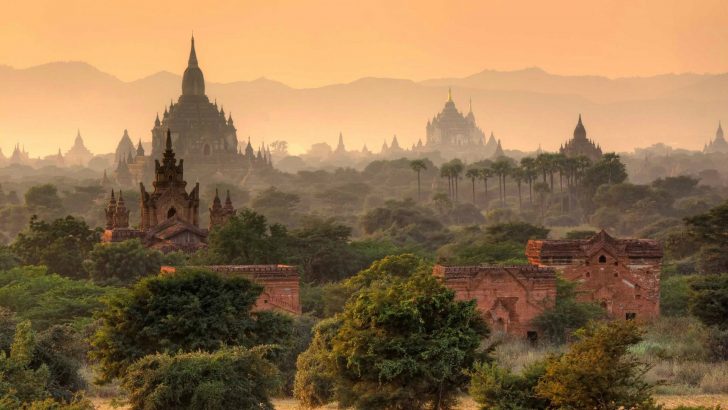
Myanmar is one of the most dangerous countries in the world right now, and that is not an exaggeration meant for clicks.
It sits in Southeast Asia between India, China, Thailand, Laos, and Bangladesh, with a long coastline along the Bay of Bengal and some of the most varied geography in the region.
On paper, it should be a traveler’s dream.
The trouble began long before today, but the 2021 military coup pushed the country into open conflict.
Since then, fighting between the military, resistance groups, and ethnic armed organizations has spread across large parts of the country.
The planned 2026 elections are unlikely to deliver quick stability, as they are widely seen as controlled by the military rather than a true path to peace.
Myanmar may one day reopen safely.
Today is not that day.
Infrastructure is fragile, the rule of law is inconsistent, and civilian areas are routinely affected by violence, airstrikes, and sudden crackdowns.
Movement can be restricted overnight.
Communication can disappear just as fast.
Despite this, the government claims that more than one million people visited in 2024, mostly from neighboring Asian countries such as China and Thailand.
Many of these trips are tightly controlled, short, or tied to business, religious travel, or border crossings rather than open tourism.
The attractions that once drew global visitors are still there in theory.
Ancient temple complexes, river journeys, tropical beaches, and hill towns all remain part of Myanmar’s landscape.
The reality on the ground is very different.
Security risks, weak emergency response, strict laws, poor transportation, and unpredictable regional fighting make even well-planned travel dangerous.
This is not a place where common sense and experience can “manage the risk.”
Too much is outside a visitor’s control.
We will break down each risk in detail throughout this article.
But the core message is simple.
Even the most adventurous travelers should stay away.
Warnings & Dangers in Myanmar

OVERALL RISK: HIGH
All risks are high in Myanmar, and even the elections of 2026 likely won't bring more stability to this tense country. Most governments will insist that you avoid all travel to Myanmar.

TRANSPORT & TAXIS RISK: HIGH
Getting around Myanmar is genuinely risky. Roads are rough, poorly lit, and often damaged by rain. Traffic mixes cars, bikes, animals, and pedestrians with little enforcement. Night driving is dangerous, drunk or drugged drivers are common, and help after accidents is limited. Even buses and trains can be unsafe and unreliable.

PICKPOCKETS RISK: HIGH
While traditional petty theft isn't your biggest concern here, you still must treat it as a high risk. Recent data shows crime rates are increasing, but when terrorists and armed battles are happening around you, pickpockets seem to be the lesser of the evils.

NATURAL DISASTERS RISK: HIGH
Myanmar faces a high natural disaster risk because of where it sits and how fragile its infrastructure is. Cyclones, flooding, and landslides hit regularly, especially during the monsoon season. When storms roll in, roads wash out, power fails, and help can be slow to arrive. Disasters here are not rare events.

MUGGING RISK: HIGH
This is another high risk, but with arbitrary arrests happening, you could quickly go from being a victim to being a prisoner. Do your best to blend in and hide signs of wealth. Stick to curfews and don't go out at night.

TERRORISM RISK: HIGH
Myanmar carries a high terrorism risk because of ongoing armed conflict between the military, resistance groups, and ethnic militias. Attacks, bombings, and clashes happen in cities and rural areas, often without warning. Civilians are not the targets, but they can get caught in the middle. There is no clear “safe zone.”

SCAMS RISK: HIGH
Scams here are more elaborate, like romance scams and work scams. Some involve human trafficking would-be workers to force them into the scam industry. Don't let anyone from this region contact you online or get personal information from you.

WOMEN TRAVELERS RISK: HIGH
Women face elevated risks in Myanmar due to limited legal protections, inconsistent policing, and deep cultural barriers around reporting harassment or assault. Street harassment happens, and help is not always accessible. Solo travel draws attention, especially outside major cities. Add in curfews, restricted movement, and unstable security, and personal safety is consistently compromised.

TAP WATER RISK: HIGH
Tap water in Myanmar is not safe to drink. Even in major cities, treatment systems are inconsistent, and pipes are old. Locals boil water or rely on bottled supplies. Brushing teeth, washing produce, and making ice with tap water can still cause illness. Stick to sealed bottles and purified water for everything.
Safest Places to Visit in Myanmar
The Ministry of Hotels and Tourism claims that about one million people visited Myanmar in 2024.
Most visitors come from China, Thailand, or Korea.
If you’re interested in seeing what “could be” on a trip to Myanmar, use the official tourism website myanmar.gov.mm/travel-myanmar.
If Myanmar ever becomes safer and genuinely open to independent travel again, the country has the bones of an extraordinary destination.
Ancient temple cities, river-based travel, tropical coastlines, and mountain regions offer the kind of geographic variety most countries can only dream of.
A stabilized Myanmar could support cultural tourism, nature-based travel, and slow, immersive experiences that feel increasingly rare in Asia.
In that future version, visitors could explore historic capitals, Buddhist pilgrimage sites, and traditional markets without navigating security concerns or legal gray areas.
For now, these remain possibilities rather than practical plans.
But they explain why Myanmar still captures attention.
Not for what it is today, but for what it could become if peace, infrastructure, and openness ever replaced the current reality.
Places to Avoid in Myanmar
Look at any nation’s travel advisory, and you’ll be greeted with a wall of text about why there aren’t safe places to visit in Myanmar.
You don’t even necessarily have to do something that seems wrong here; arbitrary detention, arrest, and sentencing are common for foreigners.
While I don’t want to repeat too much information about the dangers here, one thing worth noting is that there are job scams that can lure in adventurous workers.
The jobs are posted in Thailand, but people are often taken to scam centers in Myanmar and forced to work.
The threats here are more than what is happening.
There’s also a concern about how a seemingly quiet trip could suddenly turn violent due to civil unrest or political discourse.
Safety Tips for Traveling to Myanmar
- Policing is handled by the Myanmar Police Force. In theory, you can dial 199 for police, 191 for ambulance, and 192 for fire. In practice, the response can be slow, and English is limited. Save your embassy contact, your hotel’s front desk number, and a local guide’s phone number. Those will usually be your fastest (if not only) lifelines.
- There is no nationwide emergency alert system for travelers. Your best real-time updates come from your embassy’s travel alerts, international news, and your hotel or local contacts. Many disruptions never make official announcements.
- Myanmar’s Department of Meteorology and Hydrology uses a color system for storms. Red means a storm is nearing landfall, orange means it is moving toward the country, yellow signals development, and brown indicates an active storm. If you hear red or orange, take it seriously. Flooding, road closures, and power outages can follow fast.
- Technically, foreign nationals need local authorization and documentation to drive, but realistically, you should not attempt it. Road conditions are poor, signage is inconsistent, and enforcement varies wildly. Accidents are common, and liability is complicated.
- No vaccines are legally required for entry, but several are strongly recommended depending on your itinerary. Hepatitis A and B, typhoid, tetanus, and routine vaccines should be current. Some travelers may need malaria precautions in rural areas.
- Burmese is the official language. English is spoken in hotels, tour operations, and by some younger people in major cities, but it drops off quickly outside tourist centers. Do not expect easy communication in rural areas.
- Foreign visitors are required by law to stay in registered hotels or guesthouses. Staying with friends, in private homes, or in unregistered properties can carry serious penalties, including imprisonment and deportation. Always confirm that your accommodation is officially licensed. This is not a “gray area” rule. It is enforced.
- Religion is legally protected, and insulting it is a crime. The definition is broad and includes tattoos, artwork, social media posts, and creative projects involving Buddhist imagery. Past cases have led to arrests, deportations, and prison sentences.
- Myanmar’s telecommunications laws criminalize defamation, intimidation, and “undue influence” online. Negative posts, criticism, or even jokes about authorities, religion, or local institutions can lead to fines or jail time. What feels like casual commentary elsewhere can be treated as a criminal offense here. Assume anything you post is public and traceable.
- Consensual same-sex relationships are technically illegal under colonial-era laws that criminalize “unnatural” acts, with penalties that can include life imprisonment. While these laws are rarely enforced, reports exist of police using them to intimidate or extort bribes.
So... How Safe Is Myanmar Really?
Myanmar is far too unstable to visit in the near future.
Almost all government advisories list it at Level 4: Do Not Travel, the most stern warning possible.
The risks are intimidating and somewhat terrifying.
This isn’t just about crime rings or inadequate healthcare access.
The list of reasons Myanmar (Burma) is too dangerous to visit includes:
- Terrorist attacks
- Political violence
- Kidnapping
- Arbitrary arrest and detainment
- Civil unrest
- Armed conflict
- Dangerous demonstrations
- Land mines/unexploded ordnance
- Forced military enrollment
- Human trafficking
Even if you could safely get to Myanmar and travel around, you won’t find an established tourism industry or safety standards.
We can’t be much more blunt about how unsafe Myanmar is for visitors.
How Does Myanmar Compare?
| Country | Safety Index |
|---|---|
 Myanmar Myanmar | 39 |
 El Salvador El Salvador | 65 |
 Eritrea Eritrea | 32 |
 South Korea South Korea | 86 |
 Togo Togo | 69 |
 Brazil Brazil | 52 |
 Oman Oman | 76 |
 Algeria Algeria | 44 |
 Guyana Guyana | 43 |
Useful Information

Visas
Myanmar requires a visa for most travelers. The eVisa is the simplest option, usually approved within a few days, but entry rules can change quickly. Your passport must be valid for at least six months. You'll also need proof of hotel accommodations upon arrival.

Currency
Cash is king. The local currency is the kyat, and U.S. dollars are widely accepted for hotels and tours if they are crisp and unmarked. ATMs exist in major cities but are unreliable. Bring more cash than you think you need, and do not expect cards to work consistently.

Weather
Myanmar runs on three seasons: hot, rainy, and “still hot but tolerable.” November through February is the most comfortable time for travel. March to May is brutally hot. The monsoon hits from June through October, which means flooding, washed-out roads, and canceled transport in some regions.

Airports
Yangon International is the main gateway, with limited direct international routes compared to neighboring countries. Mandalay and Naypyidaw handle some regional flights. Domestic flights connect major cities, but schedules shift, and delays are common.

Travel Insurance
You will want comprehensive insurance, and you will want to read the fine print. Many policies exclude destinations with high security risks or limited medical infrastructure. Make sure evacuation is covered. If a provider will not insure Myanmar at all, that's just another reason to avoid this time at this time.
Myanmar Weather Averages (Temperatures)
Average High/Low Temperature
| Temperature / Month | Jan | Feb | Mar | Apr | May | Jun | Jul | Aug | Sep | Oct | Nov | Dec |
|---|---|---|---|---|---|---|---|---|---|---|---|---|
| High °C |
32 | 35 | 38 | 38 | 33 | 31 | 30 | 30 | 31 | 32 | 32 | 31 |
| Low °C |
18 | 19 | 22 | 24 | 25 | 25 | 25 | 25 | 24 | 23 | 21 | 18 |
| High °F |
90 | 95 | 100 | 100 | 91 | 88 | 86 | 86 | 88 | 90 | 90 | 88 |
| Low °F |
64 | 66 | 72 | 75 | 77 | 77 | 77 | 77 | 75 | 73 | 70 | 64 |






Safe and secure
As mentioned in the article, Myanmar is safe likely due to the punishments they have in place for those who want to violate and give problems to visitors and fellow citizens. You’d wish other countries would follow suit, no? I would suggest that you book ahead to get good deals. Also avoid the no-go zones, which are far from tourist places anyway so nothing to worry about. It just helps to be aware I guess.
Extremely safe, would leave my kids there for a month
Btw there’s only one review because they’re the only one to come back alive
I lived in Myanmar and I really loved my time there. I wish it be safe like before the military rule few year back. I visited most of cities around and especially was in love with the parks.
An extremely interesting country to visit.
Book your tour, we used “Explore” a British based group that runs excellent guided tours of a week to 10 days. Very knowledgeable local English speaking guides, excellent mid- range hotels, very good transport arrangements. Some free time for your own walking around. You will be in the tourist areas, well supervised, peaceful and shouldn’t have any problems, provided you pay attention to the basics of not flashing money, not wearing jewels and fancy watches, etc. Safer than you will feel in most big American cities. Enjoy the great Buddhist center of Theravada Buddhism.
Dangerous Place
Extremely dangerous. Do not go there and mostly reviews here are fake.
The detailed breakdown of pickpockets, transport quirks, and local scams gave a grounded feel, but the overall risk and unrest mentioned make it less inspiring for casual travel plans.
Is it just me, or does “one million visitors” in a war zone sound like a really ambitious marketing campaign?
Reading this makes me appreciate my couch and Netflix even more; there’s an adventure and then there’s whatever’s happening over there!
It’s crazy to think about how beautiful Myanmar is but how intense things have gotten; makes you really appreciate the places that are safe to explore.
Is it really true that more than a million people visited Myanmar last year? That seems hard to believe given everything going on, especially with how dangerous things sound right now.
Those ancient temples are tempting, but with overnight movement restrictions, sudden communication blackouts and even airstrikes I kept my trip to a short border crossing and honestly left feeling pretty uneasy.
Can’t believe the power cuts hit right during the temple tour, had to fumble around with a tiny torch and felt that nervous laugh you get when plans go sideways.
That line about more than one million visitors in 2024 really surprised me and gave me a knot in my stomach, do you know how many of those were tightly controlled short trips or crossings versus actual visits to the ancient temple complexes?
I thought about visiting temples there last year, but after hearing about sudden travel restrictions and spotty communication, it just didn’t feel worth the stress.
Have you heard if there’s any safe way at all for tourists to see those ancient temples right now without risking too much?
Yeah, nothing like suddenly losing all your phone signal while stuck in the middle of nowhere to really make you rethink your “adventure” plans.
Sure, because nothing screams vacation like wondering if you’ll get caught in an airstrike while trying to take a nice picture of a temple.