


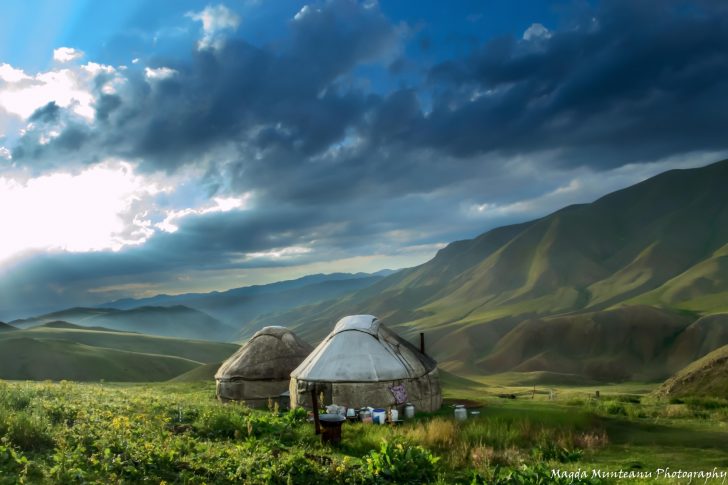
If you have ever wanted to visit a country where snowcapped mountains outnumber tourists and nomadic traditions still shape daily life, the Kyrgyz Republic, often called Kyrgyzstan, delivers that rare combination.
The country sits in Central Asia, bordered by Kazakhstan, Uzbekistan, Tajikistan, and China, right along historic Silk Road routes.
Roughly nine million people visit each year, but this number can be misleading.
Most travelers come from nearby countries like Kazakhstan, Uzbekistan, Russia, and China.
Long-haul tourism from Europe, North America, and Australia remains relatively small, which helps explain why much of the country still feels refreshingly untouristed.
What draws people here is the landscape first and foremost.
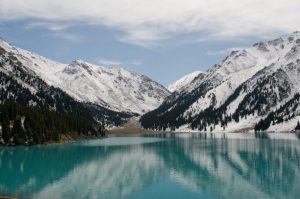
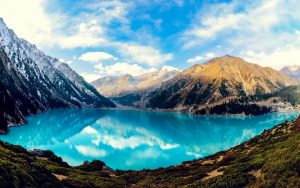
Kyrgyzstan is famously mountainous, with about 90 percent of the country covered by peaks and high-altitude terrain.
Outdoor travel is a major draw, especially hiking, horseback trekking, skiing, and yurt stays in remote valleys.
Cultural experiences matter just as much.
Nomadic traditions are still very much alive, from eagle hunting demonstrations to summer jailoo pastures where families live seasonally.
Cities like Bishkek and Osh add Soviet-era history, bustling bazaars, and a growing café culture to the mix.
Kyrgyzstan appeals most to travelers who value nature, cultural depth, and places that have not yet been smoothed over for mass tourism.
No matter how intriguing the Kyrgyz Republic sounds, there are specific safety risks for Westerners.
“Kyrgyz Republic” is the formal name used in official settings, while “Kyrgyzstan” is the shorter, internationally familiar version.
Both are correct, and locals use them interchangeably.
Warnings & Dangers in Kyrgyz Republic

OVERALL RISK: MEDIUM
Despite the number of visitors each year, the risk for Westerners is medium due to crime risks. We'll get more specific as we go through this article.

TRANSPORT & TAXIS RISK: MEDIUM
This is a medium risk, and no matter how you choose to get around, there are hazards. Drivers can be aggressive. Police can stop you at any time and demand fines. Public transportation systems can be overcrowded and dangerous. Taxis can be risky, too, especially if you stand out as a foreigner.

PICKPOCKETS RISK: MEDIUM
This is another medium risk, as petty theft is a problem, especially in crowded areas and major cities. You'll need to keep your wits about you!

NATURAL DISASTERS RISK: MEDIUM
The weather in Kyrgyzstan can be unpredictable, especially in the mountains. Sudden temperature drops, heavy snow, landslides, and fast-changing conditions are real risks, even in summer. Winter travel can be disrupted by snow and road closures. Treat this as another medium risk.

MUGGING RISK: MEDIUM
This is another medium risk, especially after dark. While the majority of crimes aren't violent, you can't afford to risk it since organized gangs are known to target foreigners in this country.

TERRORISM RISK: MEDIUM
The main concerns involve weather conditions and occasional border tensions with neighboring countries, especially near Tajikistan. These issues are usually localized. Staying informed, avoiding border areas, and planning for changing weather covers most risks. Most travel advisories encourage all visitors to be aware of the potential for terrorism, especially due to tensions in the Middle East.

SCAMS RISK: MEDIUM
Treat this as a medium risk since there are potential scammers and fake police officers throughout the country. Check with your embassy for recent scam concerns before you book your trip.

WOMEN TRAVELERS RISK: LOW
Kyrgyzstan is generally safe for women travelers, especially in cities and established tourist areas. Harassment can happen, usually in the form of unwanted attention rather than violence. Solo women should dress modestly, trust their instincts, and avoid isolated areas at night.

TAP WATER RISK: MEDIUM
Tap water in Kyrgyzstan is not considered safe for most travelers to drink. Locals often boil water before using it, especially outside major cities. Visitors should stick to bottled or filtered water for drinking and brushing teeth.
Safest Places to Visit in Kyrgyz Republic
Start with the official tourism website, which the Department of Tourism provides under the Ministry of Economy and Commerce of the Kyrgyz Republic.
That address is tourism.gov.kg.
Bishkek is often the starting point, with leafy parks, Soviet-era architecture, local museums, and easy access to nearby nature.
The State History Museum, Osh Bazaar, and Ala-Too Square give a solid sense of the country’s past and present.
Just outside the city, Ala Archa National Park provides quick mountain scenery without a long journey.
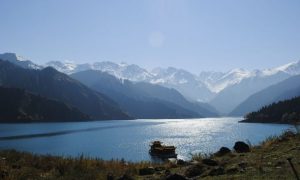
Issyk-Kul Lake is one of the country’s most popular regions, known for beaches, resort towns, and mountain backdrops.
Towns like Cholpon-Ata and Karakol offer access to petroglyph sites, hot springs, hiking routes, and regional museums.
Karakol is also a gateway to trekking in the Tian Shan mountains.
In the south, Osh is one of Central Asia’s oldest cities and a key Silk Road stop.
Sulaiman-Too Sacred Mountain, a UNESCO World Heritage Site, dominates the city and includes caves, viewpoints, and a small museum.
The surrounding Ferghana Valley region adds bazaars, historic towns, and agricultural landscapes.
For travelers looking beyond cities, regions like Naryn and Song-Kul focus on wide-open space, alpine lakes, and nomadic culture.
Yurt stays, horseback trips, and seasonal festivals are common here.
Other highlights include Burana Tower near Tokmok, Tash Rabat caravanserai near the Chinese border, and Jeti-Oguz canyon with its striking red rock formations.
Places to Avoid in Kyrgyz Republic
Most travel advisories for Kyrgyzstan agree on one main point: location matters.
Border areas are the biggest concern, especially near Tajikistan, where sporadic clashes and sudden closures have occurred in recent years.
These incidents are usually localized, but they can escalate quickly and with little warning.
Unless you have a specific reason to be there, border regions are best avoided.
Read the latest travel advisories from your government to see if the risk is elevated before your trip.
Remote mountain regions also deserve caution, not because they are unsafe in a crime sense, but because infrastructure is limited.
Poor road conditions, unpredictable weather, and limited emergency services can turn minor issues into major problems.
Stick to well-traveled routes, use local guides when heading off-grid.
Safety Tips for Traveling to Kyrgyz Republic
- Local police can be reached by dialing 102. Ambulances are 103, fire services are 101, and 112 works as a general emergency number nationwide. Response times can vary, especially outside cities, so do not expect Western-style speed in rural areas.
- The easiest way to get official alerts is to enroll in your country’s traveler alert system, such as the U.S. STEP program or similar services from the UK and Canada. These send updates about protests, border issues, and natural disasters.
- Foreigners need a valid home-country license and an International Driving Permit. Road conditions can be rough, signage limited, and local driving habits unpredictable. Even where roads are paved, the aggressive driving habits can be overwhelming. This is not a beginner road-trip destination.
- No vaccines are required for entry, but routine vaccines should be up-to-date. Hepatitis A, typhoid, and rabies are commonly recommended, especially for rural travel. Check with the CDC before your trip so you’ll have the most updated information.
- Carry medications in original packaging with a doctor’s prescription translated into Russian. Some common meds elsewhere are restricted. Check the Ministry of Health list before you travel.
- Kyrgyz and Russian are the official languages. English is limited outside hotels, tour operators, and younger urban crowds. Translation apps help a lot. It’s wise to speak the local language, at least conversationally, to avoid standing out as a tourist.
- Some buildings are off-limits for photos. Always ask before photographing government buildings, uniformed personnel, markets, or anything that looks security-related. When in doubt, don’t snap a picture.
- Proselytizing is illegal because of strict religious regulations. Violations can lead to fines, detention, or deportation. Practicing privately is fine. Actively recruiting is not. Respect the religious sites and practices of the locals while you’re visiting.
- Hunting without a license is illegal. Firearms require advanced government permits. Violations can lead to serious criminal charges and confiscation.
- Much of Kyrgyzstan sits above 5,000 feet, and altitude sickness becomes more likely above 8,000 feet, especially in mountain regions and alpine lakes. Headaches, nausea, and fatigue are common if you ascend too quickly. This is definitely a topic to discuss with your doctor several weeks before your trip
So... How Safe Is Kyrgyz Republic Really?
The travel advisories from the United States, the United Kingdom, Australia, and Canada paint a mixed message for visiting the Kyrgyz Republic.
On a scale of Level 1 to Level 4, with Level 1 being the lowest risk, here’s how it breaks down:
- United States: Level 1 for the country, Level 2 for the border with Tajikistan
- Canada: Level 2 for the country, with violent crime being the biggest risk.
- United Kingdom: Doesn’t list a risk level, but gives details about specific risks in crime, terrorism, and natural incidents.
- Australia: Level 2 due to risks of terrorism, violent crime, and civil unrest.
In the end, I would encourage you to read all the travel advisories to find your comfort level.
If you plan on doing mountainous, high-altitude adventures, you should know that rescue teams are not common.
You should be with a local trained guide and have self-rescue skills.
Out of the utmost caution, the Batken region is the one that should be avoided if you’re particularly concerned.
Stay up to date on headlines involving civil unrest and take all the steps you can to avoid standing out as a foreigner.
At the same time, I read through a lot of Reddit forums when researching this article, and you’ll get plenty of feedback about how “safe” the country is.
You’ll need to make a decision for yourself, since even similar governments can’t seem to come to an agreement on the safety risks here.
How Does Kyrgyz Republic Compare?
| Country | Safety Index |
|---|---|
 Kyrgyz Republic Kyrgyz Republic | 38 |
 Pakistan Pakistan | 26 |
 Liberia Liberia | 45 |
 Turkey Turkey | 45 |
 North Macedonia North Macedonia | 55 |
 Bonaire Bonaire | 80 |
 Zambia Zambia | 52 |
 Montenegro Montenegro | 70 |
 Niger Niger | 37 |
Useful Information

Visas
You'll only need an e-visa if you plan to stay for less than 60 days in a 120-day period. It's required to register at the passport desk within five days of arrival. Don't skip this step, or else you'll be fined and stuck in the country until you pay the fine. Be sure your passport has at least six months before expiration.

Currency
The Kyrgyz Republic uses the Kyrgyzstani som, abbreviated KGS. Cash still matters, especially outside Bishkek and Osh, so don’t rely solely on cards. ATMs are common in cities but sparse in rural areas. Small bills are useful for taxis, markets, and guesthouses. Currency exchange is easy at banks and licensed kiosks.

Weather
Kyrgyzstan has a sharply continental climate with big seasonal swings. Summers are warm to hot in the valleys, especially around Bishkek, while mountain areas stay cooler. Winters are cold, with heavy snow at higher elevations. Spring and fall are short but pleasant, though the weather can change fast, especially in alpine regions.

Airports
Kyrgyzstan’s main international gateway is Manas International Airport near Bishkek, which handles most long-haul and regional flights. Osh International Airport serves southern Kyrgyzstan with regional connections. Smaller airports exist across the country, but schedules can be limited and weather-dependent, especially in winter.

Travel Insurance
Travel insurance is not officially required to enter the Kyrgyz Republic, and border officials do not ask for proof. That said, many tour operators require it to join their trips. Coverage is strongly recommended anyway, since medical care is limited outside major cities and evacuation can get expensive fast. Higher-risk activities might require an additional adventure insurance policy.
Kyrgyz Republic Weather Averages (Temperatures)
Average High/Low Temperature
| Temperature / Month | Jan | Feb | Mar | Apr | May | Jun | Jul | Aug | Sep | Oct | Nov | Dec |
|---|---|---|---|---|---|---|---|---|---|---|---|---|
| High °C |
-1 | 0 | 8 | 14 | 19 | 24 | 27 | 26 | 21 | 14 | 6 | 0 |
| Low °C |
-8 | -7 | 0 | 5 | 9 | 14 | 16 | 15 | 11 | 6 | -2 | -6 |
| High °F |
30 | 32 | 46 | 57 | 66 | 75 | 81 | 79 | 70 | 57 | 43 | 32 |
| Low °F |
18 | 19 | 32 | 41 | 48 | 57 | 61 | 59 | 52 | 43 | 28 | 21 |







I have been to Kyrgyzstan and I would say that it is very safe country. The capital city Bishkek is very beautiful and safe too. People infact love and respect foreigners.
Safest country I've ever visited
just returned from two weeks in Kyrgyzstan and it’s one of the safest places I’ve ever traveled. No worries about pickpockets in any of the markets or anywhere, for that matter. Police were always nice and respectful. Didn’t bother locking car doors when leaving camera and binoculars inside. Very friendly people.
How are you so sure? My experiences with Kyrgyz Republic match the information in the safety score. I had several issues when staying here. I was followed by a group of men and they were trying to shove me down a blocked off area. Thankfully a policeman had been there. I can’t imagine what would have happened to me if he had not seen what was happening. NEVER go here as a single woman!
wow. did you do any on the ground research?? I went there no issues, out at night a couple of times in Bishkek. Earthqukes no more or less likely than in neighbouring countries.
Have you been to KG?
I lived in KG for almost a year and I can assure you that the country is extremely safe. Just avoid the sensitive areas at night (Osh bazar, the Uzbek exclaves and the Tajik border crossing points in Batken). If a police man harasses you, just call your embassy and yell at him in a foreign language. KG is an amazing place, very welcoming and SAFE. My Female French and German friends were walking alone in the night in Bishkek and Osh, and nothing ever happened to them.
No.
Please stop assuming that just because you had no negative experiences that it’s some Heaven on Earth
Wildly uninformed on Kyrgyzstan and most of central asia it looks like. DO YOUR RESEARCH.
Didnt feel comfortable especially in evening/dark ..bishkek.and elswhere…somene was knocking at my hotel room several times and it wasnt hotel staff!!!
This place gave me a grounded look at both the amazing mountains and everyday risks you can run into. From taxi scams and petty theft to unpredictable weather in rural canyons, it made me think twice about routes and guides but didn’t kill my excitement for Issyk-Kul.
The mountains there seriously make you feel like you’ve stepped into another world, and the nomadic vibes add a unique twist to the whole experience.
It’s wild to think there are still places like Kyrgyzstan where nature feels so untouched and the culture is so vibrant; I can’t get over the idea of staying in a yurt surrounded by those breathtaking mountains!
Sometimes I get unexpectedly choked up remembering waking before dawn in a yurt in a remote valley, the thin high-altitude air making my lungs ache while an elder quietly readied the eagle for a demonstration.
Seeing an eagle hunter on a snowy ridge gave me proper goosebumps, never expected that right outside town.
After a night in a yurt with the stove glowing and horses snorting outside, I still catch myself wondering how the sharp mountain air and empty roads change the way you measure time, and it makes me oddly restless and grateful.
I had no idea how quiet it gets up there until I slept in a yurt at about 3,000 meters and my breath froze in the night air.
The high meadows still get to me, that sharp cold at 3,000 meters and the smell of wood smoke in a yurt make everything feel honest and small in the best way.
Didn’t expect how quiet and untouched the mountains felt, like stepping into a whole different world where the air actually feels different.