


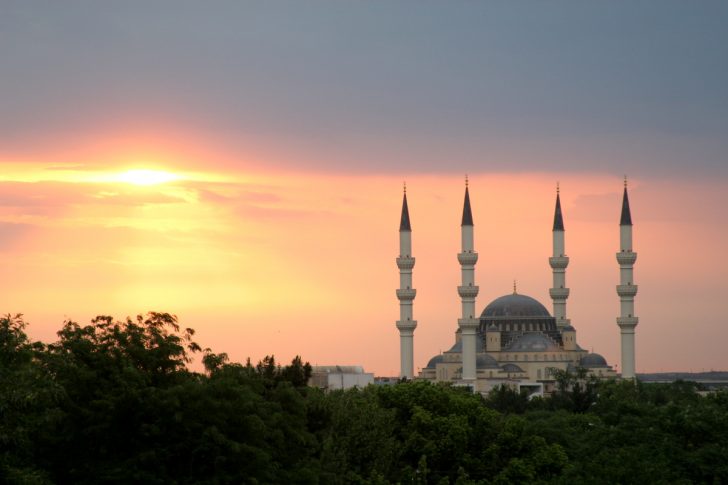
Turkmenistan is one of the least-visited countries on Earth, and that is entirely by design.
Sitting in Central Asia along the Caspian Sea, it borders Kazakhstan, Uzbekistan, Afghanistan, and Iran, occupying a strategic crossroads that once thrived along the Silk Road.
For centuries, trade, empires, and armies passed through these deserts.
Then came Russian expansion, Soviet rule, and finally independence in 1991, followed by decades of rigid authoritarian governance.
That political legacy shapes nearly every aspect of life today, especially tourism.
After independence, Turkmenistan embraced isolation, state control, and strict surveillance.
Borders tightened, visas became invitation-only, and travel was transformed into a tightly regulated system built around monitoring, not hospitality.
Modern reforms have been slow, cautious, and largely symbolic, leaving one of the world’s most restrictive entry systems firmly in place.
So why do people still try to go?
Curiosity, mostly.
Travelers are drawn by the country’s surreal capital, ancient Silk Road ruins, desert landscapes, and the flaming Darvaza gas crater.
Others go simply because so few ever have.
But visiting Turkmenistan requires far more than courage and cash.
It demands patience, planning, official approvals, and a deep understanding of a country that operates far outside modern tourism norms.
This is travel stripped of spontaneity, wrapped in bureaucracy, and frozen in a version of time most of the world left behind.
Warnings & Dangers in Turkmenistan

OVERALL RISK: LOW
Technically, there's a low risk in most of Turkmenistan. However, that is dulled by the fact that you can't go there without an invitation.

TRANSPORT & TAXIS RISK: HIGH
Transportation is a high risk, mostly because of your limited options. You'll have to stick with what is arranged by your tour guide or the person who invited you. Taxis, public transportation, and ferries are all risky.

PICKPOCKETS RISK: LOW
This is a low risk, as crime rates are low, but that's also because so few people are invited here. The country isn't very transparent with crime data, either, so take that information with a grain of salt.

NATURAL DISASTERS RISK: MEDIUM
Turkmenistan faces medium natural disaster risks, mainly earthquakes, extreme heat, drought, and seasonal dust storms. The country sits in an active seismic zone, especially near the Iranian border. Summers bring intense desert heat, while prolonged drought strains water supplies. Spring and fall can deliver powerful dust storms that reduce visibility, worsen air quality, and disrupt transportation.

MUGGING RISK: LOW
Crime rates are low, even for violent crime. However, you'll need to use extra caution at night. Bars and nightclubs are known to have violent outbursts, and you don't want to get caught in the middle of that.

TERRORISM RISK: LOW
Turkmenistan comes with the standard warning that terrorism can happen anywhere at anytime. Given how tightly controlled tourism is, there's not much chance of a major attack at a tourist center, but you'll need to check the latest travel advisories before you depart to get the latest information.

SCAMS RISK: LOW
Scam risks in Turkmenistan are low compared to many destinations, largely because tourism is tightly controlled. That said, travelers may encounter inflated prices, unofficial guides offering “special access,” and currency exchange manipulation. Stick with licensed tour operators, exchange money only through official channels, and avoid side arrangements. Watch out for romance scams before your trip, too.

WOMEN TRAVELERS RISK: LOW
Women travelers face a low violent crime risk but a higher cultural and legal sensitivity. Conservative social norms mean modest dress and reserved behavior are strongly advised. Solo women may attract attention, especially outside Ashgabat. Public displays of affection, close friendships with local men, or perceived romantic involvement can lead to questioning, fines, or deportation.

TAP WATER RISK: MEDIUM
Tap water in Turkmenistan is not considered safe for drinking. Water treatment standards vary widely, and contamination risks increase outside major cities. Travelers should use sealed bottled water for drinking and brushing teeth. Ice, street drinks, and raw produce washed in local water also pose a higher risk. Stick to bottled beverages and well-reviewed restaurants.
Safest Places to Visit in Turkmenistan
The Ministry of Foreign Affairs of Turkmenistan oversees tourism, but it is far more focused on control than promotion.
There is no glossy tourism website, no easy planning portal, and no casual trip planning.
That is intentional.
Nearly all visitors enter by invitation only, which means travel here requires advance approval, rigid itineraries, official guides, and a good dose of patience.
That said, there are things worth seeing if you manage to get in.
Ashgabat is the main draw, famous for its surreal white-marble skyline, gold statues, spotless boulevards, and monumental architecture that feels more like a movie set than a functioning capital.
The ancient Silk Road city of Merv, a UNESCO World Heritage Site, reveals sprawling ruins that once rivaled Baghdad in influence.
Darvaza’s flaming gas crater, nicknamed the “Door to Hell,” delivers one of the most otherworldly sights on Earth, glowing nonstop in the middle of the Karakum Desert.
Beyond that, travelers encounter desert landscapes, remote fortresses, Soviet-era monuments, carpet museums, and quiet bazaars.
None of it is especially easy to access.
Routes, hotels, and schedules are tightly regulated, often changing with little notice.
Visiting Turkmenistan takes careful planning, official coordination, and a willingness to surrender spontaneity.
Places to Avoid in Turkmenistan
While not all travel advisories agree on this, it’s wise to avoid the areas near the Iran and Afghanistan border.
Beyond that, Turkmenistan is more about things to avoid than places to avoid.
Expect all of your internet activity and social media posts to be monitored.
You don’t have the right to privacy in Turkmenistan.
Since visiting Turkmenistan is by invitation only, you can’t veer off the planned itinerary or stay somewhere other than where you’re scheduled to go.
Even trying to give gifts to women in Turkmenistan can get you arrested.
We’ll detail some of the top safety tips in the next section, but read all the travel advisories thoroughly before considering a trip here.
Safety Tips for Traveling to Turkmenistan
- Emergency services in Turkmenistan are limited and inconsistent. Dial 102 for police, 103 for ambulance, and 101 for fire services. English is rarely spoken, and response times can be slow. Hotels often act as intermediaries during emergencies, so involve staff whenever possible. Keep embassy contact info saved offline and carry written addresses in Russian or Turkmen.
- There is no public emergency alert system for travelers. News, protests, border closures, or disasters are rarely broadcast openly. Embassy registration is essential so you receive official security updates. Hotels and tour guides are often your fastest source of local information. If something major happens, assume limited transparency and delayed public communication.
- Foreigners technically need an international driving permit, but self-driving is strongly discouraged. Road conditions, aggressive driving, frequent checkpoints, and unpredictable enforcement make it stressful. Carjacking and roadside stops can escalate quickly. Most travelers rely on assigned drivers through tour operators.
- No mandatory vaccines are required for entry, but hepatitis A, hepatitis B, typhoid, and routine immunizations are strongly recommended. Rabies is advised for extended stays. Medical care is limited, especially outside Ashgabat, and evacuation coverage is critical.
- Turkmen is the official language, with Russian widely used in business and government. English is uncommon, even in hotels. Expect language barriers in transportation, healthcare, and law enforcement. Translation apps help, but offline phrasebooks and written addresses in Russian can save time, confusion, and awkward checkpoint moments.
- Foreign visitors must stay only at officially registered accommodations. Spending the night anywhere else, even with friends, can lead to questioning, fines, or detention. Hotels register your location with authorities, and unexpected address changes raise red flags. Stick strictly to your approved itinerary and lodging plan, even if it feels rigid.
- Police and military checkpoints are common nationwide. Visitors may be questioned, monitored, and escorted at times. Hotel rooms, phones, and internet activity may be observed. This level of surveillance is normal here and not personal. Avoid political discussions, photography near government sites, and any behavior that could attract attention.
- Sexual contact between men is illegal and punishable by fines, detention, or imprisonment. While laws regarding women are vague, social attitudes are highly conservative. LGBTQ+ travelers should exercise discretion, avoid public displays of affection, and understand that enforcement can be selective but severe.
- It is illegal for Turkmen women to have sexual relationships with foreign nationals. Foreign visitors can face fines, detention, and immediate deportation if suspected of romantic involvement, even without evidence of intimacy. Gifts, transport, or favors may be interpreted as intent. This rule is strictly enforced and leaves little room for misunderstanding.
- During Ramadan, daily rhythms change. Restaurants may close during daylight hours and become busy at sunset. Mosques and public spaces fill during prayer times. Travelers should dress modestly, avoid eating or drinking in public during fasting hours, and be respectful of religious customs. A little cultural awareness goes a long way here.
So... How Safe Is Turkmenistan Really?
This is usually where we explain the travel advisory scale from Level 1 to Level 4, and that satisfies the answer for most countries.
But in Turkmenistan, that barely scratches the surface.
The U.S. rates the country at Level 1: Exercise Normal Precautions, while Canada and Australia sit at Level 2: Use a High Degree of Caution, with Canada assigning Level 4 to areas near the Afghan border.
On paper, that sounds reassuring.
In reality, it is wildly incomplete.
You cannot look at Turkmenistan’s risk level the same way you would at most destinations, because most travelers simply are not welcome.
Entry is tightly restricted through an invitation-only visa system, and nearly all visitors must travel on pre-approved itineraries with assigned guides.
That means tourists are heavily screened, closely supervised, and limited to carefully controlled environments.
The people who do get in tend to be diplomats, business travelers, journalists on assignment, or travelers on tightly managed group tours.
So yes, crime against tourists is rare.
But that has less to do with safety conditions and more to do with strict government control, constant monitoring, and a system designed to prevent independent travel altogether.
How Does Turkmenistan Compare?
| Country | Safety Index |
|---|---|
 Turkmenistan Turkmenistan | 42 |
 Guatemala Guatemala | 53 |
 Central African Republic Central African Republic | 32 |
 Andorra Andorra | 89 |
 Egypt Egypt | 38 |
 Uganda Uganda | 49 |
 Angola Angola | 48 |
 Burkina Faso Burkina Faso | 41 |
 Morocco Morocco | 54 |
Useful Information

Visas
Turkmenistan treats visas like VIP backstage passes. Almost everyone needs a pre-approved letter of invitation before applying, typically arranged through a government-approved tour operator. Independent travel is basically a fantasy. Expect strict itineraries, assigned guides, and zero wiggle room.

Currency
The official currency is the Turkmenistani manat (TMT), but cash rules everything. ATMs are rare, credit cards barely exist, and currency exchange is tightly controlled. Travelers should arrive with crisp U.S. dollars and expect to exchange only through official channels. Budget planning here means counting bills, not tapping screens.

Weather
Turkmenistan swings between scorching desert heat and biting winter cold. Summers are brutally hot, especially in the Karakum Desert, while winters bring freezing temperatures and occasional snow. Spring and fall offer the most tolerable conditions, though dust storms and dry winds can still crash the party without warning.

Airports
Ashgabat International Airport is the main entry point and feels more like a futuristic monument than a busy travel hub. Flights are limited, connections are few, and transit options are tightly regulated. Outside the capital, regional airports exist but offer minimal services and highly restricted domestic routes. It's also worth noting that you can only get a ticket for an Air Turkmenistan flight by being in Turkmenistan.

Travel Insurance
Travel insurance is non-negotiable. Medical facilities are limited, evacuation options are essential, and rigid travel rules mean delays can get expensive fast. Coverage should include emergency evacuation, trip interruption, and medical care. This is one destination where solid insurance buys peace of mind and logistical survival.
Turkmenistan Weather Averages (Temperatures)
Average High/Low Temperature
| Temperature / Month | Jan | Feb | Mar | Apr | May | Jun | Jul | Aug | Sep | Oct | Nov | Dec |
|---|---|---|---|---|---|---|---|---|---|---|---|---|
| High °C |
5 | 10 | 15 | 23 | 30 | 35 | 38 | 36 | 31 | 20 | 15 | 10 |
| Low °C |
-6 | 0 | 5 | 11 | 16 | 20 | 23 | 20 | 15 | 10 | 5 | 0 |
| High °F |
41 | 50 | 59 | 73 | 86 | 95 | 100 | 97 | 88 | 68 | 59 | 50 |
| Low °F |
21 | 32 | 41 | 52 | 61 | 68 | 73 | 68 | 59 | 50 | 41 | 32 |












This write up gives a solid sense of travel risks in this place medium overall, practical notes about taxis, pickpockets, and road conditions but some parts felt clinical. Still useful if you’re prepping for a less conventional trip.
Sounds like a real hassle just to see a few cool sites, not sure if it’s worth all the red tape.
I never thought I’d say this, but the idea of navigating all those rules just to see a flaming crater sounds like an adventure straight out of a movie!
Does the allure of visiting such an elusive and controlled place outweigh the challenges of navigating all the red tape and gaining entry?
Seeing the Darvaza crater up close at night, with that hot sulfur smell and a sky full of stars, left me oddly calm but also unnerved by how much of life here feels watched.
Never thought a place could feel so locked away in time, like the glowing Darvaza crater is the only thing alive in a sea of silence and rules. Tried to imagine what life must feel like under all that watchfulness, and it’s honestly a bit unsettling but fascinating at the same time.
Tried to visit once and honestly, waiting for those special invitation letters felt like applying for a secret society membership rather than a trip.
Never expected the Darvaza gas crater to be that eerie in person, it kinda felt like stepping into another world.
Spent two hours just trying to get a visa, and they still acted like I was plotting a heist or something.
Tried planning a trip here last year and the whole visa process was such a headache, way more complicated than anywhere else I’ve been.