


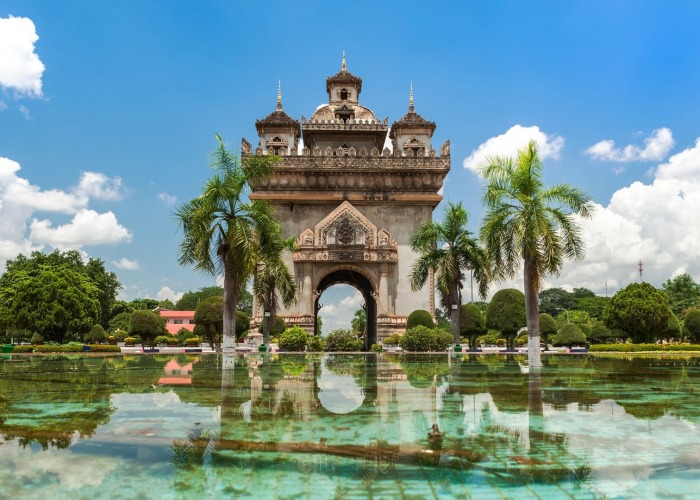
Vientiane does not hit travelers with the same intensity as Bangkok, Hanoi, or Ho Chi Minh City.
Laos’ laid-back capital sits on the banks of the Mekong River, right across from Thailand, and its pace feels noticeably slower than many other capitals in Southeast Asia.
That is part of its appeal.
You get Buddhist temples, French colonial leftovers, riverfront sunsets, night markets, and broad boulevards without the nonstop chaos that defines some neighboring cities.
From a safety standpoint, that calmer atmosphere matters too.
Vientiane is generally one of the easier capitals in the region for first-time visitors to navigate, but that does not mean you should switch your brain off.
Petty theft, scams, traffic hazards, unsafe water, and seasonal flooding are all real concerns.
The city is manageable, but smart travelers still do better here than careless ones.
Warnings & Dangers in Vientiane

OVERALL RISK: LOW
Vientiane is generally a low-risk destination for travelers, especially compared with larger regional capitals. Violent crime against tourists is not common, and the city feels calmer, smaller, and less aggressive than many other Southeast Asian urban centers. Still, low risk does not mean no risk. Theft, traffic issues, and health-related problems are more likely than serious criminal incidents.

TRANSPORT & TAXIS RISK: MEDIUM
Transport in Vientiane is one of the areas where travelers need to stay alert. Roads can be chaotic, local driving habits may feel unpredictable, and traffic laws are not always followed consistently. Tuk-tuks and informal taxis can overcharge visitors, especially near tourist zones, bus stations, and the airport. Arrange prices before the ride and avoid hopping into random vehicles late at night.

PICKPOCKETS RISK: MEDIUM
Pickpocketing is not as notorious here as in some bigger tourist cities, but it still happens in crowded areas such as markets, bus stations, riverside zones, and busy streets. Travelers carrying phones in back pockets, open bags, or loose wallets can make easy targets. Most cases are opportunistic rather than organized, which means basic awareness goes a long way.

NATURAL DISASTERS RISK: MEDIUM
Vientiane is not a city known for dramatic natural catastrophe on a daily basis, but seasonal weather can still create problems. Heavy rains during the wet season can cause flooding, disrupt transport, and make roads unpleasant or unsafe. Heat is also an issue during hotter months, and mosquito-borne illnesses become more relevant during and after rainy periods.

MUGGING RISK: LOW
Mugging risk in Vientiane is lower than in many large international capitals. Most travelers will never experience anything close to a violent street robbery. That said, isolated areas, dark riverside stretches, or poorly lit streets late at night are never ideal places to wander alone while distracted. Common sense matters more than fear here.

TERRORISM RISK: LOW
For the average tourist, terrorism risk in Vientiane is low. It is not a city commonly associated with international terror threats aimed at visitors. That said, political situations and regional tensions can change over time, so it is still wise to keep an eye on official advisories before you travel. In practical day-to-day terms, this is not the main safety concern.

SCAMS RISK: MEDIUM
Scams are one of the more realistic annoyances travelers face in Vientiane. Expect inflated tuk-tuk fares, vague pricing, pushy intermediaries, and occasional tourist-targeted tricks involving transport or nightlife. More serious issues can start with casual friendliness, especially when alcohol is involved. Nothing here is especially sophisticated, but scams work because tired travelers stop paying attention.

WOMEN TRAVELERS RISK: LOW
Women can travel in Vientiane with relative confidence, especially compared with many other capitals in the region. Solo female travelers do visit without major issues. Still, unwanted attention, drink spiking risks, and nighttime vulnerability should not be ignored. Modest dress in religious sites, cautious nightlife habits, and using trusted transport at night make a big difference.

TAP WATER RISK: HIGH
Tap water is one of the clearest safety issues for visitors in Vientiane. It is better to assume it is not safe for drinking unless you are in a very specific accommodation that clearly states otherwise. Stick to sealed bottled water or properly filtered water, and be cautious with ice, uncooked foods washed in local water, and brushing your teeth if you have a sensitive stomach.
Safest Places to Visit in Vientiane
Sisaket Temple and the Old Temple Quarter
The area around Wat Sisaket and nearby religious landmarks is one of the gentlest parts of Vientiane for travelers.
It is central, frequently visited, and usually relaxed during daylight hours.
This is a good zone for slow walking, temple visits, and getting comfortable with the city’s rhythm on your first day.
Patuxai and the Surrounding Boulevards
Patuxai is one of Vientiane’s best-known landmarks, and the surrounding roads tend to feel open and easier to navigate than cramped market lanes.
During the day, this is a solid area for sightseeing, photos, and short walks.
It is busy enough to feel active, but not usually overwhelming.
Chao Anouvong Park and the Mekong Riverside at Busy Hours
The riverside is one of the most enjoyable parts of the city when it is lively.
Around sunset, families, couples, vendors, and walkers create a more comfortable environment than you would find in isolated parts of town.
This is a good place to enjoy the city’s softer side, especially if you stay in the better-lit, more populated sections.
That Luang Area
Pha That Luang and the broader area around the national stupa are among the most culturally important parts of Vientiane.
Travelers usually come here for history and architecture, but it also tends to feel orderly and less chaotic than transport-heavy sections of the city.
It is a strong choice for daytime exploration.
Well-Known Cafes, Hotels, and Central Streets
One of the easiest safety advantages in Vientiane is simply staying close to established hotels, restaurants, and central traveler-friendly streets.
The city is not massive, so basing yourself in a recognized central area reduces the odds of getting lost, overcharged, or stuck far from reliable transport after dark.
Places to Avoid in Vientiane
Isolated Riverside Stretches Late at Night
The Mekong side of the city can feel pleasant in the evening when people are out, but quieter stretches become a different story once the crowds thin.
Darker areas with fewer people are less ideal for solo travelers, especially if you have been drinking or are carrying valuables.
Enjoy the riverfront, but time it right.
Bus Station Areas After Dark
Transport hubs are rarely the prettiest part of any city, and Vientiane is no exception.
Bus station zones can attract touts, overcharging drivers, and the general confusion that makes travelers easier targets for scams.
During the day, they are manageable.
Late at night, they are more stressful and less comfortable, especially for first-time visitors.
Poorly Lit Side Streets Away From the Center
Vientiane is not a city where every street corner feels unsafe, but the farther you move from established central areas, the less support you have as a visitor.
Poor lighting, fewer pedestrians, and limited English can combine into a frustrating situation if something goes wrong.
Avoid wandering randomly in residential backstreets after dark.
Nightlife Spots Where You Lose Track of Your Drink
This is less about a specific district and more about a behavior pattern.
Some of the real traveler risks in Laos begin in bars, parties, or informal nightlife environments where people become too trusting.
Places with heavy drinking, unclear prices, or strangers pushing drinks deserve extra caution.
Never treat a relaxed city as a harmless city.
Flood-Prone Areas During Heavy Rain
In the wet season, parts of Vientiane can become messy quickly.
Streets may flood, drainage can struggle, and movement gets more difficult.
Areas that seem totally normal in dry weather can become slippery, dirty, or temporarily hard to access.
During periods of heavy rain, avoid low-lying streets and do not assume your usual route is the best route.
Safety Tips for Traveling to Vientiane
- Use bottled or properly filtered water only. This is one of the easiest mistakes to avoid. Do not drink from the tap, and be careful with ice unless you trust the source. Even a mild stomach issue can ruin several days of a short trip.
- Agree on transport prices before the ride starts. Tuk-tuks are part of the local experience, but vague pricing is a classic tourist problem. Set the fare clearly in advance and keep small cash ready so payment stays simple.
- Do not treat the calm atmosphere as a reason to relax too much. Vientiane feels easygoing, which is exactly why some travelers stop paying attention. Keep your bag zipped, your phone secure, and your surroundings in mind, especially in markets and crowded areas.
- Be extra cautious at night, especially alone. The city is more comfortable during the day and early evening than late at night. If you are heading back after dinner or drinks, use reliable transport and avoid wandering through quiet areas just because the map says it is close.
- Watch your drink and be selective about nightlife. Travelers sometimes get into trouble not through street crime, but by being overly trusting in bars or parties. Never leave a drink unattended, and do not accept open drinks from strangers.
- Respect the traffic even when the road looks calm. Motorbikes, cars, and tuk-tuks do not always move in ways visitors expect. Crossing the street can feel deceptively simple until something appears faster than it looked. Stay patient and predictable.
- Carry only what you need for the day. Bring a copy of important documents, one payment method, and only the cash you expect to use. Leaving spare valuables locked at your hotel reduces the damage if you lose something or get targeted by a thief.
- Dress and behave respectfully at temples and official sites. Cultural respect is not just about manners. It also helps you avoid unwanted attention and awkward situations. Shoulders and knees should be covered when visiting religious places, and loud or careless behavior is never a good look.
- Plan for heat, mosquitoes, and rain. Safety is not only about crime. Vientiane can be hot, humid, and wet depending on the season. Use sunscreen, insect repellent, and lightweight clothes, and always have a backup plan for sudden rain.
- Buy travel insurance before you go. Medical standards can be limited, and an ordinary mishap can become expensive fast if you need serious treatment or evacuation. Insurance is one of those boring expenses that feels brilliant the moment something goes wrong.
So... How Safe Is Vientiane Really?
Vientiane is one of those places where the real answer is better than the stereotype, but not quite as effortless as the city’s relaxed vibe suggests.
In practical terms, most travelers will find it reasonably safe.
Serious violent crime against tourists is not the defining issue here.
The bigger concerns are ordinary travel problems: petty theft, transport confusion, bad water, nightlife-related incidents, seasonal flooding, road safety, and illness linked to food, mosquitoes, or sanitation.
What makes Vientiane feel safer than many capitals is its scale and pace.
It is not relentlessly crowded, and the atmosphere is often calm rather than aggressive.
That alone lowers stress for a lot of visitors.
Still, there are enough documented issues involving scams, drink spiking, and weather-related disruption to justify staying switched on.
If you travel the way experienced travelers usually do by protecting your valuables, arranging transport carefully, avoiding unnecessary late-night wandering, sticking to safe water, and using common sense, Vientiane is very manageable.
I would not put it in the category of a destination that should worry most tourists.
I would put it in the category of a destination that rewards sensible behavior.
That is a very different thing, and it is why many visitors leave with the impression that Vientiane is easy, friendly, and much less intimidating than expected.
How Does Vientiane Compare?
| City | Safety Index |
|---|---|
 Vientiane Vientiane |
77 |
| Luang Prabang |
75 |
 Bossier City Bossier City | 53 |
| Decatur | 75 |
| Pooler | 86 |
 Lublin Lublin | 81 |
| Gillette | 83 |
| Fairview Heights | 82 |
Useful Information

Visas
Many travelers can apply for a Laos eVisa before arrival, and tourist stays are commonly granted for up to 30 days. Some nationalities may also have visa-on-arrival options, but rules and fees vary by passport. It is smarter to check your eligibility in advance and apply early rather than rely on airport decisions at the last minute.

Currency
The local currency is the Lao kip. In tourist settings, you may sometimes see prices influenced by Thai baht or US dollars, but kip is what you will use day to day. Exchange money at reputable counters or banks, avoid random street exchangers, and keep small notes handy for transport, markets, and casual purchases.

Weather
Vientiane is hot for much of the year, with a dry season and a rainy season. The most comfortable months are usually the cooler dry-season period, while hotter months can feel draining and the wet season brings humidity and flooding risk. Pack light clothing, breathable layers, rain protection, and shoes that can handle wet streets.

Airports
Wattay International Airport is the main gateway for Vientiane and sits conveniently close to the city compared with many major airports in the region. Getting into town is usually straightforward by taxi or prearranged hotel transport. As always, sort the fare before departure if you are not using a fixed-price service.

Travel Insurance
Travel insurance is absolutely worth having for Vientiane. Even if the city feels low drama, things like food illness, transport accidents, cancellations, theft, or the need for medical evacuation can become expensive very quickly. A good policy is one of the simplest ways to turn a stressful problem into a manageable inconvenience.
Vientiane Weather Averages (Temperatures)
Average High/Low Temperature
| Temperature / Month | Jan | Feb | Mar | Apr | May | Jun | Jul | Aug | Sep | Oct | Nov | Dec |
|---|---|---|---|---|---|---|---|---|---|---|---|---|
| High °C |
28 | 32 | 35 | 36 | 34 | 32 | 31 | 31 | 31 | 31 | 29 | 27 |
| Low °C |
12 | 15 | 20 | 23 | 25 | 24 | 24 | 24 | 23 | 21 | 16 | 12 |
| High °F |
82 | 90 | 95 | 97 | 93 | 90 | 88 | 88 | 88 | 88 | 84 | 81 |
| Low °F |
54 | 59 | 68 | 73 | 77 | 75 | 75 | 75 | 73 | 70 | 61 | 54 |
Laos - Safety by City
| City | Safety Index |
|---|---|
| Luang Prabang | 75 |
| Vientiane | 77 |












Bike tour
Oh Vientiane, the urban center of Laos, 2 days there was already enough for me and will probably be enough for you too. It was my first time joining in a bike tour and that was the highlight of my visit there! I also love museums so it was a no brainer for me to visit the national museum.
Is it strange that watching That Luang glow at sunset with the Mekong breeze on my face made me slow down and actually feel how small and relaxed this city can be?
Spent a few evenings wandering by the Mekong and honestly, the calm vibe made me slow down and actually enjoy the little things like the sunsets and the quiet hum of the night market.