


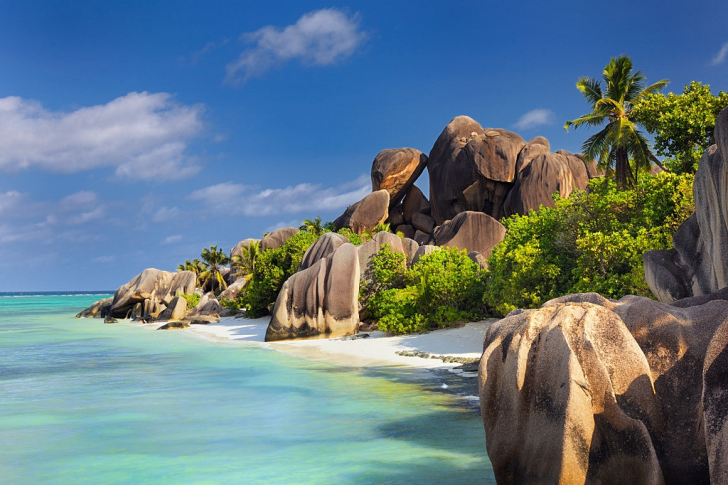
The Seychelles isn’t just a pretty backdrop for honeymoon photos.
It’s a remote Indian Ocean archipelago that somehow still feels like a secret, even though travelers have been chasing its turquoise water and granite boulders for decades.
Pronounced say-shells, this island nation sits about 1,000 miles off the coast of East Africa, northeast of Madagascar.
It’s made up of 115 islands, but most of the action happens on the three biggest: Mahé, Praslin, and La Digue.
The islands were uninhabited until the 1700s, when the French moved in, followed by the British.
Seychelles gained independence in 1976 and has been a republic ever since, with both French and English influences still shaping its culture.
Despite its small population of around 100,000 people, the country welcomed roughly 350,000 visitors in 2024.
That’s more than three tourists for every resident.
People come here for the beaches, sure, but it’s more than that.
You’ve got coral reefs made for diving, lush rainforests with rare birds, and hiking trails that lead to panoramic views that honestly don’t feel real.
It’s laid-back but not boring, developed but still wild in places.
Whether you’re into five-star resorts or off-the-grid nature, Seychelles offers a kind of escapism that’s hard to replicate elsewhere.
Warnings & Dangers in Seychelles

OVERALL RISK: LOW
The overall risk is low, with nothing but standard precautionary advice across the board. However, that's not the full story, so keep reading.

TRANSPORT & TAXIS RISK: LOW
This is a low risk, but you'll likely want to stick with buses, taxis, or ferries. The roads are narrow and winding; it's not a rental car destination for the faint of heart.

PICKPOCKETS RISK: LOW
This is another low risk, but not low enough to throw caution to the wind. Protect your stuff, leave valuables at home, and add an extra layer of protection between your wallet and the outside world.

NATURAL DISASTERS RISK: MEDIUM
Seychelles faces elevated hazards from tropical cyclones and coastal flooding, with medium-level risks from tsunamis and landslides. Storms and heavy rains often spark flash floods, landslides, and mudslides. Climate change is also creating additional challenges. Check the forecast before you go and stay informed during your visit.

MUGGING RISK: LOW
This is another low risk. Even the Canadian advisory states that armed robberies are uncommon against tourists. However, you don't want to be caught in the wrong place at work. Stick to tourist areas or go with a tour guide in remote areas.

TERRORISM RISK: LOW
The standard guidance says "Terrorism cannot be ruled out," but it's really a low risk. At the same time, report anything that seems off to help keep it a safe place to visit.

SCAMS RISK: MEDIUM
Another category with typical risks, like card skimmers on ATMs. The biggest scam risk, though the overall level is low, comes with booking bogus holiday packages. Avoid this by verifying the source and legitimacy of any vacation before offering payment information.

WOMEN TRAVELERS RISK: LOW
Stick to well-populated areas or with a group tour for the highest safety levels, but it's a low risk. The islands are pretty safe overall, even for solo female travelers.

TAP WATER RISK: LOW
Tap water in the Seychelles is technically safe to drink on Mahé, Praslin, and La Digue, but many travelers still stick to bottled or filtered water due to the taste and occasional pipe issues. On more remote islands or during heavy rains, bottled water is the safer, more reliable choice.
Safest Places to Visit in Seychelles
The official tourism site for Seychelles is easy enough — www.seychelles.com.
You can also download the Visit Saychelles app while you’re there.
Most visitors arrive in Seychelles by air, landing at Seychelles International Airport on Mahé.
It’s the largest and most developed island, home to the capital city of Victoria and the best mix of services, restaurants, and beaches.
Cruise ships also dock in Victoria, making it a common first stop for travelers exploring the islands.
Mahé has several standout beaches, including Beau Vallon, which offers clear water, nearby hiking trails, and easy access to tours.
The Morne Seychellois National Park covers more than 20% of the island and has scenic routes like the Copolia Trail.
The local markets in Victoria and the Botanical Gardens give a quick sense of the culture and native species, including giant tortoises.
From Mahé, many visitors take a ferry or short domestic flight to Praslin, home to Vallée de Mai, a UNESCO-listed nature reserve where the rare coco de mer palm grows.
Praslin’s Anse Lazio and Anse Georgette consistently rank among the best beaches for swimming and snorkeling.
La Digue is more relaxed, with bicycles replacing cars and beaches like Anse Source d’Argent offering shallow waters and iconic granite formations.
The island is small but worth at least a day or two for its different pace and access to reef-friendly water activities.
Island-hopping tours, diving, sailing excursions, and guided nature walks are available from most main islands, making it easy to explore without needing to plan every detail.
Places to Avoid in Seychelles
While there aren’t inherently dangerous places in the Seychelles, it’s worth noting some of the common risks.
That includes natural dangers.
First, near Beau Vallon, the riptides and currents can be strong.
Unfortunately, an average of 13 drownings happen each year across the archipelago.
Even shark attacks are a concern.
In 2011, two people were killed in a month, one of whom was a newly married man on his honeymoon.
It would be wise to avoid doing adventure activities solo, considering the risks from scuba diving to hiking.
Trails can be poorly marked, and weather shifts easily catch people off guard.
You want a tour guide who knows the land.
Finally, if you plan to visit Amirantes, Cosmoledo, and Aldabra, you’ll need prior approval from the Seychelles Maritime Safety Authority.
Safety Tips for Traveling to Seychelles
- Seychelles has a national police force headquartered in Victoria on Mahé. There is no dedicated tourist police unit, but police are generally responsive in populated areas. For emergencies, dial 999. Police, fire, and medical services all use this number, though response times may vary, especially in remote areas.
- There’s no centralized alert app for travelers in Seychelles. If you’re visiting during cyclone season (November to May), follow local news and check with your hotel or tour operators for real-time updates. The Seychelles Meteorological Authority’s website and Facebook page are the best sources for storm alerts and warnings.
- You can drive in Seychelles using a valid foreign driver’s license for up to three months. Vehicles are right-hand drive, and traffic flows on the left. Roads are narrow and often winding, especially on Mahé. Rental cars are common, but mopeds and bikes are popular on smaller islands like La Digue.
- There are no required vaccines for entry, but health agencies recommend routine vaccines plus hepatitis A, hepatitis B, and typhoid, especially if you plan to eat street food or visit rural areas. Dengue is present, so pack insect repellent and wear long sleeves if you’re hiking or out at dusk.
- Seychellois Creole, English, and French are all official languages. English is widely spoken, especially in hotels, airports, restaurants, and tour companies. You’ll have no problem asking for directions, reading menus, or getting help. Locals may speak Creole among themselves but switch to English when talking to visitors.
- Not all beaches have lifeguards, and conditions can shift quickly due to tides and currents. Avoid swimming alone or at unmarked beaches. Hotels often post flags for safe swimming zones. For surf conditions or sea warnings, check the Seychelles Meteorological Authority’s website or ask your accommodation staff directly.
- Topless sunbathing is allowed on some beaches, especially at private resorts or more secluded areas. However, full nudity is illegal, and topless sunbathing may offend locals in more public or family-oriented areas. If you’re unsure, follow the lead of other sunbathers or ask staff before stripping down.
- Seychelles has seen a rise in HIV/AIDS, largely linked to intravenous drug use. This doesn’t directly impact tourists, but it’s a public health issue to be aware of. If you need medical treatment or plan any activity involving close contact, use the same precautions you’d take anywhere else.
- The U.S. Coast Guard determined that Seychelles ports lack certain anti-terrorism safeguards. Commercial vessels that stop there face added security steps before entering U.S. ports. If you’re on a cruise or cargo ship, this won’t affect your safety on land, but it is worth knowing if you’re part of the crew or handling logistics.
- Hospitals and clinics with trained staff are mainly located on Mahé, Praslin, and La Digue. If you’re staying on smaller islands or heading out for diving, fishing, or island-hopping, know that emergency medical help may not reach you quickly. Travel insurance that includes evacuation is a smart move.
So... How Safe Is Seychelles Really?
Visiting the Seychelles comes down to reading the fine print of travel advisories.
While most countries, like the U.S., Canada, and Australia, list it as the lowest risk level (Level 1) on a four-tiered scale, that doesn’t mean no risk.
For example, Canada and the U.S. report a recent increase in petty crime, including theft after someone uses an ATM.
In addition, heroin use is rampant on these islands.
The Global Organized Crime Index reports that “the country has the highest per capita rate of heroin use in the world due to the drug’s abundance and affordability.”
Also, given the levels of reported corruption in the government, it’s wise to stay out of trouble.
You don’t want to end up trapped in a system of law and order that doesn’t practice fairness.
Then there’s the natural risks, like rip tides, landslides, and unmarked hiking trails.
Stick with a tour guide and know how to self-rescue, or limit how deep into the wild water or wilderness you venture.
While the average trip to the Seychelles is enjoyable, exotic, and relaxing, there are risks.
How Does Seychelles Compare?
| Country | Safety Index |
|---|---|
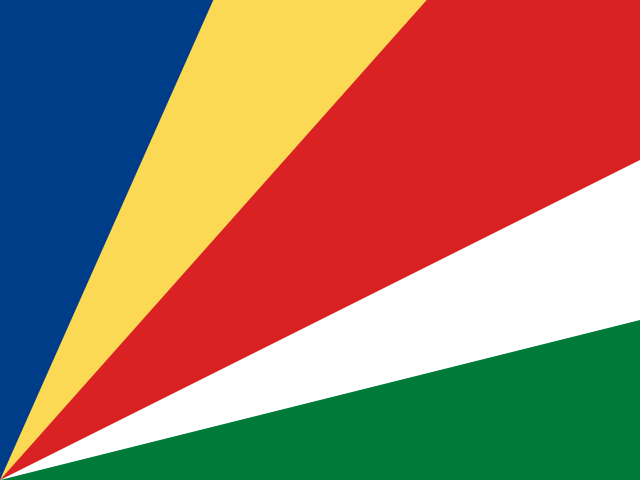 Seychelles Seychelles | 80 |
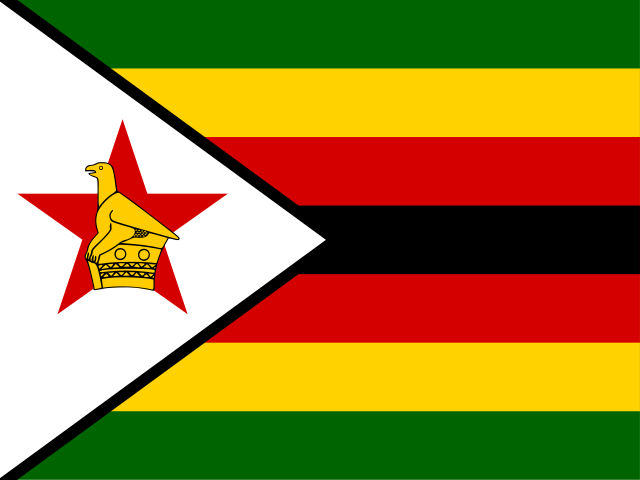 Zimbabwe Zimbabwe | 53 |
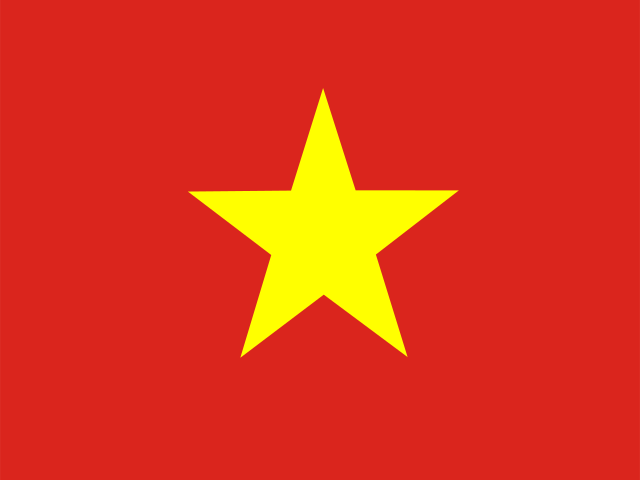 Vietnam Vietnam | 77 |
 Germany Germany | 85 |
 United Kingdom United Kingdom | 77 |
 Republic of the Congo Republic of the Congo | 54 |
 Serbia Serbia | 77 |
 Argentina Argentina | 70 |
 Gibraltar Gibraltar | 90 |
Useful Information

Visas
Most travelers don’t need a visa to enter Seychelles. Instead, you’ll get a free Visitor’s Permit on arrival, valid for up to 90 days. You’ll need a passport, proof of onward travel, confirmed accommodation, and enough funds for your stay. Extensions are possible but come with a fee and some paperwork.

Currency
Seychelles uses the Seychellois Rupee (SCR). You can exchange money at the airport, banks, or licensed bureaus. Credit cards are widely accepted in hotels and shops on the main islands, but cash is still useful for taxis, small markets, or remote areas. ATMs are available in major towns, mainly on Mahé and Praslin.

Weather
Seychelles has a warm, tropical climate year-round. Temperatures stay between 75°F and 88°F. The northwest monsoon (October to March) is wetter, while May to September is drier with cooler winds. Humidity can be high, and sudden rainstorms are common, so pack for sun and rain just in case.

Airports
Seychelles International Airport (SEZ) is on Mahé and handles all international flights. From there, you can take domestic flights or ferries to other islands like Praslin or La Digue. Praslin Island also has a small domestic airport.

Travel Insurance
Travel insurance isn’t required for entry, but is highly recommended. It should cover medical emergencies, trip delays, cancellations, and medical evacuation, especially if you’re planning to visit remote islands or do water-based activities. Be sure to double-check that your policy includes coverage for adventure sports, diving, or sailing. If not, get an additional policy to cover adventure activities.
Seychelles Weather Averages (Temperatures)
Average High/Low Temperature
| Temperature / Month | Jan | Feb | Mar | Apr | May | Jun | Jul | Aug | Sep | Oct | Nov | Dec |
|---|---|---|---|---|---|---|---|---|---|---|---|---|
| High °C |
30 | 30 | 31 | 31 | 31 | 29 | 28 | 28 | 29 | 30 | 30 | 30 |
| Low °C |
24 | 25 | 25 | 25 | 25 | 25 | 24 | 24 | 24 | 24 | 24 | 24 |
| High °F |
86 | 86 | 88 | 88 | 88 | 84 | 82 | 82 | 84 | 86 | 86 | 86 |
| Low °F |
75 | 77 | 77 | 77 | 77 | 77 | 75 | 75 | 75 | 75 | 75 | 75 |












I wouldt waste your money
I had spent 4 years working in the Seychelles as a British Expat. I was lucky to have lived in the beautiful Beau Vallon, Anse Etoile, Anse La Mouch and Eden Island. I have made many many friends there. The islands are beautiful if you are a tourist, however there is a very very dark underbelly to Seychelles. So dark, that (apparantly and is wildly known and discussed) the DEA know and turn a blind eye to the Heroin being imported and distributed from the Presidents private residence.
Visit because the beaches are lovely, exmplore the other islands, the diving is beautful and there are many many lovely Seychelolis. Just be careful where you go especially at night.
The osuth is my favourite – very expensive hotels around here though – Constance Ephilia, Four Seasons, Kempinski. But also lots of small local owned guesthouses that would be worth staying at.
It is very expensive to live there as a foreigner (there are different prices for everything if oyu are local or foreign.
hiring a car is a must (but dont expect it to be very good) as the public transport system is useless.
I was sexually assaulted outside of a shop on the main road (not far from the airport), by a heroin/meth addict and his friend. No one stopped to help because I was the “white British girl” (this is what the police told me) Not even the shopkeeper.
I went to the police, they are about as usfeul as a chocolate teapot.
I left 4 days later and will never return.
As a citizen of Seychelles. I’m sorry for the bad experience
Fave destination so far
You will never get over how insanely beautiful this place is, trust me. Been in Seychelles in 2019 and if things go according to plan we’ll see it again in 2023.
If you stay in a resort you’ll be fine, the biggest threat there is the price of an event cocktail and how much you have to tip for almost anything. Otherwise you’re fine, no need to worry about anything.
We stayed at a hotel but I’m very determined to convince my wife to switch to an airbnb. It’s way cozier having our very own apartment plus we might end up saving a lot of money and I really do mean a lot. Since our kids are always in town, having an apartment where we can easily spruce up a salad, allow the kids to be a bit noisier etc would make a lot more sense.
We stayed in Mahe, it’s perfect for a family with kids. We never felt threatened nor did we find someone looking weird at us. People mind their own business, you won’t feel like all the eyes are on you like it tends to happen in small villages from Greece or Italy. Expect to see quite a lot of lovey dovey couples, either honeymooners or guys that plan to propose.
You can either opt for a money belt – though I really don’t see it that practical – or you can have just the bare minimum with you. I go for the second one every time, I don’t see the point in carrying hundreds of dollars with me. I keep all my valuables in the room’s safe, never having an incident. If you rent a car, avoid keeping it stashed with valuables or even with random stuff, people might get tempted and you will end up having to fork over a lot of money.
Seychelles at night is not a great idea, especially dark corners and deserted areas. But where is safe to walk around at night like you own the place?!
I would love to visit the Seychelles. I wanna taste the food and beverage down there and see the islands. I wanna see the islands for myself and experience it. Rent a car and drive around the country and sight see in the daytime of course. I wanna meet the people and see what life is like there.
This travel safety overview blended dreamy descriptions of Seychelles beaches and nature with island roads, and storm risks. Tips on water safety and planning around cyclone season were especially useful before a first time trip.
The feeling of standing on those beaches with the warm sun and gentle waves is something I’ll never forget; it’s like time slows down in such a beautiful place.
Whenever I hike a trail on Mahé and round a bend to those granite boulders and turquoise water I get this calm, ridiculous grin that never goes away.
Didn’t expect the hiking trails to be that intense, the view from Morne Seychellois totally caught me off guard.
Did you find any good spots on Mahé where you could snorkel without a bunch of other people around?