


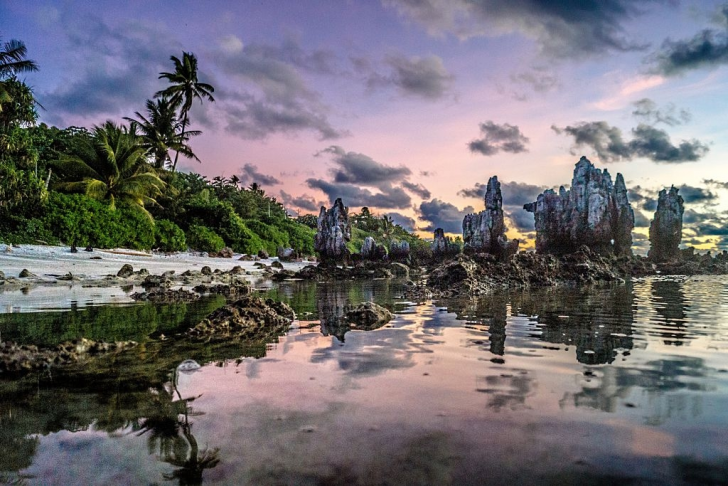
Nauru is often referred to as the least-visited country in the world.
Fewer than 200 tourists arrive in a typical year, which sounds shocking until you realize this is a tiny, eight-square-mile island in the central Pacific.
It sits northeast of Australia, just south of the equator, far from major travel routes and even farther from any semblance of mass tourism.
Nauru’s history is complicated for such a small place.
Once inhabited by Micronesian and Polynesian peoples, it was later colonized, occupied during World War II, and then transformed by decades of phosphate mining.
That industry made Nauru briefly wealthy, then left much of the interior scarred and economically vulnerable.
Today, the island is rebuilding with limited resources and very little tourist infrastructure.
What you come for is not beaches and resorts.
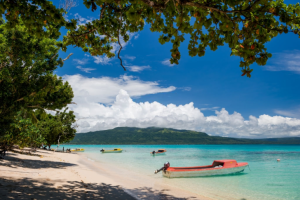
Sandy shores are rare, and most of the coastline is coral reef.
Swimming, fishing, and diving are popular for experienced travelers who understand the risks.
History lovers will find Japanese wartime relics scattered across the island.
But this is not a remote luxury escape.
It is quiet, raw, and real.
Visiting Nauru is less about indulgence and more about seeing a place few people ever will.
While most safety risks are minimal, there are some particular concerns we’ll address as we go through this article.
Warnings & Dangers in Nauru

OVERALL RISK: LOW
The risk is low, especially from a crime standpoint. Most risks are within your control, like understanding physical limits and avoiding adventurous activities solo.

TRANSPORT & TAXIS RISK: LOW
This is another low-risk, but with limited options. You won't find public transportation, taxis, or rideshares. You might be able to score a car rental, but most people get around by hiring a private driver. The small island is also walkable.

PICKPOCKETS RISK: LOW
While this is a low risk, crime isn't a major concern here. That doesn't mean letting your guard down. It just means using standard safety precautions. The wild aspect brings far greater risks.

NATURAL DISASTERS RISK: MEDIUM
Nauru’s natural disaster risk is considered medium. There are no earthquakes or volcanoes, but heavy rain, rough seas, and occasional flooding do happen. Cyclone (hurricane) season runs roughly from November through April. While direct hits are rare, nearby systems can disrupt flights, power, and water supplies. Plan with flexibility and watch weather updates closely.

MUGGING RISK: LOW
This is another low risk, with violent crime being very uncommon in Nauru. You want to use standard safety measures and protect valuables, but you don't need to worry about criminals lying in wait.

TERRORISM RISK: LOW
Most government advisories have the standard boiler template of "terrorism can happen anywhere," but in reality, the risk is low for terrorism in Nauru. You'd be more likely to face challenges like labor disputes or water shortages.

SCAMS RISK: LOW
Scams aren't common here, but you'll still want to keep your guard up when dealing with tour guides. Since the tourism industry isn't well-regulated, look for anything like certifications or verified reviews before booking.

WOMEN TRAVELERS RISK: LOW
Nauru is generally safe for women travelers, with low crime and a close-knit community. That said, it is very small and very local, so you will stand out. Dress modestly, trust your instincts, and avoid isolated areas at night. The bigger issue is remoteness, not harassment.

TAP WATER RISK: HIGH
Tap water in Nauru is considered high risk because fresh water is scarce and often comes from rain collection, storage tanks, or limited desalination. Treatment and infrastructure are not consistent, and contamination is possible. Travelers should stick to bottled or properly treated water for drinking, brushing teeth, and ice to avoid illness.
Safest Places to Visit in Nauru
You won’t find a big, fancy tourism website for Nauru.
The closest you’ll get is the website for the Government of the Republic of Nauru (http://naurugov.nr/about-nauru/visiting-nauru.aspx).
At the same time, that website pretty much covers all the things to do and places to see.
It’s practical, helpful, and official, which is always helpful when visiting such a small, remote location.
What makes Nauru worth seeing is the landscape itself.
The coastal ring road gives you a full island loop with ocean views, quiet beaches, and small villages.
Inland, the Topside area shows the island’s dramatic phosphate mining history, with jagged limestone pinnacles and a stark, otherworldly feel.
Buada Lagoon is the closest thing to a “must-see,” a calm freshwater spot surrounded by palms and local homes.
WWII history fans will find Japanese relics and old gun emplacements scattered around the island.
Activities are equally straightforward.
Swimming, snorkeling, fishing, and coastal walks are the main draws.
There are no resorts, no packaged excursions, and very little infrastructure built for tourists.
That is the appeal.
Places to Avoid in Nauru
There are no “dangerous neighborhoods” in Nauru in the way travelers might expect elsewhere.
Crime is low, and the island itself is generally safe.
What you should avoid is the assumption that a remote island automatically equals an easy, luxury escape.
With roughly 200 tourists a year, it is not curated, polished, or built for visitors.
Some inland areas are rugged, poorly marked, and far from any help.
Certain coastal spots can be hazardous due to sharp coral, strong currents, and a lack of formal rescue services.
After dark, limited lighting makes wandering off-road or along the shoreline a bad idea.
This is a place where common sense replaces guardrails.
Nauru is not about exclusivity or pampering.
It is about isolation, simplicity, and self-reliance.
If you treat it like a resort destination, you will be disappointed.
If you treat it like a true off-the-map experience, you will understand it.
I do want to caution that with just two hotels on the island nation, book your accommodations well in advance!
Safety Tips for Traveling to Nauru
- Nauru Police Force handles law enforcement and emergencies. For urgent help, dial 110. Response is generally friendly and straightforward, but resources are limited, and the island is small, so do not expect big-city response times or specialized units. For anything medical, be prepared that serious cases usually mean evacuation off the island.
- Nauru does not have a robust national alert system for travelers. For storms and regional threats, the Fiji Meteorological Service operates the Tropical Cyclone Warning Center in Nadi, which covers this part of the Pacific. Monitor weather apps, follow airline updates closely, and ask local officials or your accommodation for guidance if conditions start shifting.
- Driving is simple in theory but limited in practice. An international driving permit is recommended, but most visitors rely on hired rides because rental cars are scarce. Roads are short, signage is minimal, and lighting can be poor at night.
- No special vaccinations are required for entry, but routine travel immunizations should be up to date. Because medical facilities are basic, prevention matters more here than in most destinations. Pack any prescriptions, sun protection, and first-aid supplies. If you have underlying conditions, talk to a travel clinic before you go and carry evacuation-ready insurance.
- Nauruan is the official language, but English is widely spoken and used in government, business, and daily life. You will not struggle to communicate. That said, this is a small, close-knit community, so politeness and patience go a long way.
- If you are arriving by boat, be aware that the U.S. Coast Guard has raised concerns about security practices at Nauru’s ports. This does not mean danger is guaranteed, but it does mean you should stay alert, follow local instructions carefully, and keep movements purposeful. Mariners and passengers should exercise extra caution when transiting port areas.
- Wear reef shoes and use reef-safe sunscreen. Coral is sharp, currents can be unpredictable, and rescue infrastructure is not what you would expect in a tourism-driven destination. If something goes wrong in the water, help may be slow. Swim within your limits, avoid solo outings, and assume you are responsible for your own safety.
- Yes, you do need permission to fish in certain areas, especially for anything beyond casual shore casting. Local regulations and community norms matter here, even if enforcement feels informal. If you plan to fish seriously or from a boat, ask your host or a local authority about permits and restricted zones before you drop a line.
- Diving is a major draw, but it is not beginner-friendly. Strong currents, limited facilities, and the lack of rapid emergency response raise the stakes. Only dive with reputable local operators, bring your own well-maintained gear if possible, and make sure your insurance covers high-risk activities and evacuation. This is not the place to “try it out.”
- Fresh water is precious on Nauru, especially during the dry season. Restrictions are common, and supply can fluctuate. Expect to conserve water for showers, laundry, and basic needs. Plan accordingly, respect local usage practices, and never assume unlimited access. Resource awareness is part of traveling responsibly on a small, remote island.
So... How Safe Is Nauru Really?
Nauru sits at the lowest travel-risk levels among governments like the U.S., U.K., and Canada.
In plain terms, this is not a place where travelers worry about violent crime, scams, or political unrest.
Personal safety is generally high, and the community is small and watchful.
Where the real risks come in is everything else.
Nauru is remote, lightly developed for tourism, and not built around visitors who expect backup plans.
Medical care is basic, flights are limited, and if something goes wrong, help is not fast or cheap.
Outdoor activities like swimming, snorkeling, or exploring coastal areas require common sense, strong situational awareness, and realistic limits.
This also isn’t a place where you want to get caught off guard by threatening weather.
Keep an eye on the forecasts and when in doubt, get out as soon as possible.
How Does Nauru Compare?
| Country | Safety Index |
|---|---|
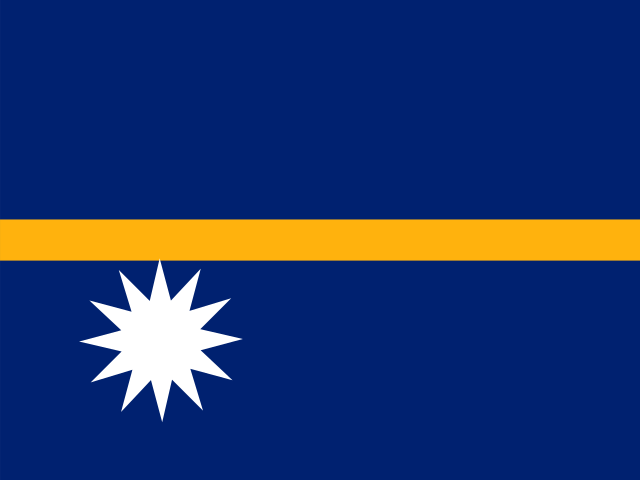 Nauru Nauru | 80 |
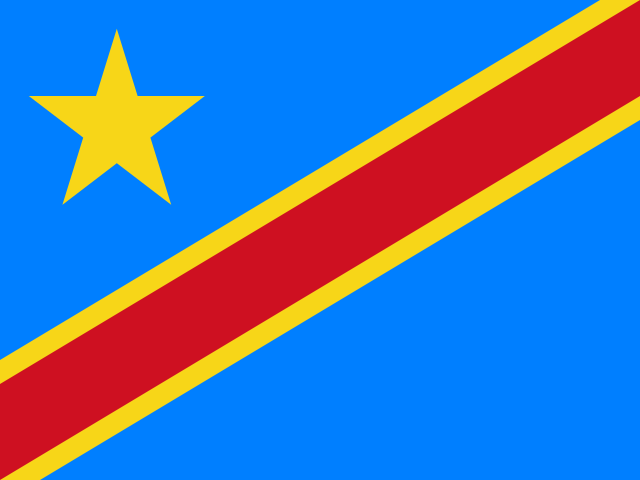 Democratic Republic of the Congo Democratic Republic of the Congo | 21 |
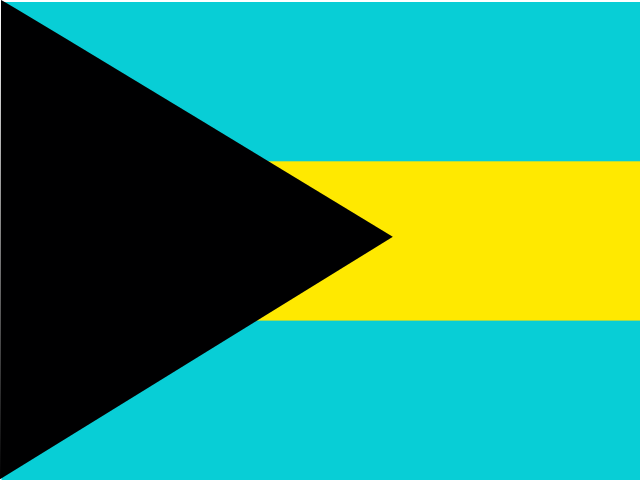 The Bahamas The Bahamas | 49 |
 South Korea South Korea | 86 |
 Equatorial Guinea Equatorial Guinea | 48 |
 Kosovo Kosovo | 44 |
 Eritrea Eritrea | 32 |
 Cyprus Cyprus | 75 |
 Malaysia Malaysia | 69 |
Useful Information

Visas
Most travelers need a visa to visit Nauru, and it is not a simple on-arrival situation. You apply in advance through a Nauruan embassy or sponsor, often with proof of accommodation and onward travel.

Currency
Nauru uses the Australian dollar, which makes life easy if you are already traveling through Australia. However, don't expect to be able to use credit cards, debit cards, or other electronic payments. This is a cash society, even when it comes to large hotel bills.

Weather
Nauru is hot, humid, and tropical year-round, with temperatures hovering in the low 80s to 90s. The wet season runs roughly from November through April, bringing heavy rain and high humidity. The weather is rarely dangerous, but it can feel intense.

Airports
Nauru International Airport is the country’s only airport and the main gateway in and out. Flights are limited, usually routed through Australia or nearby Pacific nations. Commercial flights run a few times a week at best. Expect a very small terminal and minimal amenities compared to major regional airports.

Travel Insurance
While travel insurance is not legally required, it is absolutely the kind of place you should not visit without it. Medical care is extremely limited, and serious issues mean evacuation to Australia at major cost. Choose a policy that covers medical evacuation, flight disruptions, and adventure activities if you plan to dive, snorkel, or explore rugged coastal areas.
Nauru Weather Averages (Temperatures)
Average High/Low Temperature
| Temperature / Month | Jan | Feb | Mar | Apr | May | Jun | Jul | Aug | Sep | Oct | Nov | Dec |
|---|---|---|---|---|---|---|---|---|---|---|---|---|
| High °C |
31 | 31 | 31 | 31 | 31 | 31 | 31 | 31 | 31 | 31 | 31 | 31 |
| Low °C |
25 | 25 | 25 | 25 | 25 | 25 | 25 | 25 | 25 | 25 | 25 | 25 |
| High °F |
88 | 88 | 88 | 88 | 88 | 88 | 88 | 88 | 88 | 88 | 88 | 88 |
| Low °F |
77 | 77 | 77 | 77 | 77 | 77 | 77 | 77 | 77 | 77 | 77 | 77 |













A hidden gem
I hadn’t heard of Nauru up until recently. I’ve heard about it from a friend of a friend who recommended we go there. He said this is one of the safest places in the world and I can now attest to that. There are pickpockets here and there but nothing too scary. And the place is so beautiful. It’s too bad not many of the old customs have not been preserved because the ones that are still in practice are fascinating.
Tiny Nauru’s remote beauty mixed with plain spoken precautions. Crime is low and locals are warm, but limited infrastructure, sketchy water supplies, and rugged beaches remind you this isn’t a polished resort. Perfect if you want a real, rarely-seen corner of the world
Nauru feels like a hidden chapter of the world that holds so much beauty and sadness, and walking its quiet shores while reflecting on its past really puts everything into perspective.
Nauru has such a unique vibe, it really felt like stepping into a hidden world. Exploring the remnants of its history was eye-opening and totally different from the usual tourist spots.
Spent a week there and honestly nothing says island getaway like walking a quiet shore past huge phosphate pits and feeling equal parts guilty and oddly peaceful.
Been here and, to be honest, the scarred interior from decades of phosphate mining is impossible to miss and left me feeling kind of uneasy, especially since sandy shores are rare and the coastline is mostly coral reef.
Did you find that the coral reefs around Nauru were easy enough to explore on your own, or is it really better to have a local guide to avoid any risks while diving?
I honestly didn’t expect to find so much history in such a tiny place, and swimming near those coral reefs gave me this weird mix of awe and caution at the same time.
I heard the coral reefs there are stunning but you definitely want to know what you’re getting into before jumping in.