


 China : Safety by City
- Beijing
- Chengdu
- Guangxi Guilin
- Guangzhou
- Hangzhou
- Hong Kong
- Lhasa
- Macau
- Shanghai
- Shenzhen
- Suzhou
- Tianjin
- Tibet
- Xian
- Xinjiang
- Yangshuo
Xinjiang is China’s vast far-western region, a place of dramatic desert highways, Silk Road history, snowcapped mountains, and cities that feel very different from the country’s coastal hubs.
It borders several countries, including Kazakhstan, Kyrgyzstan, Pakistan, Mongolia, and Russia, which gives it a frontier feel that many travelers find fascinating.
On paper, Xinjiang offers some of the most memorable landscapes in Asia, from the ancient trading city of Kashgar to the stark beauty of the Taklamakan Desert and the alpine scenery around Ili and Kanas.
But travel here is not a simple sightseeing trip.
Safety in Xinjiang is shaped less by everyday tourist crime and more by strict controls, surveillance, police checkpoints, and sudden restrictions.
That makes it a place where travelers need to think beyond ordinary travel safety and prepare carefully before going.
Warnings & Dangers in Xinjiang

OVERALL RISK: HIGH
Xinjiang is not usually dangerous in the classic tourist sense of widespread pickpocketing or violent street crime, but it carries a high overall travel risk because of heavy security controls, close surveillance, document checks, and the possibility of abrupt movement restrictions. For many travelers, the real issue is not robbery but being delayed, questioned, monitored, or blocked from certain areas with little warning.

TRANSPORT & TAXIS RISK: MEDIUM
Transport in Xinjiang can be orderly, especially on major routes in cities like Urumqi, but travel can be slowed by checkpoints, identity verification, and restrictions on certain roads or areas. Licensed taxis and app-based rides are usually safer than unofficial cars. Long-distance travel can become unpredictable, especially for foreign visitors moving between cities or remote regions.

PICKPOCKETS RISK: LOW
Compared with many major tourist regions worldwide, pickpocketing is not the first concern in Xinjiang. Busy markets, transport hubs, and major attractions still call for normal caution, especially in places such as Kashgar bazaars or crowded stations. Still, the day-to-day risk of theft from skilled pickpockets appears lower than the political and administrative risks that shape travel here.

NATURAL DISASTERS RISK: MEDIUM
Xinjiang is geographically extreme, so natural risk should not be ignored. Parts of the region face earthquakes, severe winter cold, desert conditions, dust storms, and dangerous long-distance driving routes. Mountain areas can bring sudden weather changes, while remote desert roads can become risky if your vehicle breaks down. The danger is manageable, but it rises quickly if you are unprepared.

MUGGING RISK: LOW
Street muggings are not the central safety problem for most tourists in Xinjiang, especially in heavily policed urban areas. That said, low risk does not mean no risk. Late-night wandering in unfamiliar districts, carrying visible valuables, or relying on isolated transport options can still create problems. Standard urban caution still applies even in places with strong security presence.

TERRORISM RISK: MEDIUM
Xinjiang has a long history of state concern over separatist violence and unrest, and security in the region reflects that. For ordinary travelers, the immediate personal risk of being caught in an attack is lower than in some classic conflict zones, but the authorities treat the risk seriously. As a result, visible armed policing, checkpoints, surveillance, and sudden security measures are part of the travel reality.

SCAMS RISK: LOW
Tourist scams do exist in China, but in Xinjiang, they are generally not the main issue for foreign visitors. You are more likely to face overcharging, unclear pricing, or language-based confusion than elaborate scam operations. Use official transport, confirm prices in advance, and watch out for informal guides or drivers offering “special access” or suspiciously flexible arrangements.

WOMEN TRAVELERS RISK: MEDIUM
Women can travel in Xinjiang, but solo travel requires care. Violent crime against tourists is not the leading concern, yet the region’s conservative social norms in some areas, limited language access, remote stretches, and heavy policing can make solo female travel more stressful. Women who dress modestly, avoid isolated nighttime situations, and keep transport plans clear will usually feel more comfortable.

TAP WATER RISK: HIGH
Travelers should not assume tap water is safe to drink in Xinjiang. Even where locals use boiled or treated water, foreign visitors should stick to sealed bottled water or properly filtered water. Ice in drinks can also be a gamble if you do not know the source. For short trips, buying bottled water is the simplest and safest approach.
Safest Places to Visit in Xinjiang
Urumqi
Urumqi is the easiest base for most travelers because it has the region’s main international airport, large hotels, better transport infrastructure, and more predictable services.
It is not the most romantic destination in Xinjiang, but it is one of the most manageable.
The city has museums, parks, shopping areas, and organized day-trip possibilities, and it is usually the most practical place to handle logistics.
Kanas and Northern Scenic Areas
The Kanas area in northern Xinjiang is known for forests, lakes, and mountain scenery that feel completely different from the desert image many travelers associate with the region.
Scenic zones with regulated tourism infrastructure tend to feel more straightforward for visitors because routes, accommodations, and sightseeing patterns are more structured.
These kinds of places are often safer for first-time travelers than wandering independently through remote settlements.
Ili Valley
The Ili region is one of Xinjiang’s more naturally beautiful and visitor-friendly areas, with grasslands, valleys, and a softer landscape than the south.
It appeals to travelers who want scenery more than politics.
While it is still part of the same tightly managed region, organized travel in scenic areas can feel calmer and easier than trying to improvise a route through more sensitive southern districts.
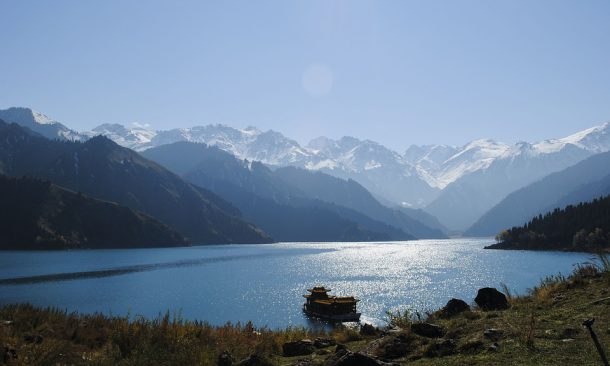
Tianshan Heavenly Lake
This is one of the better-known attractions near Urumqi and works well for travelers who want a shorter excursion without the complexity of a full cross-region journey.
Because it is a major tourist site with established visitor services, it usually offers a more controlled and approachable experience.
It is ideal for people who want Xinjiang’s mountain scenery while keeping logistics simple.
Places to Avoid in Xinjiang
Remote Southern Border Areas
The farther south and west you go, the more complicated travel can become.
Areas near sensitive borders or deep in remote prefectures can mean extra checkpoints, road restrictions, sparse services, and limited flexibility.
Even if the scenery is appealing, travelers without strong Mandarin skills, solid permits where required, and a carefully planned route may find these zones difficult rather than rewarding.
Unplanned Travel Around Kashgar’s Outer Districts
Kashgar is one of Xinjiang’s most fascinating places, but it is not a city to treat casually.
The main tourist areas can be manageable, but wandering without a plan into outer districts or assuming you can move around as freely as in other Silk Road destinations can backfire.
The issue is usually not classic neighborhood crime.
It is document checks, attention from authorities, and rapidly changing access conditions.
Isolated Desert Highways
Xinjiang’s distances are enormous, and some roads pass through deserts or empty stretches where help is not close.
These routes are best avoided unless you have a reliable driver, a properly maintained vehicle, fuel planning, offline maps, spare supplies, and clear permission to be where you are going.
A simple navigation error can become a major problem in this kind of terrain.
Politically Sensitive Areas Without Clear Purpose
Any place where the authorities may view your presence, photography, or questions as suspicious is a place to treat with caution.
That includes areas near security sites, government buildings, checkpoints, detention-related infrastructure, and certain residential zones.
In Xinjiang, curiosity can be misread.
Travelers should avoid testing boundaries or assuming that tourist status gives them room to explore freely.
Safety Tips for Traveling to Xinjiang
- Carry your passport everywhere. Identity checks are part of travel in Xinjiang, and foreign visitors may be asked for documents more often than they expect. Keep your passport accessible, along with printed hotel information and digital backups of your key documents stored securely on your phone.
- Plan transport in advance. Do not assume spontaneous travel will work smoothly. Book trains, flights, or drivers ahead of time when possible, and keep a flexible schedule in case checkpoints, route changes, or delays affect your plans. In Xinjiang, extra buffer time is a smart safety tool.
- Avoid sensitive photography. Never photograph police, checkpoints, military-style infrastructure, surveillance equipment, or anything that looks like a secure facility. Even harmless-looking photos can create unwanted attention. Stick to obvious tourist subjects and be especially careful when photographing people in markets or public spaces.
- Use official hotels and licensed transport. Not every accommodation is equally prepared or willing to host foreign travelers, and some transport options are simply more dependable than others. Established hotels and official taxi or ride-hailing services reduce confusion and lower the chance of registration problems or route disputes.
- Stay hydrated, but do not trust tap water. Carry sealed bottled water, especially on long journeys, and do not wait until you are already in a remote area to stock up. Desert air, heat, altitude shifts, and long drives can dehydrate travelers faster than expected.
- Dress conservatively and behave respectfully. Xinjiang includes communities with different customs and sensitivities. Clothing that is modest and practical usually helps travelers blend in more smoothly. Respectful behavior matters even more than style. Loud confrontations, arguments with officials, or deliberately provocative behavior are bad ideas.
- Keep your phone charged and loaded with offline tools. Distances are huge, reception may be uneven outside major cities, and navigation is harder when language barriers appear. Download offline maps, hotel details, transport bookings, and important translations before leaving major urban areas. Carry a power bank every day.
- Do not discuss politics with strangers. This is one of the most important Xinjiang-specific rules. Conversations about ethnicity, religion, surveillance, detention, protests, or state policy can make people uncomfortable and may expose both you and locals to risk. Keep small talk neutral and avoid asking probing questions.
- Travel with structure, not improvisation. Xinjiang is not the best place for romantic last-minute backpacker decisions. The more remote your route, the more valuable it is to have fixed accommodations, known transport, enough cash, and a clear daily plan. Organized travel usually feels much safer here than open-ended wandering.
- Know when to leave a situation alone. If a place feels tense, if an official says no, or if access suddenly changes, do not push. In many destinations, persistence helps. In Xinjiang, persistence can create bigger problems. Back off, stay calm, and adjust your plan instead of arguing your case.
So... How Safe Is Xinjiang Really?
Xinjiang can be physically safe in the narrow sense that many travelers are more likely to encounter checkpoints than street violence.
That distinction matters.
If you define safety only as your chance of being mugged or pickpocketed, parts of Xinjiang may seem safer than many major tourist cities around the world.
But that is not the right framework here.
For most foreign visitors, the real risk comes from control rather than chaos.
Xinjiang has extensive surveillance, high police visibility, repeated identity checks, and a history of sudden security measures and movement restrictions.
Travel can become stressful even when nothing “criminal” happens.
A route that looks simple on a map may involve delays, questioning, hotel complications, or blocked access.
The region also carries environmental and geographic risks.
Distances are huge, the weather can be extreme, and remote travel requires serious preparation.
Southern and border-adjacent areas can be harder to navigate than scenic northern destinations.
My honest view is that Xinjiang is not a casual destination right now.
It can be traveled, but only by people who understand that this is a place where administrative, political, and logistical risk outweighs classic tourist crime.
If you go, go prepared, stay flexible, and keep your expectations realistic.
How Does Xinjiang Compare?
| City | Safety Index |
|---|---|
| Xinjiang |
80 |
| Lhasa |
72 |
| Beijing |
75 |
| Macau |
85 |
| Guangxi Guilin |
76 |
| Guangzhou |
64 |
| Tibet |
87 |
 Fort Myers Fort Myers | 75 |
 Kampong Cham Kampong Cham | 70 |
| Grand Portage | 80 |
 Colmar Colmar | 86 |
| Wheeling | 47 |
 Nairobi Nairobi | 45 |
Useful Information

Visas
China’s entry rules have become more flexible for some nationalities, with certain passport holders eligible for visa-free short stays and others using transit policies or standard tourist visas. The exact rules depend heavily on nationality and itinerary. Check the current requirements before booking because eligibility, stay length, and permitted entry methods can vary.

Currency
The local currency is the Chinese yuan, also called renminbi. In larger cities, digital payment is widespread, but foreign cards do not always work smoothly everywhere, especially outside major hubs. Carry some cash for smaller purchases, rural stops, and backup needs. Exchange money at airports, banks, or reputable city exchange points rather than informal sources.

Weather
Xinjiang has extreme seasonal swings. Summers can be hot and dry, while winters in places like Urumqi are bitterly cold. Mountain regions can cool down fast even in warmer months. Pack layers, sun protection, and sturdy shoes. If you are traveling outside of summer, bring serious cold-weather gear rather than relying on light jackets.

Airports
Urumqi Tianshan International Airport is the main gateway to Xinjiang and the most practical arrival point for most travelers. From there, you can reach the city by taxi, airport transport, or arranged hotel pickup. Kashgar also has an airport, but Urumqi generally offers better connections and smoother onward planning for first-time visitors.

Travel Insurance
Do not travel to Xinjiang without travel insurance that covers medical treatment, delays, cancellations, and unexpected itinerary changes. Because travel in the region can be disrupted by restrictions, weather, or transport complications, solid insurance matters even more than usual. Read the policy carefully so you know what is and is not covered before departure.
Xinjiang Weather Averages (Temperatures)
Average High/Low Temperature
| Temperature / Month | Jan | Feb | Mar | Apr | May | Jun | Jul | Aug | Sep | Oct | Nov | Dec |
|---|---|---|---|---|---|---|---|---|---|---|---|---|
| High °C |
-8 | -5 | 3 | 17 | 24 | 28 | 30 | 30 | 23 | 13 | 2 | -5 |
| Low °C |
-17 | -14 | -5 | 5 | 12 | 16 | 19 | 17 | 12 | 3 | -6 | -14 |
| High °F |
18 | 23 | 37 | 63 | 75 | 82 | 86 | 86 | 73 | 55 | 36 | 23 |
| Low °F |
1 | 7 | 23 | 41 | 54 | 61 | 66 | 63 | 54 | 37 | 21 | 7 |
China - Safety by City
| City | Safety Index |
|---|---|
| Beijing | 75 |
| Chengdu | 74 |
| Guangxi Guilin | 76 |
| Guangzhou | 64 |
| Hangzhou | 78 |
| Hong Kong | 75 |
| Lhasa | 72 |
| Macau | 85 |
| Shanghai | 70 |
| Shenzhen | 64 |
| Suzhou | 79 |
| Tianjin | 67 |
| Tibet | 87 |
| Xian | 73 |
| Xinjiang | 80 |
| Yangshuo | 77 |













REMINDER
just a reminder that xinjiang is a region not a city
plus the only “discrimination” I experienced is 2 hours at the customs every time I am going back from other countries
A safe region with many interesting spots
A special place, with very friendly inhabitants (mostly Uighurs) that will make you feel at home quickly. A very safe region, with some pickpockets mostly in crowded areas. Make sure to do a little bargaining in bazaars which everyone expects you to do especially since the prices are high at first.
not safe if you are uyghur
Reading about Xinjiang brought back memories of my visit to the Taklimakan Desert, where the vastness felt both intimidating and strangely peaceful; the kindness of the Uighur people I met made the experience unforgettable.
Is it really as welcoming as you say, considering the whole situation with the government and the influx of Han people?
The mix of breathtaking landscapes and the heavy presence of checkpoints made me feel both awe and a bit uneasy like I was constantly reminded I wasn’t just wandering freely.
Did you notice if the police checkpoints slowed down your trip much or just added a weird vibe to the whole experience?