 China : Safety by City
- Beijing
- Changsha
- Chengdu
- Chongqing
- Dalian
- Guangxi Guilin
- Guangzhou
- Hangzhou
- Hong Kong
- Kunming
- Lhasa
- Macau
- Nanjing
- Qingdao
- Shanghai
- Shenzhen
- Suzhou
- Tianjin
- Tibet
- Wuhan
- Xiamen
- Xian
- Xinjiang
- Yangshuo
Wuhan is the capital of Hubei Province and one of the largest cities in central China.
Built around the meeting point of the Yangtze and Han rivers, the city is a major transportation, university, technology, and commercial center with a population of more than 10 million.
For travelers, Wuhan offers a mixture of historic attractions, enormous lakes, modern shopping districts, museums, riverfront parks, temples, universities, and some of central China’s most distinctive food.
Yellow Crane Tower, East Lake, the Hubei Provincial Museum, Jianghan Road, and the Yangtze River waterfront are among its best-known attractions.
Wuhan is generally a safe city for tourists from a conventional crime perspective.
Violent street crime involving visitors is uncommon, public transportation is extensive, and central districts remain busy late into the evening.
The more realistic concerns involve traffic, crowded transportation hubs, tourist scams, extreme summer heat, heavy rainfall, flooding, and China’s strict legal environment.
Visitors should also pay close attention to local laws and restrictions that may differ considerably from those in their home countries.
Warnings & Dangers in Wuhan

OVERALL RISK: LOW
Wuhan is generally a low-risk destination for ordinary tourists. Violent attacks against international visitors are uncommon, and most travelers can explore major attractions and commercial districts without feeling unsafe. Petty theft can occur in crowded places such as metro stations, railway terminals, markets, shopping streets, and tourist attractions. The biggest non-crime consideration is China's legal environment. Foreign visitors are subject to Chinese laws, including regulations concerning identification, photography, demonstrations, drugs, data, and national security. Exercise normal street precautions while also taking local regulations seriously.

TRANSPORT & TAXIS RISK: LOW
Transportation in Wuhan is generally safe and efficient. The city has an enormous metro system, buses, taxis, ride-hailing services, ferries, high-speed rail, and extensive road connections. The metro is usually one of the easiest ways for visitors to move around the city. Traffic requires more caution. Electric scooters, bicycles, buses, cars, and pedestrians frequently compete for space at intersections. Electric scooters can be particularly difficult to hear approaching. Use official taxis or recognized ride-hailing platforms and avoid accepting unsolicited rides from strangers at airports and railway stations.

PICKPOCKETS RISK: LOW
Pickpocketing is not usually a major problem, but Wuhan's enormous population means travelers regularly encounter very crowded spaces. Metro trains, railway stations, shopping streets, festivals, and major attractions provide the best opportunities for opportunistic thieves. Keep your phone secure and avoid carrying wallets in loose rear pockets. Backpacks should remain zipped in particularly crowded transportation areas. During major Chinese holidays, attractions can become extraordinarily busy, making additional awareness worthwhile.

NATURAL DISASTERS RISK: MEDIUM
Heavy rainfall and flooding are the primary natural hazards affecting ordinary travelers in Wuhan. The city sits where the Yangtze and Han rivers meet and also contains numerous lakes and waterways. Summer rain can be extremely intense, causing water levels to rise and producing localized flooding. Riverside paths and low-lying recreational areas can become inaccessible during periods of high water. Summer heat is another significant concern. Wuhan is famous for extremely hot and humid summers, with temperatures sometimes approaching or exceeding 40°C. Limit prolonged outdoor sightseeing during extreme heat and drink plenty of safe water.

MUGGING RISK: LOW
Muggings and violent street robberies involving tourists are uncommon. Wuhan's central shopping, entertainment, university, and commercial districts typically remain active well into the evening. Travelers can generally walk through busy areas after dark without taking unusual precautions. Avoid deserted riverfront sections, parks, and poorly lit streets very late at night, especially if traveling alone. There is also little reason to display expensive jewelry or large amounts of cash.

TERRORISM RISK: LOW
The risk of an ordinary tourist becoming involved in a terrorist incident in Wuhan is low. Security is often visible at railway stations, airports, metro stations, and major public facilities. Bags may be screened before entering transportation systems or certain attractions. Follow instructions from authorities and do not interfere with security procedures. Large demonstrations and politically sensitive gatherings should be avoided.

SCAMS RISK: MEDIUM
Scams represent a more realistic concern than violent crime. Visitors can encounter inflated prices, unofficial transportation, counterfeit products, questionable tours, and individuals encouraging foreigners to visit specific restaurants, tea houses, bars, or exhibitions. Be cautious when a stranger becomes unusually friendly and quickly proposes going somewhere that involves spending money. Always check prices before ordering expensive food, drinks, tours, or services. Use established businesses and official transportation whenever possible.

WOMEN TRAVELERS RISK: LOW
Wuhan is generally comfortable for women traveling alone. Metro stations, shopping districts, central streets, restaurants, and attractions remain busy throughout much of the day and evening. Standard solo-travel precautions still make sense. Avoid isolated places very late at night, watch drinks in bars, and use established taxis or ride-hailing services when returning to accommodation after drinking. Keep someone informed of your plans when making longer trips outside the central city.

TAP WATER RISK: HIGH
Visitors should generally avoid drinking untreated tap water. Use sealed bottled water or water that has been properly boiled or filtered. Hotels commonly provide bottled water, electric kettles, or other ways to prepare safe drinking water. Bottled water is inexpensive and widely available at convenience stores and supermarkets. Travelers with sensitive stomachs may also prefer bottled water when brushing their teeth.
Safest Places to Visit in Wuhan
East Lake
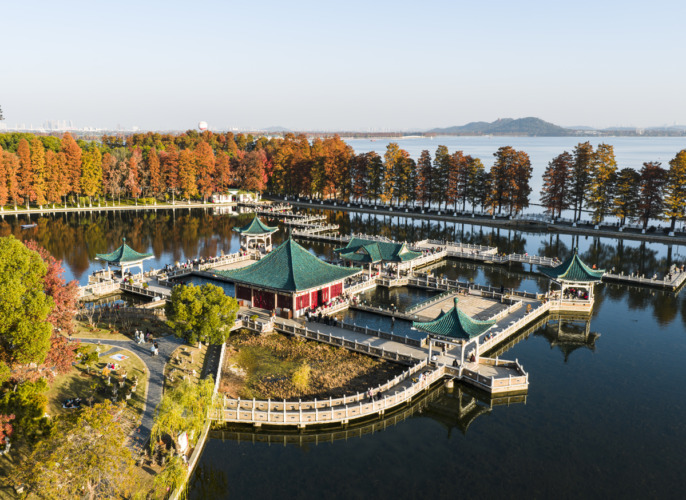
East Lake is one of Wuhan’s signature attractions and one of the largest urban lakes in China.
Its enormous scenic area includes gardens, walking paths, cycling routes, forests, waterfront areas, and seasonal attractions.
The area is generally very safe during normal visiting hours.
The main concerns involve heat, thunderstorms, cycling accidents, and slippery paths during wet weather.
Carry water because distances around the lake can be much greater than they initially appear.
Yellow Crane Tower
Yellow Crane Tower is one of Wuhan’s most famous landmarks and attracts large numbers of domestic visitors.
The attraction itself is organized and generally very safe.
Crowds are the main issue, particularly on weekends and during Chinese public holidays.
Keep belongings secure, wear comfortable shoes, and expect stairs and significant walking.
Summer visitors should plan around the hottest part of the day whenever possible.
Jianghan Road
Jianghan Road is one of Wuhan’s major pedestrian and shopping areas.
Restaurants, shops, cafés, historic buildings, nightlife, and convenient metro connections keep the district busy into the evening.
The area is generally comfortable for international visitors.
Watch bags and phones when crowds become particularly dense and avoid unofficial street offers involving tours, shopping, or entertainment.
Hubei Provincial Museum
The Hubei Provincial Museum is one of Wuhan’s most important cultural attractions.
It contains extensive collections covering the history and archaeology of Hubei, including artifacts from ancient Chinese civilizations.
The museum and surrounding cultural area are generally very safe.
Reservations or identification requirements may apply, so visitors should check procedures before arriving.
Places to Avoid in Wuhan
Wuhan does not have major central neighborhoods that ordinary tourists are routinely advised to avoid because of violent crime.
Most places worth avoiding involve weather, crowds, or sensitive locations rather than dangerous districts.
Yangtze Riverbanks During Flood Conditions
The Yangtze waterfront is one of Wuhan’s highlights, but rising water can make riverside platforms, paths, and recreational areas dangerous.
Do not cross barriers or enter flooded waterfront sections for photographs.
River currents are extremely powerful even when the surface appears relatively calm.
Isolated Riverfront Areas Late at Night
Busy river promenades can be comfortable in the evening, but quieter sections become increasingly isolated late at night.
There is little reason for visitors to wander along deserted stretches of riverfront in the early morning hours.
Stay around populated areas or use transportation back to your hotel.
Unofficial Transportation Areas
Avoid drivers who aggressively approach visitors outside airports, railway stations, or major attractions.
Use official taxi queues, metro services, recognized ride-hailing platforms, or transportation arranged by your accommodation.
Confirm your destination before departing.
Sensitive Government and Military Locations
Avoid unnecessary photography around military facilities, security installations, government buildings, checkpoints, or other clearly restricted locations.
If photography is prohibited, follow the rule.
Do not fly drones without understanding local restrictions and required permissions.
Safety Tips for Traveling to Wuhan
- Watch constantly for electric scooters. Electric scooters can move quickly and quietly, sometimes using spaces visitors assume are pedestrian-only. Look carefully in both directions before crossing streets or bicycle lanes.
- Take summer heat seriously. Wuhan can experience temperatures close to 40°C combined with intense humidity. Avoid prolonged outdoor sightseeing around midday during heat waves and drink plenty of water.
- Monitor heavy rainfall. Summer storms can cause localized flooding and rapidly raise river levels. Avoid low-lying waterfront areas during severe rain.
- Do not drink untreated tap water. Use bottled, boiled, or properly filtered water. Bottled water is inexpensive and easy to find throughout Wuhan.
- Use official transportation. The metro is usually the easiest option. For taxis, use official vehicles or established ride-hailing platforms instead of accepting rides from strangers.
- Keep your passport and identification secure. Foreign visitors may need identification for hotels, transportation, attractions, and interactions with authorities. Keep your passport protected and maintain separate copies of important information.
- Be suspicious of unsolicited invitations. If a stranger suddenly wants to take you to a specific tea house, restaurant, bar, exhibition, or shop, be cautious. You are under no obligation to follow them.
- Prepare your phone before arriving. Navigation, translation, transportation, and digital payments are much easier when the appropriate apps and payment methods have already been configured.
- Respect China’s laws carefully. Avoid illegal drugs completely, stay away from demonstrations, observe photography restrictions, and do not assume behavior legal at home is automatically legal in China.
- Keep your hotel’s address in Chinese. Save the hotel’s Chinese name, address, and phone number offline. It can be extremely useful if your phone loses connectivity or a driver does not understand the English version.
So... How Safe Is Wuhan Really?
Wuhan is generally a safe destination for international visitors when personal safety is measured primarily in terms of street crime.
Despite being an enormous city, violent crime affecting tourists is uncommon, public transportation is extensive, and major commercial districts remain active until late in the evening.
Visitors are unlikely to spend much of their trip worrying about robbery or physical violence.
Crowds are a more realistic everyday issue.
Wuhan is one of China’s major transportation hubs, with huge railway stations, a busy metro system, universities, shopping areas, and popular domestic tourist attractions.
During Chinese public holidays, the number of people using major attractions and transportation services can increase dramatically.
Keeping phones and bags secure is sensible even when the overall theft risk remains low.
Traffic is another issue travelers frequently underestimate.
Electric scooters are everywhere and can approach almost silently.
Visitors should not assume that stepping onto a pedestrian crossing automatically means surrounding vehicles will behave exactly as they would at home.
The city’s climate creates additional risks.
Wuhan is historically known as one of China’s particularly hot summer cities.
July and August can bring oppressive combinations of heat and humidity, with temperatures occasionally reaching around 40°C.
Heat exhaustion can become a bigger practical danger than crime during a full day of sightseeing.
Rainfall is another major factor.
Wuhan sits directly beside the Yangtze River and Han River and contains numerous lakes.
Heavy summer rainfall can cause water levels to rise significantly and occasionally flood low-lying areas.
Visitors should respect barriers around riverside areas and never enter flooded walkways simply because other people appear to be doing so.
Legal awareness is equally important.
China has strict laws involving drugs, public demonstrations, national security, photography, data, and other subjects.
Foreign visitors receive no exemption simply because they were unfamiliar with a particular rule.
Avoid politically sensitive activities and comply with instructions from police and other authorities.
The language barrier can occasionally make routine situations more complicated.
English is not universally spoken, including by taxi drivers.
Translation software and addresses written in Chinese can solve many of these problems.
Digital payments are also extremely important in everyday Chinese life, so preparing mobile payment options before arrival can make the trip significantly smoother.
Overall, Wuhan is suitable for families, couples, solo travelers, and women traveling independently.
Use normal precautions against theft, watch the traffic, prepare for extreme summer weather, stay away from flooded river areas, and respect Chinese laws.
The result should be a relatively straightforward visit to one of central China’s biggest and most historically important cities.
How Does Wuhan Compare?
| City | Safety Index |
|---|---|
| Wuhan |
71 |
| Macau |
85 |
| Xian |
73 |
| Nanjing |
78 |
| Changsha |
73 |
| Tibet |
87 |
| Shenzhen |
64 |
 Sao Paulo Sao Paulo | 50 |
 Sant Julia de Loria Sant Julia de Loria | 92 |
 Vatican City Vatican City | 72 |
 Alaska Alaska | 65 |
| Pulaski | 79 |
 Portmore Portmore | 67 |
Useful Information

Visas
Chinese entry requirements depend on nationality, length of stay, reason for travel, and current visa policies. Some nationalities qualify for visa-free entry under specific conditions, while others need to obtain a Chinese visa before departure. Transit arrangements may also allow certain travelers to enter temporarily without a conventional tourist visa. Because China's visa policies change periodically, confirm the rules applying to your passport shortly before traveling. Carry accommodation and onward travel information in case it is requested during immigration procedures.

Currency
China uses the renminbi, with prices normally expressed in yuan. Mobile payment systems dominate everyday transactions in Wuhan. International visitors should configure appropriate payment methods before arrival rather than relying completely on physical credit cards. Cash remains legal and can be useful as a backup, although some smaller businesses may be much more accustomed to digital payments. ATMs are widely available around banks, shopping centers, hotels, and transportation hubs.

Weather
Wuhan has a humid subtropical climate with four distinct seasons. Summers are extremely hot and humid, particularly during July and August. Temperatures can approach 40°C during severe heat periods. June and July also bring significant rainfall, with heavy storms capable of causing localized flooding. Spring is generally mild but can be rainy. Autumn is often one of the most comfortable periods for visiting, with lower humidity and pleasant temperatures. Winters are cold and damp, with temperatures occasionally approaching freezing. Snow is possible but is much less common than rain.

Airports
Wuhan Tianhe International Airport is the main airport serving the city. It handles extensive domestic services as well as international and regional routes. The airport is connected with central Wuhan by metro and road transportation. Because Wuhan is a major railway hub, many visitors also arrive by high-speed train from cities such as Beijing, Shanghai, Guangzhou, Changsha, and other parts of China. Wuhan has several major railway stations, so check carefully which station your train uses before traveling.

Travel Insurance
Travel insurance is recommended for international visitors to Wuhan. A useful policy should cover emergency medical treatment, hospitalization, trip interruption, transportation disruption, lost baggage, and unexpected cancellations. Travelers visiting during the summer may also want strong coverage for weather-related disruptions because heavy rainfall can affect flights and trains. Anyone with significant medical conditions should identify appropriate hospitals before traveling and carry enough necessary medication for the entire trip.
Wuhan Weather Averages (Temperatures)
Average High/Low Temperature
| Temperature / Month | Jan | Feb | Mar | Apr | May | Jun | Jul | Aug | Sep | Oct | Nov | Dec |
|---|---|---|---|---|---|---|---|---|---|---|---|---|
| High °C |
8 | 10 | 14 | 21 | 26 | 29 | 32 | 32 | 28 | 22 | 16 | 10 |
| Low °C |
1 | 3 | 8 | 14 | 19 | 23 | 26 | 25 | 21 | 15 | 8 | 3 |
| High °F |
46 | 50 | 57 | 70 | 79 | 84 | 90 | 90 | 82 | 72 | 61 | 50 |
| Low °F |
34 | 37 | 46 | 57 | 66 | 73 | 79 | 77 | 70 | 59 | 46 | 37 |
China - Safety by City
| City | Safety Index |
|---|---|
| Beijing | 75 |
| Changsha | 73 |
| Chengdu | 74 |
| Chongqing | 72 |
| Dalian | 79 |
| Guangxi Guilin | 76 |
| Guangzhou | 64 |
| Hangzhou | 78 |
| Hong Kong | 75 |
| Kunming | 74 |
| Lhasa | 72 |
| Macau | 85 |
| Nanjing | 78 |
| Qingdao | 80 |
| Shanghai | 70 |
| Shenzhen | 64 |
| Suzhou | 79 |
| Tianjin | 67 |
| Tibet | 87 |
| Wuhan | 71 |
| Xiamen | 82 |
| Xian | 73 |
| Xinjiang | 80 |
| Yangshuo | 77 |