 Italy : Safety by City
- Amalfi
- Bari
- Bologna
- Cagliari
- Catania
- Cinque Terre
- Florence
- Genoa
- Matera
- Milan
- Naples
- Palermo
- Perugia
- Pisa
- Positano
- Rimini
- Rome
- Sassari
- Siena
- Sorrento
- Taormina
- Turin
- Vatican City
- Venice
- Verona
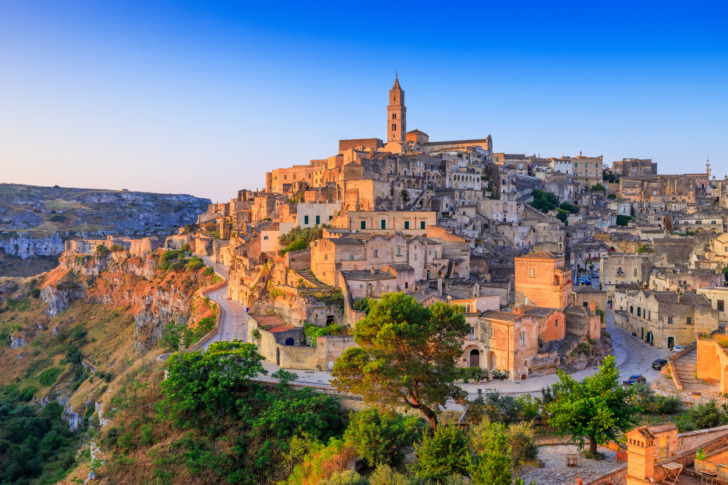
Matera is one of Italy’s most extraordinary cities, carved into the rocky landscape of Basilicata in southern Italy.
It is famous for the Sassi, ancient cave neighborhoods built into limestone cliffs, where homes, churches, stairways, and hotels seem to grow directly out of the stone.
Matera feels ancient because it is ancient, often described as one of the world’s oldest continuously inhabited cities.
It was once associated with poverty and abandonment, but today it is a UNESCO World Heritage Site, a major cultural destination, and one of the most atmospheric places in Italy.
Safety-wise, Matera is very calm, but it is physically demanding.
The biggest risks are not violent crime.
They are stairs, uneven stone, summer heat, slippery paths, pickpockets in tourist areas, parking issues, and getting lost in beautiful cave lanes after dark.
Warnings & Dangers in Matera

OVERALL RISK: LOW
Matera is a low-risk destination for most travelers. Violent crime is rare, the historic center is safe, and the city has a relaxed, welcoming feel. The main concerns are petty theft in busy tourist areas, steep walking routes, poor accessibility, summer heat, and getting disoriented in the Sassi after dark.

TRANSPORT & TAXIS RISK: LOW
Transport in Matera is generally safe, but not always simple. The old Sassi districts are best explored on foot, and driving into restricted or historic areas can be stressful. Taxis and hotel transfers are safe but limited. If arriving by car, park outside the historic center and walk in.

PICKPOCKETS RISK: MEDIUM
Pickpocketing is not a major problem in Matera, but it can happen around crowded viewpoints, Piazza Vittorio Veneto, churches, markets, festivals, tour groups, and busy restaurants. The risk is lower than in Rome or Naples, but tourists are distracted here. Keep phones, wallets, and bags secure while taking photos.

NATURAL DISASTERS RISK: MEDIUM
Matera has a medium natural risk because of its rocky terrain, steep paths, ravines, summer heat, occasional heavy rain, and regional earthquake exposure. Most visits are perfectly safe, but old stone paths can become slippery, and ravine edges require caution. Weather matters more when hiking around the Murgia plateau.

MUGGING RISK: LOW
Mugging is very rare in Matera. The Sassi, main squares, restaurants, hotels, and tourist streets are generally safe during the day and evening. Still, avoid empty alleys, isolated stairways, and dark viewpoints late at night if alone. Petty theft is much more likely than violent crime.

TERRORISM RISK: LOW
The terrorism risk in Matera is low. It is a small cultural city, not a major political, financial, or transport target. Travelers should still use normal awareness in crowded places, religious sites, festivals, and transport hubs, but terrorism is not a practical concern for most visitors.

SCAMS RISK: LOW
Scams are uncommon in Matera. The more realistic issues are unclear parking rules, tourist-priced restaurants, vague tour offers, souvenir markups, and last-minute accommodation surprises. Always check prices before booking tours, taxis, cave hotels, or restaurant meals in prime Sassi locations.

WOMEN TRAVELERS RISK: LOW
Matera is very safe for women travelers, including solo women. The historic center feels comfortable, especially during the day and early evening. Normal precautions still apply: avoid isolated stairways late at night, use trusted taxis if tired, watch drinks, and choose accommodation that does not require a lonely walk through dark lanes.

TAP WATER RISK: LOW
Tap water in Matera is safe to drink. Bring a reusable bottle, especially in summer, because the old town involves stairs, climbs, and exposed stone streets that can get very hot. If hiking outside the center, carry extra water because fountains and shops may be limited.
Safest Places to Visit in Matera
Piazza Vittorio Veneto
Piazza Vittorio Veneto is one of the safest and easiest places to start in Matera.
It is central, open, active, and close to cafes, shops, viewpoints, and entrances into the Sassi.
During the day and evening, it feels lively and comfortable.
The main thing to watch here is your phone or wallet while taking photos from the viewpoints.
Sasso Barisano
Sasso Barisano is one of the 2 main Sassi districts and is generally very safe for daytime and evening exploring.
It has cave hotels, restaurants, churches, museums, and walking routes that feel atmospheric without being too isolated.
The streets can be steep and uneven, so the biggest risk is slipping or tiring yourself out.
Sasso Caveoso
Sasso Caveoso is dramatic, ancient, and one of Matera’s most impressive areas.
It is safe and popular, especially around the cave churches, viewpoints, and main walking routes.
Some corners feel quieter at night, so explore slowly and stick to better-lit paths after dinner.
Good shoes are essential here.
Matera Cathedral and Civita
The area around Matera Cathedral and the Civita ridge is safe, scenic, and excellent for views over the Sassi.
The cathedral area is central enough to feel comfortable but elevated enough to reward the climb.
Watch your footing on stone steps, especially in rain or after dark.
Murgia Materana Viewpoints
The viewpoints across the ravine in the Murgia Materana area offer some of the best views of Matera.
They are safe when visited in daylight with proper shoes and a plan.
The risks are cliffs, heat, rough paths, and limited services.
Go with a guide or a clear route if you are not confident in hiking.
Places to Avoid in Matera
Ravine Edges and Unmarked Paths
The ravine facing the Sassi is beautiful, but cliff edges and rough paths require caution.
Avoid walking too close to drops, especially when taking photos.
Do not leave marked routes, and do not hike in poor visibility or heavy rain.
The views are spectacular, but the terrain is real.
Empty Sassi Alleys Late at Night
The Sassi are safe, but some lanes become very quiet after restaurants close.
Because the streets are uneven, maze-like, and dimly lit in places, late-night wandering can be uncomfortable if you are alone.
Stick to main routes, save your hotel location, and use a taxi if your accommodation is far uphill.
Closed Cave Churches or Restricted Sites
Matera has many ancient cave churches and rock-cut sites, but not every opening or path is meant for visitors.
Avoid entering closed, unstable, or unsigned areas.
Old stone structures can be fragile, slippery, or unsafe.
If you want deeper access, use an official guide or recognized tour.
ZTL and Historic Driving Zones
Do not casually drive into Matera’s historic areas.
Restricted traffic zones, narrow lanes, and limited parking can create fines and stress.
If you arrive by car, use public parking outside the Sassi or ask your hotel exactly where to park and how to handle luggage.
Cave Hotels Without Checking Accessibility
Staying in a cave hotel can be magical, but some involve steep stairs, uneven floors, dampness, low light, or long walks from parking.
Avoid booking purely from photos.
Check access details carefully, especially if you have mobility issues, heavy luggage, children, or dislike climbing after dinner.
Safety Tips for Traveling to Matera
- Wear proper shoes. Matera is not a flip-flop city. The Sassi are full of stone steps, slopes, uneven lanes, polished rock, and sudden little climbs that appear just when you thought you were done climbing. Comfortable shoes with grip are one of the best safety decisions you can make here. In the rain, smooth stone can become slippery fast.
- Travel light. Heavy luggage is a bad idea in Matera. Many cave hotels and old-town stays involve stairs, slopes, or pedestrian-only areas. A large suitcase can turn arrival day into a personal endurance event. Bring manageable luggage, ask your hotel about access before arriving, and consider arranging help if your room is deep inside the Sassi.
- Save your accommodation location offline. The Sassi are beautiful but confusing. Streets twist, stairways split, and GPS can be imperfect in narrow stone lanes. Save your hotel location offline, take a photo of the entrance, and keep the address handy. This is especially useful after dinner, when the city is darker, and every limestone alley starts to look suspiciously poetic.
- Start exploring early in the summer. Matera can get very hot, and the pale stone reflects heat. Summer afternoons can feel intense, especially when climbing through exposed streets. Start sightseeing early, take a long lunch break, and return for evening views. Carry water, wear sunscreen, and use a hat. Heat exhaustion is a more realistic risk than crime here.
- Be careful near viewpoints. Matera is full of dramatic viewpoints, many of which are close to drops, stone edges, or uneven surfaces. Do not step backward for photos without looking. Do not climb barriers or walls for a better angle. The city is already photogenic enough. It does not require heroic nonsense.
- Watch your belongings in crowded spots. Matera is safer than many larger Italian cities, but crowded tourist areas still attract opportunistic theft. Be alert around Piazza Vittorio Veneto, tour groups, viewpoints, churches, restaurants, and festivals. Keep bags closed, wallets out of back pockets, and phones secure when taking photos.
- Check parking rules before arrival. Parking can be one of the most stressful parts of visiting Matera. The historic center has restrictions, and not all hotels are reachable by car. Before arriving, ask your accommodation where to park and whether they offer shuttle or luggage assistance. Avoid guessing your way into the old town. Italian traffic cameras are not known for mercy.
- Use a guide for deeper Sassi history. Matera is much more meaningful when you understand its cave homes, rock churches, poverty history, abandonment, and revival. A good guide also helps you move safely through more complicated areas and avoid restricted or unstable sites. You can wander alone, but guided context makes the city far richer.
- Avoid hiking the ravine in bad weather. The Murgia trails and ravine viewpoints are excellent, but heavy rain, mud, heat, wind, and poor visibility can make them risky. Do not start a hike late in the day, and do not assume a short trail is harmless. Bring water, shoes with grip, and sun protection. If conditions look bad, enjoy Matera from the city viewpoints instead.
- Choose accommodation based on access, not just views. A cave room with a stunning view sounds perfect until you realize it requires a steep climb every time you want coffee. Before booking, check stairs, parking distance, luggage access, lighting, dampness, air conditioning, and whether the hotel offers porter help. The best stay is beautiful and practical. Matera rewards romance, but punishes poor logistics.
So... How Safe Is Matera Really?
Matera is very safe for travelers, especially compared with larger Italian cities.
Violent crime is rare, the atmosphere is calm, locals are used to visitors, and the historic center is comfortable to explore.
Families, couples, solo travelers, older visitors, photographers, history lovers, and first-time visitors to southern Italy can all feel at ease here.
The real safety story is physical, not criminal.
Matera is built into stone, hills, caves, ravines, and stairways.
That means slips, fatigue, heat, mobility issues, and getting lost are more likely than serious crime.
Pickpocketing can happen in crowded areas, but it is not the defining risk.
The bigger mistake is arriving with bad shoes, heavy luggage, no water, and a hotel that requires a heroic climb.
I would rate Matera as low risk overall, with medium risk for mobility, heat, slippery stone, and ravine-side exploring.
Stay aware in crowds, check accommodation access, respect restricted areas, and do not treat the Sassi like a smooth modern city.
Do that, and Matera is one of Italy’s safest, strangest, and most unforgettable places to visit.
How Does Matera Compare?
| City | Safety Index |
|---|---|
| Matera |
83 |
| Siena |
84 |
| Sassari |
81 |
| Vatican City |
72 |
| Perugia |
60 |
| Amalfi |
82 |
| Milan |
65 |
 Petra Petra | 68 |
 Acre Acre | 46 |
 Johnston Johnston | 79 |
| International Falls | 77 |
| Casa Grande | 91 |
| Oakland | 57 |
Useful Information

Visas
Matera is in Italy, which is part of the Schengen Area. Many travelers can visit visa-free for up to 90 days in a 180-day period, while others need a Schengen visa before arrival. Your Schengen allowance applies across member countries, so check your passport validity and travel dates before booking.

Currency
Matera uses the euro. Credit and debit cards are widely accepted in hotels, restaurants, museums, and larger shops, but cash is useful for small cafes, tips, buses, local markets, and smaller businesses. ATMs are available in the modern town and near the historic center.

Weather
Matera has hot, dry summers, mild spring and autumn weather, and cooler winters. Summer sightseeing can be tiring because of the heat, stone streets, and stairs. Pack comfortable shoes, sunscreen, sunglasses, a hat, and light clothing. In winter, bring layers, as cave hotels and stone streets can feel cooler than expected.

Airports
Matera does not have a major airport. The closest and most practical airport is usually Bari Karol Wojtyła Airport in Puglia. From Bari, travelers can reach Matera by bus, rental car, private transfer, or train connections. Brindisi and Naples may also work depending on your wider itinerary.

Travel Insurance
Travel insurance is recommended for Matera, especially if your trip includes flights, rental cars, prepaid hotels, walking tours, or multiple cities in southern Italy. Good coverage should include medical care, cancellations, theft, lost luggage, delays, rental-car issues, and emergency assistance. Check mobility and activity coverage if you plan to hike around the ravine.
Matera Weather Averages (Temperatures)
Average High/Low Temperature
| Temperature / Month | Jan | Feb | Mar | Apr | May | Jun | Jul | Aug | Sep | Oct | Nov | Dec |
|---|---|---|---|---|---|---|---|---|---|---|---|---|
| High °C |
12 | 13 | 15 | 18 | 23 | 29 | 33 | 33 | 28 | 22 | 18 | 13 |
| Low °C |
4 | 5 | 6 | 9 | 13 | 18 | 21 | 21 | 18 | 14 | 10 | 6 |
| High °F |
54 | 55 | 59 | 64 | 73 | 84 | 91 | 91 | 82 | 72 | 64 | 55 |
| Low °F |
39 | 41 | 43 | 48 | 55 | 64 | 70 | 70 | 64 | 57 | 50 | 43 |
Italy - Safety by City
| City | Safety Index |
|---|---|
| Amalfi | 82 |
| Bari | 74 |
| Bologna | 56 |
| Cagliari | 64 |
| Catania | 65 |
| Cinque Terre | 85 |
| Florence | 72 |
| Genoa | 60 |
| Matera | 83 |
| Milan | 65 |
| Naples | 62 |
| Palermo | 55 |
| Perugia | 60 |
| Pisa | 61 |
| Positano | 83 |
| Rimini | 62 |
| Rome | 65 |
| Sassari | 81 |
| Siena | 84 |
| Sorrento | 75 |
| Taormina | 80 |
| Turin | 42 |
| Vatican City | 72 |
| Venice | 72 |
| Verona | 65 |