


 Italy : Safety by City
- Amalfi
- Bari
- Bologna
- Cagliari
- Catania
- Cinque Terre
- Florence
- Genoa
- Matera
- Milan
- Naples
- Palermo
- Perugia
- Pisa
- Positano
- Rimini
- Rome
- Sassari
- Siena
- Sorrento
- Taormina
- Turin
- Vatican City
- Venice
- Verona
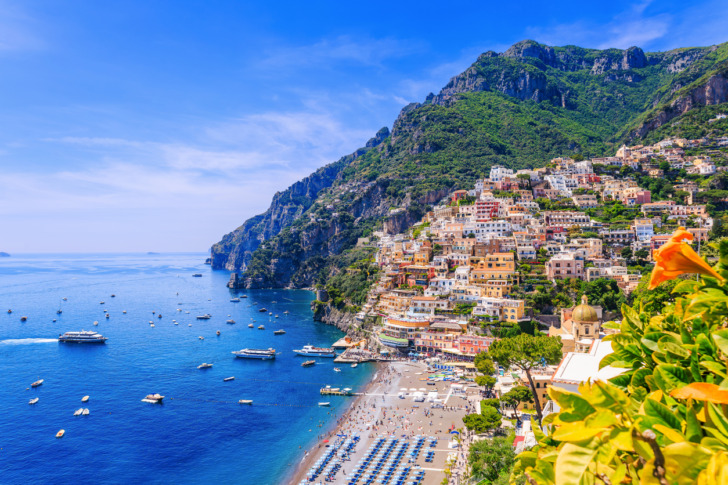
Positano is the cliffside jewel of Italy’s Amalfi Coast, stacked dramatically above the Tyrrhenian Sea in the Campania region south of Naples.
It is famous for pastel houses, steep stairways, luxury hotels, lemon trees, beach clubs, boat trips, and that famous vertical view where the town seems to tumble beautifully into the water.
Positano is small, romantic, expensive, and extremely popular, especially from late spring through early autumn.
It is also very safe from a violent-crime perspective.
But the town’s beauty comes with practical safety issues: crowded ferries, steep steps, slippery lanes, narrow roads, rough seas, summer heat, pickpockets, and tourist pricing that can feel like your wallet was pushed down a staircase.
Positano is safe, but it is not effortless.
Warnings & Dangers in Positano

OVERALL RISK: LOW
Positano is a low-risk destination for most travelers. Violent crime is rare, the town is tourism-focused, and central areas feel comfortable during the day and evening. The main concerns are petty theft, steep walking routes, high prices, transport stress, summer crowds, and sea or hiking conditions.

TRANSPORT & TAXIS RISK: MEDIUM
Transport is one of Positano's biggest challenges. Roads are narrow, winding, and crowded, especially in high season. Parking is limited and expensive, taxis can cost a lot, and buses can be packed. Ferries are often the best option in season, but they can be delayed or canceled in rough seas.

PICKPOCKETS RISK: MEDIUM
Pickpocketing is not extreme, but it can happen in crowded ferry areas, bus stops, beaches, narrow lanes, restaurants, and busy viewpoints. Positano attracts wealthy tourists, which makes phones, wallets, jewelry, and bags tempting. Keep valuables secure, especially when boarding boats or squeezing through crowded streets.

NATURAL DISASTERS RISK: MEDIUM
Positano has a medium natural risk because of its cliffside setting. Heavy rain can cause slippery stairs, rockfall, landslides, road closures, and rough seas. Summer heat can also be intense when climbing through town. Earthquakes are possible in the wider region, but daily concerns are weather, cliffs, sea conditions, and heat.

MUGGING RISK: LOW
Mugging is rare in Positano. The town is small, busy, and generally safe, especially around the beach, hotels, restaurants, and main pedestrian routes. Still, avoid quiet stairways, dark shortcuts, and isolated paths late at night if alone. Petty theft is much more likely than violent robbery.

TERRORISM RISK: MEDIUM
The terrorism risk in Positano itself is low, but Italy has a broader European security context that travelers should keep in mind. Crowded public places, transport hubs, and major tourist areas deserve normal awareness. For a typical Positano visitor, practical risks like transport, theft, heat, and sea conditions are much more likely.

SCAMS RISK: LOW
Scams are not a major problem in Positano, but tourist pricing can be intense. Watch for unclear taxi fares, expensive beach chair fees, vague boat-tour pricing, restaurant surprises, and poor-value last-minute accommodation. Confirm prices before agreeing to rides, tours, beach clubs, luggage help, or private transfers.

WOMEN TRAVELERS RISK: LOW
Positano is very safe for women travelers, including solo women. The central areas are busy, romantic, and visitor-friendly. Normal precautions still apply: avoid isolated stairways late at night, watch drinks, use trusted transport after dinner, and choose accommodation that does not require a lonely climb far from town.

TAP WATER RISK: LOW
Tap water in Positano is safe to drink. Bring a reusable bottle, especially in summer, because the town involves endless stairs and hot uphill walks. Bottled water is easy to find, but not necessary for safety. During hikes or boat trips, carry extra water because services may be limited.
Safest Places to Visit in Positano
Spiaggia Grande
Spiaggia Grande is the main beach and the safest, busiest, and most recognizable part of Positano.
It is surrounded by restaurants, beach clubs, boat offices, hotels, and postcard views of the cliffside town.
During the day and early evening, it is lively and easy to enjoy.
The main risks are beach theft, high prices, sun exposure, and crowds near the ferry dock.
Keep valuables minimal if swimming, and confirm beach club prices before settling in.
Fornillo Beach
Fornillo Beach is a little calmer than Spiaggia Grande and is reached by a scenic coastal path from the main beach area.
It is generally safe and popular with travelers who want a slightly more relaxed atmosphere.
The walk is pleasant during the day, but I would avoid quiet coastal paths very late at night.
Watch your belongings and pay attention to sea conditions.
Church of Santa Maria Assunta
The Church of Santa Maria Assunta is central, safe, and one of Positano’s most important landmarks.
Its majolica-tiled dome is a major part of the town’s skyline, and the surrounding streets are full of shops, cafes, and restaurants.
This area is easy to visit, but it can become crowded.
Keep your phone and wallet secure while taking photos.
Positano Marina and Ferry Area
The marina area is safe and practical for boat trips, ferries to Amalfi, Capri, and Sorrento, and coastal excursions.
It is one of the busiest parts of town, so give yourself extra time, especially in summer.
The main safety issue is crowding while boarding, plus the possibility of rough seas affecting ferry schedules.
Path of the Gods Access Routes
The Path of the Gods is one of the most famous hikes above the Amalfi Coast.
It is safe for prepared hikers in good weather, but it is not a casual flip-flop walk.
Use proper shoes, bring water, avoid midday heat, and do not hike in storms or poor visibility.
For many visitors, starting from nearby villages with a planned route is easier than improvising from Positano.
Places to Avoid in Positano
Quiet Stairways Late at Night
Positano is built vertically, so stairways are part of daily life.
Most are safe, but some become quiet, dim, and physically tiring late at night.
If you are alone, tired, or have been drinking, stick to main routes or take a taxi where possible.
A romantic staircase loses charm after 300 steps in the dark.
Closed or Wet Hiking Trails
Do not hike closed trails or paths after heavy rain.
The Amalfi Coast has steep terrain, and wet conditions can mean slippery stones, mud, rockfall, and landslide risk.
If signs warn against a route, take them seriously.
The view is not worth a rescue or a twisted ankle.
The Amalfi Coast Road on Foot
The famous coastal road is scenic but narrow, busy, and not designed for casual pedestrian wandering in many sections.
Avoid walking along dangerous road stretches just to save taxi money or take photos.
Cars, buses, scooters, and tight curves make this a bad idea, especially after dark.
Overcrowded Ferry Dock Areas
The ferry dock is safe, but it can become chaotic in peak season.
Crowds, luggage, boat schedules, and heat make it easy to lose a phone, bag, or ticket.
Stay alert while boarding, keep bags close, and do not wait until the last minute to find your boat.
Beach Clubs Without Checking Prices
Private beach clubs in Positano can be expensive.
Avoid sitting down before you understand sunbed fees, umbrella costs, minimum spends, towel charges, and restaurant prices.
This is not a physical danger, but it is one of the most common ways travelers get an unpleasant surprise.
Safety Tips for Traveling to Positano
- Pack light. Positano is stunning, but luggage and stairs are enemies. Many hotels and apartments require uphill walks, narrow paths, or long stair climbs. A giant suitcase can turn arrival day into a full-body workout with emotional consequences. Bring luggage you can actually carry, or arrange porter service in advance if your accommodation is high above the beach.
- Use ferries when conditions are good. In season, ferries are often the easiest way to move between Positano, Amalfi, Capri, and Sorrento. They avoid road traffic and offer beautiful views. But ferries depend on sea conditions, so always check schedules and allow flexibility. If you have a flight, train, or important connection, do not rely on the last possible ferry.
- Confirm taxi and transfer prices. Taxis and private transfers on the Amalfi Coast can be expensive. Before getting in, confirm the price clearly, especially for trips to Sorrento, Naples, Amalfi, Ravello, or the airport. Hotel-arranged transfers may cost more but can reduce stress. With Positano transport, clarity is cheaper than confusion.
- Wear proper shoes. This is not the place for slippery sandals if you plan to explore. Positano has steep streets, stone steps, uneven lanes, and beach paths. Comfortable shoes with grip are essential, especially if walking to Fornillo Beach, climbing to your hotel, or heading out after rain. Your calves will already be working overtime.
- Keep valuables secure in crowds. Positano feels safe, but crowded tourist spots still attract opportunistic theft. Be careful around the ferry dock, beaches, bus stops, narrow shopping lanes, and busy restaurants. Keep bags zipped, phones secure, and wallets out of back pockets. Do not leave bags unattended while swimming or taking photos.
- Respect the sea. The water around Positano is beautiful, but sea conditions can change. Do not swim far from shore, avoid swimming near boat traffic, and pay attention if waves or currents pick up. Boat trips should be booked with reputable operators who provide clear safety instructions. If the sea looks rough, postpone the trip.
- Avoid overpacking your day. Positano looks close to Amalfi, Ravello, Capri, and Sorrento on a map, but the coast moves slowly. Traffic, ferries, stairs, crowds, and heat can all delay you. Trying to see too much in one day leads to rushing, missed boats, and bad decisions. A slower itinerary is safer and much more enjoyable.
- Stay hydrated in summer. Summer in Positano can be hot, crowded, and physically demanding. Walking uphill from the beach to your hotel can feel like a spiritual test. Carry water, use sunscreen, wear a hat, and take breaks in the shade. Heat exhaustion is more realistic here than serious crime.
- Choose accommodation carefully. Before booking, check the exact location and how many stairs or uphill sections are involved. A room with a magical view may also mean a serious climb every time you return from dinner. This matters for families, older travelers, anyone with mobility issues, and anyone who plans to go out at night.
- Be careful with scooters and rental cars. Driving the Amalfi Coast is not for everyone. Roads are narrow, curves are sharp, buses are large, scooters move fast, and parking in Positano is limited and costly. If you are not comfortable with tight coastal driving, use ferries, buses, taxis, or private drivers instead. The view is better when you are not gripping the steering wheel like a survival device.
So... How Safe Is Positano Really?
Positano is very safe for travelers when it comes to crime.
Violent incidents are rare, tourist areas are well maintained, and the town depends heavily on visitors.
Families, couples, solo travelers, honeymooners, older visitors, and first-time Italy travelers can all feel comfortable here.
The main beach, restaurants, shops, hotels, and central lanes are generally safe during the day and evening.
The real safety issues are practical.
Positano is steep, crowded, expensive, and transport-limited.
Stairs can be exhausting, roads can be stressful, ferries can be weather-dependent, and summer crowds create opportunities for pickpockets.
Hiking and sea activities require awareness, especially when weather changes.
Beach theft and overpricing are more realistic problems than violent crime.
I would rate Positano as low risk overall, with medium risk for transport, summer crowds, hiking, and sea conditions.
The safest visitors plan ahead, pack light, wear good shoes, confirm prices, use ferries wisely, and avoid treating the Amalfi Coast like it can be rushed.
Do that, and Positano is not only safe.
It is one of Italy’s most unforgettable coastal destinations.
How Does Positano Compare?
| City | Safety Index |
|---|---|
| Positano |
83 |
| Siena |
84 |
| Venice |
72 |
| Bologna |
56 |
| Vatican City |
72 |
| Florence |
72 |
| Turin |
42 |
 Santorini Santorini | 78 |
 Whistler Whistler | 88 |
 Greenport Village Greenport Village | 78 |
| Luray | 81 |
 Wroclaw Wroclaw | 78 |
| Somerset | 86 |
Useful Information

Visas
Positano is in Italy, which is part of the Schengen Area. Many travelers can visit visa-free for up to 90 days in a 180-day period, while others need a Schengen visa before arrival. Your Schengen allowance applies across multiple member countries, so check passport validity and travel dates before booking.

Currency
Positano uses the euro. Credit and debit cards are widely accepted in hotels, restaurants, shops, and beach clubs, but cash is useful for taxis, tips, small purchases, luggage porters, and some boat services. Positano is expensive, so check prices carefully and carry smaller notes when possible.

Weather
Positano has a Mediterranean climate with warm summers, mild winters, and pleasant spring and autumn weather. Summer is best for swimming but brings heat and crowds. Spring and fall are better for walking and sightseeing. Pack light clothes, swimwear, sunscreen, comfortable shoes, and a light jacket for evenings.

Airports
Positano does not have an airport. The closest major airport is Naples International Airport. From there, travelers usually continue by private transfer, ferry connections, bus, train through Sorrento or Salerno, or rental car. Transfers can take 1.5 to 3 hours depending on traffic, season, and route.

Travel Insurance
Travel insurance is recommended for Positano, especially if your trip includes flights, ferries, boat tours, prepaid hotels, hiking, or a wider Amalfi Coast itinerary. Good coverage should include medical care, cancellations, theft, lost luggage, ferry delays, weather disruptions, and rental-car issues if you plan to drive.
Positano Weather Averages (Temperatures)
Average High/Low Temperature
| Temperature / Month | Jan | Feb | Mar | Apr | May | Jun | Jul | Aug | Sep | Oct | Nov | Dec |
|---|---|---|---|---|---|---|---|---|---|---|---|---|
| High °C |
13 | 13 | 15 | 19 | 23 | 27 | 29 | 29 | 26 | 22 | 18 | 14 |
| Low °C |
8 | 8 | 10 | 12 | 15 | 18 | 22 | 22 | 19 | 15 | 12 | 9 |
| High °F |
55 | 55 | 59 | 66 | 73 | 81 | 84 | 84 | 79 | 72 | 64 | 57 |
| Low °F |
46 | 46 | 50 | 54 | 59 | 64 | 72 | 72 | 66 | 59 | 54 | 48 |
Italy - Safety by City
| City | Safety Index |
|---|---|
| Amalfi | 82 |
| Bari | 74 |
| Bologna | 56 |
| Cagliari | 64 |
| Catania | 65 |
| Cinque Terre | 85 |
| Florence | 72 |
| Genoa | 60 |
| Matera | 83 |
| Milan | 65 |
| Naples | 62 |
| Palermo | 55 |
| Perugia | 60 |
| Pisa | 61 |
| Positano | 83 |
| Rimini | 62 |
| Rome | 65 |
| Sassari | 81 |
| Siena | 84 |
| Sorrento | 75 |
| Taormina | 80 |
| Turin | 42 |
| Vatican City | 72 |
| Venice | 72 |
| Verona | 65 |












The narrow, slippery paths caught me off guard a few times, and you definitely feel the heat climbing all those steps, but there’s something about those lemon trees that makes it all worth it.