


 Italy : Safety by City
- Amalfi
- Bari
- Bologna
- Cagliari
- Catania
- Cinque Terre
- Florence
- Genoa
- Matera
- Milan
- Naples
- Palermo
- Perugia
- Pisa
- Positano
- Rimini
- Rome
- Sassari
- Siena
- Sorrento
- Taormina
- Turin
- Vatican City
- Venice
- Verona
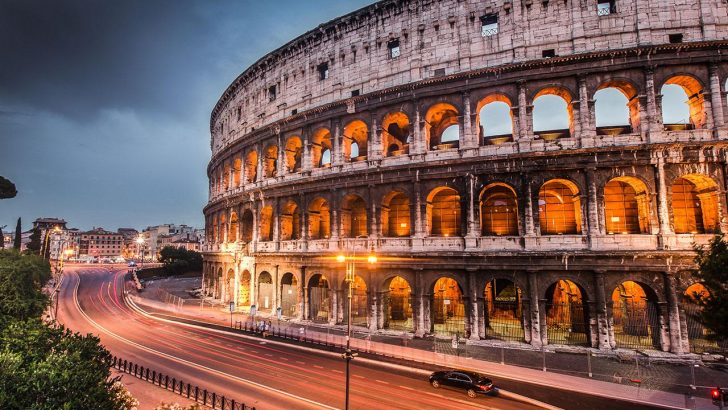
Rome is a frequent destination for many, especially those who love history.
Within walking distance of each other are ancient sites like the Colosseum, the Roman Forum, the Pantheon, the Circus Maximus, and the Capitoline Museums.
There is also St. Peter’s Basilica and Michelangelo’s Sistine Chapel painting.
This is considered one of the most romantic cities not only in Italy, but in the whole world.
Is it safe to visit?
Let’s explore how safe this city truly is.
Warnings & Dangers in Rome

OVERALL RISK: MEDIUM
Other than the things like scams and pickpockets, which occur in nearly every large city where tourists gather, this is a safe city to visit. Many people find it fine to walk in lit areas at night, and women travelers are safe as long as they stay aware of the dangers and know what to look for.

TRANSPORT & TAXIS RISK: LOW
That is, if you use the official taxis or Uber. Use official taxi ranks (white cars with "TAXI" sign), book via apps (FreeNow, Uber, appTaxi), or have hotel staff book. Only Uber Black (higher-end cars) operates, making it pricier but safer. You need to note that taxi drivers start their meters as soon as they receive a call, so when you do get in, there will already be some charge on the meter. Keep in mind, also, that you can insist the meter be turned on as it is required by law. For public transport, the biggest risk is pickpockets. You also must validate (tap) tickets on buses/trams/metro for every ride or risk significant fines.

PICKPOCKETS RISK: HIGH
The highest risk areas are in the crowded areas that are often frequented by travelers, such as the Colosseum, Trevi Fountain and public transport. If you stay aware of your surroundings and beware of distraction techniques, you should be fine.

NATURAL DISASTERS RISK: MEDIUM
The natural disaster dangers include: Flooding: Tiber River Floods: A major threat, especially in the historic center, due to outdated urban planning that hasn't kept pace with a pre-industrial climate, making areas like the Roman Forum vulnerable. Pluvial Flooding: Heavy rainfall overwhelms drainage, causing localized flooding, particularly in depressions and areas with poor infrastructure. Earthquakes: Rome is in a seismically active zone, susceptible to tremors from nearby Apennine faults and volcanic areas. Building foundations on ancient ruins creates unpredictable ground, amplifying risk, though large-scale quakes are less common than in other parts of Italy. Extreme Weather: Increasing frequency of whirlwinds, droughts, and intense storms, with Rome experiencing numerous extreme weather events in recent years.

MUGGING RISK: LOW
Violent crime is low in Rome, and the majority of the crimes you need to watch for are things like scams and pickpockets. Walking is even safe in most areas at night, as long as you avoid public transport.

TERRORISM RISK: MEDIUM
While every place needs caution regarding terrorists, Rome is at no greater danger than the majority of the world. It is best to stay aware of your surroundings and follow any orders you may be given by authority figures if they ask you to clear an area, but this is not likely to occur.

SCAMS RISK: HIGH
There are several scams you need to watch for, especially if you stand out as a tourist. If you have things on the table, a person will slap a large map on top of them and ask for directions. When they leave, the items leave with the map. People, usually a woman or a child, will offer you a "free" item. When you accept it, they will start making a scene and demanding payment, Watch for vendors giving you a 500 lira instead of a 2 euro coin. The lira is worthless in Rome. Some restaurants will also try to charge you way too much, as will unofficial taxis.

WOMEN TRAVELERS RISK: MEDIUM
A solo woman traveler anywhere faces a small amount of risk. In Rome, there are a couple of things to watch for, including. Key Risks & How to Mitigate Them: Pickpocketing & Scams: Watch Out For: Crowded buses (62/64), Termini station, Colosseum, Spanish Steps, St. Peter's Square. Scams: "Helpful locals," bracelet/ring sellers, ticket sellers on the street; say "No!" firmly and walk away. Protection: Use a crossbody bag zipped shut in front, money belts/pouches under clothes, don't flash valuables, and keep phone/passport secure. Unwanted Attention ("Romeos"): Experience: Unsolicited advances are common; it's not usually violent. Response: Be assertive, tell them off, and move on quickly. Nighttime Safety: Caution: Avoid isolated areas at night; stick to well-lit, populated streets (like near Piazza Navona). Intoxication: Be mindful of alcohol, especially cheap wine, as it lowers inhibitions.

TAP WATER RISK: LOW
Rome's water is praised for its high quality, originating from mountain springs and continuously tested. It's the same water served in homes and restaurants, fed by historic aqueducts like the Aqua Virgo. Older buildings might have lead pipes, a risk present in many cities, making a filter beneficial. The Lazio region has naturally higher levels of arsenic and fluoride, though controlled.
Safest Places to Visit in Rome
- Trastevere:
Popular but generally safe, especially in the main squares, though watch for crowds.
- Celio:
Near the Colosseum, it offers a mix of history and local life
- Borgo:
Adjacent to the Vatican, safe and historic.
- Prati:
Considered very safe, upscale, with wide avenues, near the Vatican, good for shopping and dining, and quiet.
- Monti:
Central, historic, trendy, with boutiques and restaurants, safe and welcoming.
- Testaccio:
Authentic Roman feel, vibrant market, good food, and safe due to being an active community.
Places to Avoid in Rome
- San Lorenzo & Esquilino:
Can feel rougher after dark; exercise caution.
- Termini (Station Area):
Convenient but can be sketchy at night; avoid deserted streets.
- Pigneto & Ostiense (Parts of):
Can feel rougher or attract drug-dealing/aggressive vendors at night.
- Suburbs (Tor Bella Monaca, San Basilio, Corviale):
These residential areas are far from tourist centers and generally best avoided, especially after dark.
Safety Tips for Traveling to Rome
- Avoid carrying large sums of cash or showing what you have. You don’t want to draw attention to yourself by showing expensive phones, cameras, etc.
- Keep valuables locked up or safely put away in an inner pocket. The hotel safe is a good place to keep all your valuables. If you must carry something, try using an inner pocket.
- Use indoor ATMs when possible. There is less chance of someone getting your PIN or grabbing the money you get out when you are inside.
- Be aware of your surroundings. This can be your best course of action. Watch what is going on, notice anything that appears to be “off”, and trust your instincts.
- Use a cross-body bag or fanny pack. Close to the body equals safer.
- Learn basic Italian. This helps you communicate your needs better, ask for help when needed, and avoid many misunderstandings.
- Carry copies of important documents, not originals. Leave the originals in the hotel safe, where you can retrieve them if needed.
- Stick to well-lit, populated areas when walking at night. While the city is mainly safe, risking dark alleys and empty streets is risky anywhere in the world.
- Use only city-sanctioned taxis and Ubers. White taxis and black Ubers are regulated by the city, and your only guarantee of not being scammed.
- Avoid public transport at night and use only taxis and Uber. Public transportation at night has a greater risk of pickpockets.
So... How Safe Is Rome Really?
For those looking for an enjoyable vacation filled with culture, history, and fun, Rome is a safe place to experience all this, as long as you keep your common sense handy and understand that where tourists gather, scams and pickpockets abound.
Before you go, make copies of all your important documents so you can leave the originals packed up.
Don’t carry your most expensive camera, phone, or flashy jewelry.
Try to blend in and avoid some of the darkest areas at night, and the few mentioned above.
You should be able to enjoy a safe night stroll in the better lit areas.
Natural disasters and terrorism are not things you need to worry about more so than in other areas.
In addition, by staying alert and following directions from local authorities, you will be able to return home with a ton of good memories from your time in Rome.
How Does Rome Compare?
| City | Safety Index |
|---|---|
| Rome |
65 |
| Pisa |
61 |
| Rimini |
62 |
| Bologna |
56 |
| Vatican City |
72 |
| Amalfi |
82 |
| Positano |
83 |
 Gruene Gruene | 82 |
| Portage | 87 |
| California | 70 |
 Bohol Bohol | 79 |
| Glastonbury | 92 |
| Waxahachie | 83 |
Useful Information

Visas
No visa needed, but you must have a passport valid for at least three months beyond your intended departure from the Schengen Area (Italy is in the Schengen Area). A 6-month validity is recommended. ETIAS (Starting late 2025): Travelers from visa-exempt countries will need to apply for an ETIAS travel authorization before traveling to the Schengen Area.

Currency
In Rome, the currency is the Euro (€). There are several options for converting your money. ATMs (Best Option): Find ATMs (Bancomat) attached to banks in Rome for excellent rates. Always decline the ATM's offer to convert the currency back to your home currency to get the real exchange rate, advises Wise. Banks: Banks can exchange money but often prefer customers with accounts and may offer less competitive rates. Currency Exchange Bureaus (e.g., Ria, Forexchange): Services like Ria (near Pantheon/Vatican) or Forexchange offer exchange, but compare their rates to ATMs for the best deal, as some can have hidden fees. Avoid: Airport and hotel currency exchange desks usually offer poor rates due to convenience.

Weather
The summers are short, hot, humid, dry, and mostly clear and the winters are long, cold, wet, and partly cloudy. The coldest month in Rome is January, with February being close behind. The average daily high temperatures are 55 degrees F and lows of 38 degrees F. The warmest months are July and August, with a high of 89 degrees F, on average, and nighttime lows of 67 degrees F. Pack according to the season. Rain gear is necessary all year, but there are normally no more than nine days of rain in any given month, and that is during November and December. A light jacket will be necessary for chilly evenings, but you can leave the winter clothing at home.

Airports
There are two airports very close to Rome, and both are easily accessed by Uber or taxi. Leonardo da Vinci International Airport, Rome airport named after the famous inventor & served by 30 minute express train to Termini Station. Giovan Battista Pastine International Airport. Great for catching budget flights. Can be accessed by bus, taxi, or train. Offers the fastest security checks.

Travel Insurance
While not legally required, travel insurance will aid in the case of canceled plans, medical needs, or lost or stolen items. The peace of mind that travel insurance affords is well worth the cost.
Rome Weather Averages (Temperatures)
Average High/Low Temperature
| Temperature / Month | Jan | Feb | Mar | Apr | May | Jun | Jul | Aug | Sep | Oct | Nov | Dec |
|---|---|---|---|---|---|---|---|---|---|---|---|---|
| High °C |
12 | 13 | 15 | 18 | 22 | 27 | 30 | 30 | 26 | 21 | 16 | 12 |
| Low °C |
2 | 3 | 5 | 8 | 11 | 15 | 17 | 17 | 14 | 10 | 7 | 3 |
| High °F |
54 | 55 | 59 | 64 | 72 | 81 | 86 | 86 | 79 | 70 | 61 | 54 |
| Low °F |
36 | 37 | 41 | 46 | 52 | 59 | 63 | 63 | 57 | 50 | 45 | 37 |
Italy - Safety by City
| City | Safety Index |
|---|---|
| Amalfi | 82 |
| Bari | 74 |
| Bologna | 56 |
| Cagliari | 64 |
| Catania | 65 |
| Cinque Terre | 85 |
| Florence | 72 |
| Genoa | 60 |
| Matera | 83 |
| Milan | 65 |
| Naples | 62 |
| Palermo | 55 |
| Perugia | 60 |
| Pisa | 61 |
| Positano | 83 |
| Rimini | 62 |
| Rome | 65 |
| Sassari | 81 |
| Siena | 84 |
| Sorrento | 75 |
| Taormina | 80 |
| Turin | 42 |
| Vatican City | 72 |
| Venice | 72 |
| Verona | 65 |













Mmm. Gelato!
You have all the right to refuse a ride to those unscrupulous drivers offering you a ride, true enough always go with the official taxis with a meter. Never believe that you are getting a good deal out of a ride with a stranger you do not know just because they (say) they offer a lower price! And if anything goes wrong, there’s always gelato! Lots and lots of them 🙂
Not very safe if...
Not very safe if you compare it to other western European countries.
There is a lot of crime, especially in Rome, targeting tourists like pickpockets and mainly, scammers. be on your guard and don’t “give to charity”, it’s not really charity, 90% it’s a scam, so be cautious.
When in Rome
Having spent a great deal of time in Rome, I have never felt threatened except when I was a younger lady. The men were quite flirtatious and were quite bothersome. Now as a mature woman, I feel safe walking around my favorite city. Just be careful of scammers. Do not accept a rose from anyone. Don’t accept a bracelet either. Be very careful on busses. Keep your purse or anything of value in the front of you. Do not engage with the fake gladiator’s. They will shake you down for a lot of money. I’m sorry to say but stay away from the gypsies. Don’t talk to them. Avoid eye contact with them. On trains, handle your own luggage. People will try to help you snd then demand a lot of money from you. Just say no. If there is a person outside of a restaurant trying to lure you in, don’t go. Walk to a different place. There are many to choose from. I love Rome. I do know how to handle myself when visiting but you must be careful. Enjoy!
Rome Is Safe
We felt completely safe in Rome, even late at night.
If I am to give my opinion I wouldn’t say that Rome is a safe city if you’re a tourist. We kept being bothered all the time by strangers while sightseeing and we couldn’t always tell the difference if someone was being polite or doing their job or was just trying to scam us. It’s hard to enjoy the city when you constantly need to watch out for pickpocketers, scammers etc.
Strolling through those ancient ruins really hits different when you think about all the history they hold; it makes you feel a part of something way bigger than yourself.
So we’re supposed to feel romantic while dodging pickpockets and navigating through throngs of tourists, huh? What a vibe! It’s like a historical treasure hunt but with a side of anxiety.
Strolling through the ancient streets and seeing the Colosseum rise up before you is just surreal, it’s almost like stepping back in time and feeling the weight of all those stories.
Honestly, wandering around Rome’s ancient ruins feels a bit like time travel with a side of gelato!
When I first craned my neck under the Pantheon and my chest tightened, then someone snagged my bag on a crowded tram, would you say that’s a reason to be cautious rather than just fall for Rome’s romance?
Honestly, I was surprised at how safe I felt wandering the cobblestone streets at midnight, even if the crowds around the Colosseum made me extra wary.
I got goosebumps walking past the Colosseum at night, did you feel that too?
Did you feel at all uneasy walking around near the Colosseum or the Roman Forum at night, or is it mostly chill even when it’s quieter?