


 Italy : Safety by City
- Amalfi
- Bari
- Bologna
- Cagliari
- Catania
- Cinque Terre
- Florence
- Genoa
- Matera
- Milan
- Naples
- Palermo
- Perugia
- Pisa
- Positano
- Rimini
- Rome
- Sassari
- Siena
- Sorrento
- Taormina
- Turin
- Vatican City
- Venice
- Verona
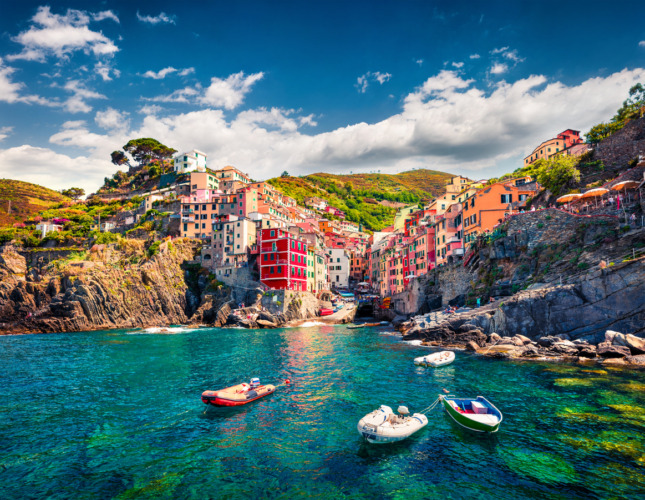
Cinque Terre is one of Italy’s most famous coastal destinations, made up of 5 colorful villages clinging to the cliffs of Liguria: Monterosso al Mare, Vernazza, Corniglia, Manarola, and Riomaggiore.
It sits along the Italian Riviera between Genoa and Pisa, where steep vineyards, tiny harbors, hiking trails, pastel houses, and Mediterranean views create the kind of scenery that makes people suddenly believe they need a linen shirt and a travel journal.
Cinque Terre is generally very safe for tourists, especially from a violent-crime perspective.
But it is not a sleepy hidden village anymore.
It gets crowded, the trains can be packed, trails can close, stairs are everywhere, and the sea and cliffs deserve respect.
The biggest risks are pickpockets, hiking injuries, heat, slippery paths, rough water, train-station crowds, and tourist overconfidence.
Warnings & Dangers in Cinque Terre

OVERALL RISK: LOW
Cinque Terre is a low-risk destination for most travelers. Violent crime is rare, the villages are small, and tourist infrastructure is strong. The main concerns are petty theft, crowded trains, hiking hazards, heat, rough seas, and trail closures. Visitors who plan and avoid careless behavior should feel very safe.

TRANSPORT & TAXIS RISK: MEDIUM
Transport is safe but can be crowded and occasionally frustrating. The train is the easiest way to move between the 5 villages, but platforms and carriages can be packed in high season. Boats are scenic but weather-dependent. Taxis are limited, roads are steep, and driving inside the villages is not practical.

PICKPOCKETS RISK: MEDIUM
Pickpocketing is the most realistic crime risk in Cinque Terre. It can happen on trains, at stations, on crowded platforms, near boat docks, in busy lanes, and around popular viewpoints. Keep bags zipped, avoid back-pocket wallets, and be especially careful when boarding or exiting trains with luggage.

NATURAL DISASTERS RISK: MEDIUM
Cinque Terre has a medium natural risk because of its steep coastal terrain. Heavy rain can cause landslides, flooding, trail closures, slippery paths, and rough seas. Summer heat can also be intense on exposed hiking routes. Always check trail conditions before hiking and avoid cliff paths during storms or poor visibility.

MUGGING RISK: LOW
Mugging is very rare in Cinque Terre. The villages are small, busy, and tourist-oriented, especially during the day and evening. Still, avoid isolated paths, dark stairways, and quiet waterfront areas late at night if alone. Petty theft is much more likely than violent street crime.

TERRORISM RISK: LOW
The terrorism risk in Cinque Terre is low. These are small coastal villages rather than major political, financial, or transport targets. Travelers should still stay aware in crowded stations and public places, but terrorism is not a practical daily concern here. Trail safety and petty theft matter much more.

SCAMS RISK: LOW
Scams are not a major issue in Cinque Terre. The bigger problem is tourist pricing, unclear restaurant costs, overpriced souvenirs, fake parking help, and poor-value last-minute accommodation. Confirm prices before sitting down, booking tours, or accepting services. During peak season, anything unusually cheap deserves a second look.

WOMEN TRAVELERS RISK: LOW
Cinque Terre is very safe for women travelers, including solo women. The villages are compact, well visited, and easy to explore. Normal precautions still apply: avoid isolated trails late, watch drinks, stay near well-reviewed accommodation, and use the train rather than dark coastal paths after dinner.

TAP WATER RISK: LOW
Tap water in Cinque Terre is safe to drink. Bring a reusable bottle, especially for hiking, beach days, and summer sightseeing. You will climb more stairs than expected, and hydration matters. If using public fountains, drink only from those clearly marked as safe for drinking.
Safest Places to Visit in Cinque Terre
Monterosso al Mare
Monterosso is the largest and flattest of the 5 villages, which makes it one of the safest and easiest bases for many travelers.
It has the best beach access, more hotels, restaurants, and a more comfortable layout for visitors who do not want endless stairs.
It is a good choice for families, older travelers, and anyone carrying luggage.
The main risks are beach theft, crowded train platforms, and swimming conditions when the sea is rough.
Vernazza
Vernazza is one of the most beautiful villages in Cinque Terre, with a small harbor, colorful buildings, a tiny beach area, and postcard views from nearby trails.
It is safe during the day and evening, but it gets very crowded in peak season.
Watch your belongings in the harbor area, around restaurants, and on narrow lanes where crowds bunch up.
Manarola
Manarola is safe, scenic, and one of the best villages for sunset views.
The famous viewpoint over the harbor is popular for photos, especially in the evening.
The village itself is compact and easy to enjoy, though the paths and stairs can be steep.
Be careful near rocky water access points and avoid climbing barriers or slippery rocks for photos.
Riomaggiore
Riomaggiore is a lively, colorful village with steep streets, a small harbor, restaurants, and easy train access.
It is generally safe, but luggage can be a challenge because of the hills and stairs.
The harbor is beautiful but rocky, so watch your footing.
At night, stick to main streets and avoid isolated waterfront corners after drinking.
Corniglia
Corniglia is the only village not directly on the water, sitting high above the sea.
It is quieter than the others and often feels safer because it has fewer crowds.
The climb from the station involves many steps, so the main risk is physical effort, especially in summer heat.
Corniglia is a great choice if you want a calmer village atmosphere.
Places to Avoid in Cinque Terre
Closed Trails
Do not enter closed trails.
Cinque Terre’s paths can close because of landslides, rockfall, storm damage, maintenance, or unsafe conditions.
Ignoring closure signs is one of the worst safety mistakes visitors make.
The cliffs are beautiful, but they are not forgiving.
If a trail is closed, choose another route or take the train.
Crowded Train Platforms During Peak Hours
The trains are safe, but platforms can become packed, especially in summer, on weekends, and around midday.
This is where pickpockets and simple accidents are more likely.
Stand back from platform edges, keep bags close, and avoid rushing onto trains.
If one train is packed beyond comfort, waiting for the next one may be smarter.
Rocky Swimming Spots in Rough Seas
Some village harbors and rocky access points look tempting, but they can be dangerous when waves are strong.
Avoid swimming where locals are not swimming, where flags warn against it, or where waves are hitting rocks.
The Mediterranean can look calm and then surprise you.
Wet rocks are especially slippery.
Cliff Edges and Viewpoints Without Barriers
Cinque Terre is full of incredible views, but some viewpoints and trail edges have steep drops.
Do not climb over barriers, lean too far for photos, or stand on unstable edges.
A dramatic picture is not worth a dramatic rescue.
Stay on marked paths and use common sense around cliffs.
Remote Paths Late in the Day
Avoid starting hikes late, especially if you do not know the route.
Trails can take longer than expected because of stairs, heat, crowds, and elevation changes.
If daylight is fading, take the train instead of trying to squeeze in one more scenic path.
Cinque Terre is better enjoyed slowly than urgently.
Safety Tips for Traveling to Cinque Terre
- Check trail status before hiking. Cinque Terre’s hiking trails are famous, but they are not always open. Storms, landslides, maintenance, and safety concerns can close routes, sometimes with little notice. Before starting a hike, check current trail conditions and do not rely only on old blog posts or outdated maps. If a path is closed, respect it. The trail will not become safer because you really wanted the view.
- Wear proper shoes. This is not the place for flimsy sandals if you plan to hike or explore all 5 villages. Streets are steep, stairs are everywhere, and trails can be rocky, dusty, muddy, or slippery. Wear shoes with grip. Even if you are not doing a serious hike, you will still walk more than expected. Cinque Terre has a way of turning “quick stroll” into “surprise leg day.”
- Protect your belongings on trains. The train is the best way to move between villages, but it is also where petty theft is most likely. Keep backpacks in front of you in crowded carriages, avoid back-pocket wallets, and watch your phone when boarding or exiting. Pickpockets love movement and distraction. Luggage, crowds, and beautiful scenery create exactly that.
- Do not bring valuables to the beach. Monterosso has the best beach scene, and the other villages have smaller swimming areas or rocky access. Bring only what you need: small cash, one card, sunscreen, towel, and water. Do not leave passports, expensive cameras, or large wallets unattended while swimming. A beach bag under a towel is not a vault. It is just optimism with fabric.
- Start hikes early. Hiking early helps you avoid heat, crowds, and rushed timing. Morning light is better for photos, trails are calmer, and you have more flexibility if a route takes longer than planned. In summer, midday hiking can be hot and exposed, especially on uphill sections through vineyards and open slopes. Early starts are safer and much more pleasant.
- Respect the sea. Cinque Terre’s water is gorgeous, but swimming is not safe everywhere. Pay attention to waves, rocks, boat traffic, and local warnings. Do not jump into water without checking the depth, and avoid swimming during rough conditions. Around rocky harbors, wet surfaces can become very slippery. The sea looks romantic until it throws your flip-flop into another village.
- Travel light. This is one of the most practical safety tips for Cinque Terre. The villages have stairs, hills, narrow lanes, and crowded platforms. Heavy luggage makes everything harder and increases the chance of falls, missed trains, and general misery. If possible, bring a smaller suitcase or backpack. Your future self will be deeply grateful.
- Avoid driving between villages. Cinque Terre is not a car-friendly destination. Parking is limited, roads are narrow, and the villages are best reached by train, boat, or on foot. If you arrive by car, park outside or in designated areas and use the train. Trying to drive like this in a normal coastal town is a fast way to meet stress in Italian form.
- Stay hydrated and protect yourself from the sun. Summer in Cinque Terre can be hot, especially on trails and exposed viewpoints. Carry water, use sunscreen, wear a hat, and take breaks. The sea breeze can make you underestimate the sun. If you are hiking, bring more water than you think you need. Gelato is emotionally hydrating, but sadly not medically sufficient.
- Book accommodation early in peak season. Cinque Terre is small and very popular. In spring, summer, and early autumn, rooms can sell out or become expensive quickly. Booking early helps you stay in a convenient village and avoid questionable last-minute options. It also reduces the need to drag luggage across multiple train changes or uphill streets at night.
So... How Safe Is Cinque Terre Really?
Cinque Terre is very safe for travelers, especially regarding violent crime.
These are small, tourism-focused villages with a relaxed atmosphere and strong visitor infrastructure.
Families, couples, solo travelers, older visitors, hikers, and first-time Italy travelers can all feel comfortable here.
The main risks are practical and environmental.
Pickpockets can operate on crowded trains and platforms.
Trails may close because of landslides or unsafe conditions.
Summer heat can make hikes harder than expected.
Rocky swimming spots and rough water require caution.
The villages are steep, so slips, falls, and luggage struggles are more common than dramatic crime stories.
I would rate Cinque Terre as low risk overall, with medium risk for hiking, crowd-related theft, and sea conditions.
It is not a destination where you need to feel nervous, but one where you need to stay sensible.
Check the trail status, wear proper shoes, protect your belongings on trains, respect the water, and do not overpack your day.
Do that, and Cinque Terre is one of Italy’s safest and most unforgettable coastal trips.
How Does Cinque Terre Compare?
| City | Safety Index |
|---|---|
| Cinque Terre |
85 |
| Venice |
72 |
| Sassari |
81 |
| Milan |
65 |
| Vatican City |
72 |
| Positano |
83 |
| Bologna |
56 |
 Norwich Norwich | 91 |
 Jaipur Jaipur | 53 |
 Montevideo Montevideo | 44 |
| Morehead | 86 |
 Durban Durban | 38 |
| Raleigh | 74 |
Useful Information

Visas
Cinque Terre is in Italy, which is part of the Schengen Area. Many travelers can visit visa-free for up to 90 days in a 180-day period, while others need a Schengen visa before arrival. Your Schengen allowance applies across multiple member countries, so check passport validity and travel dates before booking.

Currency
Cinque Terre uses the euro. Cards are accepted in many hotels, restaurants, shops, and ticket offices, but cash is useful for small cafes, beach services, tips, public toilets, and smaller businesses. ATMs are available, though not always convenient in every village, so carry some small notes.

Weather
Cinque Terre has a Mediterranean climate, with warm summers, mild winters, and pleasant spring and autumn weather. Summer is best for swimming, but crowded and hot. Spring and fall are better for hiking. Pack comfortable shoes, sunscreen, sunglasses, a hat, and a light rain jacket. Trails can become slippery after rain.

Airports
Cinque Terre has no airport. The most convenient airports are usually Pisa, Genoa, and sometimes Florence or Milan, depending on your route. Most travelers continue by train to La Spezia, Levanto, or one of the 5 villages. The train is usually easier than renting a car.

Travel Insurance
Travel insurance is recommended for Cinque Terre, especially if your trip includes hiking, trains, prepaid hotels, boat trips, or multiple Italian cities. Good coverage should include medical care, cancellations, theft, lost luggage, delays, and outdoor activities. If you plan longer hikes, check that your policy covers walking and trail injuries.
Cinque Terre Weather Averages (Temperatures)
Average High/Low Temperature
| Temperature / Month | Jan | Feb | Mar | Apr | May | Jun | Jul | Aug | Sep | Oct | Nov | Dec |
|---|---|---|---|---|---|---|---|---|---|---|---|---|
| High °C |
10 | 11 | 14 | 17 | 21 | 24 | 27 | 27 | 23 | 19 | 15 | 12 |
| Low °C |
6 | 7 | 9 | 12 | 14 | 18 | 21 | 21 | 18 | 14 | 11 | 8 |
| High °F |
50 | 52 | 57 | 63 | 70 | 75 | 81 | 81 | 73 | 66 | 59 | 54 |
| Low °F |
43 | 45 | 48 | 54 | 57 | 64 | 70 | 70 | 64 | 57 | 52 | 46 |
Italy - Safety by City
| City | Safety Index |
|---|---|
| Amalfi | 82 |
| Bari | 74 |
| Bologna | 56 |
| Cagliari | 64 |
| Catania | 65 |
| Cinque Terre | 85 |
| Florence | 72 |
| Genoa | 60 |
| Matera | 83 |
| Milan | 65 |
| Naples | 62 |
| Palermo | 55 |
| Perugia | 60 |
| Pisa | 61 |
| Positano | 83 |
| Rimini | 62 |
| Rome | 65 |
| Sassari | 81 |
| Siena | 84 |
| Sorrento | 75 |
| Taormina | 80 |
| Turin | 42 |
| Vatican City | 72 |
| Venice | 72 |
| Verona | 65 |













Definitely felt the crowd crunch on those trails, but the view while catching my breath was totally worth it.