


 United Kingdom : Safety by City
- Aberdeen
- Bath
- Belfast
- Birmingham
- Bradford
- Brighton
- Bristol
- Cambridge
- Canterbury
- Cardiff
- Coventry
- Dundee
- Edinburgh
- Exeter
- Glasgow
- Inverness
- Leeds
- Leicester
- Liverpool
- London
- Manchester
- Newcastle upon Tyne
- Northern Ireland
- Nottingham
- Oxford
- Peterborough
- Salford
- Scotland
- Sheffield
- Southampton
- Surrey
- York
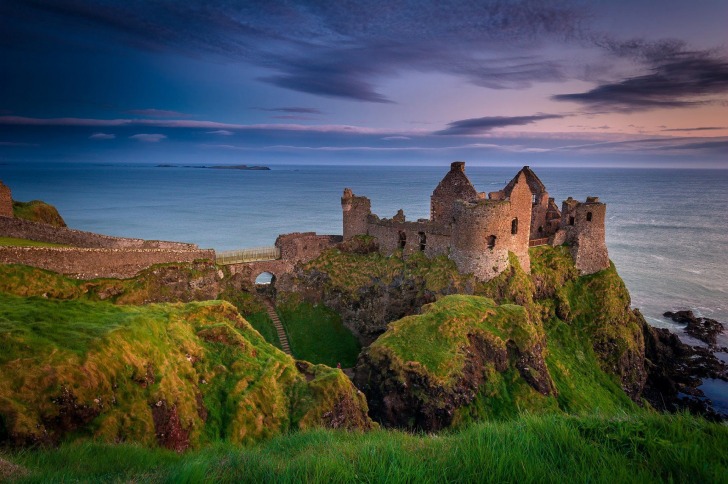
Not long ago, Northern Ireland was considered to be a place most people avoided.
Today, however, Game of Thrones has piqued the interest of the world, and Northern Ireland is seeing an upsurge in visitors.
Political tension can still be high in certain areas, but for the most part, avoiding the roughest areas will allow you to stay removed from the upheaval.
How safe is Northern Ireland today?
Let’s take a look at what a visitor to Northern Ireland will experience.
We’ll explore the best and worst areas and take a deeper look at the risk factors.
We’ll also give you some helpful advice on making your visit easier and safer.
A visit to Northern Ireland can be an experience you will remember for the rest of your life.
Let’s make it a good one.
Let’s get started.
Warnings & Dangers in Northern Ireland

OVERALL RISK: LOW
The overall risk of visiting Northern Ireland is low to medium. With some plain common sense and avoidance of anything political, the majority of visitors have an uneventful stay in the area.

TRANSPORT & TAXIS RISK: LOW
Taxis are generally safe. Intercity bus and train service networks are extensive and reliable. They are occasionally affected by overcrowding and traffic congestion. As usual, common sense actions such as being aware of the area and keeping personal items secure are necessary.

PICKPOCKETS RISK: HIGH
Organized groups of thieves often use distraction techniques and are particularly active at tourist sites and attractions, in hotels, restaurants and bars. on public transportation, and at airports and railway stations.

NATURAL DISASTERS RISK: MEDIUM
High risk for coastal flooding but low for any other natural disasters.

MUGGING RISK: LOW
While the overall risk is low, be aware of places like dark alleys and empty streets. Using an indoor ATM will also be safer.

TERRORISM RISK: HIGH
There is a "substantial risk" of political terrorist attacks in this area. Normally, only the law or the military is targeted, but there is always the chance that civilians will get caught in the crossfire.

SCAMS RISK: MEDIUM
Credit card and ATM fraud occurs. When using debit or credit cards, pay careful attention to whether other people are handling your cards and use ATMs located in public areas or inside a bank or business. If possible, use cash at places that you are unsure of.

WOMEN TRAVELERS RISK: MEDIUM
This is medium, as it is in most places. While violent crime isn't a regular thing, women can be targets of crimes such as purse snatching. They are at risk of having drinks spiked in the bars. Use normal common sense and be willing to ask for help if you feel uncomfortable. Most of the locals are friendly.

TAP WATER RISK: LOW
Tap water is normally safe according to the water supplier. Older buildings may still have lead pipes, and some people mention the water smells strange, but the water supplier enacts very strong safety protocols where tap water is concerned.
Safest Places to Visit in Northern Ireland
Ards and North Down:
Low crime rates reported.
Lisburn and Castlereagh:
Also noted for low reported crimes per capita.
Mid and East Antrim:
Low burglary rates.
Fermanagh and Omagh:
Also listed with low burglary rates.
Mid Ulster:
Shows very low burglary numbers.
Derry City (Waterfront/Guildhall):
Redeveloped, safe for visitors, especially around the Peace Bridge.
Portrush & Benone Beach:
Popular for campers with facilities, generally safe areas along the coast.
Mourne Mountains (Castlewellan):
Castlewellan Forest Park offers beautiful, safe outdoor activities.
Rathlin Island:
A tranquil, safe island escape.
Belfast:
South Belfast, East Belfast (excluding specific spots like Church View/Spencer Street), City Centre, Cathedral Quarter, and near Queen’s University are generally safe and well-patrolled.
Derry/Londonderry:
While having higher rates than the safest rural areas, it’s security-conscious, and areas like the Waterside can be safe, though caution is always wise.
Places to Avoid in Northern Ireland
According to the latest figures from the PSNI, a total of 31,364 crimes were reported in the Belfast City area between September 2024 and August 31, 2025.
This means a total of 89 crimes per thousand people, the highest crime rate in Northern Ireland.
The next highest crime rate was in the Derry and Strabane area, which had a rate of 63.9 crimes reported per 1000 people.
Outside of the major cities, the Newry, Mourne and Down area had the highest crime rate with 43 crimes reported per 1,000 people during the same period.
The Antrim and Newtownabbey (42.9) and Mid and East Antrim (42.7) areas followed close behind.
Just below them are the Armagh, Banbridge, and Craigavon area (39.9) and the Causeway Coast and Glens.
Safety Tips for Traveling to Northern Ireland
- Avoid wearing either a British or an Irish flag. These are sometimes looked at with a smile at the innocence of visitors, but many citizens, especially in certain areas, get angry easily. It is safer to avoid wearing anything with either flag, as well as expressing any preference for sides.
- Be aware of political murals and territorial markings. It may be tempting to photograph these, and doing so is fine as long as it is quick. These murals have great meaning in the areas where they are located, and the locals demand respect for them. These murals and territorial markings also indicate the political bend of a particular area. If you avoid discussing politics completely and don’t wear anything indicating a particular leaning, you should be okay.
- Be aware that law enforcement officials do carry weapons. This may make some people edgy, but it isn’t any more dangerous than here in the U.S. It is recommended that you follow all directions given to you by police officials in order to remain safe.
- Emergency: Dial 999 for police, fire, or ambulance services. Keep this in mind and be willing to use it if the need arises.
- Avoid joining in Loyalist marches. The largest of these takes place on July 12 every year. The parade season runs from April through July. Not only can it cause delays when going from one place to another, but tension can be high, so avoid it if possible. In fact, it is wisest to avoid areas where these are occurring. This may be a day to enjoy the hotel pool!
- Keep valuables secured. Only carry the items you will need for the day. Leave any valuables locked inside the hotel safe or in a secure spot in your hotel. Don’t leave anything unattended in public.
- Avoid unlicensed taxis. There are metered taxis and Uber-like services that are less likely to charge you an outlandish price.
- Don’t carry your passport and other important papers. Leave these in a secure place and carry only copies.
- Avoid public Wi-Fi. This is the same everywhere, and cybercrimes do occur. Using the services within your hotel should be safe.
- Keep vehicles locked. Car-related crimes do occur regularly. Make sure to keep cars locked, especially the rental cars that are likely to stand out. Don’t leave valuables in them, and park in a place where your car can be watched.
So... How Safe Is Northern Ireland Really?
Northern Ireland is a very safe place to visit as long as you keep a few fundamental rules in mind.
The weather is fairly good, and the only natural disaster you are likely to encounter is flooding.
There are warnings in place for this, so as long as you heed these warnings, you will be safe.
Avoiding expressing any political or religious opinions is a must.
Tension is still high in many areas, and not everyone is tolerant of the “inexcusable” opinions of visitors to the area.
Stay respectful around things like the murals, which are highly valued.
Avoid the “parades” and any demonstrations that may occur.
These can happen without notice.
Respect the law enforcement personnel and avoid going against a direct order.
Take time to learn the major laws before visiting.
Use common sense when it comes to visiting drinking establishments, especially if you are a woman traveling alone.
Never leave your drink unattended and leave the establishment before closing time, when there are people around for protection.
Lastly, avoid putting yourself at risk of a scam by visiting only indoor ATMs, using only metered taxis or public transportation, and avoiding “offers” of help.
How Does Northern Ireland Compare?
| City | Safety Index |
|---|---|
| Northern Ireland |
65 |
| Newcastle upon Tyne |
72 |
| Cardiff |
64 |
| Oxford |
66 |
| Southampton |
65 |
| Scotland |
71 |
| Glasgow |
60 |
 Bern Bern | 85 |
 Alpharetta Alpharetta | 86 |
| Andover | 93 |
| Palm Springs | 65 |
 Barranquilla Barranquilla | 47 |
 Panama City Panama City | 62 |
Useful Information

Visas
No visa required. U.S. citizens can enter visa-free for tourism or business stays of up to 90 days. Visit the consulate page for current information, as things can change rapidly. You will need to apply for an Electronic Travel Authorization (ETA). This costs 16 pounds and is valid for two years. Being part of the UK, Northern Ireland is subject to UK laws, so make sure you follow these.

Currency
The currency used in Ireland is the Euro. U.S. dollars are not legal tender in Ireland and are not an accepted form of payment. There are limited locations to exchange U.S. dollars when in Ireland, should you travel with cash. Payment by credit card and Apple Pay is widely accepted throughout Ireland. However, it is important to note that not all U.S. credit cards are universally accepted. Most Irish banks will not accept U.S. $100 bills.

Weather
The weather in Northern Ireland is traditionally changeable. The temperature usually stays above freezing, so there is seldom snow or ice, but at all times of the year it is advisable to be prepared for rain. Summer months sometimes see prolonged periods of sunshine. There are generally higher levels of ultraviolet (UV) rays between March and October, even on cool or cloudy days. Pack clothing for chilly evenings and make sure you have rain gear handy, as buying it at the last moment could prove expensive.

Airports
There are three airports serving Northern Ireland: George Best Belfast City Airport (BHD): Known for its proximity to Belfast city center, offering convenient connections, especially for UK and Amsterdam flights. City of Derry Airport (LDY): Situated in the northwest, providing access to Londonderry and the surrounding region Belfast International Airport (BFS): The main hub, located northwest of Belfast, handles significant passenger traffic with flights across Europe and the UK, operated by airlines like easyJet and Jet2. This is the largest of the three.

Travel Insurance
While not legally required, a traveler will experience a greater sense of peace if they have insurance. This can help cover any unexpected medical expenses, including injuries while enjoying sporting activities. It can help replace "non-refundable" deposits if the trip is canceled or interrupted. Finally, it will also cover lost or stolen items if needed.
Northern Ireland Weather Averages (Temperatures)
Average High/Low Temperature
| Temperature / Month | Jan | Feb | Mar | Apr | May | Jun | Jul | Aug | Sep | Oct | Nov | Dec |
|---|---|---|---|---|---|---|---|---|---|---|---|---|
| High °C |
7 | 7 | 9 | 11 | 14 | 16 | 18 | 18 | 16 | 13 | 10 | 8 |
| Low °C |
2 | 2 | 3 | 4 | 6 | 9 | 11 | 11 | 9 | 7 | 4 | 3 |
| High °F |
45 | 45 | 48 | 52 | 57 | 61 | 64 | 64 | 61 | 55 | 50 | 46 |
| Low °F |
36 | 36 | 37 | 39 | 43 | 48 | 52 | 52 | 48 | 45 | 39 | 37 |
United Kingdom - Safety by City
| City | Safety Index |
|---|---|
| Aberdeen | 63 |
| Bath | 81 |
| Belfast | 65 |
| Birmingham | 44 |
| Bradford | 42 |
| Brighton | 67 |
| Bristol | 58 |
| Cambridge | 78 |
| Canterbury | 79 |
| Cardiff | 64 |
| Coventry | 41 |
| Dundee | 60 |
| Edinburgh | 75 |
| Exeter | 77 |
| Glasgow | 60 |
| Inverness | 73 |
| Leeds | 56 |
| Leicester | 43 |
| Liverpool | 65 |
| London | 70 |
| Manchester | 60 |
| Newcastle upon Tyne | 72 |
| Northern Ireland | 65 |
| Nottingham | 56 |
| Oxford | 66 |
| Peterborough | 70 |
| Salford | 43 |
| Scotland | 71 |
| Sheffield | 74 |
| Southampton | 65 |
| Surrey | 77 |
| York | 83 |













Did you feel a noticeable difference in the atmosphere compared to what people used to say about it?
So are we just going to pretend that the political tension is a fun part of the tour package now?
So after getting stuck in the crowds at the Game of Thrones filming spots and feeling more excited than scared, are you seriously saying I still need to tiptoe around the ‘roughest areas’?
Even with the Game of Thrones buzz bringing more tourists, I still felt wary around the areas where political tension runs high, so it never felt completely carefree.
Did you find any spots where the history really hits you hard, like that time I got caught in a spontaneous local event and felt the tension firsthand?
Sure, if your idea of a great trip is dodging sketchy spots while pretending you’re on some fantasy show, Northern Ireland might just be your dream vacation.
Sure, just don’t stroll around the “rough” spots like it’s some kind of Disney tour, got it.