 Croatia : Safety by City
Croatia - safety as a country
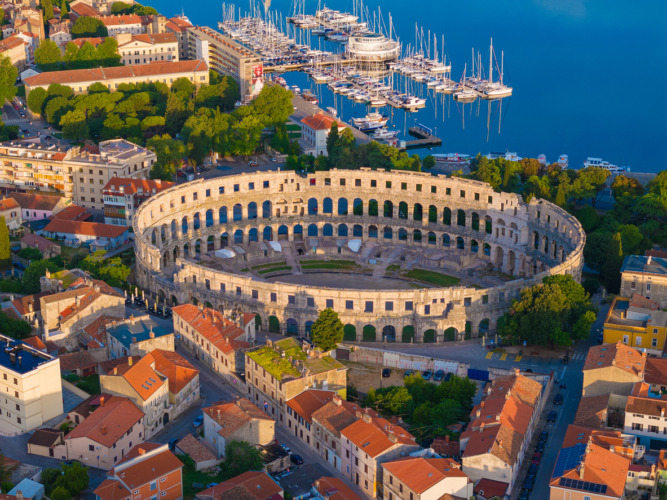
Pula sits at the southern tip of Croatia’s Istrian peninsula, a sun-bleached port city where the Adriatic laps at Roman ruins and old shipyard cranes stand against the sunset.
Its first-century amphitheater is among the six largest surviving Roman arenas anywhere, and it still hosts concerts and film screenings under the open sky.
James Joyce once taught English here, the Austro-Hungarian navy based its fleet in the harbor, and about 50,000 locals now share the city with summer visitors from Italy, Germany, Austria, and beyond.
Italy is just across the water, and you can taste it in the pasta and see it on the bilingual street signs.
It all looks idyllic, but is it actually safe?
I dug into crime data, government advisories, and traveler reports to find out.
Warnings & Dangers in Pula

OVERALL RISK: LOW
Pula is one of the calmest tourist cities on the Adriatic. Violent crime against visitors is rare, the center is well lit, and locals are relaxed and helpful. Most problems I found involve petty theft, summer crowds, sunburn, and the occasional inflated restaurant bill. Use normal city sense after midnight and you will probably have an uneventful, stress-free trip.

TRANSPORT & TAXIS RISK: LOW
Local buses are cheap and safe, though schedules thin out on evenings and Sundays. Taxis are not always clearly metered, so agree on a price first or use a ride-hailing app like Bolt. Driving is straightforward, but summer parking is tight and drivers can be impatient on coastal roads. Never drink and drive, because police enforce limits strictly.

PICKPOCKETS RISK: LOW
Pickpocketing exists but is uncommon compared with Rome or Barcelona. Crowded spots such as the Arena entrance, the green market, Sergijevaca Street, and packed summer festivals are where wallets occasionally vanish. Beach theft is the bigger nuisance, since phones and bags left on towels are easy targets. Keep valuables close and you will almost certainly be fine.

NATURAL DISASTERS RISK: MEDIUM
Croatia sits in an active seismic zone, though Istria is calmer than the interior. The more realistic summer concerns are wildfires, heat waves, and sudden thunderstorms. The strong bora wind can disrupt ferries and make coastal roads risky. Check forecasts, respect fire bans, and remember that 112 is the emergency number across the country.

MUGGING RISK: LOW
Violent street crime is rare, and I found no pattern of muggings aimed at tourists. The compact center stays busy until late. Isolated stretches, such as harbor edges, unlit park paths, and quiet residential streets, deserve more caution after dark. If someone ever demands your belongings, hand them over, walk away, and call 112.

TERRORISM RISK: LOW
Croatia has not suffered significant terrorist attacks in recent years, and most Western governments rate the threat as low. The usual European advice applies: stay alert in big crowds, at large concerts, and around transport hubs, and follow instructions from local authorities. Terrorism should not influence your decision to visit Pula.

SCAMS RISK: MEDIUM
Scams here are mild but real. Watch for restaurants without printed prices, unclear service charges, and fish sold by weight that balloons into a shocking bill. Unlicensed boat-tour sellers and unmarked taxis occasionally overcharge. Skip exchange booths with poor rates, and when paying by card, always choose euros rather than your home currency.

WOMEN TRAVELERS RISK: LOW
Solo women generally report feeling comfortable in Pula, even in the evenings. Catcalling is uncommon and serious harassment is rare. Standard precautions still apply: watch your drink in bars, take licensed rides at night, and share your location with a friend. Beach clubs and festivals get rowdy in peak season, so trust your instincts and leave if something feels off.

TAP WATER RISK: LOW
Tap water in Pula is safe to drink, and you can refill bottles from your hotel or accommodation tap without worry. It can taste slightly mineral because of the limestone landscape. Buying bottled water is unnecessary and wasteful. Be more careful at remote campsites or on small islands, where supply issues occasionally occur, and ask locals if unsure.
Safest Places to Visit in Pula
The Old Town and Arena
The pedestrian-friendly historic core is the safest and most atmospheric part of Pula.
Wander past the Arch of the Sergii, the Temple of Augustus, and the Forum, then settle on a café terrace.
Foot traffic keeps things lively into the evening, and summer patrols add reassurance.
Verudela Peninsula
South of the center, Verudela is a leafy resort district with hotels, seaside promenades, and the Aquarium Pula, housed in an old Austro-Hungarian fort.
It is calm, family-friendly, and well suited to sunset walks.
Stoja
This pine-covered peninsula west of the center offers rocky swimming spots, shaded paths, and relaxed picnic areas.
It feels peaceful and green, and many locals come here to unwind.
Premantura and Cape Kamenjak
About twenty minutes by car, this protected nature area has wild cliffs, hidden coves, and beach bars.
Crime is almost nonexistent.
The real hazards are sun, slippery rocks, and sea urchins, so bring water shoes.
Brijuni National Park
A short ferry ride from nearby Fažana, these islands once served as a presidential retreat.
Today they offer cycling, a small safari park, and Roman ruins in a tightly managed, very safe setting.
Places to Avoid in Pula
Pula has no true no-go zones, but a few areas call for extra caution.
The Bus Station and Harbor Edges at Night
Transport hubs everywhere attract opportunists, and the area around the bus station and quieter harbor stretches is no exception.
By day it’s fine. After midnight, take a ride-hailing car instead of walking alone.
Giardini Park and Dark Back Streets
The small park near the Arch of the Sergii and the unlit alleys nearby are quiet late at night.
Nothing alarming is reported, but isolation increases the chance of a bad encounter. Stick to well-lit routes.
Industrial and Shipyard Districts
Areas around the old Uljanik shipyard and surrounding industrial zones have little to see and almost no nightlife.
Wandering there after dark is pointless and potentially uncomfortable, so keep daytime visits for photography only.
Peak-Season Nightlife Strips
Bar-heavy streets and beach clubs get rowdy in July and August.
Expect heavy drinking, occasional fights, and overpriced drinks. Keep an eye on your belongings and your glass.
Cliff Edges and Unsupervised Swimming Spots
Tempting cliff jumps around Kamenjak and other coves cause real injuries every summer.
Currents, hidden rocks, and no lifeguards make them riskier than any street in town.
Safety Tips for Traveling to Pula
- Save 112 in your phone. This single number reaches police, ambulance, and fire services across Croatia, and operators often speak English. Add your accommodation’s address and the name of Pula’s general hospital to your notes as well.
- Never leave valuables on the beach. Beach theft is the most common crime visitors face. Pack light, use a waterproof pouch for your phone and cards, or swim in shifts so someone always watches the towels.
- Check restaurant prices before ordering. Look for a printed menu, and ask the price per kilogram for fresh fish, which is where bills explode. Confirm any cover or service charges before you sit down.
- Use ride-hailing or agree on fares. Taxis can be pricey for short hops, so settle on a rate in advance or use an app that shows the cost up front. This also helps at night.
- Respect the sun and the sea. Heat exhaustion and sunburn put more tourists in clinics than crime does. Wear high SPF, carry water, and wear water shoes to protect against sea urchins and sharp rocks.
- Skip risky swimming and cliff jumping. Stick to lifeguarded or clearly popular beaches. Avoid swimming after drinking, and never jump from cliffs into water you haven’t checked.
- Watch the weather and fire warnings. Bora gusts and summer storms can arrive fast. Never light fires outdoors, and if you hike, stay on marked trails, since stray off-trail hazards exist in some parts of Croatia.
- Drive and park carefully. Photograph rental cars before leaving the lot, pay for parking in the correct zone, and never leave bags visible in the vehicle. Parking enforcement is real, and fines add up.
- Carry ID. Foreign visitors are expected to carry a passport or national ID. Keep a photocopy on your phone and store the original in your accommodation if you aren’t crossing borders.
- Get travel insurance. A medical visit, a lost phone, or a cancelled ferry can cost far more than a policy. Make sure it covers medical care, theft, and activities such as boating or cycling.
So... How Safe Is Pula Really?
The numbers back up the relaxed feeling on the streets.
Croatia regularly lands in the top twenty or so countries on the Global Peace Index, and its homicide rate sits at roughly one per 100,000 people, which is lower than many Western European countries.
Istria is one of the safest counties in Croatia, and the national police consistently record little serious crime in the region.
This matters because the region hosts tens of millions of overnight stays each year, so the sample of visitors is enormous, and the trouble they report remains modest.
What the statistics don’t capture are the everyday hazards.
Opportunistic theft from beaches and parked cars, summer overpricing, traffic accidents, and heat-related issues account for most of the problems tourists run into.
Drowning and cliff injuries are a more serious statistical risk than assault.
My verdict: Pula is very safe for solo travelers, couples, families, and groups.
Treat it like any European coastal city: lock your car, watch your bag, stay sun-smart, and be careful at night after heavy drinking.
Do that, and you’re far more likely to be sunburned than scammed.
How Does Pula Compare?
| City | Safety Index |
|---|---|
| Pula |
85 |
| Sibenik |
86 |
| Zadar |
84 |
| Zagreb |
80 |
| Hvar |
85 |
| Rijeka |
85 |
| Trogir |
87 |
 Covington | 47 |
 Chefchaouen | 80 |
| Dothan | 59 |
| Little Compton | 81 |
 Annaba | 44 |
 Serowe | 79 |
Useful Information

Visas
Croatia is part of the Schengen Area, so citizens of the US, UK, Canada, Australia, and many other countries can stay 90 days within any 180-day period without a visa. Since April 2026, border officers record photos and fingerprints under the Entry/Exit System. The ETIAS pre-travel authorization is currently expected in 2027 and will carry a small fee, so verify requirements before booking.

Currency
Croatia adopted the euro in January 2023, replacing the kuna. Cards and contactless payments are accepted almost everywhere, though small cafés, markets, and parking machines still like cash. The best exchange rates come from withdrawing euros at a bank-run ATM. Avoid standalone ATMs with exchange offers, and always pay in euros when asked to choose a currency.

Weather
Pula has a Mediterranean climate: summer highs commonly reach 28 to 32°C, with warm seas for swimming, while winters are cool and damp. Pack breathable clothing, a hat, sunscreen, and water shoes for summer. Bring a light rain jacket for spring and autumn, plus warm layers in winter. Comfortable shoes help on the Arena's slippery stones.

Airports
Pula Airport is about 6 kilometers from the center, roughly a 10 to 15 minute ride by taxi or ride-hailing app, and summer shuttle buses also operate. Many visitors also arrive via Trieste in Italy, around two hours away by road, or Rijeka, roughly 90 minutes. Zagreb is further away but offers more flights.

Travel Insurance
I strongly recommend travel insurance for Pula. Croatia is an EU country with good healthcare, but visitors can still face significant bills for treatment, ambulance transport, or emergency evacuation. A policy also covers cancelled flights, stolen phones, and sports injuries. Compare options, check what counts as an excluded activity, and buy it before you go.
Pula Weather Averages (Temperatures)
Average High/Low Temperature
| Temperature / Month | Jan | Feb | Mar | Apr | May | Jun | Jul | Aug | Sep | Oct | Nov | Dec |
|---|---|---|---|---|---|---|---|---|---|---|---|---|
| High °C |
9 | 10 | 12 | 16 | 20 | 25 | 28 | 28 | 23 | 19 | 14 | 11 |
| Low °C |
6 | 6 | 8 | 11 | 15 | 20 | 22 | 23 | 19 | 15 | 11 | 8 |
| High °F |
48 | 50 | 54 | 61 | 68 | 77 | 82 | 82 | 73 | 66 | 57 | 52 |
| Low °F |
43 | 43 | 46 | 52 | 59 | 68 | 72 | 73 | 66 | 59 | 52 | 46 |
Croatia - Safety by City
| City | Safety Index |
|---|---|
| Dubrovnik | 90 |
| Hvar | 85 |
| Korcula Town | 89 |
| Pula | 85 |
| Rijeka | 85 |
| Rovinj | 88 |
| Sibenik | 86 |
| Split | 67 |
| Trogir | 87 |
| Zadar | 84 |
| Zagreb | 80 |