


 Canada : Safety by City
- Abbotsford
- Banff
- Brampton
- Burnaby
- Calgary
- Coquitlam
- Edmonton
- Halifax
- Hamilton
- Jasper
- Kelowna
- Kitchener
- Mississauga
- Montreal
- Nanaimo
- Niagara Falls
- Oshawa
- Ottawa
- Quebec City
- Red Deer
- Regina
- Saskatoon
- Thunder Bay
- Tofino
- Toronto
- Vancouver
- Victoria
- Whistler
- Windsor
- Winnipeg
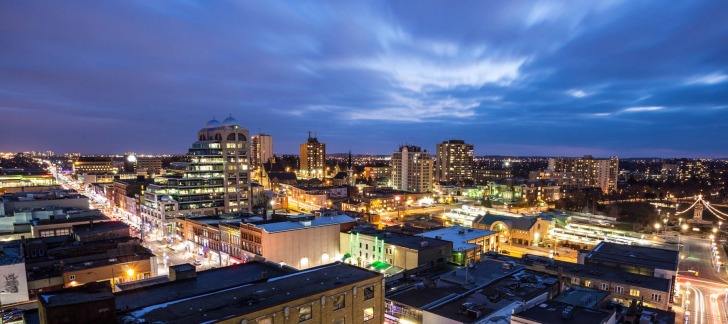
Kitchener sits in southwestern Ontario, about an hour west of Toronto, and forms part of the Kitchener-Waterloo-Cambridge urban area often called Waterloo Region.
It is a city with a practical, lived-in feel rather than a polished tourist facade, which is part of its appeal.
You get a mix of tech offices, historic neighborhoods, parks, markets, light rail, and one of Canada’s best-known Oktoberfest celebrations.
For travelers, Kitchener is not the kind of place that usually lands on “dangerous destinations” lists.
It is much more likely to surprise you with how normal, manageable, and easy it feels.
That said, normal does not mean risk-free.
Like most mid-sized cities, Kitchener has petty theft, some rougher pockets after dark, seasonal weather hazards, and a few nuisance issues downtown.
Overall, though, it is a destination where smart, basic precautions usually go a long way.
Warnings & Dangers in Kitchener

OVERALL RISK: LOW
Kitchener is generally a low-risk destination for travelers. Violent crime exists, as it does in any urban area, but most visitors will experience the city as safe, orderly, and easy to navigate. The biggest real-world concerns are petty theft, occasional disorder in some downtown blocks late at night, and winter weather that can make roads and sidewalks slippery.

TRANSPORT & TAXIS RISK: LOW
Getting around Kitchener is usually straightforward. Grand River Transit buses and the ION light rail serve the main urban corridor well, and rideshares and taxis are easy enough to use. The larger risk is not crime but weather, especially snow, ice, and poor visibility in winter. Late at night, it is still wise to wait for transit in well-lit areas.

PICKPOCKETS RISK: LOW
Kitchener is not famous for professional pickpockets the way some larger tourist cities are. Still, theft can happen in busy public places, transit hubs, bars, festivals, or anywhere people get distracted. Visitors are more likely to deal with opportunistic theft, such as a phone left on a table or a wallet sticking out of a coat pocket.

NATURAL DISASTERS RISK: LOW
Kitchener does not face the kind of large-scale disaster risk seen in earthquake or hurricane zones. The more realistic hazards are severe winter storms, ice, flash flooding in low-lying areas, and occasional summer thunderstorms. Travelers should respect weather alerts because heavy snow, freezing rain, or fast snowmelt can disrupt transport more than they expect.

MUGGING RISK: LOW
Mugging is not a defining problem for most visitors to Kitchener, and random street robbery is relatively uncommon compared with many large North American cities. Still, the risk is not zero, especially late at night in isolated areas, poorly lit parking lots, or around nightlife zones when people are distracted, intoxicated, or visibly carrying valuables.

TERRORISM RISK: LOW
The terrorism risk in Kitchener is low. There is no special reason most tourists would view it as a high-threat destination. As with anywhere in Canada, crowded events and transit hubs are places to remain aware of your surroundings, but this is more about sensible public-space awareness than any unusually elevated threat specific to the city.

SCAMS RISK: LOW
Scams in Kitchener tend to look like everyday Canadian fraud rather than tourist-targeted street cons. Think fake bank calls, phishing texts, online marketplace tricks, rental fraud, or overpayment schemes. In person, the most likely issue for a traveler is being approached with a strange story designed to get quick cash. Polite skepticism works well here.

WOMEN TRAVELERS RISK: LOW
Kitchener is usually comfortable for solo women travelers, especially during the day and in normal commercial or residential areas. The usual precautions still matter at night: avoid isolated transit stops, poorly lit trails, and empty parking structures, and keep an eye on drinks in bars. Most visits are uneventful, but awareness still matters after dark.

TAP WATER RISK: LOW
Tap water in Kitchener is generally safe to drink. In fact, many visitors will be perfectly fine using the municipal supply throughout their trip. The one thing some travelers notice is hardness, which can affect taste a bit, but that is a water-quality issue rather than a safety problem. A reusable bottle is all you need.
Safest Places to Visit in Kitchener
Victoria Park and the Civic Core
Victoria Park is one of the easiest places for visitors to enjoy Kitchener comfortably.
It is scenic, central, and well-used by locals, which usually adds to the feeling of safety during the day.
Around the park and civic buildings, you will find broad paths, public activity, and a more monitored environment than in isolated corners of the city.
Downtown Kitchener in Daylight
Downtown Kitchener gets mixed reviews, but during the day, it is one of the better areas for visitors who want cafés, restaurants, public spaces, festivals, and a bit of local character.
Streets with regular foot traffic feel much more comfortable than empty side blocks.
For most travelers, daytime exploring here is completely manageable and often enjoyable.
Belmont Village and Nearby Uptown Connections
Belmont Village, just west of the core, has a friendlier neighborhood feel with independent shops, restaurants, and a more relaxed pace.
It is a good pick if you want an area that feels lively without being too intense.
Nearby Waterloo and Uptown Waterloo also make strong, comfortable add-ons for visitors who want walkable, lower-stress urban exploring.
Huron Natural Area and Family-Friendly Green Space
For travelers who want parks and trails, Huron Natural Area is a calmer option than wandering isolated urban paths at odd hours.
Go in daylight, stick to marked routes, and it feels like a pleasant outdoor escape.
Family attractions, community centers, and well-used recreational spaces across Kitchener are generally the city’s easiest, lowest-stress zones.
Places to Avoid in Kitchener
Isolated Downtown Blocks Late at Night
Downtown is not a no-go zone, but some blocks feel very different at 2 p.m. than at 1 a.m.
Late at night, quieter stretches away from busier restaurants and main event areas can feel uncomfortable, especially around spots with visible social disorder.
Visitors should avoid aimless wandering after bars close and choose direct transportation instead.
Poorly Lit Trails and Park Edges After Dark
Kitchener has plenty of green space, which is great during the day and less appealing at night.
Trails, creek corridors, park edges, and underpasses can become isolated fast.
Even if the actual crime risk is not extreme, these places are not ideal if you are alone, unfamiliar with the city, or carrying valuables after dark.
Parking Lots and Residential Areas with Low Foot Traffic
Visitors often focus on street crime and forget about theft from vehicles.
Quiet parking lots, especially near green spaces or away from active storefronts, deserve extra caution.
The same goes for unfamiliar residential pockets with little foot traffic late at night.
These are not necessarily dangerous neighborhoods, but they are places where opportunistic crime is more comfortable.
Any Area Where You Feel Like the Only Person Around
This may sound simple, but it is one of the best filters for Kitchener.
The city is usually safest where people are visibly going about their normal lives.
If you find yourself on an empty side street, a deserted transit platform, or a dim stretch with no one around, that is your signal to turn back or get a ride.
Safety Tips for Traveling to Kitchener
- Stay weather-aware, especially in winter. Kitchener’s most underrated travel risk is the weather. Snow, freezing rain, and icy sidewalks can turn a simple outing into a fall or traffic problem. Check the forecast daily and build in extra travel time if conditions look rough.
- Use direct transportation late at night. If you are out drinking or attending an event, avoid the temptation to walk long distances through half-empty streets. A rideshare, taxi, or a well-planned transit route is the better move once the city quiets down.
- Keep valuables out of sight on transit and in cafés. Petty theft in Kitchener is usually opportunistic. Do not leave your phone on the table while you order, your bag hanging open on a chair, or your wallet visible in a back pocket.
- Choose well-reviewed accommodations in active areas. Where you stay shapes how safe the city feels. Hotels or rentals near active commercial streets, established neighborhoods, or central transit links usually make life easier than cheap options in isolated areas.
- Do not leave anything visible in your car. Even a jacket, charging cable, or shopping bag can invite a smash-and-grab or at least unwanted attention. Lock the vehicle and clear the interior every time, even during short stops.
- Stick to marked, busy routes when walking. Kitchener is easiest to navigate when you stay on main streets with lighting, traffic, and open businesses. Random shortcuts through parks, alleys, or trail connections are usually not worth it, especially after sunset.
- Be cautious with strangers asking for money or urgent help. Most interactions are harmless, but some are built around pressure, distraction, or a made-up emergency. You do not need to hand over cash, unlock your phone, or step aside to an ATM for anyone.
- Treat festival days like higher-risk days for petty theft. Large events are fun, but they also create crowds, distractions, and easy opportunities for minor theft. Keep bags zipped, phones secured, and meetup plans clear if you are traveling with friends.
- Have proper shoes and layers. Safety is not just about crime. In Kitchener, cold wind, wet slush, and sudden temperature swings can make you miserable fast. Waterproof shoes and a proper coat can solve more problems than travelers expect.
- Trust your instincts if a place feels off. Kitchener is mostly manageable, which makes it easier to notice when something feels wrong. If a block is empty, a stop is badly lit, or a situation feels tense, leave. The safest travelers are usually the ones who do not overthink that decision.
So... How Safe Is Kitchener Really?
Kitchener is, in practical terms, a fairly safe place for travelers.
It is not a city where most visitors spend their time worrying about violent crime, organized tourist scams, or major travel threats.
In the broader Kitchener-Cambridge-Waterloo area, crime levels are not among the very lowest in Canada, but they are also nowhere near the profile of higher-risk urban centers that dominate safety headlines.
That puts Kitchener in an important middle ground: safe enough for normal tourism, but not so safe that you should switch your brain off.
What matters most is context.
Daytime visits to parks, cafés, museums, neighborhoods, and shopping areas are usually easy and low-stress.
The risk profile rises a bit at night, particularly in isolated downtown pockets, on empty trails, or in parking areas with little activity.
Petty theft and vehicle-related theft are more relevant for most travelers than mugging.
Seasonal hazards also matter more here than many visitors expect.
Winter ice, snow, and transit delays can cause more real trouble than street crime.
My honest take is that Kitchener is a low-risk destination for travelers who use common sense.
Stay aware, respect the weather, avoid lonely areas late, and you will probably find it much safer than many people assume.
How Does Kitchener Compare?
| City | Safety Index |
|---|---|
| Kitchener |
75 |
| Edmonton |
86 |
| Calgary |
85 |
| Whistler |
88 |
| Toronto |
83 |
| Thunder Bay |
65 |
| Hamilton |
76 |
 Brownsville Brownsville | 68 |
 Rumonge Rumonge | 54 |
| Barstow | 62 |
| Meredith | 79 |
| Elgin | 88 |
 Wellington Wellington | 72 |
Useful Information

Visas
Canada’s entry rules depend on your nationality. Many visitors need either a visitor visa or an electronic travel authorization before flying in. U.S. citizens typically do not need a visa for short tourist visits, while many other travelers may need an eTA, which is inexpensive and usually requested online before departure.

Currency
Kitchener uses the Canadian dollar. Credit and debit cards are widely accepted, so there is rarely a need to carry much cash. If you do exchange money, use banks or established exchange services rather than airport counters when possible, since airport rates are often less favorable.

Weather
Kitchener has four real seasons, and they can feel very different. Winters are cold, snowy, and sometimes icy, while summers are warm and occasionally humid. Pack layers year-round, and if you are visiting between late fall and early spring, bring waterproof shoes and a warm coat rather than hoping to improvise.

Airports
The nearest convenient airport is Region of Waterloo International Airport, which sits just outside the city and works well for select routes. Many international travelers also use Toronto Pearson, which has far more connections. From either airport, you can reach Kitchener by rental car, shuttle options, or regional transit connections.

Travel Insurance
Travel insurance is a smart buy for Kitchener, even though the city is generally low risk. Medical costs, trip disruptions, lost baggage, and weather-related delays can add up quickly. Good insurance matters even more in winter, when storms and slippery conditions can interfere with both flights and local transportation.
Kitchener Weather Averages (Temperatures)
Average High/Low Temperature
| Temperature / Month | Jan | Feb | Mar | Apr | May | Jun | Jul | Aug | Sep | Oct | Nov | Dec |
|---|---|---|---|---|---|---|---|---|---|---|---|---|
| High °C |
-3 | -1 | 4 | 12 | 18 | 23 | 26 | 25 | 21 | 14 | 7 | 0 |
| Low °C |
-12 | -10 | -5 | 1 | 7 | 12 | 15 | 14 | 10 | 4 | 0 | -7 |
| High °F |
27 | 30 | 39 | 54 | 64 | 73 | 79 | 77 | 70 | 57 | 45 | 32 |
| Low °F |
10 | 14 | 23 | 34 | 45 | 54 | 59 | 57 | 50 | 39 | 32 | 19 |
Canada - Safety by City
| City | Safety Index |
|---|---|
| Abbotsford | 83 |
| Banff | 91 |
| Brampton | 82 |
| Burnaby | 65 |
| Calgary | 85 |
| Coquitlam | 86 |
| Edmonton | 86 |
| Halifax | 79 |
| Hamilton | 76 |
| Jasper | 90 |
| Kelowna | 76 |
| Kitchener | 75 |
| Mississauga | 85 |
| Montreal | 82 |
| Nanaimo | 32 |
| Niagara Falls | 87 |
| Oshawa | 42 |
| Ottawa | 83 |
| Quebec City | 88 |
| Red Deer | 32 |
| Regina | 74 |
| Saskatoon | 73 |
| Thunder Bay | 65 |
| Tofino | 86 |
| Toronto | 83 |
| Vancouver | 80 |
| Victoria | 82 |
| Whistler | 88 |
| Windsor | 81 |
| Winnipeg | 78 |












Not as safe for BIPOC as it is for white folks
All these warnings about homeless people are cruel. Homeless people aren’t the threat but the threatened. I know of more people being attacked by cops than by homeless people.
Racism is an issue here. Visible minorities are often treated as less-than. Indigenous people are treated like nuisances.
Many businesses have accessibility problems (eg. no ramps, no automatic door openers, aisles too narrow for wheelchairs, etc.). If you are an able-bodied white man, you will likely be just fine. If you are not, exercise caution.
Kitchener is not a safe city for cyclists. Keep to cycling and multi-use trails whenever possible. Bike thefts are an ongoing issue here.
If you are a user, be aware that there is a serious problem here with fentanyl and carafentanyl, and overdoses happen frequently. Don’t use alone, and carry an overdose kit.
Such a great non judgemental or biased review. 😍
Just took a stroll through Victoria Park and the clock tower is even more impressive in person!
The Oktoberfest here is such a blast, it’s hard to believe it’s not in Germany! Plus, walking through Victoria Park on a sunny day just hits differently with those views.
Took a walk around Victoria Park yesterday, that big lake and the old clock tower give it a really chill vibe.
I get a goofy grin every time the old clock tower chimes while I’m munching a pretzel by the lake after biking the Walter Bean Trail, does anyone else?
Have you noticed the downtown market by the light rail feels sketchier after dark, because I got pretty uneasy walking home from the light rail after Oktoberfest last year?
Honestly, I didn’t expect an hour west of Toronto to feel this laid back, and hopping on the light rail to pop into the market gave me a goofy little thrill.
Have you noticed if certain neighborhoods feel safer than others when the light rail stops running at night?
I noticed the markets here have a really laid-back vibe but still feel surprisingly lively on weekends.
Have you noticed if the light rail makes getting around downtown much easier during Oktoberfest, or is it still kind of a hassle with all the crowds?