


 Canada : Safety by City
- Abbotsford
- Banff
- Brampton
- Burnaby
- Calgary
- Coquitlam
- Edmonton
- Halifax
- Hamilton
- Jasper
- Kelowna
- Kitchener
- Mississauga
- Montreal
- Nanaimo
- Niagara Falls
- Oshawa
- Ottawa
- Quebec City
- Red Deer
- Regina
- Saskatoon
- Thunder Bay
- Tofino
- Toronto
- Vancouver
- Victoria
- Whistler
- Windsor
- Winnipeg
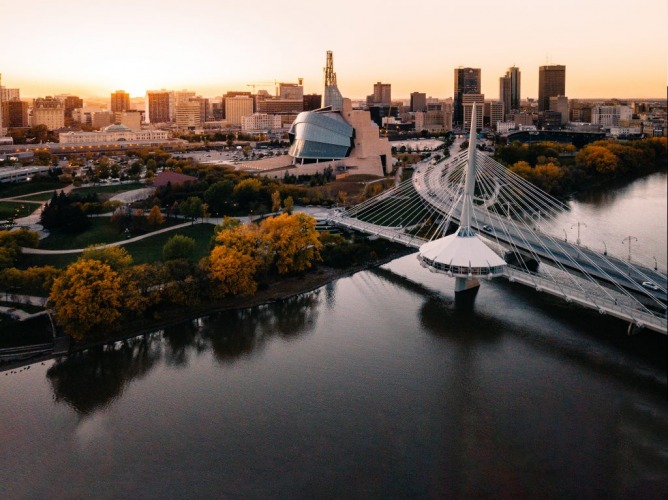
Set in the heart of Canada, where the Red and Assiniboine Rivers meet, Winnipeg is often called the gateway to the prairies.
It is the capital of Manitoba, a city known for its big skies, bitterly cold winters, and surprisingly rich arts scene.
From polar bear excursions in Churchill that start here to world-class ballet and one of the largest French-speaking communities in Western Canada, Winnipeg has more personality than most travelers expect.
But safety is the question that inevitably comes up.
Winnipeg has a reputation, sometimes exaggerated, for crime challenges.
At the same time, it consistently ranks as one of Canada’s most affordable and culturally vibrant cities.
So what is the reality for travelers?
After digging into crime data, local reports, and firsthand experiences, here is the honest breakdown.
Warnings & Dangers in Winnipeg

OVERALL RISK: MEDIUM
Winnipeg’s overall risk level is medium compared to other major Canadian cities. While violent crime rates are statistically higher than in cities like Toronto or Vancouver, incidents are heavily concentrated in specific neighborhoods. Tourist areas, downtown attractions, and suburban districts are generally safe during the day with standard precautions.

TRANSPORT & TAXIS RISK: LOW
Public transportation and taxis in Winnipeg are generally safe. Winnipeg Transit buses run throughout the city, though some routes that pass through high-crime neighborhoods may feel uncomfortable at night. Licensed taxis and ride shares are reliable, and major roads are well-maintained, though winter driving can be hazardous due to ice and snow.

PICKPOCKETS RISK: LOW
Pickpocketing is not a major issue in Winnipeg compared to European cities. Opportunistic theft can occur in busy areas or during festivals, but it is not widespread. Most property crime involves vehicles rather than tourists being targeted in crowded public spaces.

NATURAL DISASTERS RISK: MEDIUM
Winnipeg faces extreme winters and occasional flooding due to its river location. Blizzards, ice storms, and subzero temperatures are real concerns. The city has flood control systems like the Red River Floodway, which significantly reduce risk, but winter weather remains a serious safety factor for visitors unfamiliar with prairie conditions.

MUGGING RISK: MEDIUM
Muggings do occur, primarily in certain inner-city neighborhoods. Random attacks on tourists are uncommon, but walking alone late at night in poorly lit areas increases risk. Most violent incidents involve people who know each other rather than strangers targeting visitors.

TERRORISM RISK: LOW
There is no significant history of terrorism targeting Winnipeg. Like the rest of Canada, the overall threat level is considered low. Security measures are standard at major public venues and events.

SCAMS RISK: LOW
Winnipeg does not have a strong culture of tourist scams. Visitors are more likely to encounter online fraud or phone scams than street-based trickery. As always, avoid unsolicited offers and verify ticket sellers during major events.

WOMEN TRAVELERS RISK: MEDIUM
Women can generally travel safely in Winnipeg, especially in central and suburban areas. As in any city, avoiding isolated areas at night and using licensed transport is wise. Harassment levels are lower than in many global cities, but awareness is still important.

TAP WATER RISK: LOW
Winnipeg’s tap water is safe to drink and meets Canadian federal standards. It is sourced from Shoal Lake and treated to high-quality standards. Visitors can confidently refill bottles without concern.
Safest Places to Visit in Winnipeg
When people talk about safety in Winnipeg, context is everything.
The city’s challenges are real, but they are highly localized.
Many of the areas visitors naturally gravitate toward are well-maintained, well-lit, and regularly patrolled.
The Forks: Winnipeg’s Safest Social Hub
If I had to recommend one area where visitors can relax almost completely, it would be The Forks.
This historic meeting place at the junction of two rivers has transformed into a lively public space with markets, restaurants, riverwalk trails, and seasonal events.
Security presence is visible, especially during festivals and weekends.
Families, couples, and tourists fill the area year-round.
In winter, the skating trail along the river draws crowds, and in summer, patios and outdoor concerts keep the energy high.
It is one of the most consistently safe places in the city, even after dark.
The Exchange District: Culture with Character
The Exchange District feels like stepping onto a movie set, with early-20th-century warehouses converted into galleries, cafes, and lofts.
During the day, it is busy with office workers and visitors exploring boutiques and museums.
While parts of downtown can feel empty late at night, the core Exchange area around Old Market Square and major venues is generally safe when events are happening.
Stick to well-lit streets, and you will likely find it charming rather than concerning.
Assiniboine Park and Tuxedo: Calm and Residential
For travelers who prefer green space and quiet surroundings, Assiniboine Park and the nearby Tuxedo neighborhood are excellent choices.
The park is spacious, clean, and family-friendly, home to gardens, walking trails, and the zoo.
The surrounding residential area is among the more affluent parts of Winnipeg, with a lower crime rate than the city average.
It feels suburban and relaxed, especially compared to the inner city.
Corydon Avenue and River Heights: Evening Friendly
Corydon Avenue, often nicknamed Little Italy, is one of the best evening spots in the city.
Patios line the street in summer, and foot traffic keeps the area lively.
River Heights, just nearby, is another well-established neighborhood that feels safe and residential.
For travelers, these districts offer a balanced mix of nightlife and comfort without the higher crime patterns found elsewhere.
Places to Avoid in Winnipeg
Winnipeg’s crime statistics can look intimidating, but the reality is that most serious incidents are concentrated in specific neighborhoods.
As a visitor, you are unlikely to wander into them accidentally, but awareness is key.
Parts of the North End: Concentrated Crime
Certain areas of the North End, particularly around Selkirk Avenue and nearby residential streets, consistently report higher rates of violent and property crime.
These neighborhoods face long-standing socioeconomic challenges.
There are no major tourist attractions here, so visitors have little reason to explore.
Daytime driving through main roads is typically uneventful, but walking around unfamiliar side streets, especially after dark, is not advisable.
Higgins Avenue and Point Douglas: High Risk After Dark
The Higgins Avenue corridor and parts of Point Douglas have elevated crime rates compared to city averages.
Reports of assaults and robberies are more common here than in central tourist zones.
If you are staying downtown, it is wise to avoid wandering too far north toward these areas at night.
During the day, traffic flows normally, but late evenings can feel isolated.
Certain Downtown Pockets at Night
Downtown Winnipeg is not uniformly unsafe, but it changes character after business hours.
Areas around Portage Place Mall and some blocks near Main Street can feel deserted and uncomfortable late at night, with visible social issues and fewer pedestrians.
This does not mean you should avoid downtown entirely.
It simply means planning smarter.
Use ride shares at night, stick to well-lit streets, and avoid empty stretches with limited foot traffic.
Elmwood: Limited Tourist Appeal, Higher Crime Rates
Elmwood, located east of the Red River, reports higher than average property crime and assaults.
While many residents live there peacefully, it offers little for tourists and is best skipped on a short visit.
Safety Tips for Traveling to Winnipeg
- Research Your Neighborhood Before Booking. Choose accommodations in The Forks area, the Exchange District, or safe suburban zones. A few blocks can make a big difference in Winnipeg.
- Avoid Walking Alone Late at Night in Isolated Areas. Even downtown, streets can empty quickly after business hours, especially in winter. Use taxis or ride shares after dark.
- Take Winter Seriously. Temperatures can drop below -20 degrees Celsius. Frostbite can occur within minutes. Pack insulated boots, thermal layers, gloves, and a proper winter coat.
- Lock Your Vehicle at All Times. Car theft and break-ins are common issues in Winnipeg. Never leave valuables visible, even during short stops.
- Stay Aware Around Bus Terminals at Night. While transit is generally safe, certain central stops can attract loitering after dark. Wait in well-lit areas and remain alert.
- Use Common Sense at ATMs. Choose indoor ATMs in banks or malls rather than standalone street machines, particularly at night.
- Monitor Weather Alerts. Snowstorms and extreme cold warnings are common in winter. Check forecasts daily and adjust plans accordingly.
- Keep Emergency Numbers Handy. Canada’s emergency number is 911. Police response times in central areas are generally quick.
- Blend In. Winnipeg is casual. Flashy displays of wealth are unnecessary and may draw unwanted attention in certain areas.
- Trust Local Advice. Hotel staff and locals will honestly tell you which areas to avoid. Winnipeg residents are friendly and straightforward.
So... How Safe Is Winnipeg Really?
Winnipeg does record higher per capita crime rates than many other Canadian cities, particularly for violent crime.
However, context matters.
Much of the violence is gang-related or concentrated in specific neighborhoods with socioeconomic challenges.
Tourist-focused areas such as The Forks and the Exchange District are heavily monitored and regularly patrolled.
Visitors who stay in central, well-known areas and avoid high-risk neighborhoods after dark typically experience no problems.
Compared to large US cities with similar population sizes, Winnipeg’s risk level is moderate.
Compared to other Canadian cities, it ranks higher statistically, but not uniformly across the city.
In practical terms, Winnipeg is safe for travelers who use common sense.
The biggest realistic danger for many visitors is actually the winter cold rather than street crime.
How Does Winnipeg Compare?
| City | Safety Index |
|---|---|
| Winnipeg |
78 |
| Abbotsford |
83 |
| Toronto |
83 |
| Windsor |
81 |
| Kelowna |
76 |
| Jasper |
90 |
| Edmonton |
86 |
 Eagle Beach Eagle Beach | 91 |
 Riverside Riverside | 57 |
| Pomona | 61 |
 Budapest Budapest | 78 |
| Rocky Mount | 52 |
| Fort Myers | 75 |
Useful Information

Visas
Most US, UK, EU, and Australian travelers do not need a visa for short tourist stays in Canada, typically up to six months. Some nationalities require an Electronic Travel Authorization, which costs a small fee and can be applied for online before departure.

Currency
Winnipeg uses the Canadian Dollar. Credit and debit cards are widely accepted. Exchange money at banks or official exchange offices rather than at airports for better rates. ATMs provide competitive exchange rates for most travelers.

Weather
Winnipeg has extreme seasonal variation. Winters are long and very cold, while summers are warm and pleasant. If visiting between November and March, pack heavy winter gear. Summer travelers should still bring a light jacket for cool evenings.

Airports
The main airport is Winnipeg James Armstrong Richardson International Airport, located about 8 kilometers from downtown. Taxis, ride shares, and airport buses provide easy access to the city center within 20 to 25 minutes.

Travel Insurance
Travel insurance is strongly recommended. While Canada has excellent healthcare, visitors must pay out of pocket without coverage. Insurance also protects against trip cancellations, weather disruptions, and lost luggage, which can be particularly useful during winter travel.
Winnipeg Weather Averages (Temperatures)
Average High/Low Temperature
| Temperature / Month | Jan | Feb | Mar | Apr | May | Jun | Jul | Aug | Sep | Oct | Nov | Dec |
|---|---|---|---|---|---|---|---|---|---|---|---|---|
| High °C |
-13 | -9 | -1 | 8 | 17 | 22 | 25 | 24 | 17 | 9 | -1 | -9 |
| Low °C |
-22 | -19 | -10 | -2 | 4 | 10 | 12 | 10 | 5 | -1 | -10 | -18 |
| High °F |
9 | 16 | 30 | 46 | 63 | 72 | 77 | 75 | 63 | 48 | 30 | 16 |
| Low °F |
-8 | -2 | 14 | 28 | 39 | 50 | 54 | 50 | 41 | 30 | 14 | -0 |
Canada - Safety by City
| City | Safety Index |
|---|---|
| Abbotsford | 83 |
| Banff | 91 |
| Brampton | 82 |
| Burnaby | 65 |
| Calgary | 85 |
| Coquitlam | 86 |
| Edmonton | 86 |
| Halifax | 79 |
| Hamilton | 76 |
| Jasper | 90 |
| Kelowna | 76 |
| Kitchener | 75 |
| Mississauga | 85 |
| Montreal | 82 |
| Nanaimo | 32 |
| Niagara Falls | 87 |
| Oshawa | 42 |
| Ottawa | 83 |
| Quebec City | 88 |
| Red Deer | 32 |
| Regina | 74 |
| Saskatoon | 73 |
| Thunder Bay | 65 |
| Tofino | 86 |
| Toronto | 83 |
| Vancouver | 80 |
| Victoria | 82 |
| Whistler | 88 |
| Windsor | 81 |
| Winnipeg | 78 |












This rating is absurd. Winnipeg is super safe, there are no scams, people are friendly. You might see a drunk native in the park, and the north area is a bit shady, but this will not concern you one bit.
7/19/2021; Yeah ummm you’re obviously not from Winnipeg. Murder Capital of Canada for the better part of the last 10 years, assaults & violent crime at a all time high, robberies at a all time high. Get with the times man.
Be Aware
Yeah, it’s actually Thunder Bay per capita but who’s counting. Winnipeg is second and historically always near the top.
Simply stay away from downtown and the “core”.
Very safe great value
I’m 53 years old and have lived in Winnipeg all my life. I’ve never seen violence and have never experienced any for of vandalism. Almost all of these murders happen one area (where most regular folks are never in.) It also offers fantastic value for travellers. Everywhere we travel to is always more expensive than here.
Winnipeg
Winter lasts six months of the year. Otherwise, it’s a nice city.
Winnipeg is only dangerous if you happen to be born poor there. Everyone else is fine.
Did you have a favorite spot when exploring The Forks? There’s just something about the buzz of the market and the food there that makes it feel alive!
I always end up at The Forks on a Sunday, the smell of fresh bannock and the buskers somehow makes the city feel softer on those cold afternoons.
Sure, it’s full of ballet and big skies, but after trudging along the river on a bitterly cold night I wasn’t feeling all that safe.
Who knew those big skies and the Red River wind in a bitterly cold winter could make the city feel so alive, and I was actually surprised to catch a world-class ballet after an affordable meal.
Stayed downtown a few times and honestly the cold can sneak up on you way faster than you’d expect, but the arts scene really made it worth bundling up.
Honestly, I was a bit nervous at first walking around downtown at night but I never felt unsafe, just a little chilly with those big prairie winds.