 Bosnia and Herzegovina : Safety by City
Bosnia and Herzegovina - safety as a country
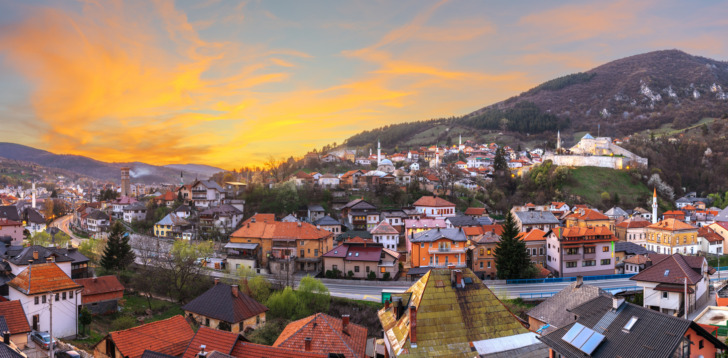
Travnik sits in central Bosnia and Herzegovina, surrounded by green mountains in the Lašva Valley about halfway between Sarajevo and Banja Luka.
For more than 150 years, it served as the seat of Ottoman viziers, leaving behind a compact old town filled with mosques, stone bridges, colorful houses, fountains, and one of Bosnia’s most impressive hilltop fortresses.
The city is also associated with Nobel Prize-winning writer Ivo Andrić and makes a great base for exploring nearby Vlašić Mountain.
Travnik is generally safe for tourists, with low levels of serious crime and a relaxed atmosphere.
The biggest concerns are road safety, winter weather, petty theft, hiking accidents, and unexploded landmines in remote areas outside established tourist routes.
Warnings & Dangers in Travnik

OVERALL RISK: LOW
Travnik is a low-risk destination for most visitors. Serious crime involving tourists is uncommon, central areas are walkable, and locals are generally welcoming. The most important precautions involve traffic, winter roads, hiking, occasional petty theft, and avoiding unmarked rural land where mines or unexploded ordnance may still remain from the 1990s conflict.

TRANSPORT & TAXIS RISK: MEDIUM
Taxis and buses are generally safe, but road conditions require more attention. Roads through central Bosnia can be narrow, winding, busy with trucks, and slippery during winter. Use reputable taxis, agree on fares when necessary, and avoid aggressive driving on mountain roads. Snow and fog can make routes toward Vlašić especially challenging.

PICKPOCKETS RISK: LOW
Pickpocketing is not a major issue in Travnik, but it can happen around markets, bus stations, festivals, and crowded tourist sites. Keep phones, wallets, and passports secure and avoid leaving bags unattended at cafés. The risk is considerably lower than in major European capitals, but basic precautions still make sense.

NATURAL DISASTERS RISK: MEDIUM
Travnik can experience flooding, heavy snow, landslides, thunderstorms, heatwaves, and earthquakes. Mountain weather can change quickly, especially around Vlašić. Winter snow may disrupt roads and hiking routes, while intense rain can affect rivers and slopes. Check conditions before driving or hiking outside the city.

MUGGING RISK: LOW
Mugging is uncommon in Travnik. The historic center and main commercial streets are generally comfortable during the day and evening. Still, avoid isolated alleys, dark river paths, and quiet parks late at night. Carry limited cash and use a taxi if your accommodation is far from central streets.

TERRORISM RISK: LOW
The terrorism risk in Travnik is low. Bosnia and Herzegovina has experienced isolated security concerns, but tourists in Travnik are far more likely to encounter ordinary travel problems than terrorism. Remain aware at major public events and avoid suspicious activity, but terrorism should not strongly influence normal travel plans.

SCAMS RISK: LOW
Scams are uncommon. Visitors may encounter occasional taxi overcharging, vague accommodation fees, or inflated prices in tourist-oriented restaurants. Confirm prices before accepting private transportation or tours, check restaurant bills, and use established accommodation providers. Serious organized tourist scams are not a defining problem here.

WOMEN TRAVELERS RISK: LOW
Travnik is generally safe for women, including solo travelers. Central streets are active and comfortable, especially during the day and early evening. Women should follow normal nighttime precautions, avoid isolated mountain trails alone, and use reliable transportation after dark. Conservative clothing is appreciated inside mosques and religious sites.

TAP WATER RISK: LOW
Tap water in Travnik is generally safe to drink. Bosnia is known for abundant freshwater sources, and locals commonly drink from the tap. Travelers with sensitive stomachs can use bottled water if preferred. When hiking, do not automatically drink from streams unless you know the water source is safe.
Safest Places to Visit in Travnik
Travnik Fortress
Travnik Fortress, also called Stari Grad, rises above the old town and is one of the city’s safest and most rewarding attractions.
The stone walls provide excellent views across the valley, rooftops, mosques, and surrounding mountains.
The main risk is physical rather than criminal.
Stone steps can be uneven or slippery after rain, and some edges require caution.
Wear shoes with good grip and supervise children closely.
Plava Voda
Plava Voda is one of Travnik’s most distinctive areas, built around a fast-flowing blue stream lined with restaurants and cafés.
It is busy during the day and evening and has a relaxed atmosphere.
Keep children away from slippery water edges and watch your footing around wet stone surfaces.
Otherwise, it is one of the easiest areas for visitors to enjoy.
Sulejmanija Mosque
The colorful Sulejmanija Mosque, also known as the Painted Mosque, is one of Travnik’s most recognizable buildings.
Its central location makes it easy and safe to visit during normal hours.
Dress respectfully, remove shoes where required, and avoid interrupting prayers.
Ask before photographing worshippers or religious ceremonies.
Ivo Andrić Birth House
The memorial museum dedicated to Ivo Andrić offers a quiet look at the life of Bosnia’s Nobel Prize-winning writer.
It is centrally located and easy to combine with a walk through the old town.
The surrounding area is generally safe, and the attraction works particularly well during rainy or cold weather.
Vlašić Mountain
Vlašić is a popular destination for skiing, hiking, mountain scenery, and traditional food.
Established resort areas are generally safe, but mountain conditions can change quickly.
Use marked trails and roads, check snow and weather forecasts, and avoid exploring remote terrain without local knowledge.
Places to Avoid in Travnik
Travnik does not have clearly defined dangerous neighborhoods.
The areas travelers should avoid are mainly remote locations, unmarked rural land, difficult mountain terrain, and poorly lit places after dark.
Unmarked Rural Land
This is the most important warning outside the city.
Bosnia and Herzegovina still has areas containing landmines and unexploded ordnance left from the 1990s war.
Never leave marked roads and established trails in unfamiliar rural areas.
Do not explore abandoned military positions, empty fields, ruined structures, or forest clearings without local confirmation that the area is safe.
Remote Forests Around Vlašić
Vlašić offers excellent hiking, but do not wander onto unknown forest tracks or unmarked paths.
Weather can change quickly, phone reception may weaken, and some remote areas may contain old mine contamination.
Use recognized hiking routes and consider a local guide for longer excursions.
Riverbanks During Flood Conditions
The rivers and streams around Travnik are normally attractive and harmless, but heavy rain can increase water levels quickly.
Avoid riverbanks, bridges, and low-lying areas during flooding warnings.
Do not attempt to cross fast-moving water on foot or by vehicle.
Mountain Roads During Snowstorms
Roads toward Vlašić and surrounding villages can become difficult during heavy snowfall.
Avoid driving without proper winter equipment and experience.
If conditions deteriorate, use a local driver or delay the trip instead of forcing an unfamiliar rental car up a steep icy road.
Empty Streets Far From the Center at Night
Travnik is generally safe after dark, but residential and industrial streets become quiet.
Avoid unnecessary walking through poorly lit outskirts, abandoned industrial areas, or riverside paths late at night.
Staying around central streets and active restaurants is the easier choice.
Safety Tips for Traveling to Travnik
- Stay on marked trails outside the city. Bosnia’s remaining landmine problem is the single most unusual safety issue visitors need to understand. Tourist areas, roads, towns, and established trails are generally safe, but remote forests and abandoned land may not be. Never follow an interesting-looking shortcut through unfamiliar fields or woodland.
- Drive carefully on mountain roads. Central Bosnia has beautiful driving routes, but they can be narrow and winding. Trucks, local drivers, fog, snow, and sharp bends require patience. Drive during daylight when possible and avoid overtaking unless visibility is completely clear.
- Prepare properly for Vlašić. The mountain may look close to Travnik, but conditions can be dramatically colder and windier at elevation. Bring layers, water, suitable shoes, and navigation. In winter, check road and ski conditions before leaving.
- Watch your footing in the old town. Travnik’s historic streets, fortress steps, bridges, and stone paths can become slippery when wet. Comfortable shoes with grip are more useful than fashionable footwear, especially if you plan to climb to the fortress.
- Keep valuables secure at busy attractions. Crime is low, but crowded festivals, bus stations, restaurants, and markets still create opportunities for theft. Keep bags zipped and avoid leaving your phone sitting on café tables near busy pedestrian areas.
- Respect religious customs. Travnik contains important mosques, Catholic churches, and other religious sites. Dress modestly when entering, speak quietly, and follow instructions about footwear and photography. Respectful behavior avoids awkward situations and makes interactions with local residents much warmer.
- Avoid political arguments. Bosnia and Herzegovina has a complicated political and ethnic history. Travelers are welcome to ask respectful questions, but heated discussions about the war, nationalism, ethnicity, or current politics are rarely useful. Listen more than you debate.
- Do not explore abandoned war sites casually. Ruins, bunkers, damaged buildings, and former military positions may look fascinating, but they can contain unstable structures, unexploded ordnance, or other hazards. Only visit recognized historical sites that are known to be safe.
- Carry some cash. Cards are increasingly common, but smaller restaurants, cafés, taxis, markets, and businesses may prefer cash. Carry Bosnian convertible marks in small denominations and keep backup money separately from your everyday wallet.
- Allow extra travel time in winter. Snow, fog, roadworks, and slow-moving vehicles can make travel around central Bosnia unpredictable. Do not schedule a mountain excursion immediately before a flight or long-distance connection. A relaxed itinerary works much better here than a tightly timed one.
So... How Safe Is Travnik Really?
Travnik is genuinely safe for most ordinary travelers.
The city does not have a major violent-crime problem, tourist scams are limited, and the historic center feels comfortable to explore on foot.
Most visitors will spend their time visiting the fortress, eating around Plava Voda, exploring religious sites, and taking day trips into the surrounding mountains without encountering serious trouble.
The main risks become more important once you leave established urban areas.
Bosnia and Herzegovina continues to deal with landmines and unexploded ordnance left from the war of the 1990s.
This does not mean travelers are walking through minefields around central Travnik.
Established cities, roads, resorts, and recognized trails are routinely used safely.
The problem arises when visitors leave known routes and enter abandoned or unmarked land.
Road conditions also deserve attention.
Mountain driving can involve fog, snow, narrow lanes, trucks, and sharp curves.
Vlašić becomes significantly more challenging during winter weather.
Overall, I rate Travnik as low risk.
It is suitable for solo travelers, couples, families, and road-trippers who use normal precautions.
Stay on established routes, respect mountain conditions, drive carefully, and do not explore abandoned countryside casually.
For most visitors, Travnik’s safety will be one of the easiest parts of the trip.
How Does Travnik Compare?
| City | Safety Index |
|---|---|
| Travnik |
88 |
| Tuzla |
84 |
| Mostar |
72 |
| Sarajevo |
65 |
| Banja Luka |
60 |
| Bihac |
85 |
| Jajce |
90 |
 Galle Galle | 77 |
 Bongor Bongor | 25 |
 Amsterdam Amsterdam | 78 |
 Kenosha Kenosha | 74 |
 Bridgetown Bridgetown | 78 |
| St. Matthews | 82 |
Useful Information

Visas
Many travelers, including citizens of the United States, United Kingdom, Canada, Australia, and European Union countries, can visit Bosnia and Herzegovina without a visa for up to 90 days within a 180-day period. Travelers who require a visa should apply before departure and confirm passport validity requirements.

Currency
Travnik uses the Bosnia and Herzegovina convertible mark, abbreviated BAM or KM. The currency has a fixed relationship with the euro. Cards are accepted at many hotels and restaurants, but cash remains useful for cafés, taxis, markets, small shops, parking, and businesses outside the center.

Weather
Travnik has warm summers and cold winters, with significantly colder conditions on Vlašić Mountain. Summer travelers should pack light clothing, sunscreen, and a rain layer. Winter requires a warm coat, gloves, waterproof footwear, and proper layers. Spring and autumn can bring rapid temperature changes and frequent rain.

Airports
Sarajevo International Airport is the most practical airport for Travnik, roughly 90 kilometers away by road. Travel time is usually around one and a half to two hours depending on traffic and weather. Private transfers, rental cars, buses, and connections through Sarajevo are available.

Travel Insurance
Travel insurance is recommended, particularly if you plan to drive, ski, hike, or spend time in the mountains. Coverage should include medical treatment, evacuation, road accidents, rental vehicle damage, winter sports, hiking injuries, theft, and trip cancellation. Check whether off-piste skiing or higher-risk outdoor activities require additional coverage.
Travnik Weather Averages (Temperatures)
Average High/Low Temperature
| Temperature / Month | Jan | Feb | Mar | Apr | May | Jun | Jul | Aug | Sep | Oct | Nov | Dec |
|---|---|---|---|---|---|---|---|---|---|---|---|---|
| High °C |
4 | 6 | 10 | 15 | 20 | 25 | 27 | 28 | 22 | 17 | 11 | 6 |
| Low °C |
-4 | -2 | 1 | 4 | 8 | 12 | 14 | 14 | 10 | 6 | 2 | -2 |
| High °F |
39 | 43 | 50 | 59 | 68 | 77 | 81 | 82 | 72 | 63 | 52 | 43 |
| Low °F |
25 | 28 | 34 | 39 | 46 | 54 | 57 | 57 | 50 | 43 | 36 | 28 |
Bosnia and Herzegovina - Safety by City
| City | Safety Index |
|---|---|
| Banja Luka | 60 |
| Bihac | 85 |
| Jajce | 90 |
| Mostar | 72 |
| Sarajevo | 65 |
| Travnik | 88 |
| Trebinje | 89 |
| Tuzla | 84 |