 Bosnia and Herzegovina : Safety by City
Bosnia and Herzegovina - safety as a country
Tuzla is one of Bosnia and Herzegovina’s most interesting overlooked cities, sitting in the country’s northeast about 120 kilometers north of Sarajevo.
Once known primarily as an industrial and salt-mining center, Tuzla has reinvented part of its center around cafés, pedestrian streets, colorful Austro-Hungarian architecture, and the unusual Pannonian Lakes, a complex of artificial saltwater lakes right in the middle of the city.
It also has a large student population, giving central Tuzla a livelier atmosphere than its size might suggest.
The city is generally safe for visitors, and serious violence involving tourists is uncommon.
The main concerns are petty theft, aggressive driving, winter air pollution, political demonstrations, and the continued presence of landmines in some remote or abandoned areas of Bosnia and Herzegovina.
Warnings & Dangers in Tuzla

OVERALL RISK: LOW
Tuzla is a low-risk destination for ordinary travelers. Central neighborhoods are generally comfortable to explore on foot, violent crime against tourists is uncommon, and most visits pass without problems. Greater caution is needed around road traffic, nightlife, demonstrations, abandoned land, and valuables left inside vehicles.

TRANSPORT & TAXIS RISK: MEDIUM
Road safety deserves more attention than crime. Driving can be fast and impatient, pedestrian crossings are not always treated as visitors expect, and winter weather makes conditions worse. Use registered taxis, wear seat belts, and drive defensively. Rural roads around Tuzla can be narrow, dark, and poorly maintained.

PICKPOCKETS RISK: MEDIUM
Petty theft can occur in pedestrian areas, markets, bus stations, festivals, shopping centers, and crowded cafés. Keep phones and wallets secure and avoid leaving bags hanging from chairs. Vehicle break-ins are another concern, so never leave luggage, electronics, passports, or other valuable items visible inside a parked car.

NATURAL DISASTERS RISK: MEDIUM
Tuzla can experience flooding, landslides, earthquakes, thunderstorms, snow, heatwaves, and periods of extreme cold. Heavy rain is particularly important because northeastern Bosnia has experienced destructive flooding and landslides in the past. Winter snow and ice can also affect roads throughout the surrounding hills.

MUGGING RISK: LOW
Mugging is uncommon, particularly in the central pedestrian district. Normal nighttime precautions are sufficient for most travelers. Avoid poorly lit parks, deserted industrial areas, isolated streets, and unnecessary late-night walks while intoxicated. If your accommodation is far from the center, taking a taxi is inexpensive and sensible.

TERRORISM RISK: LOW
The direct terrorism risk for an ordinary visitor to Tuzla is low, although Bosnia and Herzegovina maintains broader security concerns related to terrorism. Large public gatherings, transportation facilities, and crowded events always warrant ordinary awareness, but terrorism should not dominate a traveler’s day-to-day planning.

SCAMS RISK: LOW
Tourist scams are not particularly common. Possible issues include taxi overcharging, unofficial accommodation offers, questionable currency exchange, or unexpected charges at nightlife venues. Confirm prices before accepting private transportation and use established booking services. Check restaurant bills rather than assuming every mistake is intentional.

WOMEN TRAVELERS RISK: LOW
Tuzla is generally comfortable for women traveling alone. The city center has restaurants, cafés, students, families, and nightlife that keep streets active into the evening. Women should still avoid isolated nighttime routes, watch their drinks in bars, and use reputable taxis when returning to accommodation late.

TAP WATER RISK: LOW
Tap water in Tuzla is generally considered suitable for drinking. Travelers with sensitive stomachs can choose bottled water, which is inexpensive and widely available. When hiking or exploring rural areas, do not assume untreated springs and streams are safe simply because the water appears clear.
Safest Places to Visit in Tuzla
Trg Slobode
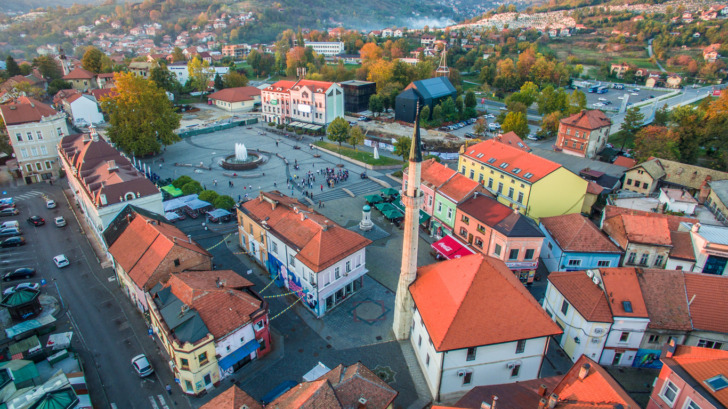
Freedom Square is the heart of central Tuzla and one of the easiest places for visitors to begin exploring.
Restaurants, cafés, shops, fountains, and pedestrian streets surround the square, creating regular foot traffic from morning until late evening.
Petty theft remains possible when events or festivals create large crowds, but serious security concerns are uncommon.
Pannonian Lakes
The Pannonian Lakes are Tuzla’s signature attraction.
Artificial saltwater lakes, beaches, pools, waterfalls, restaurants, and recreation areas turn part of the city center into something resembling a miniature seaside resort during summer.
The organized complex is generally safe for families.
Supervise children around water, use sunscreen, stay hydrated, and secure valuables before swimming.
Korzo
Tuzla’s main pedestrian zone, commonly called Korzo, is lined with cafés, stores, restaurants, and historic buildings.
It is active throughout much of the day and evening and is one of the safest areas for walking.
As with any place with outdoor cafés, avoid leaving phones or wallets unattended on tables.
Slana Banja
Slana Banja is a hillside park near the Pannonian Lakes offering walking paths, monuments, greenery, and views over the city.
It is pleasant during daylight and early evening.
Some quieter sections become poorly lit later at night, so there is little reason for visitors to wander through isolated paths after the park empties.
Srebrenik Fortress
Srebrenik Fortress makes an excellent excursion from Tuzla.
The medieval fortress sits dramatically on a rocky hill and is one of the most photogenic historic sites in northeastern Bosnia.
The main hazards are steep paths, uneven surfaces, and slippery stone after rain.
Wear suitable footwear and supervise young children carefully.
Places to Avoid in Tuzla
Tuzla does not have clearly defined tourist no-go neighborhoods.
The areas travelers should avoid are mostly determined by isolation, abandoned property, political activity, and the possibility of unexploded ordnance outside established urban routes.
Abandoned Buildings and Industrial Land
Tuzla has an industrial and mining history, leaving some unused factories, warehouses, and deteriorating structures around the wider urban area.
Do not enter abandoned industrial buildings for photography or exploration.
Structural collapse, broken glass, open shafts, chemicals, and other hazards are more realistic dangers than crime.
Unmarked Rural Fields and Forests
Landmines and unexploded ordnance remain present in parts of Bosnia and Herzegovina decades after the 1990s war.
Known hazardous areas are often marked, but travelers should never rely solely on spotting warning signs.
Stay on paved roads, established trails, and clearly used land when exploring rural areas.
Political Demonstrations
Avoid political protests and large confrontational gatherings.
Bosnia and Herzegovina periodically experiences political tension, and even demonstrations that begin peacefully can disrupt traffic or involve police.
If you unexpectedly encounter a protest, leave the area rather than stopping to watch or photograph confrontations.
Quiet Bus and Railway Areas Late at Night
Transportation areas are generally manageable during normal operating hours but may become deserted late at night.
If arriving after midnight, know your route to the hotel beforehand or arrange a taxi instead of walking around with luggage while trying to find directions.
Remote Hills During Severe Weather
The hills surrounding Tuzla can be affected by heavy rain, snow, fog, and landslides.
Avoid hiking unfamiliar routes during storms and never cross barriers around unstable slopes.
Safety Tips for Traveling to Tuzla
- Stay on established paths outside the city. Tourists are unlikely to encounter landmines while casually walking around central Tuzla, but they remain a genuine concern in parts of Bosnia’s countryside. Stay on recognized hiking routes, paved roads, maintained parks, and obviously used paths. Never explore abandoned military positions, ruined structures, or random forest clearings.
- Be defensive around traffic. Cars do not always yield to pedestrians as reliably as visitors from some countries expect. Look carefully before entering crossings and watch for vehicles turning through intersections. If renting a car, expect assertive local driving, narrow roads, and limited lighting outside central areas.
- Do not leave valuables inside your car. Vehicle break-ins are a more realistic problem than violent street crime. Remove luggage, laptops, cameras, passports, and shopping bags before parking overnight or at tourist attractions. Even an empty backpack can tempt someone to break a window just to see what is inside.
- Prepare for poor winter air quality. Tuzla has historically struggled with significant winter air pollution because of industry, coal-fired heating, geography, and weather inversions. Travelers with respiratory sensitivities should check daily air conditions, limit strenuous outdoor exercise on bad days, and consider accommodation with good indoor filtration.
- Avoid political demonstrations. Bosnia’s political system remains complicated, and demonstrations sometimes take place over economic, governmental, or social issues. Visitors gain nothing from being caught in the middle. If crowds, police barriers, or roadblocks start appearing, simply change your route.
- Carry some Bosnian cash. Tuzla is modern enough that cards work in many businesses, but cash remains useful at smaller restaurants, bakeries, cafés, markets, taxis, parking areas, and businesses outside the center. Carry smaller denominations and avoid displaying large amounts of money.
- Watch your belongings at the Pannonian Lakes. Swimming creates the perfect opportunity to forget about phones, wallets, and bags. Bring only what you need, use lockers when available, and avoid leaving expensive electronics unattended beside the water while everyone in your group swims.
- Take winter driving seriously. Snow, black ice, fog, and freezing temperatures can make roads around Tuzla significantly more difficult between late autumn and early spring. Make sure your vehicle has appropriate winter equipment and slow down substantially on rural and hillside roads.
- Respect Bosnia’s recent history. Tuzla suffered heavily during the Bosnian War, including the 1995 Tuzla massacre. Memorials are not ordinary sightseeing props. Avoid insensitive jokes, political arguments, or staged photographs at commemorative locations. If discussing the conflict with residents, approach the subject respectfully.
- Keep emergency flexibility in your itinerary. Heavy snow, flooding, road closures, demonstrations, border delays, or flight disruptions can interfere with transportation. Avoid scheduling an important international connection immediately after a long road journey. Keeping a little extra time in the itinerary makes travel throughout Bosnia much easier.
So... How Safe Is Tuzla Really?
Tuzla is safer than many first-time visitors expect.
The city has a relaxed pedestrian center, a large student population, an active café culture, and relatively little crime specifically targeting international tourists.
Walking between Freedom Square, Korzo, the Pannonian Lakes, and central restaurants should feel straightforward during both the day and early evening.
Petty theft deserves normal attention, particularly around crowds and vehicles, but violent robbery is not a defining tourist problem.
The unusual safety issue is what lies outside the everyday city environment.
Bosnia and Herzegovina continues to contain landmines and unexploded ordnance from the 1990s conflict, and the country’s latest travel guidance still specifically warns visitors to remain on hard-surfaced roads and avoid abandoned buildings in potentially affected areas.
Tuzla also has environmental concerns that visitors sometimes underestimate.
Winter air pollution can become severe, while heavy rainfall has historically caused flooding and landslides across northeastern Bosnia.
Driving in snow, fog, or icy conditions requires additional caution.
Overall, I rate Tuzla as low risk.
Normal urban precautions are enough for most visits.
Secure valuables, drive carefully, avoid protests, stay on established routes when leaving the city, and pay attention to winter air and weather conditions.
How Does Tuzla Compare?
| City | Safety Index |
|---|---|
| Tuzla |
84 |
| Bihac |
85 |
| Mostar |
72 |
| Travnik |
88 |
| Trebinje |
89 |
| Banja Luka |
60 |
| Jajce |
90 |
 New Hampshire New Hampshire | 85 |
| Ketchikan | 94 |
 Lhasa Lhasa | 72 |
| Auburn | 89 |
 Ottawa Ottawa | 83 |
| Bridgeport | 57 |
Useful Information

Visas
Citizens of the United States, United Kingdom, Canada, European Union countries, Australia, and many other nations can generally visit Bosnia and Herzegovina without obtaining a visa for stays of up to 90 days within a 180-day period. Travelers requiring a visa should arrange one before arrival and confirm current passport validity requirements.

Currency
Tuzla uses the Bosnia and Herzegovina convertible mark, abbreviated BAM or KM. It has a fixed exchange rate with the euro. Cards are accepted at many hotels, supermarkets, restaurants, and shopping centers, but cash remains useful for taxis, bakeries, cafés, markets, parking, and smaller establishments.

Weather
Tuzla has warm summers and cold winters. Summer temperatures frequently climb above 30°C, while winter brings frost, fog, snow, and occasional periods well below freezing. Spring and autumn are mild but wetter. Winter visitors should also be prepared for episodes of significant air pollution.

Airports
Tuzla International Airport is located near Živinice, approximately 15 kilometers from central Tuzla. It serves a changing network of European destinations, with Wizz Air among the main operators and additional scheduled services from other airlines. Because routes change seasonally, travelers should check schedules when planning their trip.

Travel Insurance
Travel insurance is recommended for Tuzla and wider Bosnia and Herzegovina. Coverage should include medical treatment, road accidents, theft, trip cancellation, weather disruption, and emergency transportation. Travelers planning hiking, skiing, or other mountain activities should confirm that those activities are included in their policy.
Tuzla Weather Averages (Temperatures)
Average High/Low Temperature
| Temperature / Month | Jan | Feb | Mar | Apr | May | Jun | Jul | Aug | Sep | Oct | Nov | Dec |
|---|---|---|---|---|---|---|---|---|---|---|---|---|
| High °C |
4 | 7 | 12 | 16 | 20 | 25 | 28 | 28 | 23 | 18 | 12 | 6 |
| Low °C |
-2 | -1 | 2 | 6 | 9 | 14 | 16 | 16 | 12 | 8 | 4 | 0 |
| High °F |
39 | 45 | 54 | 61 | 68 | 77 | 82 | 82 | 73 | 64 | 54 | 43 |
| Low °F |
28 | 30 | 36 | 43 | 48 | 57 | 61 | 61 | 54 | 46 | 39 | 32 |
Bosnia and Herzegovina - Safety by City
| City | Safety Index |
|---|---|
| Banja Luka | 60 |
| Bihac | 85 |
| Jajce | 90 |
| Mostar | 72 |
| Sarajevo | 65 |
| Travnik | 88 |
| Trebinje | 89 |
| Tuzla | 84 |