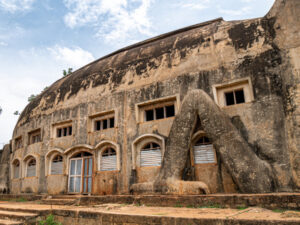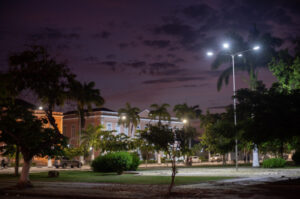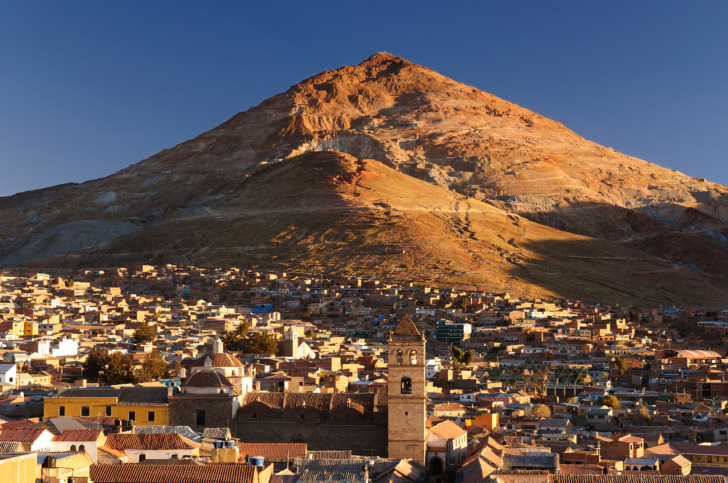
Potosí is one of South America’s most extraordinary cities, sitting at roughly 4,090 meters above sea level beneath the unmistakable cone of Cerro Rico.
Founded by the Spanish in 1545 after enormous silver deposits were discovered nearby, Potosí became one of the richest and most important cities in the colonial world.
Today, its churches, narrow streets, colonial mansions, markets, and enormous former Royal Mint tell a much more complicated story of wealth, forced labor, mining, and survival.
Potosí is fascinating, but it is not an effortless destination.
The altitude hits hard, working-mine tours involve genuine danger, Bolivian roads can be unpredictable, and protests frequently disrupt transportation.
Street crime is manageable with normal precautions, but travelers need to take the physical environment and Bolivia’s current political situation seriously.
Warnings & Dangers in Potosi

OVERALL RISK: MEDIUM
Potosí has a medium overall risk. Most travelers explore the historic center without serious problems, but petty theft, unreliable transportation, demonstrations, roadblocks, altitude sickness, and dangerous mine tours require attention. Bolivia is currently experiencing recurring political disruption, so visitors should maintain flexible travel plans and avoid demonstrations completely.

TRANSPORT & TAXIS RISK: HIGH
Transportation is one of the bigger risks. Long-distance buses may have poor safety standards, drivers sometimes travel for excessive hours, and mountain roads can be dangerous at night. Roadblocks can halt journeys without warning. Use reputable bus companies, choose marked radio taxis, and avoid overnight road travel whenever a daytime alternative exists.

PICKPOCKETS RISK: MEDIUM
Pickpocketing and bag theft can occur around markets, bus terminals, crowded streets, festivals, and transportation areas. Travelers carrying cameras and large backpacks are easy to identify. Keep phones out of loose pockets, carry your wallet securely, and never leave bags unattended. Distraction techniques involving multiple thieves are possible.

NATURAL DISASTERS RISK: MEDIUM
Potosí faces earthquakes, landslides, severe thunderstorms, cold weather, hail, and occasional flooding. Mountain roads may be blocked by landslides during the November to March rainy season. At more than 4,000 meters, freezing nighttime temperatures and rapidly changing weather can also become serious problems for poorly prepared travelers.

MUGGING RISK: MEDIUM
Muggings are not an everyday experience in central Potosí, but robberies occur in Bolivia, and travelers should avoid isolated streets after dark. Risk increases around transportation terminals, quiet hillsides, and poorly lit neighborhoods. Use taxis at night, carry limited cash, and do not resist if confronted by an armed robber.

TERRORISM RISK: LOW
The terrorism risk in Potosí is low. Political protests and civil unrest are much more realistic concerns than terrorism. Demonstrations can become confrontational and may involve police or military responses. Avoid crowds, political marches, blocked highways, government confrontations, and any gathering where tensions appear to be rising.

SCAMS RISK: MEDIUM
Travelers may encounter taxi overcharging, unofficial guides, fake police scams, questionable tour operators, and misleading exchange offers. Be especially cautious if someone claiming to be a police officer asks you to enter an unmarked vehicle. Book mine tours and transportation through established businesses and confirm prices before accepting services.

WOMEN TRAVELERS RISK: MEDIUM
Women regularly travel through Potosí safely, including independently, but solo travelers should use extra caution after dark. Harassment, unwanted attention, drink tampering, and opportunistic crime are possible. Use reputable taxis, avoid empty streets at night, and join established groups rather than exploring mines or isolated mountain areas alone.

TAP WATER RISK: HIGH
Travelers should not rely on Potosí tap water for drinking. Use sealed bottled water, boiled water, or properly filtered water. The combination of altitude, dehydration, and stomach illness can quickly make you feel miserable. Be cautious with ice, raw produce, and street drinks made with water of uncertain quality.
Safest Places to Visit in Potosi
Plaza 10 de Noviembre
Plaza 10 de Noviembre is the heart of historic Potosí and one of the easiest areas for first-time visitors.
The surrounding streets contain churches, restaurants, cafes, banks, museums, and colonial buildings.
During daylight and early evening, there is usually enough foot traffic to make the area comfortable.
Political gatherings occasionally occur around central squares, however, so leave immediately if a protest starts developing.
Casa Nacional de la Moneda
The National Mint is one of Bolivia’s best museums and arguably the safest way to understand Potosí’s extraordinary mining history.
The enormous colonial building once processed silver extracted from Cerro Rico and now contains coins, machinery, paintings, archaeological material, and exhibits on colonial life.
Organized guided visits make this an easy attraction for solo travelers and families.
San Francisco Church and Viewpoint
The Church of San Francisco is another major historic attraction.
Visitors can explore the church and, when available, climb to rooftop viewpoints overlooking the red roofs of Potosí and Cerro Rico.
Take your time on stairs because the altitude makes exertion noticeably harder.
Stone surfaces may also become slippery during rain or freezing weather.
Central Historic District
The streets surrounding the main plaza contain many of Potosí’s churches, colonial houses, markets, and museums.
Exploring this area during daylight is generally safe and gives visitors the best sense of the city.
Keep valuables secured in busy market streets and avoid wandering too far into unfamiliar residential hills after sunset.
Places to Avoid in Potosi
Cerro Rico Mines Without a Reputable Tour
Do not enter Cerro Rico independently.
These are active working mines rather than regulated tourist attractions.
Conditions can include unstable tunnels, falling rock, explosives, dust, toxic gases, low oxygen, moving ore carts, and extremely confined passages.
If you choose to enter at all, use a well-established operator, wear proper protective equipment, and understand that no tour can make an active Bolivian mine completely safe.
Abandoned Mine Entrances
Cerro Rico contains numerous old shafts, abandoned tunnels, unstable workings, and unmarked openings.
Never explore them on your own or leave your group to investigate a side passage.
Parts of the mountain have suffered structural instability after centuries of mining.
An entrance that looks harmless can connect to collapsing tunnels or deep vertical shafts.
Roadblocks and Demonstrations
Roadblocks are one of Bolivia’s most disruptive travel risks.
They can appear suddenly and may stop buses, taxis, fuel deliveries, and access to nearby cities.
Never attempt to walk or drive through a blockade.
Arguments between protesters, police, drivers, and security forces can escalate. Stay at your hotel and adjust your itinerary.
Bus Terminal Surroundings Late at Night
The main bus terminal is useful but deserves extra caution after dark.
Travelers arriving tired with luggage, passports, phones, and cash are obvious targets.
Keep bags beside you, ignore unsolicited offers of assistance, and take a marked taxi directly to your accommodation rather than beginning a long walk at night.
Isolated Hillsides and Outskirts
Potosí spreads across steep hills surrounding the historic center.
Some outer neighborhoods have little reason for tourists to visit and become extremely quiet after dark.
Avoid wandering along unfamiliar hillside roads for photographs or viewpoints.
Besides crime, dogs, poor lighting, steep drops, and altitude make these areas uncomfortable at night.
Safety Tips for Traveling to Potosi
- Spend your first day adjusting to the altitude. Potosí sits at approximately 4,090 meters, or around 13,400 feet. That is high enough for altitude sickness to affect perfectly healthy travelers. Take your first day slowly, drink plenty of water, eat lighter meals, and avoid heavy drinking. Headache and shortness of breath are common, but worsening symptoms, confusion, severe breathlessness, or difficulty walking require immediate medical attention and descent.
- Consider carefully whether a mine tour is right for you. Cerro Rico mine tours are famous, but they are not sanitized museum experiences. You may crawl through tight tunnels while miners work nearby with explosives and heavy equipment. People with asthma, heart problems, claustrophobia, mobility limitations, or strong sensitivity to dust should skip the underground portion entirely. Seeing Cerro Rico from outside is still worthwhile.
- Use reputable transportation companies. Bolivian bus safety varies dramatically. When traveling between Potosí, Sucre, Uyuni, and La Paz, pay a little more for a company with a good reputation, functioning seatbelts, and maintained vehicles. Daytime buses are preferable to overnight journeys on winding mountain roads.
- Never cross a roadblock. Political and economic protests frequently use roadblocks to shut down highways. Bolivia declared a state of emergency in June 2026 amid widespread blockades and unrest, and disruptions were still an important concern in August. If your route is blocked, change plans instead of confronting protesters or attempting a back road.
- Keep your phone secured around markets and terminals. A phone is one of the easiest valuables to steal. Check directions inside a cafe or shop rather than walking around staring at a screen. Keep wallets in front pockets or zipped bags and avoid putting backpacks down while buying tickets or food.
- Drink more water than usual. Potosí’s cold, dry air hides dehydration surprisingly well. The altitude causes you to breathe faster and lose moisture, even when you are not sweating. Carry bottled or filtered water throughout the day. Alcohol hits harder at this elevation, so save the heroic drinking session for somewhere closer to sea level.
- Prepare for very cold nights. The high-altitude climate means temperatures drop sharply after sunset. During the dry winter months from roughly May through August, nighttime temperatures can fall well below freezing. Bring warm layers, gloves, and a proper jacket, even when daytime sunshine feels pleasant.
- Use marked taxis at night. Use radio taxis, hotel-arranged drivers, or transportation from a known company. Avoid entering vehicles already carrying strangers. If someone claiming to be a police officer wants you to get into an unmarked vehicle, be extremely cautious and request identification rather than simply complying.
- Keep flexibility in your itinerary. Bolivia is not a place where I would schedule a Potosí bus arriving at noon and an international flight leaving from another city at 4 p.m. Roadblocks, fuel shortages, landslides, protests, mechanical problems, and weather can all create major delays. Leave buffer days before important flights.
- Buy insurance that covers altitude and mine activities. Standard travel insurance may cover normal sightseeing but exclude underground mine visits, high-altitude trekking, or certain adventure activities. Check the wording before going underground. Your policy should also include medical evacuation, road accidents, political disruption, theft, and unexpected accommodation caused by transportation delays.
So... How Safe Is Potosi Really?
Potosí is reasonably safe for experienced travelers, but it demands more preparation than its compact historic center initially suggests.
Bolivia currently carries an increased-caution travel rating because of crime and unrest, while roadblocks and demonstrations remain a particularly serious logistical problem in 2026.
Crime is manageable.
Pickpocketing, phone theft, taxi-related scams, and robberies occur, but tourists who stay centrally, use reputable transportation, and avoid walking alone at night can reduce those risks substantially.
The most distinctive danger is altitude.
Potosí stands at approximately 4,090 meters, making it one of the highest major cities on Earth.
Travelers arriving directly from low altitude may feel exhausted simply walking uphill.
Severe altitude illness is less common, but it can become life-threatening if ignored.
Then there is Cerro Rico.
Mining has continued inside the mountain for nearly five centuries, and some tourist tours enter active workings where modern visitor-safety standards simply do not exist.
That experience is historically powerful, but nobody should mistake it for a harmless theme-park attraction.
Political disruption is another major factor.
Demonstrations and roadblocks can shut down regional transportation without much warning.
As of August 2026, travelers need flexible itineraries and enough cash, medication, food, and water to handle delays.
I assess that Potosí has a medium overall travel risk.
It is absolutely worth seeing for travelers comfortable with altitude and unpredictable transportation, but plan carefully, choose tour operators cautiously, and never underestimate Cerro Rico.
How Does Potosi Compare?
| City | Safety Index |
|---|---|
 Potosi Potosi |
69 |
| Tarija |
73 |
| Uyuni |
72 |
| Copacabana |
68 |
| Sucre |
74 |
| La Paz |
55 |
 Ayacucho Ayacucho | 44 |
 Miles City Miles City | 78 |
| Lambertville | 74 |
 Aveiro Aveiro | 85 |
| Rock Island | 82 |
| Sitka | 91 |
Useful Information

Visas
Bolivia allows many nationalities to visit visa-free, commonly for up to 90 days in a calendar year. As of 2026, U.S. citizens can also enter for tourism or business without a visa for stays of less than 90 days per year. Requirements differ by nationality, so confirm passport validity and entry rules before departure.

Currency
Potosí uses the Bolivian boliviano. Cash is extremely useful for markets, taxis, buses, smaller restaurants, mine tours, and local shops. Larger hotels may accept cards, but payment systems can fail. Use bank ATMs during daylight, carry smaller notes, and keep backup cash separate in case roadblocks or fuel shortages disrupt services.

Weather
Potosí has a cold, high-altitude climate. The dry season from roughly May through October brings sunny days but extremely cold nights, sometimes below freezing. November through March is wetter, with thunderstorms and possible road disruption. Pack warm layers year-round, sunscreen, sunglasses, lip balm, and a waterproof jacket during the rainy season.

Airports
Potosí’s Capitán Nicolás Rojas Airport has been undergoing major work aimed at restoring commercial service. As of August 2026, Potosí still does not have dependable, regular direct commercial air connections. The most practical airport is usually Alcantarí International Airport near Sucre, followed by roughly three to four hours by road to Potosí.

Travel Insurance
Travel insurance is strongly recommended for Potosí. Choose a policy covering medical treatment, altitude illness, emergency evacuation, theft, bus accidents, roadblocks, cancellations, and unexpected accommodation. If you intend to enter Cerro Rico, confirm specifically that underground mine tours are covered, since ordinary policies may classify them as excluded adventure activities.
Potosi Weather Averages (Temperatures)
Average High/Low Temperature
| Temperature / Month | Jan | Feb | Mar | Apr | May | Jun | Jul | Aug | Sep | Oct | Nov | Dec |
|---|---|---|---|---|---|---|---|---|---|---|---|---|
| High °C |
16 | 16 | 16 | 15 | 13 | 11 | 12 | 13 | 15 | 16 | 17 | 16 |
| Low °C |
3 | 3 | 2 | -1 | -3 | -4 | -4 | -3 | -1 | 1 | 2 | 3 |
| High °F |
61 | 61 | 61 | 59 | 55 | 52 | 54 | 55 | 59 | 61 | 63 | 61 |
| Low °F |
37 | 37 | 36 | 30 | 27 | 25 | 25 | 27 | 30 | 34 | 36 | 37 |
Bolivia - Safety by City
| City | Safety Index |
|---|---|
| Copacabana | 68 |
| La Paz | 55 |
| Potosi | 69 |
| Sucre | 74 |
| Tarija | 73 |
| Uyuni | 72 |