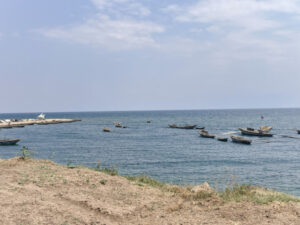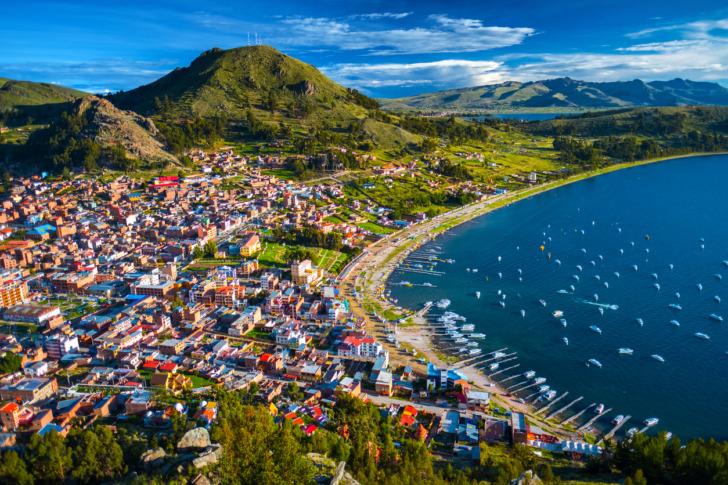
Copacabana sits on the Bolivian shore of Lake Titicaca, close to the Peruvian border and almost 3,850 meters above sea level.
The setting is spectacular: deep-blue water, dry Andean hills, colorful fishing boats, pilgrimage churches, and distant mountains beneath an enormous high-altitude sky.
The town is one of Bolivia’s most important Catholic pilgrimage destinations thanks to the Basilica of Our Lady of Copacabana, but international travelers usually know it as the gateway to Isla del Sol.
Despite sharing its name with Brazil’s famous beach, this Copacabana could hardly feel more different.
It is small, chilly after sunset, and surrounded by some of South America’s most dramatic high-altitude scenery.
Crime is manageable, but altitude sickness, roadblocks, unsafe buses, petty theft, lake conditions, food and water illness, and unpredictable transportation make careful planning important.
Warnings & Dangers in Copacabana

OVERALL RISK: MEDIUM
Copacabana is generally manageable for tourists, but Bolivia currently requires increased caution because of crime and political unrest. Petty theft is the most common security issue. Road transportation, altitude sickness, demonstrations, food and water illness, and limited medical facilities make the destination more challenging than its relaxed lakeside atmosphere suggests.

TRANSPORT & TAXIS RISK: LOW
Transportation deserves particular caution. Official travel guidance specifically recommends using direct buses between Copacabana and La Paz, traveling during daylight, buying tickets at the terminal, and confirming the destination with the driver. Roads can also be disrupted by protests, landslides, weather, or informal roadblocks.

PICKPOCKETS RISK: MEDIUM
Pickpocketing and bag theft can occur around the bus terminal, markets, boat docks, festivals, crowded streets, and transportation to La Paz. Keep passports and backup money secured at your accommodation. Carry your phone in a zipped pocket rather than loosely in your hand.

NATURAL DISASTERS RISK: MEDIUM
Copacabana faces earthquakes, thunderstorms, landslides, hail, strong wind, flooding, and rapidly changing lake weather. High altitude adds powerful ultraviolet exposure and cold nighttime temperatures. Heavy rain can affect roads and trails, while wind can make Lake Titicaca surprisingly rough for small boats.

MUGGING RISK: MEDIUM
Muggings are less common than petty theft but remain possible, particularly after dark or on isolated roads and lakeside paths. Avoid displaying expensive cameras, jewelry, or large amounts of cash. Stay around central streets at night and do not physically resist someone threatening you with a weapon.

TERRORISM RISK: LOW
The terrorism risk in Copacabana is low. Political unrest, strikes, and roadblocks are much more realistic concerns in Bolivia. Travelers should avoid demonstrations, political gatherings, and crowds around security forces. Even peaceful protests can disrupt roads and strand travelers for hours or days.

SCAMS RISK: MEDIUM
Minor tourist scams include inflated boat fares, unofficial guides, confusing bus offers, taxi overcharging, and poor currency exchange rates. Police impersonation has also occurred elsewhere in Bolivia. Use established transportation companies and never enter an unmarked vehicle simply because someone claims to be a police officer.

WOMEN TRAVELERS RISK: MEDIUM
Many women visit Copacabana and Isla del Sol independently without problems, but solo travelers should remain cautious after dark and on isolated trails. Use trusted accommodation, avoid empty lakeside areas late at night, watch drinks, and tell someone your hiking route before exploring remote parts of Isla del Sol alone.

TAP WATER RISK: MEDIUM
Do not drink untreated tap water in Copacabana. Use sealed bottled water, boiled water, or a reliable filtration and purification system. Be cautious with ice, raw salads, street juices, and pre-cut fruit. At this altitude, staying hydrated is especially important, so always carry enough safe drinking water.
Safest Places to Visit in Copacabana
Basilica of Our Lady of Copacabana
The basilica is the town’s spiritual and architectural centerpiece and one of the easiest attractions to visit safely.
The surrounding plaza remains active with pilgrims, vendors, families, and travelers throughout much of the day.
Dress respectfully, keep control of your belongings when crowds gather, and avoid disrupting ceremonies or photographing worshippers without permission.
Central Copacabana
The streets surrounding Avenida 6 de Agosto contain restaurants, hostels, tour agencies, cafes, shops, and most services visitors need.
This is generally the safest area to stay and walk, particularly during daylight and early evening.
Petty theft remains possible, but normal precautions are usually sufficient.
Cerro Calvario During Daylight
Cerro Calvario offers some of Copacabana’s best views over Lake Titicaca.
The climb is short but steep, and the altitude makes it harder than it appears.
Visit during daylight, carry water, wear sunscreen, and move slowly.
The summit and trail become much less suitable for solo visitors once darkness approaches.
Isla del Sol
Isla del Sol is the main reason many travelers come to Copacabana.
Its archaeological sites, villages, terraces, lake views, and walking trails make it one of Bolivia’s most memorable destinations.
Use established boats, confirm departure times, carry cash and water, and plan hikes conservatively because the island sits above 3,800 meters.
Copacabana Waterfront
The main waterfront and boat-launch area are generally safe while restaurants, tour companies, vendors, and boat crews are active.
It is a pleasant place for sunset views and arranging trips to Isla del Sol.
Keep valuables secure and avoid wandering onto isolated sections of shoreline after dark.
Places to Avoid in Copacabana
Bus Terminal Area Late at Night
The bus terminal and surrounding streets are practical rather than dangerous, but travelers with backpacks and luggage make obvious targets for opportunistic theft.
Arrive during daylight whenever possible.
If reaching town late, go directly to your accommodation rather than lingering while checking maps or negotiating with unknown drivers.
Isolated Lakefront Areas After Dark
The central waterfront is pleasant when restaurants and boat businesses are active, but darker sections become quiet quickly.
Avoid long solo walks beside the lake late at night.
Poor lighting, cold temperatures, uneven terrain, and limited assistance create unnecessary risk even without serious crime.
Cerro Calvario After Sunset
Sunset from Cerro Calvario is beautiful, but descending after dark can be uncomfortable and risky.
The trail is steep, lighting is poor, and tourists may be carrying cameras and phones.
If staying for sunset, descend promptly with other visitors rather than waiting until the hill becomes empty.
Roadblocks and Demonstrations
Never attempt to cross a Bolivian protest blockade simply because your bus is delayed.
Demonstrations and roadblocks can become confrontational and may shut down highways for extended periods.
Stay away, monitor local conditions, and wait for transportation companies or authorities to confirm that travel has resumed.
Remote Isla del Sol Trails Near Dark
Isla del Sol is peaceful, but its trails can be long, exposed, and surprisingly tiring at altitude.
Villages and accommodation may be farther apart than expected.
Do not begin a long island crossing late in the afternoon.
Poor visibility, cold temperatures, fatigue, and limited medical assistance can turn a simple hike into a problem.
Safety Tips for Traveling to Copacabana
- Take altitude sickness seriously. Copacabana sits at roughly 3,850 meters, which is high enough to cause headaches, nausea, dizziness, fatigue, and poor sleep. Take your first day slowly, drink plenty of safe water, eat lighter meals, and avoid excessive alcohol. Severe breathlessness, confusion, or difficulty walking requires urgent medical attention and descent.
- Use direct daytime buses from La Paz. Avoid complicated transfers when traveling between La Paz and Copacabana. Use a reputable direct service, buy the ticket through an established terminal or company, and travel during daylight. Keep your valuables with you instead of placing passports, cash, or electronics in luggage stored underneath the bus.
- Keep your plans flexible around roadblocks. Bolivia frequently experiences strikes, demonstrations, and highway blockades. These can delay journeys with little warning. Never schedule your Copacabana departure immediately before an international flight. Leaving an additional day in your itinerary can save you from an expensive transportation disaster.
- Carry sun protection everywhere. The cool mountain air can hide how strong ultraviolet radiation is at nearly 4,000 meters. Apply sunscreen regularly, wear sunglasses and a hat, and consider covering exposed skin during long hikes. You can burn surprisingly quickly even when the temperature feels chilly.
- Use safe drinking water. Drink bottled, boiled, or properly treated water. Check that bottle seals are intact before drinking. Dehydration can worsen altitude symptoms, so carry more water than usual when climbing Cerro Calvario or hiking across Isla del Sol.
- Confirm boat times before visiting Isla del Sol. Do not assume boats operate continuously. Ask where your boat will arrive, when the final return service leaves, and whether your ticket covers one or both directions. If spending the night, confirm your accommodation before starting a long island hike.
- Keep cash divided. Copacabana and Isla del Sol are more cash-dependent than major Bolivian cities. Carry enough bolivianos for boats, meals, accommodation, entrance fees, and emergencies, but divide money between separate locations. ATMs can fail or run out of cash, so do not wait until you have nothing left.
- Avoid isolated areas after dark. Central Copacabana is manageable in the evening, but beaches, hills, trails, and quiet roads become poorly lit. Walk with other travelers and use a taxi when necessary. There is little benefit to wandering around alone once businesses close.
- Respect Lake Titicaca. Lake Titicaca looks peaceful, but it is enormous, cold, and exposed to sudden wind. Use established boat operators, wear a life jacket when provided, and avoid overloaded boats. Swimming can be extremely cold even when the sun is strong, so do not treat it like a tropical lake.
- Have proper travel insurance. Choose coverage for altitude illness, emergency medical care, evacuation, theft, road accidents, cancellations, and political disruption. If hiking extensively or kayaking on Lake Titicaca, confirm those activities are covered. Medical facilities in Copacabana are limited, so serious cases may require transportation to La Paz.
So... How Safe Is Copacabana Really?
Copacabana is reasonably safe for travelers, but it deserves a medium overall risk rating rather than a low one.
The town itself is small, heavily dependent on tourism and pilgrimage traffic, and noticeably less intimidating than Bolivia’s largest cities.
Serious violence against foreign visitors is not an everyday problem.
Petty crime is the more realistic concern.
Theft can happen around buses, terminals, markets, docks, and crowded tourist areas.
Current travel guidance for Bolivia specifically advises additional caution on the Copacabana to La Paz bus route, including using direct buses, traveling during daylight, and purchasing tickets through the terminal.
Political unrest is another important factor.
Bolivia continues to experience demonstrations and roadblocks that can appear with little warning.
These may not target tourists, but they can leave travelers stranded or unable to reach airports and onward connections.
Then there is the altitude.
Copacabana sits at approximately 3,850 meters, while many Isla del Sol hikes remain at similar or greater elevations.
Altitude sickness, dehydration, intense ultraviolet exposure, and cold nighttime temperatures are much more likely to affect a visitor than violent crime.
Lake conditions also deserve respect.
Strong winds can create rough water, and medical resources on Isla del Sol are limited.
My assessment is that Copacabana is perfectly manageable for prepared travelers.
Protect your belongings, use direct daytime transportation, allow for roadblock delays, acclimatize properly, and treat Lake Titicaca as a serious high-altitude environment.
How Does Copacabana Compare?
| City | Safety Index |
|---|---|
 Copacabana Copacabana |
68 |
| La Paz |
55 |
| Potosi |
69 |
| Uyuni |
72 |
| Sucre |
74 |
| Tarija |
73 |
 Pipestone Pipestone | 81 |
 Northern Ireland Northern Ireland | 65 |
 Dilijan Dilijan | 90 |
 Aveiro Aveiro | 85 |
| Roswell | 73 |
 Seven Mile Beach Seven Mile Beach | 88 |
Useful Information

Visas
Bolivia’s visa requirements depend on nationality. As of 2026, U.S. tourists do not require a visa for ordinary tourist travel, while many European, British, Canadian, Australian, and South American visitors can also enter visa-free. A passport with at least six months of validity beyond arrival is generally recommended.

Currency
Copacabana uses the Bolivian boliviano. Cash is important, especially for boat tickets, small restaurants, markets, taxis, and Isla del Sol. ATMs are available in town but can be unreliable. Withdraw money before traveling to the islands and carry smaller notes because change can be difficult.

Weather
Copacabana has a cool high-altitude climate despite its strong sunshine. Days can feel mild while nights become cold. The wetter season generally runs from roughly December through March, while May through August is colder and drier. Pack layers, a warm jacket, sunscreen, sunglasses, rain protection, and sturdy walking shoes.

Airports
Copacabana has no commercial airport. El Alto International Airport, serving La Paz, is the main gateway and sits roughly 140 kilometers away by road. The journey commonly takes three to four hours but can take much longer because of traffic, ferry crossings, road conditions, protests, or blockades.

Travel Insurance
Travel insurance is strongly recommended for Copacabana. Look for coverage that includes altitude-related illness, emergency evacuation, road disruption, theft, cancellation, and medical treatment. Travelers planning long hikes, kayaking, cycling, or extended stays on Isla del Sol should confirm that those activities are specifically covered.
Copacabana Weather Averages (Temperatures)
Average High/Low Temperature
| Temperature / Month | Jan | Feb | Mar | Apr | May | Jun | Jul | Aug | Sep | Oct | Nov | Dec |
|---|---|---|---|---|---|---|---|---|---|---|---|---|
| High °C |
15 | 15 | 15 | 14 | 14 | 13 | 13 | 13 | 14 | 15 | 16 | 15 |
| Low °C |
4 | 4 | 4 | 4 | 2 | 1 | 1 | 2 | 3 | 4 | 5 | 5 |
| High °F |
59 | 59 | 59 | 57 | 57 | 55 | 55 | 55 | 57 | 59 | 61 | 59 |
| Low °F |
39 | 39 | 39 | 39 | 36 | 34 | 34 | 36 | 37 | 39 | 41 | 41 |
Bolivia - Safety by City
| City | Safety Index |
|---|---|
| Copacabana | 68 |
| La Paz | 55 |
| Potosi | 69 |
| Sucre | 74 |
| Tarija | 73 |
| Uyuni | 72 |