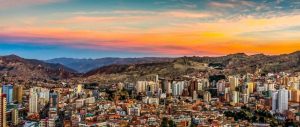
Sucre is Bolivia’s constitutional capital and, in my opinion, one of the country’s easiest cities to fall for.
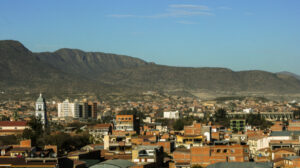
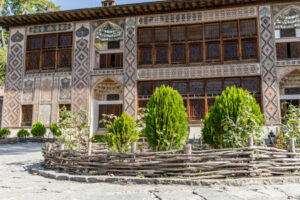
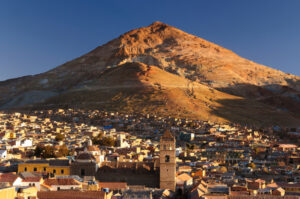
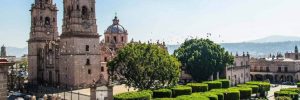
Sitting in a mountain valley at roughly 2,800 meters above sea level, it is famous for whitewashed colonial buildings, red-tiled roofs, ornate churches, leafy plazas, universities, and a historic center recognized as a UNESCO World Heritage Site.
The city played a central role in Bolivia’s independence, which you can explore at Casa de la Libertad, but Sucre also has a completely different claim to fame: thousands of preserved dinosaur footprints just outside town.
Compared with La Paz, Sucre feels calmer, smaller, and easier to explore on foot.
Crime is still a concern, particularly petty theft, but traffic, political demonstrations, altitude, food and water illness, and unpredictable road travel are more likely to complicate the average visit.
Warnings & Dangers in Sucre

OVERALL RISK: MEDIUM
Sucre is one of Bolivia’s more comfortable cities for tourists, but I would still rate it medium risk. Petty crime, demonstrations, roadblocks, unsafe driving, food and water illness, and limited emergency medical resources all deserve attention. Staying in the historic center and using reliable transportation reduces most everyday risks considerably.

TRANSPORT & TAXIS RISK: MEDIUM
Taxis are inexpensive and widely available, but travelers should use registered vehicles or rides arranged through hotels and restaurants. Road safety is a bigger concern than taxi crime. Driving can be aggressive, seat belts are not always used, and mountain roads outside Sucre may be narrow, winding, or damaged.

PICKPOCKETS RISK: MEDIUM
Pickpocketing and phone theft are realistic concerns around markets, bus terminals, festivals, crowded streets, and public transportation. Keep your phone in a secure pocket rather than carrying it loosely. Backpacks should remain zipped and preferably worn in front when moving through particularly crowded markets.

NATURAL DISASTERS RISK: MEDIUM
Sucre can experience earthquakes, severe thunderstorms, flash flooding, landslides, and occasional hail. Its mountain setting also means roads can be affected by heavy rain. Earthquake risk should not be ignored, while intense storms can make steep streets slippery and temporarily disrupt transportation.

MUGGING RISK: MEDIUM
Muggings are less common than petty theft, but robbery can occur, especially after dark or in isolated areas. Avoid wandering into unfamiliar neighborhoods at night and do not display expensive watches, jewelry, or large amounts of cash. If confronted by an armed robber, protecting yourself matters more than protecting your belongings.

TERRORISM RISK: LOW
Sucre has a low terrorism risk. Political unrest and demonstrations are much more realistic concerns than terrorism. Visitors should still maintain normal awareness around government buildings, major public events, transport terminals, and crowded gatherings, particularly when political tensions are elevated.

SCAMS RISK: MEDIUM
Common problems are relatively minor, including inflated taxi fares, questionable tour offers, unofficial guides, and poor currency exchange rates. Agree on taxi prices when necessary and book excursions through established operators. Be cautious if someone suddenly claims there is a problem with your hotel, transportation, or travel documents.

WOMEN TRAVELERS RISK: MEDIUM
Many women travel through Sucre safely, including solo backpackers, but harassment and unwanted attention can occur. Avoid isolated streets late at night, watch drinks carefully, and use trusted taxis after evening outings. Central Sucre is generally comfortable during daylight and early evening.

TAP WATER RISK: HIGH
Visitors should not rely on untreated tap water in Sucre. Use sealed bottled water, boiled water, or a reliable filtration and purification system. Also be cautious with ice, raw vegetables, street juices, and fruit that has already been peeled, particularly during the first few days of your trip.
Safest Places to Visit in Sucre
Plaza 25 de Mayo
Plaza 25 de Mayo is the heart of Sucre and one of the easiest places for visitors to get comfortable.
The surrounding streets contain restaurants, hotels, churches, government buildings, cafes, and museums, keeping the area active throughout the day.
It is generally safe during the evening as well, although phones and wallets should remain secured when crowds gather.
Casa de la Libertad
Casa de la Libertad is one of Bolivia’s most historically important buildings and a must for anyone interested in the country’s independence.
The museum sits directly beside Plaza 25 de Mayo, making it part of Sucre’s most established tourist zone.
Visit during normal opening hours and use ordinary precautions with belongings.
Recoleta
The Recoleta area sits above central Sucre and offers one of the city’s best views.
Its plaza, monastery, cafes, and overlook make it especially popular around sunset.
The walk uphill is manageable but can feel surprisingly strenuous because of Sucre’s elevation.
Take your time and avoid descending through quiet side streets alone late at night.
Parque Cretácico
Sucre’s Cretaceous Park is home to one of the largest collections of dinosaur footprints in the world.
Thousands of tracks are preserved on an enormous exposed rock face.
The attraction itself is controlled and generally safe.
Use organized transportation or a reliable taxi and follow staff instructions when approaching viewing areas.
San Felipe de Neri
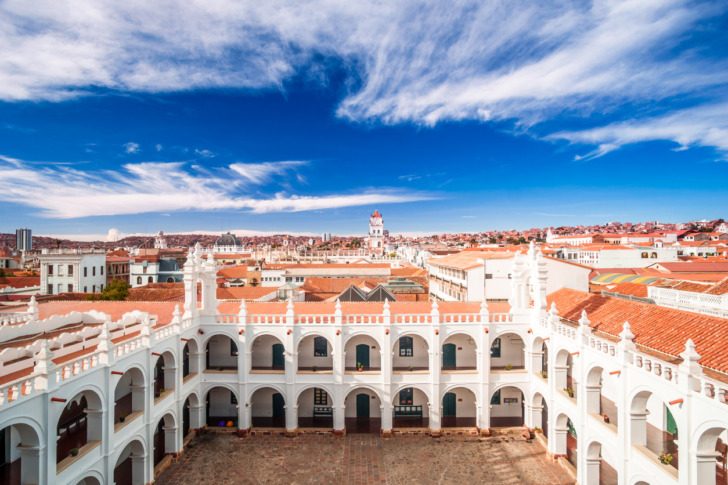
The rooftop and terraces of San Felipe de Neri provide another excellent viewpoint over Sucre’s white historic center.
The site is centrally located and safe during visiting hours.
Staircases and rooftop surfaces require some care, particularly during rain.
Places to Avoid in Sucre
Bus Terminal Surroundings Late at Night
Sucre’s bus terminal is busy and useful, but transportation hubs naturally attract more petty crime, unofficial taxi drivers, and people looking for distracted travelers.
Keep luggage close and arrange onward transportation if arriving late.
Do not wander away from the station with your phone out trying to find your accommodation.
Mercado Campesino After Dark
Mercado Campesino is huge, chaotic, and fascinating during the day.
It is also one of the places where travelers should pay closer attention to phones, wallets, and bags.
There is little reason for a tourist unfamiliar with Sucre to explore the surrounding streets late at night.
Visit during busy daytime hours instead.
Peripheral Hillside Neighborhoods at Night
Sucre does not have a simple list of neighborhoods that tourists must never enter.
However, residential districts far beyond the historic center can become quiet, poorly lit, and difficult for outsiders to navigate.
If your destination lies outside the central areas, use a taxi rather than wandering through unfamiliar hillside streets after dark.
Demonstrations and Roadblocks
Political protests, strikes, and roadblocks occur periodically in Bolivia.
Sucre’s role as the constitutional capital means political gatherings can take place around government institutions and major squares.
Do not walk through barricades or protest lines, even if other pedestrians are doing so.
Leave the area and find an alternative route.
Remote Roads During Heavy Rain
Roads from Sucre toward rural communities and other Bolivian cities can be affected by landslides, mud, flooding, and poor visibility.
Avoid unnecessary nighttime travel and never pressure a driver to continue when conditions are unsafe.
Safety Tips for Traveling to Sucre
- Give yourself time to adjust to the altitude. Sucre is around 2,800 meters above sea level, high enough for some visitors to develop headaches, fatigue, shortness of breath, nausea, or poor sleep. Take the first day slowly, drink plenty of safe water, eat lightly, and avoid immediately combining altitude with alcohol and an ambitious uphill walking tour.
- Use reliable taxis. Ask your hotel or restaurant to arrange taxis whenever possible. If using a vehicle from the street, make sure it appears legitimate before entering. Avoid sharing taxis with strangers unless using a recognized shared-transport system that your accommodation recommends.
- Keep your phone discreet. Phone theft is easier when visitors stand beside a road staring at navigation apps. Check maps inside cafes, hotels, or shops rather than constantly carrying an expensive smartphone in your hand. This becomes especially important around markets, terminals, and crowded streets.
- Avoid political demonstrations. Bolivian protests can block roads and occasionally become confrontational. Sucre’s government buildings make it a natural location for demonstrations. If you encounter chanting crowds, police lines, fireworks, barricades, or rapidly closing businesses, move away and return to your accommodation.
- Drink treated water. Use sealed bottled water, boiled water, or a reliable purifier. Be selective about street juices, ice, raw salads, and pre-cut fruit. Restaurants serving busy tourist areas generally understand foreign visitors’ concerns, but basic hygiene precautions are still worthwhile.
- Be careful crossing streets. Drivers may not give pedestrians the priority you expect. Look carefully before crossing, especially around minibuses, taxis, and motorcycles. Historic streets can be narrow, and vehicles sometimes appear surprisingly quickly around corners.
- Do not underestimate overnight bus travel. Bolivia’s distances are substantial, and overnight buses are common. Road accidents, poor weather, theft, and exhausting travel conditions make these journeys more complicated than they look. Choose reputable companies, keep valuables with you, and avoid the cheapest operator simply because it saves a few dollars.
- Carry cash without carrying everything. Bolivia remains relatively cash-oriented. Carry enough bolivianos for meals, taxis, markets, and small purchases, but keep emergency cash and a backup card elsewhere. Use ATMs attached to established banks and avoid counting large amounts of money on the street.
- Protect yourself from the sun. Sucre’s mild temperatures can disguise powerful high-altitude sunlight. Sunscreen, sunglasses, a hat, and water matter even when the air feels pleasantly cool. Sunburn happens quickly at elevation, particularly during long afternoons walking through the historic center.
- Build flexibility into your itinerary. Roadblocks, strikes, severe weather, landslides, and transportation cancellations can disrupt travel with little warning. Do not plan to arrive in another city only hours before an important international flight. Keeping an extra day available can turn a major transportation headache into a minor inconvenience.
So... How Safe Is Sucre Really?
Sucre is one of the places in Bolivia where many travelers feel comfortable surprisingly quickly.
Its historic center is compact, walkable, visually beautiful, and filled with restaurants, hostels, hotels, museums, language schools, and other visitors.
Serious violent crime against tourists is not an everyday concern.
Petty crime deserves more attention.
Phone theft, pickpocketing, bag theft, and occasional robbery occur in Bolivia, particularly around transport hubs and crowded areas.
Travelers who keep valuables hidden and avoid wandering alone late at night can reduce much of this risk.
Political unrest is another factor that does not fit neatly into ordinary crime statistics.
Demonstrations and roadblocks can disrupt buses, airports, roads, and entire travel itineraries.
Sucre may be calm while a road elsewhere in the country becomes impassable.
Health and geography also matter.
At roughly 2,800 meters, Sucre is high enough to affect newly arrived visitors.
Tap water should be treated cautiously, and medical facilities may not match standards available in wealthier countries.
Earthquakes, heavy rain, and landslides add occasional environmental risk.
My assessment is that Sucre is medium risk overall but one of Bolivia’s easier cities for independent travelers.
Families, couples, backpackers, solo travelers, and women traveling alone can visit successfully.
Stay centrally, use reliable taxis, watch valuables, respect the altitude, and never build a rigid itinerary around Bolivian transportation.
How Does Sucre Compare?
| City | Safety Index |
|---|---|
 Sucre Sucre |
74 |
| Copacabana |
68 |
| La Paz |
55 |
| Tarija |
73 |
| Uyuni |
72 |
| Potosi |
69 |
 Orlando Orlando | 64 |
| Keokuk | 52 |
| Lambertville | 74 |
| Virginia City | 79 |
 Leuven Leuven | 87 |
| Kennewick | 40 |
Useful Information

Visas
Bolivian visa requirements depend on nationality. Citizens of many countries can enter visa-free for tourism, while others must obtain a tourist visa before arrival or through an eligible entry process. Tourist stays are commonly limited to a maximum period established by immigration authorities. Travelers should have a passport valid for at least six months and proof of onward travel.

Currency
Sucre uses the Bolivian boliviano. Cash is still important for markets, taxis, smaller restaurants, buses, and rural excursions. Cards are increasingly accepted at hotels and established businesses. Withdraw money from bank ATMs, carry smaller notes, and avoid unofficial street currency exchanges.

Weather
Sucre has a mild highland climate. Days are often pleasantly warm while evenings become much cooler. The wetter season generally falls between roughly November and March, while the middle of the year is drier and cooler at night. Pack layers, sunscreen, comfortable walking shoes, and rain protection during wetter months.

Airports
Alcantarí International Airport is the main airport serving Sucre and replaced the old city airport in 2016. It sits outside the city, so travelers generally need a taxi, shuttle, or private transfer. The road trip to central Sucre normally takes around 40 to 60 minutes depending on traffic and conditions.

Travel Insurance
Travel insurance is strongly recommended for Sucre and wider Bolivia. Choose coverage for medical treatment, emergency evacuation, altitude-related illness, theft, cancellations, demonstrations, road disruption, and lost luggage. If your itinerary includes trekking, mountain biking, or high-altitude travel elsewhere in Bolivia, confirm those activities are specifically covered.
Sucre Weather Averages (Temperatures)
Average High/Low Temperature
| Temperature / Month | Jan | Feb | Mar | Apr | May | Jun | Jul | Aug | Sep | Oct | Nov | Dec |
|---|---|---|---|---|---|---|---|---|---|---|---|---|
| High °C |
20 | 19 | 20 | 20 | 21 | 19 | 21 | 20 | 21 | 21 | 21 | 21 |
| Low °C |
10 | 9 | 9 | 8 | 7 | 5 | 4 | 6 | 6 | 8 | 9 | 9 |
| High °F |
68 | 66 | 68 | 68 | 70 | 66 | 70 | 68 | 70 | 70 | 70 | 70 |
| Low °F |
50 | 48 | 48 | 46 | 45 | 41 | 39 | 43 | 43 | 46 | 48 | 48 |
Bolivia - Safety by City
| City | Safety Index |
|---|---|
| Copacabana | 68 |
| La Paz | 55 |
| Potosi | 69 |
| Sucre | 74 |
| Tarija | 73 |
| Uyuni | 72 |