 Bangladesh : Safety by City
Bangladesh - safety as a country
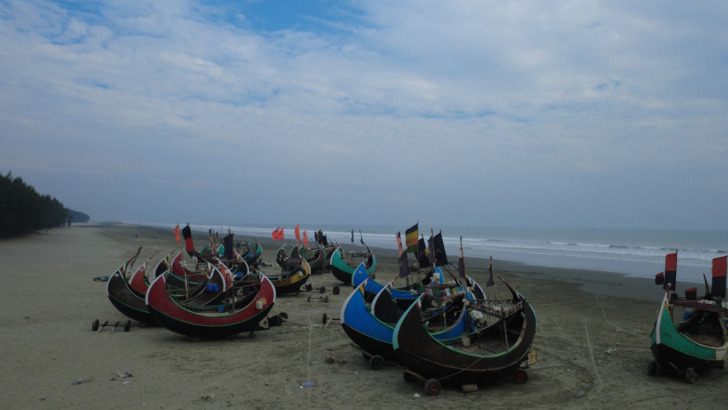
Cox’s Bazar is Bangladesh’s great seaside escape, stretching along the Bay of Bengal in the country’s far southeast.
Its enormous sandy coastline runs for more than 100 kilometers, backed by fishing communities, green hills, hotels, markets, and roads leading south toward Teknaf and the Myanmar border.
For Bangladeshis, Cox’s Bazar is the country’s signature beach destination, becoming especially busy during winter holidays and festivals.
International travelers will find a very different beach experience from Thailand or Sri Lanka: more conservative, less polished, extremely crowded at times, and unmistakably Bangladeshi.
The main tourist zone can be visited safely with preparation, but the wider district presents serious concerns involving monsoon flooding, dangerous sea conditions, political unrest, disease, traffic, and insecurity around the Rohingya refugee camps farther south.
Warnings & Dangers in Cox’s Bazar

OVERALL RISK: MEDIUM
Cox’s Bazar has a medium overall risk. The main hotel and beach districts receive large numbers of domestic tourists and are generally manageable during daylight. However, Bangladesh faces risks from political unrest, terrorism, crime, dangerous traffic, and natural disasters. Areas around Ukhia, Teknaf, refugee camps, and the Myanmar border require substantially more caution.

TRANSPORT & TAXIS RISK: MEDIUM
Road safety is one of the biggest practical concerns. Buses, auto-rickshaws, motorcycles, taxis, and pedestrians often share congested roads with inconsistent traffic discipline. Avoid overnight buses when possible, use transportation arranged by established hotels, and always wear a seatbelt when available. Long road journeys become particularly hazardous during heavy monsoon rain.

PICKPOCKETS RISK: MEDIUM
Pickpocketing and phone theft can occur around Laboni Beach, markets, bus terminals, crowded restaurants, festivals, and beachfront gatherings. The risk increases dramatically during national holidays when huge numbers of visitors arrive. Keep phones secured, use zipped bags, avoid carrying your passport unnecessarily, and never leave valuables unattended while swimming.

NATURAL DISASTERS RISK: HIGH
Cox’s Bazar is exposed to cyclones, storm surges, monsoon flooding, landslides, lightning, and dangerous coastal conditions. Heavy rain can flood roads and destabilize hillsides with little warning. The cyclone season and monsoon require extra preparation. Travelers should follow weather warnings closely and never remain on the beach when evacuation instructions are issued.

MUGGING RISK: MEDIUM
Robbery and violent crime are possible, especially on deserted roads, isolated beach sections, poorly lit streets, and transport routes at night. Most tourists will not experience serious crime, but walking alone after dark is unnecessary. Carry limited cash, keep electronics discreet, and arrange transportation between your hotel and evening destinations.

TERRORISM RISK: MEDIUM
Bangladesh continues to face a terrorism threat, including the possibility of attacks around crowded places, religious sites, transportation, restaurants, and public gatherings. Cox’s Bazar is not normally the country's primary target, but travelers should maintain awareness. Avoid political rallies, demonstrations, large security operations, and gatherings that appear tense or poorly controlled.

SCAMS RISK: MEDIUM
Travelers may encounter inflated taxi fares, unclear beach-chair prices, unofficial guides, fake tour offers, poor currency-exchange deals, or unexpectedly high restaurant charges. Confirm prices beforehand, particularly for transportation and excursions. Avoid paying large deposits to strangers, and arrange longer trips through established hotels or reputable local operators.

WOMEN TRAVELERS RISK: HIGH
Women, particularly those traveling alone, should exercise increased caution. Harassment, staring, unwanted photography, and inappropriate physical attention can occur, especially in crowded public areas. Cox’s Bazar is socially conservative, so modest clothing is strongly recommended on public beaches. Solo women should avoid isolated areas and use trusted transportation after dark.

TAP WATER RISK: HIGH
Do not drink untreated tap water in Cox’s Bazar. Use sealed bottled water or properly filtered and purified water, including for medication. Travelers with sensitive stomachs may also prefer bottled water when brushing their teeth. Avoid questionable ice, unpeeled fruit, and raw foods washed with untreated water.
Safest Places to Visit in Cox’s Bazar
Kolatoli Beach Area
Kolatoli is one of the busiest tourist districts and a practical choice for first-time visitors.
Hotels, restaurants, shops, transportation, and other tourists are concentrated nearby, making the area easier to navigate than quieter sections of the coast.
The beach becomes extremely crowded during holidays, so watch your valuables carefully.
Swimming should only be attempted when local flags and beach personnel indicate conditions are suitable.
Laboni Beach During Daylight
Laboni Beach is one of the best-known central sections of the Cox’s Bazar coastline.
Its location near markets, hotels, and restaurants means there are usually plenty of people around.
Visit during daylight or early evening rather than remaining on the sand late at night.
Crowds create a pickpocketing risk, and swimming conditions can change quickly with tides and weather.
Sugandha Beach
Sugandha Beach is another popular central beach area with restaurants, shops, and accommodation nearby.
It is generally comfortable during busy hours and gives visitors easy access to transportation.
Families should supervise children carefully, especially near the water.
The Bay of Bengal can produce strong waves and currents, and lifeguard coverage should never be assumed.
Marine Drive in Daylight
Marine Drive runs south from Cox’s Bazar through coastal scenery, fishing villages, hills, and beach areas.
It can be an enjoyable daytime excursion with an experienced local driver.
Do not continue south casually toward sensitive areas without checking current conditions.
The farther you travel toward Ukhia and Teknaf, the more complicated the security situation becomes.
Places to Avoid in Cox’s Bazar
Rohingya Refugee Camps
The refugee camps around Ukhia and Teknaf are not tourist attractions.
Security problems have included armed groups, kidnappings, killings, protests, and clashes.
Humanitarian conditions are also extremely difficult.
Foreign visitors should not attempt to enter camps independently or photograph residents from outside.
Anyone traveling there for legitimate humanitarian work should coordinate through recognized organizations and follow official procedures.
Teknaf Without a Specific Reason
Teknaf lies near the southern end of Cox’s Bazar District close to Myanmar.
The area has experienced drug-related gang violence, shootings, kidnappings, and instability connected with the nearby border.
Ordinary tourists have little reason to visit independently.
If your itinerary requires Teknaf, arrange transportation and current local guidance in advance and avoid nighttime movement.
Bangladesh-Myanmar Border
Do not approach the Myanmar border for sightseeing, photography, or curiosity.
Fighting across the frontier and instability inside Myanmar can affect nearby Bangladeshi areas with little warning.
Avoid border posts, military activity, security facilities, and remote roads leading toward the frontier.
Never attempt an unofficial crossing or photograph soldiers and checkpoints.
Isolated Beaches After Dark
Cox’s Bazar’s coastline is enormous, and some sections become virtually empty once local visitors leave.
Deserted beaches should be avoided at night, especially by solo travelers.
Besides crime, risks include dangerous waves, hidden channels, poor lighting, stray animals, and difficulty obtaining help.
Stay close to busy hotels and established beachfront areas.
Hillsides During Heavy Rain
The hills around Cox’s Bazar and the refugee-camp region become dangerous during intense monsoon rain.
Landslides can occur suddenly, especially where slopes have been cleared or heavily developed.
Do not hike beneath unstable slopes during storms, enter flooded low-lying areas, or remain in buildings where local authorities have ordered evacuation.
Safety Tips for Traveling to Cox’s Bazar
- Take beach warning flags seriously. The Bay of Bengal can be rough, especially during monsoon weather. Follow every beach flag, lifeguard instruction, and swimming restriction. Red warnings mean stay out of the water. Do not assume that being a strong swimmer makes currents harmless. If conditions look rough, enjoy the beach from the sand.
- Do not travel toward the Myanmar border casually. Cox’s Bazar city and the southern district should be treated differently. Ukhia, Teknaf, refugee-camp zones, and the Myanmar frontier have more serious security concerns. Before any journey south, ask your hotel or a reliable local contact about current conditions and whether permission is required.
- Avoid political demonstrations completely. Bangladesh has experienced periods of serious political unrest, and demonstrations can change from peaceful to violent quickly. Do not stop to photograph a rally or watch clashes from the edge of a crowd. If shops begin closing or security forces appear, leave the area and return to your hotel.
- Use trusted transportation after dark. Avoid walking long distances along empty beach roads or taking random rides at night. Ask your accommodation to arrange a car or use a recognized transportation service. If traveling by auto-rickshaw, agree on the price first and keep valuables secured rather than holding your phone openly.
- Dress with local culture in mind. Cox’s Bazar is a beach destination, but it is still part of a conservative Muslim-majority country. Public beachwear is generally much more modest than in European or Caribbean resorts. Lightweight shirts, longer shorts, trousers, or modest swim clothing reduce unwanted attention and make interactions easier, especially for women.
- Protect yourself from mosquitoes. Cox’s Bazar District has malaria risk, while dengue is another mosquito-borne concern in Bangladesh. Use insect repellent, wear long sleeves and trousers during mosquito-heavy periods, and choose accommodation with screens or air conditioning. Discuss malaria prevention with a medical professional before traveling, particularly if you will leave the main resort zone.
- Drink only safe water. Use factory-sealed bottled water or water you know has been properly filtered and disinfected. Be cautious with ice, street drinks, uncooked salads, and food that has been sitting in the heat. Diarrheal disease can become especially unpleasant when combined with tropical heat and limited medical facilities.
- Carry fewer valuables to the beach. Leave your passport, extra cards, expensive jewelry, and most cash secured at your hotel. Take only what you actually need. If traveling alone, use a waterproof pouch for your phone and room key rather than leaving everything inside a bag on the sand while swimming.
- Prepare seriously for the monsoon. Heavy rain is not just an inconvenience in Cox’s Bazar. It can produce flooding, landslides, road closures, strong waves, and transportation disruption. Avoid traveling through floodwater, even in a large vehicle. Keep essential medication, cash, identification, chargers, and drinking water available during prolonged storms.
- Get insurance that matches the itinerary. A basic beach-holiday policy may not cover every situation in southeastern Bangladesh. Look for medical care, evacuation, tropical storms, flooding, canceled transportation, theft, and political disruption. If visiting areas subject to official travel warnings, confirm explicitly that your insurance remains valid there.
So... How Safe Is Cox’s Bazar Really?
Cox’s Bazar is not a destination I would describe as carefree, but neither is the main tourist zone an automatic no-go area.
The central hotel and beach districts receive huge numbers of domestic visitors, and normal tourism continues throughout much of the year.
Travelers who stay in established accommodation, use reliable transportation, and remain around busy central areas can significantly reduce their exposure to crime.
The wider security picture is more complicated.
Bangladesh continues to face risks involving political demonstrations, terrorism, kidnapping, and violent crime.
In Cox’s Bazar District specifically, Ukhia and Teknaf require greater caution because of refugee-camp insecurity, organized criminal activity, kidnappings, drug trafficking, and instability close to Myanmar.
Natural hazards may actually be the most immediate threat for many tourists.
Cox’s Bazar regularly experiences heavy monsoon rain, and severe flooding and landslides affected the region again in 2026.
Cyclones and storm surges can also threaten the coastline, while rough seas and dangerous currents create drowning risks.
Health preparation matters too.
Malaria transmission occurs in Cox’s Bazar District, dengue is present in Bangladesh, and travelers should be cautious with untreated water and food hygiene.
I assess that Cox’s Bazar has a medium overall tourist risk, but certain parts of the district reach high-risk territory.
Stay in the main resort zone, avoid the Myanmar border and refugee camps, respect beach warnings, and monitor local conditions.
With careful planning, the city itself can still be visited safely.
How Does Cox’s Bazar Compare?
| City | Safety Index |
|---|---|
| Cox’s Bazar |
55 |
| Sylhet |
64 |
| Dhaka |
32 |
| Chattogram |
61 |
| Srimangal |
68 |
| Rajshahi |
68 |
| Khulna |
66 |
 Boulder City Boulder City | 74 |
| Yonkers | 59 |
 Isla Holbox Isla Holbox | 85 |
 Meknes Meknes | 72 |
 Positano Positano | 83 |
 Kavala Kavala | 75 |
Useful Information

Visas
Bangladesh visa requirements depend on nationality. Eligible tourists may receive a visa on arrival for a maximum stay of 30 days. The fee is typically US$50, with payment collected on arrival. Travelers may need a return ticket, accommodation details, and proof of at least US$500 in available funds. Confirm eligibility before flying.

Currency
Cox’s Bazar uses the Bangladeshi taka. Cash remains important for restaurants, auto-rickshaws, markets, beach services, and smaller hotels. Cards are accepted at many larger resorts and businesses. Use bank ATMs or official exchange services and carry smaller notes, since drivers and small vendors may struggle to provide change.

Weather
Cox’s Bazar has a tropical climate with warm temperatures throughout the year. November through February generally provides the most comfortable beach weather. The monsoon from roughly June through September brings heavy rain, humidity, flooding, rough seas, and landslide risk. Pack breathable clothing, modest beachwear, sunscreen, insect repellent, and waterproof protection.

Airports
Cox’s Bazar Airport is only a few kilometers from the main hotel and beach districts. Domestic flights provide the easiest connection with Dhaka, usually taking around one hour. Most international visitors first arrive at Hazrat Shahjalal International Airport in Dhaka and then continue to Cox’s Bazar by domestic flight.

Travel Insurance
Travel insurance is strongly recommended. Choose coverage for medical treatment, emergency evacuation, malaria or other illness, theft, flooding, cyclones, canceled flights, and political disruption. Check exclusions carefully before traveling toward Teknaf, Ukhia, refugee camps, border areas, or any location covered by stronger government travel warnings.
Cox’s Bazar Weather Averages (Temperatures)
Average High/Low Temperature
| Temperature / Month | Jan | Feb | Mar | Apr | May | Jun | Jul | Aug | Sep | Oct | Nov | Dec |
|---|---|---|---|---|---|---|---|---|---|---|---|---|
| High °C |
25 | 28 | 30 | 32 | 32 | 31 | 30 | 30 | 30 | 30 | 29 | 26 |
| Low °C |
18 | 19 | 22 | 26 | 27 | 27 | 26 | 26 | 26 | 25 | 22 | 19 |
| High °F |
77 | 82 | 86 | 90 | 90 | 88 | 86 | 86 | 86 | 86 | 84 | 79 |
| Low °F |
64 | 66 | 72 | 79 | 81 | 81 | 79 | 79 | 79 | 77 | 72 | 66 |
Bangladesh - Safety by City
| City | Safety Index |
|---|---|
| Chattogram | 61 |
| Cox’s Bazar | 55 |
| Dhaka | 32 |
| Khulna | 66 |
| Rajshahi | 68 |
| Srimangal | 68 |
| Sylhet | 64 |