


 Spain : Safety by City
- Alicante
- Barcelona
- Bilbao
- Cadiz
- Canary Islands
- Granada
- Ibiza
- Lanzarote
- Las Palmas
- Madrid
- Malaga
- Murcia
- Palma de Mallorca
- Pamplona
- Salamanca
- San Sebastian
- Seville
- Tenerife
- Valencia
- Zaragoza
Salamanca is one of those places that wins people over fast.
Sitting in western Spain, not far from the Portuguese border, this elegant university city feels both grand and approachable.
It is famous for its honey-colored sandstone buildings, lively student culture, and a historic center so striking that even an ordinary evening walk can feel cinematic.
I think that is part of what makes Salamanca appealing to travelers who want beauty without the nonstop intensity of Spain’s biggest tourist hubs.
You get monumental architecture, packed terraces, old churches, and a buzzing Plaza Mayor, but you also get a city that is manageable on foot and generally calmer than Madrid or Barcelona.
For most visitors, Salamanca feels safe, welcoming, and easy to enjoy, especially if you use the same common sense you would in any popular European destination.
Warnings & Dangers in Salamanca

OVERALL RISK: LOW
Salamanca is generally a low-risk destination for travelers. Violent crime is not a major concern for most tourists, and the city center is active, walkable, and well used by residents, students, and visitors. The main issues tend to be petty theft, late-night carelessness, and tourist mistakes like leaving bags unattended in cafés, buses, or public squares.

TRANSPORT & TAXIS RISK: LOW
Getting around Salamanca is usually straightforward and low stress. Public transport is limited compared with huge cities because much of the historic center is best explored on foot. Taxis are generally reliable, but travelers should still use licensed cabs or trusted ride arrangements, especially when arriving late or heading out early in the morning.

PICKPOCKETS RISK: MEDIUM
This is one area where travelers should stay alert. Salamanca is not a pickpocketing capital, but busy public spaces, bus and train stations, nightlife areas, and crowded festival periods can create easy opportunities for thieves. I would not call it extreme, but it is common enough that phones, wallets, and backpacks deserve more attention than many relaxed visitors give them.

NATURAL DISASTERS RISK: LOW
Salamanca does not face frequent high-impact natural disasters. You are not dealing with the same earthquake, hurricane, or major flood risks seen in some other destinations. The more realistic concerns are summer heat, occasional storms, and slippery conditions in winter. Weather can still affect comfort and mobility, but not usually in a dramatic way.

MUGGING RISK: LOW
Muggings and violent street attacks are not the defining safety issue in Salamanca. Most visitors will never come close to this kind of incident. Still, low risk does not mean zero risk. Quiet streets very late at night, heavy drinking, and flashing valuables can raise your exposure, especially after the bars empty and foot traffic thins out.

TERRORISM RISK: MEDIUM
Salamanca itself is not usually singled out as a major high-threat tourist city, but Spain as a whole remains under a general terrorism warning framework, as many European countries do. For travelers, that means basic vigilance in crowded areas, transport hubs, festivals, and public events. The day-to-day risk feels low, but official caution still matters.

SCAMS RISK: LOW
Scams in Salamanca are usually minor rather than elaborate. The classic traveler problems are distraction thefts, overpaying in nightlife settings, or being targeted by people asking for money or signatures in busy pedestrian areas. It is not a city where scam culture dominates the travel experience, but tourists who look distracted can still be easy targets.

WOMEN TRAVELERS RISK: LOW
Salamanca is generally comfortable for women travelers, including solo visitors. The central areas are lively, the city has a large student population, and the atmosphere is usually social rather than intimidating. The biggest concerns are the same ones women face in many destinations: unwanted attention late at night, intoxicated crowds, and isolated streets after bars close.

TAP WATER RISK: LOW
Tap water in Salamanca is considered safe to drink. Most travelers can use it without worrying about health issues, though some may prefer bottled water if they are sensitive to taste changes or just adjusting after arrival. Bringing a reusable bottle is a smart move, especially in warmer months when dehydration sneaks up quickly during sightseeing.
Safest Places to Visit in Salamanca
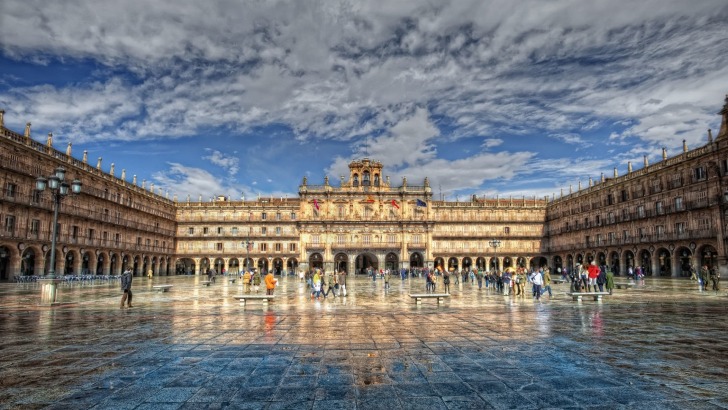
Plaza Mayor and the Historic Core
If you want the classic Salamanca experience with the least friction, start in and around Plaza Mayor.
This part of the city is heavily visited, visually stunning, and almost always full of people.
That constant foot traffic helps.
From there, walking through the old town toward the cathedral complex and university buildings feels easy and secure during the day and early evening.
I like this area for first-time visitors because it lets you settle into the city without ever feeling far from restaurants, shops, or help.
University District
Salamanca is one of Spain’s great university cities, and that youthful energy shapes the atmosphere.
Around the University of Salamanca and nearby academic streets, you will find a lively but generally comfortable environment.
It is a good place for travelers who enjoy architecture, bookstores, cafés, and a social setting that feels active without being chaotic.
During term time, the area stays animated well into the evening.
Cathedral Area and Scenic Walks
The New Cathedral, Old Cathedral, and surrounding viewpoints are among the best places to spend time if you want beautiful scenery with a relaxed pace.
These areas attract a steady flow of tourists and locals, which usually adds to the feeling of safety.
Nearby walking routes toward the Roman Bridge can also be pleasant, particularly in daylight and around sunset, when the city looks its best.
Calle Zamora and Central Shopping Streets
For travelers who like browsing, eating, and people-watching, the central pedestrian streets near the main square are ideal.
Calle Zamora and the nearby commercial lanes are usually busy enough to feel comfortable, especially during shopping hours and the early evening rush.
The key advantage here is visibility.
You are rarely isolated, and there is always some movement around you.
Places to Avoid in Salamanca
Bus and Train Station Areas Late at Night
The transport zones in Salamanca are not famously dangerous, but they are among the places where travelers are more likely to feel exposed, especially after dark or when carrying luggage.
Stations attract distracted people, and distracted people attract thieves.
I would not avoid them altogether, but I would avoid lingering there unnecessarily at night, especially if you look lost or overloaded with bags.
Nightlife Streets in the Early Morning
Salamanca has a strong student nightlife scene, which is fun until it becomes messy.
Streets around bars and club zones can feel very different at 2:30 a.m. than they do at 7:00 p.m.
The risk is less about organized crime and more about drunken behavior, arguments, petty theft, and poor choices.
If you go out late, keep your phone secure, stay aware of who is around you, and do not wander alone after the crowd thins.
Quiet Outskirts and Poorly Lit Areas
Most travelers spend their time in the central districts, and that is part of why Salamanca feels easy.
The further you drift from the active center into quiet residential edges or poorly lit peripheral streets, the less comfortable things can feel, especially at night.
These are not must-see tourist zones anyway, so there is little reason to roam them without purpose.
Riverbank and Isolated Park Areas After Dark
Walks by the river can be lovely in daylight, but isolated open spaces become less appealing once it is late and foot traffic disappears.
The issue is not that these spots are notorious danger zones.
It is that darkness, low visibility, and limited witnesses make any isolated area less smart for solo travelers.
During the day, fine.
Deep at night, I would skip it.
Safety Tips for Traveling to Salamanca
- Keep your valuables zipped and close to your body. Salamanca is far more likely to test your attention span than your physical safety. A crossbody bag, zipped backpack, or money belt for passport storage is a simple way to shut down the most common tourist problem before it starts.
- Stay extra alert in crowded plazas and transport areas. Plaza Mayor, station zones, and busy festival periods are where distractions happen. If someone bumps you, starts a confusing conversation, or tries to pull your attention away from your bag, check your belongings immediately.
- Use licensed taxis and confirmed transport only. Salamanca is easy to navigate, but late arrivals can make people rush into sloppy choices. Use marked taxis, official taxi ranks, or reputable booking methods. Never hop into an unmarked vehicle because someone claims it is cheaper or faster.
- Do not flash cash, jewelry, or expensive tech. This city is relaxed, but that should not turn into carelessness. Holding your phone loosely while walking, leaving it on a café table, or counting money in public is just advertising that you are an easy target.
- Be smart with nightlife. Salamanca’s student energy makes nights out fun, but alcohol lowers awareness fast. Watch your drink, stick with people you trust, and know how you are getting back before the night gets sloppy. The walk home is when many travelers make their worst decisions.
- Choose central accommodation if safety is your priority. Staying near the old town, Plaza Mayor, or other central well-trafficked areas makes everything easier. You will have better lighting, more people around, shorter walks, and less temptation to cross quiet streets late at night.
- Carry a backup card and a small amount of cash separately. If your wallet disappears, you do not want your trip to stop with it. I always think this is one of the smartest low-effort travel habits. Keep one payment method in your main wallet and another hidden in your luggage or day bag.
- Respect heat and weather changes. Salamanca can get quite hot in summer and surprisingly cold in winter, especially in the mornings and evenings. Drink water, wear layers, and do not underestimate how tiring a full day of walking can be when the sun is strong.
- Keep your phone charged and your route simple at night. Wandering is part of the fun in a city like Salamanca, but freestyle exploration works best in daylight. At night, know where you are going. A charged phone, offline map, and direct route back to your hotel make a real difference.
- Trust the city, but do not switch off your instincts. Salamanca often feels so pleasant that travelers relax too much. That is the hidden danger of safe-feeling cities. Stay confident, but if a street feels too empty, a person feels too pushy, or a situation feels off, change course immediately.
So... How Safe Is Salamanca Really?
Salamanca is, in my view, one of the more comfortable city breaks in Spain for travelers who want history, beauty, and an easier rhythm.
It does not have the same scale of tourist pressure, crowding, or opportunistic crime concerns that define some of Spain’s biggest destinations.
That already works in its favor.
The city’s strong student identity also keeps central areas lively, which usually helps visitors feel less isolated.
That said, safe does not mean effortless.
The biggest mistakes travelers make here are the usual ones: getting too relaxed with valuables, underestimating nightlife risks, and assuming a charming old city is automatically risk free.
Petty theft still happens.
Bags still get snatched when people are distracted.
Late-night drinking still leads to bad judgment.
Those are the real issues, not a constant fear of violent crime.
What I like about Salamanca is that the risk profile is predictable.
You do not need special street survival instincts to enjoy it.
You just need standard urban awareness.
Stay in central areas, protect your stuff, be a little more careful after dark, and Salamanca is likely to feel not just manageable, but genuinely enjoyable.
For most travelers, I would classify it as a low-risk destination with a medium need for basic anti-theft awareness.
How Does Salamanca Compare?
| City | Safety Index |
|---|---|
| Salamanca |
59 |
| Murcia |
83 |
| Barcelona |
65 |
| Valencia |
72 |
| San Sebastian |
56 |
| Las Palmas |
74 |
| Cadiz |
74 |
 The Hague The Hague | 90 |
 Sochi Sochi | 66 |
 Panama City Beach Panama City Beach | 77 |
| Miami | 55 |
 Gomel Gomel | 45 |
 Palermo Palermo | 55 |
Useful Information

Visas
Spain is part of the Schengen Area. Many tourists, including travelers from the United States, can visit for up to 90 days within a 180-day period without a visa for tourism. Travelers from countries that do require a visa usually need a short-stay Schengen visa. Fees and procedures vary by nationality and application center, so check the current rules before booking.

Currency
Salamanca uses the euro. Cards are widely accepted, but it is smart to carry a small amount of cash for cafés, taxis, or minor purchases. I would avoid airport exchange counters if possible, since rates are usually weaker. Using a bank ATM or a travel-friendly debit card is often the simplest and most cost-effective option.

Weather
Salamanca has hot, dry stretches in summer and cold mornings and evenings in winter. Spring and fall are often the most comfortable for walking. Pack light breathable clothes for warm months, but add layers for nighttime. In colder seasons, a proper coat, scarf, and comfortable closed shoes make sightseeing much easier.

Airports
Salamanca’s main gateway for most international travelers is Madrid-Barajas Airport, not a major local airport. From Madrid, you can reach Salamanca by direct bus, train connection, or private transfer. The city is roughly a couple of hours away, depending on the route and transport choice, so plan arrival times with that extra leg in mind.

Travel Insurance
I strongly recommend travel insurance for Salamanca, even though it is a relatively low-risk destination. Insurance helps with medical treatment, trip interruptions, lost luggage, theft, and other expensive surprises. If you need a Schengen visa, travel insurance may also be required as part of the application, so it is worth arranging early.
Salamanca Weather Averages (Temperatures)
Average High/Low Temperature
| Temperature / Month | Jan | Feb | Mar | Apr | May | Jun | Jul | Aug | Sep | Oct | Nov | Dec |
|---|---|---|---|---|---|---|---|---|---|---|---|---|
| High °C |
9 | 10 | 15 | 17 | 21 | 27 | 31 | 31 | 27 | 20 | 14 | 10 |
| Low °C |
0 | 1 | 3 | 5 | 8 | 12 | 14 | 14 | 11 | 8 | 4 | 1 |
| High °F |
48 | 50 | 59 | 63 | 70 | 81 | 88 | 88 | 81 | 68 | 57 | 50 |
| Low °F |
32 | 34 | 37 | 41 | 46 | 54 | 57 | 57 | 52 | 46 | 39 | 34 |
Spain - Safety by City
| City | Safety Index |
|---|---|
| Alicante | 77 |
| Barcelona | 65 |
| Bilbao | 52 |
| Cadiz | 74 |
| Canary Islands | 81 |
| Granada | 72 |
| Ibiza | 82 |
| Lanzarote | 84 |
| Las Palmas | 74 |
| Madrid | 70 |
| Malaga | 78 |
| Murcia | 83 |
| Palma de Mallorca | 57 |
| Pamplona | 81 |
| Salamanca | 59 |
| San Sebastian | 56 |
| Seville | 75 |
| Tenerife | 82 |
| Valencia | 72 |
| Zaragoza | 79 |











Hi,
I’m Jen from Design Geeks. The company is located in the Philippines and has been running for a few years now. We have existing clients from the USA, UK and Australia in different industries.
I provide prospecting (call agents), virtual assistance, customized and personalized marketing plan.
Since we are based in the Philippines, I am offering cost-efficient services. Are you looking for help?
Salamanca is one of the safest cities in Spain and Europe. It is a small city where you can literally leave your bike in the middle of the street and no one is going to steal it.
I have lived in many places and Salamanca is the safest.
Salamanca is really safe!!
Hahaha, no way!! I’ve lived in Salamanca for 35 years and never had a problem!! No pickpockets and no terrorism at all. Is Barcelona or even Buenos Aires safer than Salamanca? This seems like a joke.
The energy in Salamanca is something else, but it can be a bit overwhelming with all the nightlife; it’s easy to forget about the rich history when the bars are packed every night.
The bars really are full every night and it gets tiring when the streets in the center never quiet down.
Did you find the buzz at Plaza Mayor just as lively when the sun went down or did it mellow out a bit?
Did you find that the student vibe in Salamanca changes much between weekdays and weekends, especially around the Plaza Mayor at night?