


 Spain : Safety by City
- Alicante
- Barcelona
- Bilbao
- Cadiz
- Canary Islands
- Granada
- Ibiza
- Lanzarote
- Las Palmas
- Madrid
- Malaga
- Murcia
- Palma de Mallorca
- Pamplona
- Salamanca
- San Sebastian
- Seville
- Tenerife
- Valencia
- Zaragoza
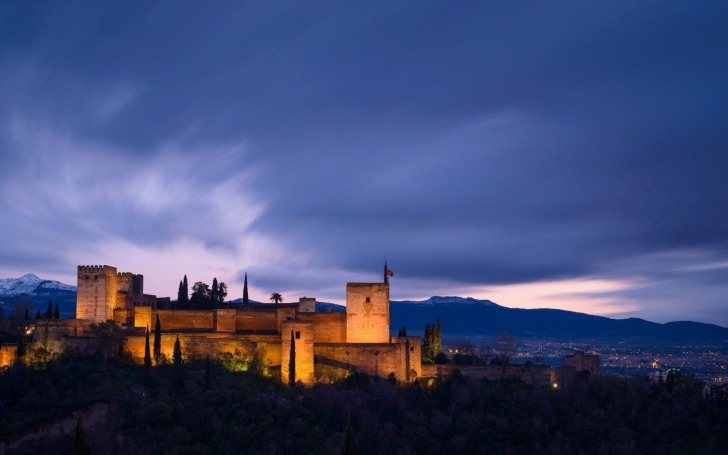
Tucked into the foothills of the Sierra Nevada mountains in southern Spain, Granada is one of those cities that feels almost unreal the first time you see it.
With the snow capped peaks in the background and the honey colored walls of the Alhambra glowing at sunset, it is easy to understand why travelers fall in love with this Andalusian gem.
Granada is compact, walkable, and layered with history from Roman, Moorish, and Catholic eras.
It is also a lively university city, which gives it youthful energy year round.
But beyond the beauty and culture, one question always comes up: how safe is Granada for travel?
After researching crime data, speaking with locals, and visiting myself, here is the full picture.
Warnings & Dangers in Granada

OVERALL RISK: LOW
Granada is considered a low risk destination for travelers. Violent crime rates are relatively low compared to many major European cities, and most incidents affecting tourists involve minor theft rather than serious harm. The city center is well policed, especially around major attractions, and locals are generally welcoming and helpful.

TRANSPORT & TAXIS RISK: LOW
Public transportation in Granada is reliable and safe. Buses and the metro line operate efficiently, and licensed taxis are regulated. As with most cities, minor issues can arise late at night, but serious safety concerns are rare. Always use official taxis or ride apps rather than accepting rides from strangers.

PICKPOCKETS RISK: MEDIUM
Pickpocketing is the most common issue facing tourists. Busy areas such as the Albaicín district, around the Alhambra entrance, and crowded buses are prime targets. It is not rampant, but it does happen often enough to warrant caution. Keep valuables secure and avoid displaying phones or wallets openly in crowded spots.

NATURAL DISASTERS RISK: LOW
Granada sits in a region that experiences occasional small earthquakes due to tectonic activity in southern Spain. However, most are minor and cause little to no damage. Severe weather is uncommon, though summer heat waves can be intense. Overall, natural disaster risk remains low for travelers.

MUGGING RISK: LOW
Muggings and violent robberies are uncommon in Granada. While isolated incidents can occur, particularly late at night in poorly lit areas, the city does not have a widespread violent crime problem targeting tourists. Staying aware of your surroundings significantly reduces any risk.

TERRORISM RISK: LOW
Spain has experienced isolated terrorism incidents in the past, but Granada itself is not considered a high risk target. Security presence around major attractions is visible but not intrusive. The overall terrorism threat level for tourists in Granada remains low.

SCAMS RISK: MEDIUM
Petition scams and distraction techniques occasionally occur in tourist heavy areas. Someone may approach you asking for donations or signatures while an accomplice attempts to access your bag. These scams are opportunistic rather than aggressive. A polite but firm refusal and walking away is usually enough.

WOMEN TRAVELERS RISK: LOW
Granada is generally safe for solo female travelers. Street harassment is minimal compared to many global destinations, and walking alone in central areas during the evening is typically comfortable. As anywhere, exercising basic precautions at night is recommended, especially in quieter neighborhoods.

TAP WATER RISK: LOW
Tap water in Granada is safe to drink and meets European Union quality standards. In fact, many locals praise the taste due to fresh water flowing from the Sierra Nevada mountains. Bottled water is widely available, but not necessary for safety reasons.
Safest Places to Visit in Granada
Some of the safest and most rewarding places to explore in Granada are also its most iconic.
The Alhambra is not only the city’s crown jewel but also one of its safest environments.
With controlled entry, security staff, and steady tourist traffic, visitors feel comfortable wandering through its palaces and gardens.
The historic Albaicín district, despite narrow winding streets, is generally safe during the day and early evening.
Its viewpoints, especially Mirador de San Nicolás, are lively with musicians and travelers enjoying panoramic views.
The city center around Granada Cathedral and Plaza Nueva is well lit and active late into the evening.
Restaurants, tapas bars, and shops create a constant flow of people, which naturally deters serious crime.
Realejo, the former Jewish quarter, is another pleasant and safe neighborhood.
It blends residential calm with vibrant street art and cozy cafés.
Families and students frequent this area, contributing to a relaxed atmosphere.
In short, the main tourist zones are not only culturally rich but also benefit from steady police presence and community activity.
Places to Avoid in Granada
Granada does not have extremely dangerous districts in the way some larger cities do, but certain areas require more caution.
Parts of the northern district, particularly areas farther from the center such as Almanjáyar, have higher crime rates compared to the historic core.
These neighborhoods are primarily residential and not typical tourist destinations.
There is usually little reason for visitors to wander there.
Late at night, poorly lit streets in the Albaicín can feel isolated.
The maze like layout can also make it easier to become disoriented.
While serious crime is rare, it is better to return to your accommodation by taxi if you feel uncomfortable.
The Sacromonte area, known for cave houses and flamenco shows, is generally safe during organized visits.
However, wandering deep into unlit paths alone at night is not advisable.
As a general rule, Granada’s risks increase slightly after midnight, especially in quieter residential zones.
Stick to central, well populated areas and you are unlikely to encounter problems.
Safety Tips for Traveling to Granada
- Buy Alhambra Tickets in Advance and Use Official Channels. The Alhambra is Granada’s most visited attraction, and tickets regularly sell out days or even weeks ahead, especially in spring and summer. Purchase only through official sales platforms or your hotel concierge. Avoid people outside the entrance claiming to have spare tickets, as these are often overpriced or invalid. Arrive early for your timed entry and bring ID, since staff may check that the name matches your ticket.
- Be Extra Careful on the C1 and C2 Minibuses. The small red minibuses that climb into the Albaicín and Sacromonte are convenient but can get extremely crowded. These tight spaces create perfect conditions for pickpockets. Keep backpacks zipped and worn on your front, and hold your phone firmly if using it for navigation. If the bus feels overly packed, simply wait for the next one. They run frequently.
- Navigate the Albaicín Smartly After Dark. The Albaicín’s narrow, winding streets are charming but can feel deserted late at night. Plan your route before heading out so you are not standing alone checking maps in a dim alley. Stick to better lit paths near Mirador de San Nicolás and main walking routes. If you are unsure, take a short taxi ride back to your hotel rather than wandering.
- Protect Your Belongings at Mirador de San Nicolás.This viewpoint is one of the most popular sunset spots in the city. Crowds gather tightly to watch the Alhambra glow pink in the evening light. That density creates opportunities for distraction theft. Keep your bag in front of you, avoid placing phones on low walls unattended, and stay aware of people brushing too closely against you.
- Stay Hydrated During Summer Heat Waves. Granada’s inland location means summer temperatures frequently exceed 35°C and can approach 40°C in July and August. Heat exhaustion is a real risk, especially when climbing uphill to the Alhambra or Sacromonte. Carry water at all times, wear a hat, and schedule sightseeing in the early morning or late afternoon. Use indoor breaks to cool down.
- Choose Accommodation in Central or Historic Areas. Staying near Plaza Nueva, the Cathedral area, or Realejo provides both convenience and safety. These areas are lively into the evening and well lit. If you choose accommodation farther north or on the outskirts, research the neighborhood first. Central locations reduce the need for late night transport and long walks through quiet streets.
- Use Licensed Taxis or Ride Apps at Night. Granada’s taxis are white with a green diagonal stripe and clearly displayed license numbers. If you are returning from a flamenco show in Sacromonte or a late dinner in Albaicín, it is smart to call a taxi rather than walk downhill alone at 1 am. Avoid accepting rides from unmarked vehicles or informal drivers.
- Keep an Eye on Personal Items in Tapas Bars. Granada is famous for free tapas served with drinks, and hopping between bars is part of the culture. In busy bars, people stand close together and move around frequently. Do not leave your phone on the counter or your bag hanging loosely from a chair. Keep items secured and within sight while enjoying the atmosphere.
- Watch for Petition and Bracelet Scams. In high traffic tourist zones, someone may approach you asking for signatures for a cause or offering a “free” bracelet. These distractions can be used to access your wallet or bag. Politely decline without stopping, keep walking, and do not engage in extended conversation with strangers who approach aggressively.
- Prepare for Minor Earth Tremors. Granada occasionally experiences small earthquakes due to its geological location. Most are mild and cause little damage, but it is wise to know basic safety steps. If indoors during a tremor, stay away from windows and heavy objects, and follow instructions from hotel staff. These events are rare and typically brief, but awareness adds peace of mind.
So... How Safe Is Granada Really?
Granada consistently ranks as one of Spain’s safer mid sized cities.
Spain overall has lower violent crime rates compared to many Western countries, and Granada follows that trend.
Most reported crimes involve petty theft rather than assault or robbery.
Police presence around the Alhambra and historic districts is visible and reassuring.
The city’s compact layout also works in its favor, as heavy pedestrian activity discourages serious criminal behavior.
While no destination is entirely risk free, Granada’s primary concern for travelers is pickpocketing, not violence.
By following standard precautions that you would use in any European city, your chances of encountering trouble are minimal.
For most visitors, Granada feels comfortable, welcoming, and safe to explore both day and evening.
How Does Granada Compare?
| City | Safety Index |
|---|---|
| Granada |
72 |
| Barcelona |
65 |
| Bilbao |
52 |
| Canary Islands |
81 |
| Zaragoza |
79 |
| Palma de Mallorca |
57 |
| Alicante |
77 |
 Kannapolis Kannapolis | 82 |
| East Point | 54 |
 Bogotá Bogotá | 55 |
| Barranquilla | 47 |
| Richmond | 60 |
 Bergen Bergen | 71 |
Useful Information

Visas
Spain is part of the Schengen Area. Travelers from the United States and many other countries can stay visa free for up to 90 days within a 180 day period for tourism. Longer stays require a national visa obtained through a Spanish consulate before arrival.

Currency
Granada uses the Euro. Credit and debit cards are widely accepted, but small cafés may prefer cash. ATMs are easy to find in the city center. Exchanging money at banks or withdrawing directly from an ATM usually offers better rates than airport exchange counters.

Weather
Granada has hot summers and cool winters. Summer temperatures often exceed 35°C, while winter nights can drop near freezing due to the nearby mountains. Pack light clothing for summer, but bring layers and a jacket during colder months.

Airports
The closest airport is Federico García Lorca Granada Airport, located about 15 kilometers from the city. Many international travelers also fly into Málaga Airport, which offers more connections and is about 1.5 hours away by bus or car.

Travel Insurance
Even in a low risk destination like Granada, travel insurance is strongly recommended. It covers unexpected medical expenses, trip cancellations, and theft. Healthcare in Spain is excellent, but non residents may face high costs without proper coverage.
Granada Weather Averages (Temperatures)
Average High/Low Temperature
| Temperature / Month | Jan | Feb | Mar | Apr | May | Jun | Jul | Aug | Sep | Oct | Nov | Dec |
|---|---|---|---|---|---|---|---|---|---|---|---|---|
| High °C |
12 | 14 | 17 | 19 | 23 | 28 | 34 | 34 | 29 | 22 | 16 | 12 |
| Low °C |
2 | 3 | 5 | 7 | 10 | 14 | 17 | 17 | 14 | 10 | 6 | 3 |
| High °F |
54 | 57 | 63 | 66 | 73 | 82 | 93 | 93 | 84 | 72 | 61 | 54 |
| Low °F |
36 | 37 | 41 | 45 | 50 | 57 | 63 | 63 | 57 | 50 | 43 | 37 |
Spain - Safety by City
| City | Safety Index |
|---|---|
| Alicante | 77 |
| Barcelona | 65 |
| Bilbao | 52 |
| Cadiz | 74 |
| Canary Islands | 81 |
| Granada | 72 |
| Ibiza | 82 |
| Lanzarote | 84 |
| Las Palmas | 74 |
| Madrid | 70 |
| Malaga | 78 |
| Murcia | 83 |
| Palma de Mallorca | 57 |
| Pamplona | 81 |
| Salamanca | 59 |
| San Sebastian | 56 |
| Seville | 75 |
| Tenerife | 82 |
| Valencia | 72 |
| Zaragoza | 79 |












Open pockets
Granada is worth a visit for sure but do not let your guard down in markets and open air book stalls in the centre, They are around and will be very quick indeed so keep wallets in zipped pockets and not in back pockets. It can happen in a flash and not just in Spain!
Did you, like me, get that little knot of awe and unease watching the honey colored walls of the Alhambra glow at sunset with the Sierra Nevada’s snow capped peaks behind it and then walking the compact, walkable streets as the city settled and feeling a bit vulnerable?
I felt surprisingly safe wandering the steep cobbled streets at night, especially after a friendly tapas bar owner pointed me back toward the plaza when I got turned around.
After wandering the compact, walkable streets and watching the Alhambra glow against the snow capped Sierra Nevada at sunset, did you feel that same mix of awe and a little unease when it got quiet and did talking with locals actually make you feel safer?
Seeing the Alhambra’s honey colored walls glow at sunset with the snow capped peaks behind it made me oddly calm and curious about how a place that looks so perfect keeps feeling so alive.
That view of the Alhambra at sunset with the mountains behind it totally takes your breath away, no joke.
Did you notice if the lively university vibe made the streets feel safer at night or did it get a bit sketchy sometimes?