


 Spain : Safety by City
- Alicante
- Barcelona
- Bilbao
- Cadiz
- Canary Islands
- Granada
- Ibiza
- Lanzarote
- Las Palmas
- Madrid
- Malaga
- Murcia
- Palma de Mallorca
- Pamplona
- Salamanca
- San Sebastian
- Seville
- Tenerife
- Valencia
- Zaragoza
Seville is the sun-soaked heart of southern Spain, the capital of Andalusia, and one of the most atmospheric cities in Europe.
Set along the Guadalquivir River, Seville blends Moorish palaces, Gothic cathedrals, flamenco rhythms, and orange tree-lined plazas into one unforgettable destination.
It is home to the breathtaking Alcázar of Seville and the world-famous Seville Cathedral, both UNESCO World Heritage Sites.
But beyond the romance and architecture, one practical question matters: how safe is Seville for travel?
After researching crime data, government advisories, and my own experiences wandering its narrow streets at all hours, I can confidently say Seville is one of the safer large cities in Spain.
That said, like any major tourist hotspot, it comes with a few predictable risks you should understand before you go.
Let’s break it down properly.
Warnings & Dangers in Seville

OVERALL RISK: LOW
Seville is generally a low-risk destination for travelers. Violent crime rates are low compared to many major European and American cities. Most issues reported by tourists involve petty theft rather than physical harm. Police presence is visible in central areas, and emergency services are reliable and efficient.

TRANSPORT & TAXIS RISK: LOW
Public transport in Seville, including buses, trams, and taxis, is safe and well-regulated. Official taxis use meters and are licensed. The metro is modern and clean. The main concern is occasional pickpocketing on crowded buses rather than any danger from drivers or infrastructure.

PICKPOCKETS RISK: MEDIUM
Pickpocketing is the most common problem in Seville. Tourist-heavy zones like the Santa Cruz district and areas near major landmarks attract opportunistic thieves. These incidents are non-violent but frustrating. Keeping valuables secure and staying aware significantly reduces the risk.

NATURAL DISASTERS RISK: LOW
Seville is not prone to earthquakes, hurricanes, or major natural disasters. The primary environmental risk is extreme heat in summer. Temperatures regularly exceed 40 degrees Celsius in July and August. Heat exhaustion and dehydration are more realistic concerns than storms or seismic events.

MUGGING RISK: LOW
Muggings are relatively rare. Violent street crime is uncommon in tourist areas. Most neighborhoods frequented by visitors remain active late into the evening, which adds a layer of safety. Still, poorly lit or deserted areas late at night should be avoided, as in any city.

TERRORISM RISK: LOW
Spain has experienced terrorism historically, but Seville itself is not considered a high-risk city today. Security in public spaces, airports, and train stations is consistent with European standards. There are no specific ongoing threats targeting tourists in Seville.

SCAMS RISK: LOW
Tourist scams exist but are not widespread. Common minor scams include distraction techniques near landmarks or overpriced drinks in tourist bars. There are no large-scale organized scam operations specifically targeting visitors in Seville.

WOMEN TRAVELERS RISK: LOW
Seville is generally safe for solo female travelers. Street harassment is uncommon compared to some other destinations. Spanish culture is social and expressive, but aggressive behavior toward women is rare in central areas. Standard urban precautions apply at night.

TAP WATER RISK: LOW
Tap water in Seville is safe to drink. Spain maintains high water quality standards. Some visitors find the taste slightly different due to mineral content, but it is not unsafe. Bottled water is widely available if preferred.
Safest Places to Visit in Seville
Casco Antiguo and Santa Cruz
The historic center of Seville, known as the Casco Antiguo, is the safest and most rewarding area for visitors.
It is one of the largest old town districts in Europe, packed with cultural landmarks, small plazas, and lively streets.
The Santa Cruz neighborhood, with its narrow alleys and colorful courtyards, is constantly filled with tourists, local guides, and residents.
This steady flow of people creates a strong sense of security.
Police patrols are common near major attractions, and the area remains active well into the evening.
While pickpocketing can happen in crowded spots, physical safety concerns are minimal.
Cathedral and Alcázar Surroundings
The areas surrounding the Alcázar of Seville and Seville Cathedral are among the most closely monitored and maintained in the city.
Restaurants, souvenir shops, hotels, and guided tour groups operate here from morning until late at night.
The combination of tourism infrastructure, visible security, and constant pedestrian activity makes this one of the most secure parts of Seville.
Even after sunset, the area remains well-lit and vibrant.
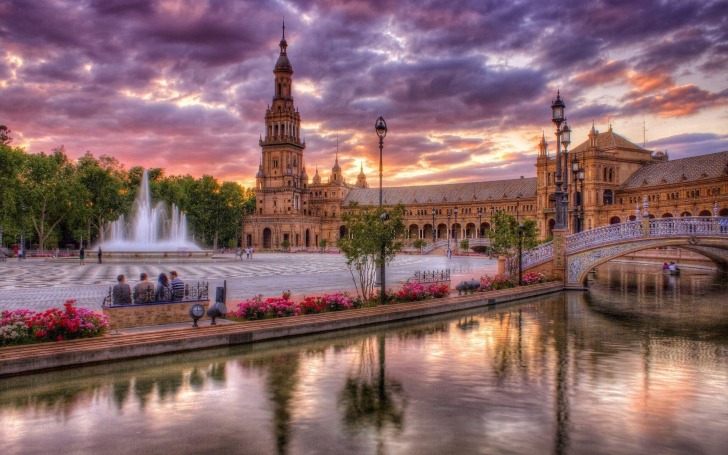
Plaza de España and María Luisa Park
Plaza de España and the adjacent María Luisa Park are particularly safe during daylight hours.
Locals jog, families picnic, and cyclists pass through regularly.
The atmosphere is relaxed and community-oriented rather than chaotic.
The only real consideration here is timing.
It is best enjoyed during the morning or early evening, especially in summer when temperatures are extreme.
After dark, the park becomes quieter, so daytime visits are ideal.
Triana
Across the Guadalquivir River lies Triana, a neighborhood with a more residential and local character.
Known for its ceramic shops and flamenco culture, Triana feels authentic and welcoming.
While it is calmer at night than the historic center, it is not considered unsafe.
Evening dinners and riverside walks are common here, and the neighborhood maintains a strong sense of community.
El Arenal
El Arenal sits between the cathedral and the river and offers a central yet manageable base for travelers.
With hotels, tapas bars, and easy access to main attractions, it is both convenient and secure.
The area benefits from steady tourism activity without feeling overwhelmingly crowded.
Places to Avoid in Seville
Polígono Sur
Polígono Sur, often referred to locally as Las Tres Mil Viviendas, has higher crime rates compared to the rest of the city.
The district faces social and economic challenges that contribute to drug-related activity and petty crime.
It is located far from the tourist center, and there is no practical reason for travelers to visit.
Avoiding this area entirely is the simplest and safest choice.
Parts of Los Pajaritos
Some sections of Los Pajaritos have historically reported higher crime levels than central Seville.
While not universally dangerous, the neighborhood lacks tourist infrastructure and offers little for visitors.
If you are unfamiliar with the area, particularly at night, it is better to focus your time in the central districts instead.
Isolated Industrial and Outer Residential Zones
Industrial zones and peripheral residential districts on the outskirts of Seville are not designed for tourism.
Streets can become empty at night, and lighting may be limited.
Although violent crime remains uncommon citywide, isolation increases vulnerability anywhere.
There is simply no benefit for tourists to wander these areas without a clear purpose.
Overcrowded Tourist Hotspots During Festivals
During Semana Santa and Feria de Abril, central Seville becomes extremely crowded.
While not dangerous in terms of violent crime, these dense gatherings are prime territory for pickpockets.
Bus stations, packed plazas, and tightly clustered viewing areas require heightened awareness.
Staying alert in these situations is far more important than avoiding entire neighborhoods.
Safety Tips for Traveling to Seville
- Protect Against Pickpockets. Use anti-theft bags or money belts in crowded areas. Keep your phone out of your back pocket and avoid placing wallets in easily accessible compartments.
- Stay Hydrated in Summer. Seville’s summer heat is intense. Carry water, wear a hat, and schedule sightseeing early in the morning or after sunset to avoid heat exhaustion.
- Use Official Taxis Only. Look for licensed taxis with visible identification and meters. Ride-sharing apps operate legally and provide additional transparency.
- Avoid Empty Streets Late at Night. While central Seville is lively, side alleys in less busy areas can become deserted. Stick to well-lit and populated streets after dark.
- Watch Your Belongings at Outdoor Cafes. Do not hang bags on the back of chairs facing outward. Keep personal items in sight when dining outside.
- Be Alert During Festivals. Major events like Semana Santa and Feria de Abril draw huge crowds. Crowded environments increase the chance of theft. Keep valuables secure.
- Respect Local Laws. Spain has strict regulations on public drinking and disorderly conduct. Fines are possible if you ignore them.
- Keep Copies of Important Documents. Have digital and paper copies of your passport in case of loss or theft. Spanish police require identification.
- Choose Central Accommodation. Staying in Santa Cruz, El Arenal, or Triana keeps you within safe and accessible areas close to attractions.
- Get Travel Insurance. Unexpected medical costs or lost luggage can disrupt a trip. Insurance offers peace of mind, especially during peak travel seasons.
So... How Safe Is Seville Really?
When looking at Spain’s national crime statistics, Seville ranks as one of the safer major cities in the country.
Violent crime rates remain low compared to many global urban destinations.
Petty theft accounts for most reported incidents involving tourists.
Spain consistently ranks high in global safety indexes, and Seville benefits from strong public healthcare, effective policing, and stable infrastructure.
The most significant real-world risk is not crime but extreme summer heat, which can be physically demanding.
Compared to cities like Barcelona or Madrid, Seville experiences fewer tourist-related theft incidents simply due to lower overall visitor volume.
While no city is entirely risk-free, Seville presents a low-risk environment for travelers who use common sense.
In practical terms, most visitors leave Seville with memories of flamenco music, historic architecture, and warm hospitality rather than safety concerns.
How Does Seville Compare?
| City | Safety Index |
|---|---|
| Seville |
75 |
| Malaga |
78 |
| Barcelona |
65 |
| Bilbao |
52 |
| Tenerife |
82 |
| Valencia |
72 |
| Cadiz |
74 |
 Nafplio Nafplio | 81 |
 Apostle Islands Apostle Islands | 78 |
| Oro Valley | 92 |
| Incline Village | 78 |
 Sarajevo Sarajevo | 65 |
| Gaffney | 68 |
Useful Information

Visas
Spain is part of the Schengen Area. Travelers from the United States, Canada, the UK, and many other countries can stay up to 90 days within a 180-day period without a visa for tourism. Passport validity must extend at least three months beyond departure.

Currency
Spain uses the Euro. Credit and debit cards are widely accepted, but small cash amounts are useful for markets and cafes. ATMs provide competitive exchange rates. Avoid airport currency exchange booths due to higher fees.

Weather
Summers are extremely hot, often exceeding 40 degrees Celsius. Spring and autumn offer the most comfortable temperatures. Light breathable clothing is essential in summer, while winters are mild but may require a light jacket.

Airports
Seville Airport, officially known as Seville Airport, is about 10 kilometers from the city center. Buses run regularly and take about 30 minutes. Taxis are affordable and convenient.

Travel Insurance
Healthcare in Spain is excellent, but visitors are responsible for medical expenses. Travel insurance covers emergencies, trip cancellations, and lost property. It is a smart investment for international travel.
Seville Weather Averages (Temperatures)
Average High/Low Temperature
| Temperature / Month | Jan | Feb | Mar | Apr | May | Jun | Jul | Aug | Sep | Oct | Nov | Dec |
|---|---|---|---|---|---|---|---|---|---|---|---|---|
| High °C |
16 | 18 | 21 | 23 | 26 | 31 | 35 | 35 | 32 | 26 | 20 | 16 |
| Low °C |
5 | 7 | 8 | 10 | 13 | 17 | 19 | 20 | 17 | 13 | 9 | 6 |
| High °F |
61 | 64 | 70 | 73 | 79 | 88 | 95 | 95 | 90 | 79 | 68 | 61 |
| Low °F |
41 | 45 | 46 | 50 | 55 | 63 | 66 | 68 | 63 | 55 | 48 | 43 |
Spain - Safety by City
| City | Safety Index |
|---|---|
| Alicante | 77 |
| Barcelona | 65 |
| Bilbao | 52 |
| Cadiz | 74 |
| Canary Islands | 81 |
| Granada | 72 |
| Ibiza | 82 |
| Lanzarote | 84 |
| Las Palmas | 74 |
| Madrid | 70 |
| Malaga | 78 |
| Murcia | 83 |
| Palma de Mallorca | 57 |
| Pamplona | 81 |
| Salamanca | 59 |
| San Sebastian | 56 |
| Seville | 75 |
| Tenerife | 82 |
| Valencia | 72 |
| Zaragoza | 79 |













Did you really get that orange blossom and jasmine smell on a warm morning while walking around, because I nearly stopped in the street when it hit me?
Walked along the Guadalquivir at dusk and felt surprisingly safe, though I kept my bag zipped in the crowded plazas.
I’ve wandered those narrow streets at night and honestly didn’t feel uneasy, though I kept an eye on my bag around the busier plazas because you never know with crowds.
I spent some evenings walking around near the Cathedral and felt surprisingly relaxed even when it got late, which made me appreciate the city’s vibe even more.
When you were out late in those narrow streets, did you ever feel uneasy or noticed anything sketchy that wasn’t in the official reports?
I’ve walked around late at night near the cathedral and never felt uneasy, but did you notice any particular areas where tourists should be extra cautious?
Walking through those narrow streets at night I never felt more alive but definitely kept a close eye on my bag by the busier plazas.