


 Argentina : Safety by City
- Buenos Aires
- Cordoba
- El Calafate
- El Chaltén
- La Plata
- Mar del Plata
- Mendoza
- Neuquen
- Puerto Iguazu
- Puerto Madryn
- Rosario
- Salta
- San Carlos de Bariloche
- San Miguel de Tucuman
- Ushuaia
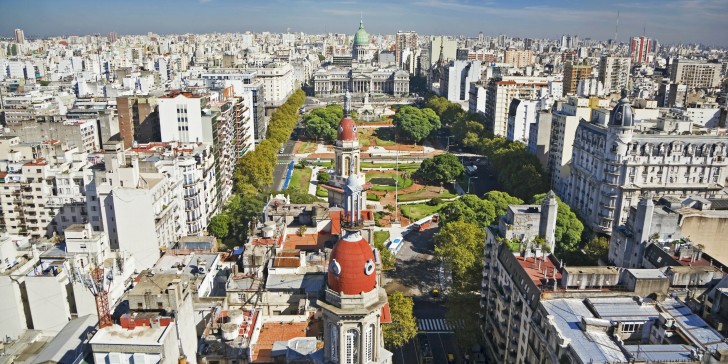
Buenos Aires is one of South America’s most captivating cities.
Often called the “Paris of the South,” Argentina’s capital blends European elegance with Latin American energy.
Travelers to the area are treated to wide boulevards, historic cafés, tango halls, colorful neighborhoods, and a late-night culture that gives the city a personality all its own.
Located along the Río de la Plata on Argentina’s eastern coast, Buenos Aires is a massive urban center with more than 15 million people in the greater metro area.
It’s a city that thrives on art, food, football, and conversation.
But travelers often ask the same question before booking a flight.
Is Buenos Aires safe?
Like many large global cities, the answer isn’t a simple yes or no.
Safety in the area depends on awareness, location, and behavior.
Here’s what to know about the real risks, the safest neighborhoods, the places to avoid, and how to travel Buenos Aires confidently and smartly.
Warnings & Dangers in Buenos Aires

OVERALL RISK: MEDIUM
Buenos Aires has a medium overall risk level for travelers. Violent crime against tourists is relatively uncommon, but petty crime is widespread. The most frequent issues visitors face are pickpocketing, bag snatching, and distraction theft, and these crimes are usually opportunistic rather than aggressive. The neighborhood choice plays a major role in safety, with some areas feeling relaxed and walkable, while others change dramatically after dark. Travelers who stay alert, avoid risky zones, and understand local patterns usually experience Buenos Aires as vibrant rather than dangerous.

TRANSPORT & TAXIS RISK: MEDIUM
Transportation in Buenos Aires is extensive and affordable, as buses, subways, and trains connect most of the city. The subway system is easy to use but can be extremely crowded during peak hours. Stay alert, because crowds increase the risk of pickpocketing, especially on popular lines. Taxis are also widely available, but not all are created equal, and unlicensed taxis may overcharge or take longer routes. Rideshare apps are generally safer and more transparent. Especially at night, using app-based transport or radio taxis is strongly recommended over flagging one on the street.

PICKPOCKETS RISK: HIGH
Pickpocketing is one of the biggest safety concerns in Buenos Aires. The risk is high, particularly in tourist-heavy areas. Busy streets, public transport, markets, and pedestrian zones are common hotspots, and thieves often work in teams and use distraction tactics. Phones, wallets, and backpacks are frequent targets, and snatch-and-run theft is also common, especially near cafes and transit stops. The upside is that awareness makes a huge difference, and travelers who keep their valuables secured and stay alert usually avoid problems.

NATURAL DISASTERS RISK: LOW
Buenos Aires faces relatively low natural disaster risk. Earthquakes are rare, and extreme weather events are uncommon. There are occasional heavy rains that can cause localized flooding in some neighborhoods, and heatwaves during the summer months can be intense, especially in January and February. Overall, natural disasters aren't a major concern when you're visiting the city.

MUGGING RISK: MEDIUM
Muggings do occur, but they're far less common than theft. You'll see an increased risk of them at night and in less populated areas. Most muggings involve intimidation rather than physical violence, and tourists who appear distracted or carry visible valuables are more likely targets. Staying on busy streets, avoiding empty areas after dark, and using transportation at night significantly reduce your risk of a mugging.

TERRORISM RISK: LOW
The risk of terrorism in Buenos Aires is considered low, and there aren't any ongoing threats targeting tourists or public gathering spaces. A security presence exists around government buildings and major landmarks, and for most travelers, terrorism isn't a significant safety concern compared to everyday crime.

SCAMS RISK: MEDIUM
Scams targeting tourists are fairly common, and they usually involve deception rather than force. Common scams include distraction thefts, fake charity petitions, currency exchange tricks, and overcharging in taxis or at bars. Another known tactic involves spilling something on or staining your clothing, followed by an offer to help you while an accomplice steals your belongings. Being cautious with strangers, avoiding unsolicited help, and using official services reduces your exposure to scams.

WOMEN TRAVELERS RISK: MEDIUM
Buenos Aires poses a medium risk for women travelers, but many women travel solo to the area and report positive experiences. Some women have experienced street harassment, particularly in crowded tourist areas or late at night, and catcalling is more common than physical threats. If you're a woman traveling to the area, you can benefit from staying in well-populated neighborhoods, using rideshares after dark, and avoiding isolated streets. With careful planning and some confidence, Buenos Aires can be a rewarding destination and a unique travel experience.

TAP WATER RISK: LOW
Tap water in Buenos Aires is generally safe to drink, as the city's water supply is treated and considered potable. Some travelers may still prefer bottled water due to taste or sensitivity. In restaurants and hotels, ice is typically safe. This makes Buenos Aires easier than many destinations when it comes to hydration and food safety, as there are a wide variety of locations across the globe where tourists are discouraged from drinking the tap water.
Safest Places to Visit in Buenos Aires
Several neighborhoods in Buenos Aires are considered safer and more tourist-friendly.
Palermo is the most popular choice for visitors, and it’s divided into smaller zones that offer parks, restaurants, nightlife, and wide streets.
Police presence is noticeable, and the area stays lively well into the night.
Recoleta is elegant and calm, and the area is known for museums, cafés, and historic architecture.
It’s very walkable and often feels safer to tourists than many central areas.
Another option is Belgrano, which is a quieter residential neighborhood with good transport connections and fewer tourists.
Puerto Madero is modern, well-lit, and heavily patrolled, especially at night.
It’s one of the safest areas but less culturally immersive, so if you’re looking to dive into the midst of life in Buenos Aires, it may not provide enough of that for your needs.
Places to Avoid in Buenos Aires
Just like with any travel location, some areas are best avoided, particularly for first-time visitors.
For example, La Boca, which is outside of the main tourist strip, has higher crime rates and shouldn’t be explored independently.
If you want to see that area, stick to guided visits for safety.
Constitución has transportation hubs but also elevated levels of theft and street crime, so it may not be a comfortable area for tourists.
Additionally, Retiro, especially around the bus terminal and train station at night, can feel unsafe.
Certain parts of Once are crowded and known for pickpocketing.
These neighborhoods aren’t off-limits to locals, but for travelers, they present unnecessary risk without much payoff.
Unless you’re involved in a guided tour, have traveled to the area many times, or know someone in the neighborhood, the best course of action is to avoid these locations and stay in safer spaces where the majority of tourists congregate.
Safety Tips for Traveling to Buenos Aires
- Choose the Right Neighborhood: Where you stay in Buenos Aires has a direct impact on your safety. Neighborhoods like Palermo, Recoleta, Belgrano, and Puerto Madero are more tourist-friendly, better lit, and have stronger police presence. Also, avoid choosing your accommodation solely based on its price. A cheaper stay in the wrong area can quickly turn stressful.
- Watch Your Phone at All Times: Phone snatching is one of the most common crimes affecting tourists. You should avoid using your phone near busy streets, subway doors, or open windows in taxis. If you need to check directions, step into a store or stand with your back to a wall.
- Use Rideshare Apps After Dark: Buenos Aires feels very different at night, and streets that are lively and welcoming during the day can become quiet and unsettling after sunset. Using rideshare apps or radio taxis at night is far safer than walking long distances, especially if you’re alone.
- Secure Your Belongings in Crowds: Pickpocketing thrives in crowded environments, and markets, buses, subways, and festivals are prime locations. Use anti-theft backpacks, keep zippers closed, and wear bags in front of your body when necessary, to reduce your risk of having your belongings taken.
- Avoid Flashy Clothing and Accessories: Luxury watches, expensive jewelry, and designer handbags attract attention you don’t want. Dressing simply helps you blend in with locals and reduces your visibility as a target.
- Be Careful With Currency Exchange: Argentina’s currency situation can be confusing for visitors. To avoid being scammed, only exchange money at reputable exchange offices or banks. It’s wise to avoid street exchangers, even if the rate seems tempting.
- Stay Alert on Public Transport: Public transport is efficient but crowded. Be sure to stand away from doors when possible and keep valuables close to your body. If a train or bus feels uncomfortably chaotic, trust your instincts and get off of it. You can take a different one or order a rideshare or taxi.
- Limit Late-Night Wandering: Buenos Aires has an active nightlife, but wandering late at night increases your risks. Plan your evenings and know how you’ll get back to your accommodation, so you can have a good time and stay safe.
- Trust Your Instincts Immediately: If a situation feels off, don’t second-guess yourself. Instead, leave the area, enter a business, or get transportation right away. It’s not “paranoid” to remove yourself from a situation or location. Quick decisions often prevent problems.
- Learn a Bit of Spanish: You don’t need to be fluent, but basic phrases help enormously when you’re trying to communicate with others. This can reduce misunderstandings, help in emergencies, and signal awareness rather than vulnerability.
So... How Safe Is Buenos Aires Really?
Buenos Aires is not a dangerous city, but it’s not carefree, either.
It sits comfortably in the middle, like many large cities in unfamiliar locations.
Most travelers who experience problems deal with theft, not violence, and the city rewards awareness.
You want to avoid complacency while traveling within Buenos Aires, so you can experience all it has to offer and fully enjoy the area.
Security has improved in tourist zones, and police presence is visible in popular neighborhoods.
However, economic challenges have contributed to increased petty crime in recent years.
Compared to other major global cities, Buenos Aires feels familiar in its risks, since similar precautions apply as in cities like Barcelona, Rome, or Paris.
If you choose your neighborhoods carefully, secure your belongings, and move around smartly, Buenos Aires can feel exciting rather than intimidating.
For travelers willing to stay informed and alert, it’s a city full of culture, warmth, and unforgettable experiences.
How Does Buenos Aires Compare?
| City | Safety Index |
|---|---|
| Buenos Aires |
65 |
| Rosario |
32 |
| El Chaltén |
91 |
| San Carlos de Bariloche |
76 |
| Salta |
54 |
| Neuquen |
58 |
| Cordoba |
61 |
 Washington Washington | 88 |
| Baton Rouge | 60 |
 Marseille Marseille | 55 |
| Kankakee | 41 |
| Creve Coeur | 78 |
| Cape Cod | 85 |
Useful Information

Visas
Many travelers, including citizens of the U.S., Canada, the UK, and the EU, can enter Argentina visa-free for tourism stays of up to 90 days. Still, you should always verify entry requirements before you travel.

Currency
Argentina uses the Argentine Peso (ARS), and currency exchange rates can fluctuate. Credit cards are accepted in many places, but cash is still widely used.

Weather
Buenos Aires has four distinct seasons. Its summers are hot and humid, while winters are mild and cool. Pack light clothing, layers, and comfortable walking shoes.

Airports
The main international airport is Ezeiza International Airport (EZE). Domestic flights often use Aeroparque (AEP), which is closer to the city center.

Travel Insurance
Travel insurance is strongly recommended, as it covers medical care, theft, delays, and emergencies. Having coverage adds peace of mind for your trip, especially when you're traveling in a large city.
Buenos Aires Weather Averages (Temperatures)
Average High/Low Temperature
| Temperature / Month | Jan | Feb | Mar | Apr | May | Jun | Jul | Aug | Sep | Oct | Nov | Dec |
|---|---|---|---|---|---|---|---|---|---|---|---|---|
| High °C |
29 | 29 | 27 | 23 | 19 | 16 | 16 | 17 | 19 | 22 | 25 | 29 |
| Low °C |
20 | 20 | 18 | 14 | 11 | 8 | 8 | 9 | 11 | 13 | 16 | 19 |
| High °F |
84 | 84 | 81 | 73 | 66 | 61 | 61 | 63 | 66 | 72 | 77 | 84 |
| Low °F |
68 | 68 | 64 | 57 | 52 | 46 | 46 | 48 | 52 | 55 | 61 | 66 |
Argentina - Safety by City
| City | Safety Index |
|---|---|
| Buenos Aires | 65 |
| Cordoba | 61 |
| El Calafate | 78 |
| El Chaltén | 91 |
| La Plata | 68 |
| Mar del Plata | 76 |
| Mendoza | 68 |
| Neuquen | 58 |
| Puerto Iguazu | 73 |
| Puerto Madryn | 70 |
| Rosario | 32 |
| Salta | 54 |
| San Carlos de Bariloche | 76 |
| San Miguel de Tucuman | 32 |
| Ushuaia | 68 |













I wanted to go to Buenos Aires last summer but my brother and mother talked me out of it. They said it was too risky. I want to go this year and once again, they are telling me not to. This time however, I am planning on going with a group of 6 that includes 4 men. I know we need to be aware of the risks but based on my research, if you know what you are doing and don’t travel alone, you will be fine.
Try not to look lost
You should ask yourself why is risky?
I live in Buenos Aires and is full of tourists everywhere. It’s dangerous if you go to the outskirts at night. If you’re cautious with your belongings you’re pretty safe.
From someone who lives in Buenos Aires
Don’t be scared to travel because of other people’s fears. I live here and it’s definitely not a city to be scared of like your mom and brother are saying. Lots of solo travelers and groups come to Argentina. Be street smart and you’ll be fine.
Buenos Aires is generally a safe city
Sarah, I have been to Argentina four times, the first being in 1997, the second six months before the terrible financial crisis at the end of 2001 and the most recent being just before Covid, Dec 2019 to January 2020. Buenos Aires is a relatively safe city for its size, and it is considerably safer than comparably sized American cities. There are some problems with “motochorros”, robbers riding motorcycles, although some of these are illegal immigrants. There are districts to be avoided, but the Microcentro area which includes El Obelisco, the area down to Plaza de Mayo and Puerto Madero, north towards Retiro (but the railway station area is a bit dodgy) and west to El Congreso is fine.
BsAs is a fantastic city to visit. If you are a country bumpkin then yeah you might be intimidated. Follow normal big city advice and you will be fine. I pray I will be able to visit again after this COVID 19 B.S. is all finished….
Sooo good
Nice place Buenos Aires. There are thieves and stuff but where arent?
Be careful but enjoy!!!
I have wanted to go to santa rosa lampa for a couple of years and maybe move there if I find what want. Would like E Mail friend that lives there to talk to. Hope to hear from someone that can advise.
Cuidado!
Asegurate la identidad de la persona antes. Hay mucha trata de personas
Solo Female Traveller
I went as a solo female traveller just before covid. I stayed right in the city centre & walked around all day with no issues. At night, I took taxis to bars to meet up with friends & taxis are very cheap in Argentina.
I had a group tour of other parts of the city including La Boca & the guide told us not to go back there when it was dark.
You are braver than I! This is one of the places I would never do solo. Anything that has high crime among other issues, it is always best to not go alone. Thankfully nothing happened to you. I went with a small group of friends and while I felt okay mostly, at night I was too scared to go far from my hotel which kind of ruined the trip for me.
Won't go back to BsAs
I was in BsAs and other parts ARG 3x in the past 12 years. I’ve been ripped off and threatened but was considering returning to live for 2-3 months because of the amazing exchange rate. However, what is the point of having a great exchange rate if you get ripped off shortly (or anytime) after you get the pesos? If in the future I read that the government truly cracks down on taxi thiefs and other thugs, in a true attempt to draw back long-term visitors, I’ll possibly reconsider. The ARG thugs and the population as a whole need to know, as someone wrote on another site, that they are shooting themselves in their own feet (and other more valuable body parts) by mugging and endangering the very people who want to come in and spend money. Their own co-thugs need to crack down on them but I don’t see that happening soon.
Great city and never had any issues. Safer than big cities in the US.
Buenos Aires is safe, full of energy and well worth a visit or two
Honestly, I think Buenos Aires is safer than the 60 Safety Index you’ve given it. I think it’s a 74-75 for sure, especially for tourists. As a tourist you should travel and visit areas that are safe and worth the travel in the city and these areas are very safe.
Of course the city has spots that are dangerous, of course it has pickpockets and thieves. What big city doesn’t? Wherever there are crowds of people, you will find pickpockets, no matter the city. And the bigger the city, the more people live there and the more chances are that thieves will want to operate there.
With this out of the way, I think Buenos Aires is a great place to visit. Take a tour of the President’s Pink House or Casa Rosada or the very colorful neighborhood, La Boca (which is filled with artists that use the street and buildings as their canvas).
The Metropolitan Cathedral (with impressive art pieces inside, some from 1871) or the Colón Theater (which is considered to boast the best acoustics). Don’t forget the Jardín Botánico which is a piece of paradise, expanding over 20 acres, with lakes, bridges, plants and over 5000 flower species. A must visit if you ask me.
The Recoleta Cemetery is one of the most beautiful cemeteries I’ve ever seen. You’ll find many elaborate mausoleums here, with many famous people resting in this cemetery. Argentinians are very interested in death and in honoring their ancestors after they die and this place is a testament to that.
We’ve stayed at the Mine Hotel Boutique (and we highly recommend them) which is a place where we felt at home, with outdoor pool, great prices, family rooms and nice, attentive staff. We’ve also had a chance to dance the tango while here and we will be back for sure. It’s that kind of place that makes you feel like you belong, you know?
From someone who lives in Buenos Aires
American living in Buenos Aires for the last 10 years. Unless you want to pay double for everything do not use credit cards or ATM’s here. The dollar blue is a better exchange rate than the official. Bring new 100s or 50s, nothing smaller, no writing or pen marks.
Also, it’s not unsafe for women as this article speaks of, I don’t feel afraid to walk alone at night and never have.
If you go to places like La Boca, only go within the tourist area and do not venture off that and do not hang out there at night. Same with places like Retiro.
The article mentions pick pocketing, and yes cell phones are stolen here quite frequently. Don’t put valuables in your backpack and walk around, without a doubt you have a high chance that they will be opened and you won’t feel it until you get somewhere and notice your stuff is gone. Be aware of your surroundings. There is a risk of scams and taxis taking a more “touristic route” but you can always map your route out before you get in a taxi. Uber works here as well, but you can only pay in cash.
Keep your wits about you and pay attention and you should be fine.
I had such a great time wandering around those vibrant neighborhoods, and the late-night vibe really brings the city to life in a way that’s hard to describe.
Stumbling through Buenos Aires at midnight felt like being in a movie, especially with the tango music wafting through the streets; just don’t forget to keep an eye on your belongings!
Did you really experience that vibrant late-night culture everyone talks about?
Oh sure, between the tango halls and those historic cafés it’s postcard-perfect by day, but after a few late-night strolls along the wide boulevards I end up feeling thrilled and a little on edge, which somehow feels true to the place.
Walking the wide boulevards along the Río de la Plata and ducking into a historic café at night left me buzzing and a little on edge.
Did you ever get that jittery excitement walking down Avenida Corrientes at 2 a.m. with the neon buzzing and stray dogs around that makes you love the place but also keeps you glancing at your pockets?
Me atrae la mezcla de cafés y tango, pero volver por la ribera del Río de la Plata a las tantas me dejó con un nervio que no me esperaba.
Spent an evening wandering San Telmo and yeah, you definitely have to keep your wits about you, but the vibe there at night is something else.