 Central African Republic : Safety by City
Central African Republic - safety as a country
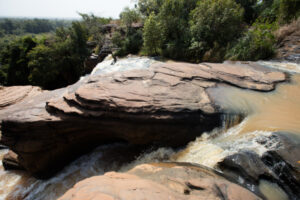
Boali is a small town in the Central African Republic best known for the dramatic Boali Falls, where the M’Bali River drops through a series of rocky cascades surrounded by green countryside.
Located northwest of Bangui, Boali has traditionally been one of the country’s better-known excursion destinations.
However, its natural attractions should not obscure the serious security concerns associated with traveling outside the capital.
Armed crime, kidnapping, roadblocks, weak emergency services, poor infrastructure, and the possibility of sudden unrest make Boali a high-risk destination.
Current international travel guidance advises against travel outside Bangui, and security conditions can change with little warning.
Warnings & Dangers in Boali

OVERALL RISK: HIGH
Boali should be treated as a high-risk destination. Although it is relatively close to Bangui and has historically received visitors to Boali Falls, it is outside the capital, where security conditions are considerably less predictable. Armed groups, criminal activity, kidnapping, illegal roadblocks, and limited government services are concerns throughout the Central African Republic outside Bangui.

TRANSPORT & TAXIS RISK: HIGH
Road travel is one of the biggest risks when visiting Boali. The journey from Bangui involves overland travel, and road conditions, vehicle standards, security checkpoints, and driving behavior can all create problems. Travel only during daylight and use pre-arranged transportation with a trusted driver rather than public transport or an unfamiliar taxi.

PICKPOCKETS RISK: HIGH
Petty theft can occur in markets, roadside stops, and other busy areas. Visitors should keep phones, cameras, cash, and jewelry out of sight whenever possible. The consequences of losing a passport or phone can also be considerably more serious here because replacement services and consular assistance are extremely limited.

NATURAL DISASTERS RISK: MEDIUM
Boali experiences a tropical climate with significant seasonal rainfall. Heavy rain can worsen road conditions, cause localized flooding, and make travel more difficult. The area around Boali Falls also contains wet rocks, steep terrain, and powerful moving water, requiring extra caution near the falls.

MUGGING RISK: HIGH
Armed robbery is a serious concern in the Central African Republic, particularly outside Bangui. Travelers should avoid walking alone, carrying visible valuables, or traveling after dark. If confronted during a robbery, do not resist.

TERRORISM RISK: HIGH
The Central African Republic faces continuing risks related to armed groups, political instability, and terrorism. Boali is not generally known as a specific terrorism target, but its location outside Bangui means travelers are exposed to the country's broader security environment. Attacks and security incidents can occur with little warning.

SCAMS RISK: MEDIUM
Traditional tourist scams are less important than security and crime risks, but visitors may encounter inflated transportation prices, unofficial fees, demands for money at checkpoints, or unclear charges. Arrange transport and excursions through trusted contacts and establish prices beforehand.

WOMEN TRAVELERS RISK: HIGH
Women traveling alone face additional risks. Sexual harassment and sexual violence are concerns in the country, particularly in isolated locations and during insecure travel. Women should avoid solo road travel, walking alone after dark, and visiting remote areas without reliable local support.

TAP WATER RISK: HIGH
Do not rely on untreated tap water for drinking. Use sealed bottled water or properly purified water. Travelers should also be cautious with ice, uncooked food, and meals prepared where hygiene standards are uncertain.
Safest Places to Visit in Boali
Boali Falls
Boali Falls, also known as Chutes de Boali, is the town’s main attraction and one of the best-known natural landmarks in the Central African Republic.
If security conditions permit a visit, go during daylight and preferably with a trusted local guide or organized driver.
Stay away from slippery edges and strong currents around the falls.
Boali Town Center
The central part of Boali is generally preferable to isolated countryside locations.
Being closer to populated areas provides somewhat better access to transportation and assistance if a problem occurs.
Visitors should still avoid unnecessary walking and remain aware of changing local conditions.
Established Compounds and Accommodation
Secure compounds or accommodation recommended by established organizations are preferable to informal lodging.
Controlled access, reliable transportation contacts, communications, and backup power are particularly valuable in this environment.
Main Roads During Daylight
If road travel is unavoidable, staying on established main routes during daylight is preferable to using unfamiliar secondary roads.
Do not take shortcuts through remote areas simply because they appear faster on a map.
Places to Avoid in Boali
Remote Roads After Dark
Avoid road travel around Boali after sunset.
Night driving increases exposure to armed robbery, illegal checkpoints, poor visibility, vehicle breakdowns, and accidents.
Isolated Countryside
The countryside surrounding Boali should not be casually explored without reliable local knowledge.
Security conditions can vary greatly over relatively short distances, and assistance may be unavailable if something goes wrong.
Unofficial Roadblocks
Both official and unofficial checkpoints can occur on Central African Republic roads.
Do not attempt to force your way through a checkpoint or become argumentative with armed personnel.
Follow the instructions of your trusted driver or security contact.
Boali Falls During Severe Rain
The falls can become considerably more powerful during periods of heavy rainfall.
Wet surfaces, strong currents, and slippery rocks increase the risk of falls and drowning.
Stay well back from dangerous edges.
Demonstrations or Gatherings
Avoid political demonstrations, protests, security operations, and unusual gatherings.
Events can become violent with little warning, and road closures may make it difficult to leave the area.
Safety Tips for Traveling to Boali
- Do Not Treat Boali as a Normal Day Trip. The distance from Bangui may make Boali look like an easy excursion, but traveling outside the capital carries substantially greater security risks. Plan accordingly.
- Use Pre-Arranged Transportation. Arrange a trusted driver before leaving Bangui. Avoid relying on public transportation or trying to negotiate transport on the roadside.
- Travel Only During Daylight. Leave enough time to return before sunset. Nighttime road travel significantly increases both crime and accident risks.
- Check Security Conditions Before Leaving. Conditions can change rapidly. Confirm the situation with reliable local contacts immediately before traveling rather than depending on information from several days earlier.
- Keep Valuables Out of Sight. Avoid expensive watches, jewelry, visible cameras, and unnecessarily displaying your smartphone. Carry only the cash you need.
- Stay on Established Roads. Do not explore unknown tracks, forest roads, or remote countryside without experienced local guidance. Unexploded ordnance and landmines are additional concerns in parts of the Central African Republic.
- Bring Water and Essential Supplies. Carry sufficient bottled water, basic food, medication, a charged phone, and backup power. Do not assume supplies or emergency assistance will be readily available.
- Be Extremely Careful Around the Falls. Boali Falls can be powerful, particularly during the rainy season. Stay away from slippery edges and avoid entering unfamiliar water.
- Have a Communication Plan. Make sure someone in Bangui knows where you are going and when you expect to return. Keep important telephone numbers stored both electronically and separately.
- Have a Contingency Plan. Know what you will do if the road becomes blocked, security conditions deteriorate, your vehicle breaks down, or you cannot return to Bangui as planned. Do not depend on local emergency services being able to respond quickly.
So... How Safe Is Boali Really?
Boali presents an unusual situation for travelers because its main attraction would ordinarily make it an obvious excursion from Bangui.
Boali Falls are scenic, the town is relatively close to the capital, and the drive has historically been one of the Central African Republic’s better-known tourist outings.
The security situation changes that calculation considerably.
Boali lies outside Bangui, where violent crime, kidnapping, armed groups, roadblocks, and limited government control become greater concerns.
Current international travel guidance treats travel outside Bangui much more seriously than movement within the capital.
Road travel is particularly important to consider.
A visitor cannot simply assume that because a destination is relatively close to the capital, the road between the two places is secure.
Travel after dark should be avoided, and anyone making the journey should use reliable transportation and obtain current local security information immediately before departure.
Emergency response is another major limitation.
Police, medical services, vehicle recovery, and communications are significantly less dependable outside Bangui.
A minor problem such as a breakdown or injury can therefore become much more complicated.
The waterfalls themselves also require caution.
Rocks can be extremely slippery, particularly during periods of heavy rainfall, and strong currents make approaching the water dangerous.
Boali should therefore not be approached like an ordinary sightseeing destination.
Travelers who have an essential reason to visit should have reliable local contacts, secure transportation, current information about the road and surrounding area, and a clear plan for returning to Bangui.
How Does Boali Compare?
| City | Safety Index |
|---|---|
| Boali |
24 |
| Bouar |
17 |
| Mbaiki |
22 |
| Berberati |
20 |
| Bangui |
28 |
 La Massana La Massana | 93 |
 Boynton Beach Boynton Beach | 74 |
 Almaty Almaty | 29 |
| Rock Springs | 81 |
| Branson | 70 |
| Wahpeton | 82 |
Useful Information

Visas
Most foreign visitors require a visa to enter the Central African Republic. Entry requirements depend on nationality and should be confirmed before departure. Travelers should also carry the necessary passport, vaccination, and supporting documentation required for their trip.

Currency
The Central African Republic uses the Central African CFA franc. Cash is extremely important, particularly outside Bangui. Do not expect credit cards or ATMs to be readily available in Boali, and carry enough money for essential expenses while keeping it divided between secure locations.

Weather
Boali has a tropical climate with warm conditions throughout the year. Rainfall becomes much heavier during the wet season and can affect road conditions. The falls are often particularly dramatic after substantial rainfall, but wet weather also creates more dangerous conditions around rocks, roads, and riverbanks.

Airports
Boali does not have a major commercial airport. International visitors normally enter the country through Bangui M'Poko International Airport and would need to continue to Boali by road. Any transfer between Bangui and Boali should be arranged in advance with a reliable local operator.

Travel Insurance
Comprehensive insurance is especially important for anyone traveling to Boali. Many standard travel insurance policies exclude destinations covered by official warnings against travel, so policy conditions should be checked carefully. Coverage should include emergency medical treatment, evacuation, security-related disruption, and transportation to another country if adequate treatment is unavailable locally.
Boali Weather Averages (Temperatures)
Average High/Low Temperature
| Temperature / Month | Jan | Feb | Mar | Apr | May | Jun | Jul | Aug | Sep | Oct | Nov | Dec |
|---|---|---|---|---|---|---|---|---|---|---|---|---|
| High °C |
33 | 34 | 34 | 33 | 32 | 31 | 29 | 29 | 31 | 31 | 32 | 32 |
| Low °C |
18 | 21 | 23 | 23 | 22 | 22 | 21 | 21 | 22 | 22 | 22 | 19 |
| High °F |
91 | 93 | 93 | 91 | 90 | 88 | 84 | 84 | 88 | 88 | 90 | 90 |
| Low °F |
64 | 70 | 73 | 73 | 72 | 72 | 70 | 70 | 72 | 72 | 72 | 66 |
Central African Republic - Safety by City
| City | Safety Index |
|---|---|
| Bangui | 28 |
| Berberati | 20 |
| Boali | 24 |
| Bouar | 17 |
| Mbaiki | 22 |