


 Bhutan : Safety by City
Bhutan - safety as a country
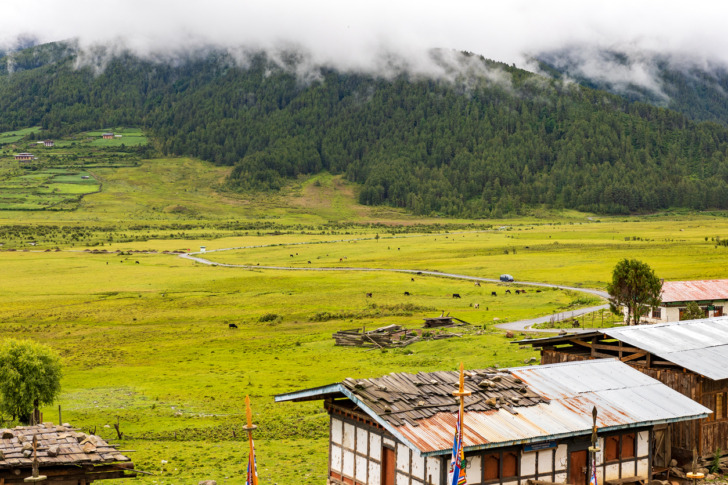
Phobjikha is a broad glacial valley hidden among the mountains of central Bhutan, roughly 3,000 meters above sea level in Wangdue Phodrang District.
Also called Gangtey Valley, it is famous for the endangered black-necked cranes that migrate here each winter from the Tibetan Plateau.
Instead of crowded streets or major hotels, visitors find traditional farmhouses, pine-covered mountains, wetlands, hiking trails, and the hilltop Gangtey Monastery overlooking the valley.
Phobjikha is one of those destinations where the silence is part of the attraction.
Crime is remarkably uncommon, and travelers are more likely to worry about a muddy hiking trail than a stolen wallet.
The main safety considerations involve altitude, cold weather, winding mountain roads, limited medical facilities, and sudden changes in weather.
Warnings & Dangers in Phobjikha

OVERALL RISK: LOW
Phobjikha is a very safe destination for travelers. Violent crime is extremely rare, communities are small, and tourism is carefully managed. The main risks have little to do with criminals. Altitude, mountain roads, cold temperatures, hiking accidents, limited medical care, and changing weather are much more likely to cause problems during a visit.

TRANSPORT & TAXIS RISK: MEDIUM
Transportation is Phobjikha's biggest everyday safety concern. Mountain roads can be narrow, winding, foggy, muddy, or affected by landslides. Journeys take longer than distances suggest. Use an experienced local driver, wear a seat belt whenever available, and avoid unnecessary driving after dark or during heavy rain, snow, or dense fog.

PICKPOCKETS RISK: LOW
Pickpocketing is extremely uncommon. Phobjikha lacks crowded transport systems, nightlife districts, and packed shopping streets. You should still keep your passport, cash, and electronics secured at guesthouses and festivals. The annual Black-Necked Crane Festival brings larger crowds than usual, making ordinary awareness more important.

NATURAL DISASTERS RISK: MEDIUM
Bhutan is mountainous and earthquake-prone, while Phobjikha can also experience landslides, severe rain, snow, freezing conditions, and road blockages. The monsoon makes slopes and roads particularly vulnerable. These hazards rarely prevent tourism entirely, but visitors should leave flexibility in their itinerary and avoid hiking during severe weather.

MUGGING RISK: LOW
Mugging is exceptionally rare in Phobjikha. The valley consists mostly of villages, farms, monasteries, guesthouses, and wilderness rather than urban neighborhoods. Visitors can generally walk around comfortably. Even so, avoid wandering alone on unfamiliar mountain roads after dark because poor lighting, cold, dogs, and traffic are more realistic hazards.

TERRORISM RISK: LOW
The terrorism risk in Phobjikha is very low. Bhutan is politically stable, and this remote rural valley has no significant history as a terrorism target. Travelers should maintain normal awareness at airports and major public events elsewhere in Bhutan, but terrorism should not influence ordinary sightseeing plans in Phobjikha.

SCAMS RISK: LOW
Tourist scams are uncommon. Prices for accommodation, drivers, guides, and activities should still be confirmed beforehand, especially when arranging services independently. The more likely issue is misunderstanding what is included rather than deliberate fraud. Use established accommodation providers and tourism businesses for transportation and excursions.

WOMEN TRAVELERS RISK: LOW
Phobjikha is generally very safe for women, including those traveling alone. Serious harassment is uncommon, and local communities are accustomed to respectful visitors. Solo women should still avoid isolated hikes after dark, share trekking plans with their accommodation, and use trusted transportation when traveling between villages or other parts of Bhutan.

TAP WATER RISK: MEDIUM
Do not automatically drink untreated tap or stream water. Mountain water may look exceptionally clean but can still contain microorganisms or contamination from livestock. Use bottled, boiled, or properly filtered water. Many hotels and guesthouses provide treated drinking water, so ask before purchasing unnecessary plastic bottles.
Safest Places to Visit in Phobjikha
Gangtey Monastery
Gangtey Monastery is one of the valley’s most important landmarks and a very safe place to visit.
The 17th-century Buddhist monastery sits above the valley and provides spectacular views across Phobjikha.
Visitors should dress respectfully, speak quietly, and ask before photographing monks or religious ceremonies.
Stone paths and stairs can become slippery in rain or winter frost.
Black-Necked Crane Information Centre
The information center near the valley wetlands is one of the easiest places to learn about Phobjikha’s famous winter visitors.
Observation equipment allows travelers to view cranes without entering sensitive nesting areas.
The facility is especially worthwhile from late autumn through winter, when cranes typically occupy the valley.
Gangtey Nature Trail
This popular trail passes through forests, villages, open meadows, and valley scenery.
It is one of the safest hiking options because the route is relatively well known and commonly used by visitors.
Wear proper shoes, carry water, and start early enough to finish before darkness or afternoon weather changes.
Phobjikha Villages
The small settlements scattered across the valley provide an excellent look at rural Bhutanese life.
Walking between established villages during daylight is generally very safe.
Respect private homes, farmland, livestock, and religious structures.
Ask before photographing residents rather than treating the community as an outdoor museum.
Valley Wetlands
The protected wetlands are beautiful but environmentally sensitive.
Stay on recognized paths and observation areas, especially during crane season.
Keeping your distance protects both the birds and you from boggy ground, livestock, and difficult terrain.
Places to Avoid in Phobjikha
There Are No Dangerous Neighborhoods
Phobjikha has no recognizable crime-heavy neighborhoods that tourists need to avoid.
It is a rural valley rather than a city, and personal safety is generally excellent.
The areas worth avoiding are dangerous because of terrain, weather, wildlife protection, or isolation rather than criminal activity.
Crane Roosting and Nesting Areas
Do not walk into protected wetland areas simply to get closer to black-necked cranes.
The birds are endangered and highly valued in Bhutan.
Stay on designated paths and use observation areas.
Approaching cranes can disturb feeding and roosting behavior and may violate conservation rules.
Remote Trails After Dark
Mountain trails become much harder to navigate once daylight disappears.
Fog, cold, uneven ground, loose dogs, and poor mobile reception can turn a simple walk into a problem.
Plan hikes so you return well before sunset and carry a flashlight as backup.
Mountain Roads During Heavy Rain
The roads connecting Phobjikha with Wangdue Phodrang and other parts of Bhutan can experience landslides, mud, falling rocks, and poor visibility.
Avoid unnecessary travel during severe rain and allow additional days in your itinerary during the monsoon rather than building a schedule with no room for road delays.
Frozen or Snow-Covered Paths
Winter is one of the most atmospheric times to visit because of the cranes, but temperatures can fall well below freezing overnight.
Shaded trails, stone stairs, and rural roads may develop ice.
Wear footwear with good traction and do not attempt unfamiliar mountain hikes simply because the weather looks sunny.
Unmarked Forest Routes
Avoid wandering deep into forests without understanding the route.
Phobjikha’s surroundings contain wildlife, steep terrain, rivers, and areas with limited phone reception.
Use established trails or an experienced local guide for longer hikes.
Safety Tips for Traveling to Phobjikha
- Give yourself time to adjust to the altitude. Phobjikha sits around 3,000 meters above sea level. Some travelers experience headaches, tiredness, shortness of breath, or poor sleep after arriving. Drink water, avoid excessive alcohol, and keep your first day relatively easy. Seek medical assistance if symptoms become severe or continue worsening.
- Use an experienced mountain driver. Bhutanese roads can be beautiful and intimidating at the same time. Sharp bends, steep slopes, fog, landslides, and livestock are normal possibilities. A local driver who knows the route is much safer than attempting unfamiliar mountain roads yourself.
- Avoid nighttime road journeys. Road lighting is limited outside settlements, and mountain hazards become harder to spot after sunset. Falling rocks, animals, broken pavement, and fog all become more dangerous. Plan long transfers so they finish during daylight whenever possible.
- Pack warmer clothing than you think you need. Even when daytime temperatures feel comfortable, nights can become extremely cold. Winter visitors need thermal layers, gloves, a warm jacket, and proper footwear. Even summer travelers should carry a fleece or light insulated layer because mountain weather changes quickly.
- Stay on established hiking trails. The valley looks open and easy to navigate, but forests, wetlands, farm tracks, and mountain slopes can quickly become confusing. Follow recognized trails, download maps for offline use, and tell your guesthouse where you are going before longer hikes.
- Do not disturb the black-necked cranes. The cranes are one of the main reasons people visit Phobjikha. Observe them from designated areas and never chase, approach, feed, or fly drones near them. Conservation is taken seriously, and respectful behavior protects an extraordinary migration that happens every winter.
- Drink treated water. Do not assume clear mountain water is automatically safe. Use boiled, filtered, or properly treated water. Carry enough during hikes, particularly because altitude can increase dehydration without making you feel especially sweaty.
- Prepare for road delays. A landslide or heavy snowfall can turn a straightforward transfer into a much longer journey. Avoid booking tightly connected flights immediately after leaving Phobjikha. Build flexibility into your route, particularly during the summer monsoon and winter cold periods.
- Respect monasteries and rural communities. Remove shoes where required, dress modestly, keep voices low, and ask before photographing people. Never climb on religious structures or touch ritual objects without permission. Phobjikha is a living community and sacred landscape, not simply a scenic attraction.
- Carry insurance covering mountain travel. Medical facilities in Phobjikha are limited, and serious injuries may require transportation to a larger hospital. Choose insurance that covers hiking, road accidents, emergency medical treatment, evacuation, trip delays, and weather-related disruption.
So... How Safe Is Phobjikha Really?
Phobjikha is one of those destinations where the usual travel-safety conversation feels almost backwards.
You do not need to spend much time worrying about muggings, aggressive scams, dangerous neighborhoods, or pickpocketing.
Crime against tourists is extremely uncommon, communities are small, and Bhutan has a strong reputation for public safety.
Instead, the environment deserves your attention.
At roughly 3,000 meters, the altitude is high enough for some visitors to experience mild altitude symptoms.
The roads into the valley involve mountain driving, and landslides or snow can occasionally interrupt transportation.
Medical care is also much more limited than in Thimphu.
Winter brings the black-necked cranes and some of the valley’s most beautiful scenery, but nights can become bitterly cold, and paths may freeze.
Summer is greener, but monsoon rain increases the risk of landslides and muddy trails.
Wildlife conservation is another unusual safety consideration.
Visitors should stay out of protected crane habitat and follow local guidance around wetlands.
Overall, I rate Phobjikha as low risk.
Families, couples, solo travelers, older visitors, and women traveling alone can all enjoy the valley comfortably.
Prepare for altitude, use an experienced driver, respect the weather, and give yourself enough time to travel without rushing.
How Does Phobjikha Compare?
| City | Safety Index |
|---|---|
| Phobjikha |
89 |
| Thimphu |
88 |
| Bumthang |
92 |
| Punakha |
91 |
| Trongsa |
90 |
| Paro |
90 |
 Puerto Princesa Puerto Princesa | 77 |
 Florianopolis Florianopolis | 72 |
 Newnan Newnan | 75 |
| South Fulton | 48 |
| Jericoacoara | 65 |
| Fond du Lac | 64 |
Useful Information

Visas
Most international visitors need a Bhutanese visa before arrival. The visa application carries a one-time US$ 40 fee.VisitorsalsopayBhutan'sSustainableDevelopmentFee,currentlyUS100 per adult per night. Children aged 6 through 11 pay US$50 per night, while children under 6 are exempt. Indian nationals follow a separate permit and fee system.

Currency
Phobjikha uses the Bhutanese ngultrum, which is pegged at equal value to the Indian rupee. Indian rupees are also widely accepted, although some denominations may be less convenient. Carry cash because card acceptance can be limited in rural guesthouses, shops, and restaurants. Withdraw money before reaching remote areas rather than relying on local ATMs.

Weather
Phobjikha has cool summers and cold winters because of its elevation. December through February can bring freezing nights and occasional snow, while June through September is influenced by the monsoon. October and November are excellent for clear mountain scenery. Pack layers, rain protection, sunscreen, and sturdy waterproof footwear throughout the year.

Airports
Paro International Airport is Bhutan's main international gateway and the airport most visitors use for Phobjikha. The drive to the valley typically takes around five to six hours depending on road and weather conditions. Travelers usually pass through Thimphu or Wangdue Phodrang as part of a wider Bhutan itinerary.

Travel Insurance
Travel insurance is strongly recommended because Phobjikha is remote and serious medical emergencies may require evacuation or a lengthy road transfer. Choose coverage for medical treatment, hiking injuries, road accidents, evacuation, lost baggage, and weather-related delays. Verify that high-altitude activities at approximately 3,000 meters are included.
Phobjikha Weather Averages (Temperatures)
Average High/Low Temperature
| Temperature / Month | Jan | Feb | Mar | Apr | May | Jun | Jul | Aug | Sep | Oct | Nov | Dec |
|---|---|---|---|---|---|---|---|---|---|---|---|---|
| High °C |
10 | 12 | 14 | 17 | 20 | 21 | 22 | 22 | 20 | 16 | 12 | 20 |
| Low °C |
-6 | -4 | 0 | 4 | 8 | 12 | 13 | 13 | 11 | 5 | 0 | -4 |
| High °F |
50 | 54 | 57 | 63 | 68 | 70 | 72 | 72 | 68 | 61 | 54 | 68 |
| Low °F |
21 | 25 | 32 | 39 | 46 | 54 | 55 | 55 | 52 | 41 | 32 | 25 |
Bhutan - Safety by City
| City | Safety Index |
|---|---|
| Bumthang | 92 |
| Paro | 90 |
| Phobjikha | 89 |
| Punakha | 91 |
| Thimphu | 88 |
| Trongsa | 90 |





The chill in the air at Phobjikha really gets to you, but watching those black-necked cranes makes it totally worth bundling up.
Got caught off guard by how quiet the valley gets at dusk, like the world just hits pause with those cranes quietly settling in.