


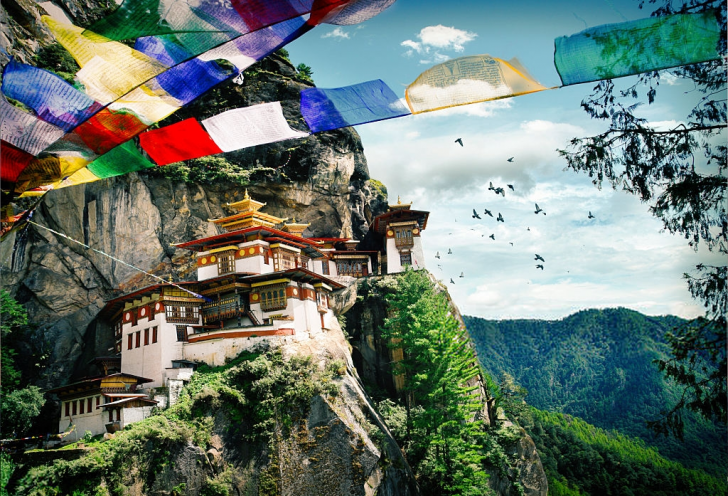
Bhutan feels mythical until you see it for yourself.
Tucked between India and China in the eastern Himalayas, this small kingdom has built a reputation not only for its dramatic scenery but also for its distinctive way of measuring success through Gross National Happiness.
Its history is defined by isolation; Bhutan remained closed to most outsiders until the 1970s, preserving centuries of culture, religion, and tradition.
Today, the country balances that heritage with carefully managed tourism.
Fewer than 150,000 visitors arrive each year, not because Bhutan lacks appeal, but because its government deliberately limits numbers to protect the environment and culture.
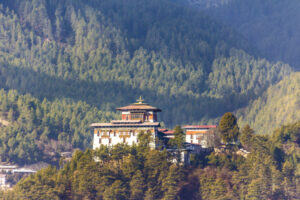
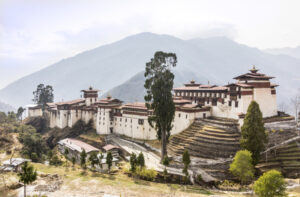
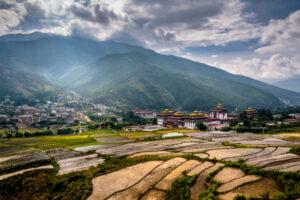
The result is a destination where towering monasteries, fortress-like dzongs, and festivals feel untouched by mass tourism.
For travelers, the restrictions mean you can’t just book a flight and wander on your own.
Trips must be arranged through licensed operators, and guides are required for most journeys.
While that sounds restrictive, it guarantees a curated experience that avoids the usual tourist crowds.
For those willing to embrace Bhutan on its own terms, the reward is access to one of the world’s most breathtaking and authentic travel experiences.
Keep reading to see why and how to maximize the experience when you visit.
Warnings & Dangers in Bhutan

OVERALL RISK: LOW
Travelers face very few security issues in Bhutan, with crime almost unheard of and government advisories keeping it at the lowest risk level. The bigger concerns come from natural factors such as altitude, steep terrain, and unpredictable weather.

TRANSPORT & TAXIS RISK: MEDIUM
Public transportation in Bhutan isn’t really an option. The country’s mountainous terrain and strict tourism rules mean visitors travel by private vehicles arranged through licensed guides. That setup eliminates common risks like taxi scams or car break-ins and keeps things controlled.

PICKPOCKETS RISK: LOW
Petty theft is rare compared to other Asian destinations. Government advisories note that incidents of pickpocketing do happen occasionally, usually in crowded areas or festivals. While the risk is considered low, it’s still worth keeping your wallet and phone secure in busy spaces. Extra precaution at night is recommended, but the risk is low.

NATURAL DISASTERS RISK: HIGH
Bhutan’s mountains mean landslides, earthquakes, and flooding are possibilities, especially during the monsoon season. These hazards are taken seriously by the government and local operators, but they can disrupt travel. The risk is higher from nature than from people, making it important to monitor conditions and follow guidance from your tour operator.

MUGGING RISK: LOW
Violent crime, including muggings, is extremely uncommon in Bhutan. The U.S. government specifically notes minimal criminal activity, and visitors generally report feeling safe walking around towns. While it’s smart to stay cautious anywhere in the world, the risk of mugging here is very low compared to regional or global averages.

TERRORISM RISK: LOW
Bhutan is not considered a terrorism hotspot, and no recent incidents have been reported. Governments classify the terrorism risk as very low. The controlled nature of tourism and the country’s political stability further reduce concerns.

SCAMS RISK: LOW
Since all travel is booked through licensed operators, the usual entry points for scammers don’t exist. While some small bargaining misunderstandings might happen in markets, the overall scam risk is very low compared to many other destinations.

WOMEN TRAVELERS RISK: LOW
Women generally report feeling safe in Bhutan. There are no widespread concerns about harassment, and the cultural norms promote respectful interactions. That said, being in rural or isolated areas without a guide may feel less comfortable. Overall, the risk for women travelers is low, though usual precautions around personal safety still apply.

TAP WATER RISK: MEDIUM
Tap water in Bhutan is not safe to drink, and even locals often boil or filter it first. The risk of waterborne illness is considered high if you drink directly from the tap. Stick to bottled or treated water for drinking and brushing your teeth, and you’ll avoid most stomach-related problems.
Safest Places to Visit in Bhutan
The Bhutan Department of Tourism runs the website “https://bhutan.travel.”
While searching for information online will get you to a lot of tour companies, you’ll want to vet the legitimacy through the official website before booking.
I can’t emphasize this enough: Bhutan requires visitors to book through licensed operators and follow set guidelines.
Bhutan’s most famous landmark is Paro Taktsang (Tiger’s Nest Monastery), a 17th-century temple perched at 10,200 feet.
Paro also houses the National Museum of Bhutan in a former watchtower.
In the capital, Thimphu, major sites include the Buddha Dordenma, a 169-foot gilded statue, the National Memorial Chorten, and the Tashichho Dzong, Bhutan’s central administrative and monastic complex.
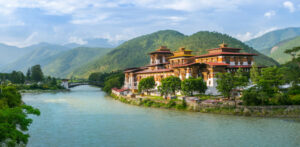
Punakha Dzong, built in 1637 at the meeting of the Pho Chhu and Mo Chhu rivers, is one of the country’s most important fortresses.
The nearby suspension bridge is among the longest in Bhutan.
The Dochula Pass (10,300 feet) is known for panoramic Himalayan views and the 108 Druk Wangyal Chortens.
In central Bhutan, the Bumthang Valley is considered the cultural heart, with historic temples like Jambay Lhakhang and Kurjey Lhakhang.
Eastern Bhutan offers fewer crowds and a stronger sense of traditional life, particularly in Mongar and Trashigang.
Festivals, or tshechus, are another highlight.
These multi-day events feature masked dances, religious ceremonies, and community gatherings, giving travelers an authentic window into Bhutanese culture.
Places to Avoid in Bhutan
There aren’t really “bad neighborhoods” or unsafe regions to avoid in Bhutan.
Crime is minimal, and the country’s tourism system is tightly regulated.
By law, most visitors must travel with a licensed guide and a pre-arranged itinerary, so trying to plan your own off-the-grid adventure is not only discouraged but often not allowed.
Where you do need to be careful is with altitude.
Popular spots like Dochula Pass (10,300 feet), Tiger’s Nest Monastery (10,200 feet), and long-distance trekking routes can quickly put you in thin-air conditions.
Altitude sickness can affect anyone, no matter how fit you are.
If you plan to spend time above 8,000 feet, it is smart to check with your doctor a couple of months before your trip.
If you’re hoping to summit a mountain, Bhutan is not the place.
Climbing above 6,000 meters was banned in 1994 out of respect for local spiritual beliefs, and by 2003, all mountaineering was prohibited.
That means every peak is off-limits, including Gangkhar Puensum, the world’s highest unclimbed mountain.
The highest points visitors reach are passes and viewpoints, which still deliver breathtaking experiences without the risks of technical climbing.
Safety Tips for Traveling to Bhutan
- The Royal Bhutan Police handle law enforcement across the country, and they are generally approachable and professional. For emergencies, dial 113 from any phone. While crime is minimal, it is good to know the number. Police stations are present in major towns, but in remote areas, your guide is often the best first point of contact.
- Bhutan does not have the same widespread text alert systems you might be used to. Instead, the government uses television, radio, and local announcements for major events like landslides, floods, or road closures. Your licensed guide is also a reliable source of updates.
- Foreign nationals cannot simply rent a car and hit the road. Bhutan requires visitors to arrange drivers through licensed tour operators, partly because of the country’s challenging mountain terrain and strict tourism regulations.
- Bhutan does not require proof of vaccination for entry, but most health organizations recommend being current on routine shots like MMR, diphtheria, tetanus, and polio. Hepatitis A and typhoid vaccines are also advised since food and water sanitation may not match your home country’s standards.
- Most Bhutanese speak Dzongkha, but English is widely taught in schools and is used in government and business. In cities and tourist areas, you can expect most people to communicate comfortably in English. Rural areas may be more limited, but your guide will bridge any gaps.
- You’ll find Wi-Fi in hotels, cafes, and some public spaces, but it is rarely secure. Avoid logging into sensitive accounts, banking apps, or sharing personal details over public connections. A VPN is the safest way to browse if you need to connect.
- Authorities may request identification at checkpoints, hotels, or during transportation, and a passport is the only document that works for foreign visitors. Keep it in a secure, easy-to-access place while out exploring. A photocopy or digital backup will not replace the original if you are asked to show it.
- Same-sex relations are legal, and no laws are preventing LGBTQ+ gatherings or events. However, protections against discrimination based on sexual orientation are not explicitly written into law. While violent incidents are not reported, social stigma and subtle discrimination do occur. LGBTQ+ travelers should feel safe, but may want to be discreet in rural or traditional settings.
- Tobacco products, including cigarettes, vapes, and chewing tobacco, are heavily restricted. You can bring in limited amounts for personal use, but sales are banned, and penalties for illegal possession or smuggling are steep.
- Counterfeit drugs are common, and you cannot guarantee that pills bought locally contain the right ingredients or strength. Some may even be dangerous. Bring enough of your prescription medications for your entire trip and keep them in their original packaging.
So... How Safe Is Bhutan Really?
Bhutan is about as safe as it gets for travelers.
The U.S., Canadian, and Australian governments all list it at Level 1, the lowest advisory, which simply means use standard precautions.
The U.S., which tends to be picky about crime concerns, even says criminal activity is minimal and petty theft is only occasionally reported.
The bigger risks here come from nature, like altitude sickness or narrow mountain roads.
Travel is tightly regulated, with tours, guides, and transportation arranged in advance, which removes many of the usual headaches and scams you might worry about in other countries.
What you can control is the rest: pack smart, watch your belongings, and use the same personal safety habits you would anywhere else.
Bhutan’s mix of oversight and calm culture makes it one of the most secure destinations you can choose.
At the same time, you won’t have much chance to wing it.
People who like a structured itinerary and curated experiences will feel right at home.
Travelers who prefer to wander off the beaten path may find Bhutan a bit restrictive, but that controlled environment is exactly what helps keep it so safe.
How Does Bhutan Compare?
| Country | Safety Index |
|---|---|
 Bhutan Bhutan | 70 |
 Sweden Sweden | 83 |
 Romania Romania | 80 |
 Switzerland Switzerland | 89 |
 Algeria Algeria | 44 |
 Puerto Rico Puerto Rico | 48 |
 Lithuania Lithuania | 79 |
 Myanmar Myanmar | 39 |
 Curacao Curacao | 80 |
Useful Information

Visas
Every visitor to Bhutan needs a visa, except citizens of India, Bangladesh, and the Maldives. You can’t just show up at the airport and wing it. Visas must be arranged in advance through Bhutan’s online system or by a licensed tour operator. The approval process is straightforward, but you’ll want to get it squared away before booking flights.

Currency
The Bhutanese ngultrum (BTN) is the local currency, pegged to the Indian rupee. Indian rupees are widely accepted, but bring cash since ATMs can be unreliable. Credit cards are gaining traction, mostly in larger hotels and shops, but don’t count on them everywhere. Cash is king once you step outside Thimphu and Paro.

Weather
Bhutan’s weather swings dramatically with altitude. Expect chilly mornings even in summer, and downright freezing nights if you’re trekking. Spring and fall are the sweet spots for clear skies and festivals, while the monsoon season (June to August) can leave trails muddy and flights delayed. Always pack layers. This is mountain weather at its most unpredictable.

Airports
Paro International Airport is Bhutan’s main entry point, and landing here is an adventure on its own. Nestled in a narrow valley, only a handful of pilots worldwide are certified to fly in. Domestic airports exist, but most visitors arrive and leave through Paro. You can also book helicopter tours to get around part of the country.

Travel Insurance
As of April 2024, Bhutan dropped its mandatory travel insurance requirement. That said, skipping coverage is risky because medical facilities are basic, and evacuation costs skyrocket if something goes wrong in the mountains. Smart travelers still buy a policy that covers health, accidents, and cancellations. More adventurous visitors should consider insurance riders for risky activities.
Bhutan Weather Averages (Temperatures)
Average High/Low Temperature
| Temperature / Month | Jan | Feb | Mar | Apr | May | Jun | Jul | Aug | Sep | Oct | Nov | Dec |
|---|---|---|---|---|---|---|---|---|---|---|---|---|
| High °C |
9 | 13 | 15 | 18 | 24 | 25 | 27 | 25 | 23 | 19 | 14 | 11 |
| Low °C |
-6 | 2 | 1 | 5 | 11 | 14 | 15 | 15 | 12 | 7 | 1 | -2 |
| High °F |
48 | 55 | 59 | 64 | 75 | 77 | 81 | 77 | 73 | 66 | 57 | 52 |
| Low °F |
21 | 36 | 34 | 41 | 52 | 57 | 59 | 59 | 54 | 45 | 34 | 28 |
Bhutan - Safety by City
| City | Safety Index |
|---|---|
| Bumthang | 92 |
| Paro | 90 |
| Phobjikha | 89 |
| Punakha | 91 |
| Thimphu | 88 |
| Trongsa | 90 |












Earthquakes Do Happen...
I have only gone to Bhutan once and the warning for natural distastes is accurate. I would say that is the only reason not to visit. I had experienced two earthquakes on my 10-day trip and it was a lot to take in. I come from an area that doesn’t get them so I was not prepared. I ended up missing out on 3 days of my trip because of them.
Immerse yourself in the culture
If you’re the type to get a Starbucks every morning before you start off your day, forget about it when you’re in Bhutan. To preserve their culture, they focus on local products and don’t bring in renowned food and beverage chains and restaurants to their place. I truly respect their decision and why I really wanted to immerse myself in the culture when I was there. Don’t act all touristy too though as it cannot be avoided that some people will take advantage of your lack of knowledge.
I still can’t get over how surreal it felt standing in front of those ancient dzongs, like stepping into a real-life fantasy!
Standing beneath the fluttering prayer flags after the climb up to Tiger’s Nest, smelling yak butter lamps and hearing monks chant, I felt a sudden ache in my chest I couldn’t explain.
I couldn’t believe how calm the dzong courtyard felt with only a handful of visitors around, my shoulders actually dropped for the first time in months.
Around here the thin mountain air makes you feel both small and strangely at home, especially when prayer flags outside your room flap at dawn.
Had no idea it was such a big deal to get around there, but honestly, trekking past those dzongs while barely seeing another tourist was pretty wild.
Hiking up to the Tiger’s Nest monastery left me speechless, the quiet there felt almost sacred.
Walking through those ancient monasteries, I actually felt like I stepped into another time, it’s wild how peaceful everything was despite the strict rules.
Yeah, nothing screams freedom like needing a guide to pee in the wild.