


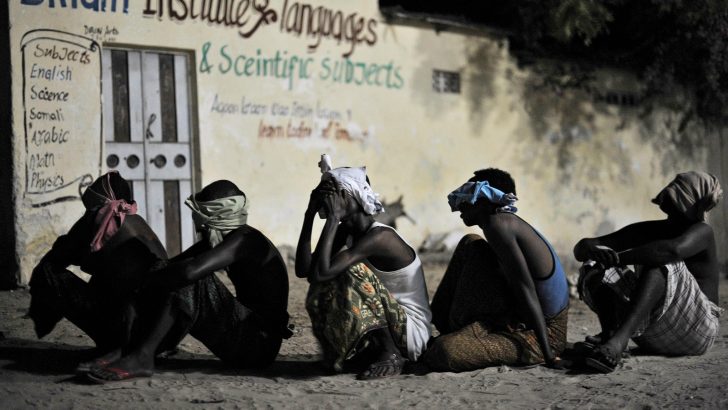
Somalia sits on the eastern edge of Africa, stretching along the Indian Ocean and Gulf of Aden, with Ethiopia, Djibouti, and Kenya as neighbors.
Its location made it a historic crossroads for trade between Africa, the Middle East, and Asia.
Centuries of maritime commerce shaped Somali culture long before European colonization, followed by Italian and British rule and a complicated path to independence in 1960.
Modern Somalia has been defined by decades of civil war, the collapse of the central government in the early 1990s, and the rise of militant groups.
In the north, Somaliland declared independence in 1991 and operates with its own government, currency, and relative internal stability.
It functions like a separate country in practice, but lacks international recognition and still exists within a volatile regional framework.
Somalia carries the highest travel risk level issued by Western governments.
That assessment goes far beyond crime.
Terrorism, armed conflict, kidnapping, weak infrastructure, limited healthcare, and almost nonexistent consular support all factor in.
The country’s long coastline, ancient rock art, Islamic architecture, and deep cultural traditions can spark curiosity.
But those interests are outweighed by an extensive list of risks that make travel unsafe.
Warnings & Dangers in Somalia

OVERALL RISK: HIGH
Somalia comes with a high risk, and there are many reasons why it's listed at the highest risk level possible. We'll discuss the major concerns as we go through this article.

TRANSPORT & TAXIS RISK: HIGH
No matter how you might consider getting around Somalia, it's all a high risk. You won't find public transportation, taxis, or safe rental car agencies. The poor condition of the roads is just the start of the problems, with armed groups controlling the routes around the country. Anti-Western sentiment is strong.

PICKPOCKETS RISK: HIGH
This is a high risk, with pickpocketing being common, and police rarely holding the thieves accountable. Of course, the greater risks might make petty theft seem inconsequential, but you don't want to take any risks in this country.

NATURAL DISASTERS RISK: MEDIUM
Natural disaster risk in Somalia is medium but disruptive. Seasonal droughts are common and can strain food and water supplies. Heavy rains during the Gu and Deyr seasons can cause flash flooding, especially in low-lying areas near rivers. Limited infrastructure makes recovery slower and increases overall travel risk.

MUGGING RISK: HIGH
This is another high risk, and armed robberies can quickly escalate into kidnapping, forced marriage, or other criminal atrocities.

TERRORISM RISK: HIGH
Terrorism risk in Somalia is high. Militant groups, including Al-Shabaab, regularly carry out bombings and armed attacks targeting government sites, hotels, and transportation hubs. Travelers from Western countries face an elevated risk due to anti-Western ideology, visibility, and the symbolic value such targets carry.

SCAMS RISK: HIGH
The risk of scams in Somalia is high and often extends beyond financial fraud. Travelers may encounter bogus currency, extortion attempts, or staged “assistance” schemes. More serious threats include coercion, forced marriage, and human trafficking. Weak legal protections make these risks especially severe for foreigners.

WOMEN TRAVELERS RISK: HIGH
Women travelers face a high risk level in Somalia. Harassment, unwanted attention, and restrictive gender expectations are common, especially for foreign women. Conservative dress and behavior are essential, but do not eliminate risk. Legal protections are limited, and social norms strongly favor men, making independent travel unsafe.

TAP WATER RISK: HIGH
Tap water risk in Somalia is high. Water treatment and sanitation systems are inconsistent or nonexistent in many areas. Drinking tap water can lead to serious gastrointestinal illness. Use bottled or treated water for drinking, brushing teeth, and washing produce. Ice should be avoided unless you know it was made from safe water.
Safest Places to Visit in Somalia
The Ministry of Information, Culture, and Tourism in Somalia runs the tourism website tourism.gov.so.
You can use this to learn information about potential places to see, but don’t expect it to reflect the real risks as detailed in the government advisories.
While Somalia carries the highest travel risk level and has no genuinely safe places to visit right now, that does not mean the country lacks cultural, historical, or natural significance.
If security conditions were to meaningfully improve in the future, Somalia would offer experiences unlike anywhere else in East Africa.
Mogadishu sits along the Indian Ocean with one of the longest coastlines in Africa, known for white sand beaches and historic districts shaped by Arab, Italian, and Swahili influences.
In the north, Hargeisa is often described as the cultural heart of Somaliland, home to markets, museums, and a strong local arts scene.
Nearby, the ancient rock art at Laas Geel ranks among the most important archaeological sites in the Horn of Africa.
The port city of Berbera offers dramatic desert-meets-sea landscapes, while Zeila reflects centuries of trade across the Red Sea.
Along the eastern coast, parts of Puntland feature rugged mountains, fishing villages, and coral reefs that remain largely undocumented.
Places to Avoid in Somalia
You should avoid all of Somalia.
The country comes with a Level 4: Do Not Travel assessment from Western governments.
You may hear that Somaliland and Puntland operate semi-independently and are more stable.
That does not make them safe by typical travel standards.
Infrastructure is weak, security can shift quickly, and consular help is limited or nonexistent.
The United Kingdom slightly lowers the risk for parts of Somaliland, noting that the UK Foreign, Commonwealth & Development Office advises against all but essential travel to Awdal, Maroodijeh, and Sahil regions.
“Essential” does not mean tourism.
It signals that serious risks remain, even in areas often described as calmer.
While an estimated 125,000 people visit Somalia each year, strong anti-Western sentiment significantly increases the risk for travelers from the U.S., Europe, and other allied countries.
We strongly encourage you to read the most recent travel advisories from Western governments to get a broader picture of the risks here.
Safety Tips for Traveling to Somalia
- Law enforcement capacity is limited and inconsistent across Somalia. There is no reliable nationwide emergency number like 911. In Mogadishu, security is often handled by local police, military forces, or private security teams. Travelers typically rely on hotel security or local fixers for emergencies rather than direct police response.
- There is no national public alert system for disasters or security incidents. Power and mobile networks can fail without notice. Your best option is monitoring embassy security alerts, international news outlets, and updates from your accommodation or security provider. If you are not plugged into real-time local intelligence, you are effectively operating blind.
- Foreign nationals should not drive in Somalia. Roads are poorly maintained, traffic laws are loosely enforced, and checkpoints are common. Renting a car is rare and risky. Most visitors use armored vehicles with local drivers who understand routes, security dynamics, and how to navigate interactions at checkpoints without escalating situations.
- Vaccinations are not optional here. Travelers should be up-to-date on routine vaccines and strongly consider protection against yellow fever, hepatitis A and B, typhoid, polio, and meningococcal disease. Malaria prevention is essential. Medical care is extremely limited, so prevention matters more than treatment in this environment.
- Somali and Arabic are the official languages. English is spoken in some government offices, airports, hotels, and by people working with international organizations. Outside those circles, English fluency drops fast. A trusted local guide or translator is not a luxury. It is a practical safety tool.
- Do not assume proximity to an airport equals safety. The U.S. government warns that Al-Shabaab has repeatedly targeted Aden Adde International Airport with mortars, rockets, suicide bombings, and small arms attacks. Airports and surrounding areas are high-value targets, not neutral ground.
- You may be stopped at roadside checkpoints or questioned by security forces. Keep paper copies of your passport and visa with you, separate from the originals. Digital copies help, but may not be accepted. Failure to produce documents can delay travel, escalate questioning, or result in detention until identity is verified.
- Photography can get you into serious trouble. Do not photograph government buildings, military sites, airports, checkpoints, or infrastructure. Even casual phone photos can be misinterpreted. Always ask permission before photographing people. Violations can lead to detention, fines, or confiscation of equipment without warning or appeal.
- Same-sex relationships are criminalized nationwide, with penalties ranging from prison sentences to, under some local interpretations of sharia law, death. Sexual orientation is considered taboo and not openly discussed. LGBTQ+ travelers face extreme legal and personal risk and should understand that protections common elsewhere do not exist here.
- Power outages are common and can shut down lighting, water pumps, mobile networks, and internet access. Carry backup batteries, cash, water, and essential supplies at all times. When systems go offline, help does not arrive quickly. Planning for disruption is part of basic personal safety in Somalia.
So... How Safe Is Somalia Really?
Somalia is not safe, and the risks go far beyond violent crime against tourists.
Most Western governments rank a country’s safety on a four-tier scale, with Level 1 the lowest and Level 4 the highest.
The United States, the United Kingdom, Canada, and Australia all rank Somalia at Level 4: Do Not Travel.
In fact, even U.S. government workers can’t leave the embassy complex just outside the Mogadishu airport.
While violent crime is listed as one of the reasons for the elevated risk level, others include terrorism, civil unrest, piracy, kidnapping, and health concerns.
If you choose to visit Somalia, your embassy will have little ability to help you if things go sideways.
The risk is even higher for Westerners, who can be targeted because of the negative sentiment across the country.
You will sometimes hear that Somaliland and Puntland are safer.
The UK does list parts of these regions at Level 3: Avoid Non-Essential Travel.
That is lower, but still signals serious security risks, weak infrastructure, and limited emergency support.
“Safer than Mogadishu” does not mean safe by normal travel standards, especially for Western visitors.
How Does Somalia Compare?
| Country | Safety Index |
|---|---|
 Somalia Somalia | 16 |
 Belize Belize | 43 |
 Samoa Samoa | 70 |
 Philippines Philippines | 47 |
 Ecuador Ecuador | 55 |
 United Kingdom United Kingdom | 77 |
 Sri Lanka Sri Lanka | 60 |
 Cuba Cuba | 47 |
 Qatar Qatar | 84 |
Useful Information

Visas
You must obtain a visa before travel, or you can apply for a 30-day tourist visa on arrival in Mogadishu for about $60 USD. Entry rules can change quickly, so confirm details through the Permanent Mission of the Somali Republic to the United Nations, the Somali Department of Immigration and Naturalization, or the nearest Somali embassy or consulate before booking anything.

Currency
The Somali shilling is the official currency, but U.S. dollars are widely used for everyday transactions. Cash is king. ATMs are scarce and unreliable, especially outside major cities. Credit cards are rarely accepted.

Weather
Somalia is hot and dry most of the year, with temperatures often hovering in the 80s and 90s. Seasonal rains arrive during the Gu and Deyr periods, which can cause flooding and disrupt travel. Heat management matters here. Sun protection and hydration are not optional; they are survival basics.

Airports
Most international arrivals use Aden Adde International Airport in Mogadishu. Security is extremely tight, with armed escorts common. Flights are limited, and schedules can change without notice. Domestic air travel exists but is inconsistent.

Travel Insurance
Travel insurance is essential and also difficult. Many insurers exclude Somalia due to its Level 4 travel risk status. You will need a specialty provider that covers conflict zones, evacuation, and medical transport. Policies are expensive but non-negotiable. Without coverage, you are financially and logistically on your own.
Somalia Weather Averages (Temperatures)
Average High/Low Temperature
| Temperature / Month | Jan | Feb | Mar | Apr | May | Jun | Jul | Aug | Sep | Oct | Nov | Dec |
|---|---|---|---|---|---|---|---|---|---|---|---|---|
| High °C |
30 | 31 | 32 | 32 | 31 | 30 | 29 | 29 | 29 | 30 | 30 | 30 |
| Low °C |
24 | 25 | 26 | 26 | 25 | 24 | 23 | 23 | 23 | 24 | 24 | 23 |
| High °F |
86 | 88 | 90 | 90 | 88 | 86 | 84 | 84 | 84 | 86 | 86 | 86 |
| Low °F |
75 | 77 | 79 | 79 | 77 | 75 | 73 | 73 | 73 | 75 | 75 | 73 |







anyone travel to here before ?
Oso
Nah, Somalia is more unsafe han Afghanistan and other countries
Somalia is very safe the capital Mogadishu is amazing there is a beautiful lighthouse and beautiful beach. Somalia is truly a must travel.
Thick Biscuits
Went to Somalia last summer for a few months, and there are baddies everywhere. Not pirates, but women. I’m talking 10/10 biracial slam pieces everywhere. It’s definitely worth a visit!
Somalia is at war right now
I heard that Somalia is at a civil war right now. I never been there and until Somalia becomes very safe i’m not visiting Somalia ever. Avoid Somalia if you can. You wouldn’t wish for your worst enemies to travel there.
Somalia is a amazing, great country, you never even went there. I can assure you its better than you think
Is it really worth exploring Somalia’s rich culture when the risks seem so overwhelming?
It’s tough to think about the beauty and history of a place like Somalia when the risks seem so overwhelming; you can’t help but feel for the people caught in such a complex situation.
What’s the vibe like in Somaliland these days with all the challenges surrounding the rest of Somalia?
It’s hard to imagine such rich history and culture coexisting with so many challenges; it really makes you think about the stories behind those beautiful coastlines and ancient sites.
Not bad folks.
If you really desire to visit Somalia, try out Minnesota first. I highly recommend the Learing Centers! Also note this is a country where you do not discuss gender identity and women have no rights, no respect and little protection from rape and forced marriage. If you fly the rainbow flag remember you are not welcome in Somalia. It sounds like a really fun place🤪 good luck!
It’s incredible how a place with such rich history and culture can be overshadowed by ongoing challenges and risks.
Walking along the waterfront with dhows rocking in the tide and mosque calls filling the air felt oddly beautiful, but when the tiny clinic was locked and soldiers set up a checkpoint I got a real knot in my stomach and decided to leave.