 Japan : Safety by City
- Fukuoka
- Hakone
- Hiroshima
- Kamakura
- Kanazawa
- Kyoto
- Nagasaki
- Nara
- Nikko
- Osaka
- Sapporo
- Sendai
- Tokyo
- Yokohama
Kamakura is a historic coastal city in Kanagawa Prefecture, about an hour south of Tokyo by train.
It is famous for the Great Buddha, centuries-old temples, Shinto shrines, forested walking trails, quiet residential lanes, beach views, seasonal flowers, and a slower atmosphere than Japan’s capital.
Once the political center of medieval Japan, Kamakura now feels like a peaceful mix of spiritual sites, seaside cafés, local shopping streets, and easy day-trip energy.
Safety-wise, Kamakura is very safe.
Violent crime is rare, public transport is reliable, and the town is comfortable for solo travelers, families, couples, and older visitors.
The main risks are not crime-heavy.
They are earthquake and tsunami awareness, summer heat, crowded trains, beach safety, slippery temple steps, hiking trails, and the occasional tourist crowd around famous sights.
Warnings & Dangers in Kamakura

OVERALL RISK: LOW
Kamakura is a low-risk destination for most travelers. Violent crime is rare, streets are orderly, and tourist areas are well maintained. The main concerns are natural hazards, crowded trains, summer heat, beach safety, slippery steps, and getting tired from walking. Basic awareness is enough for most visitors.

TRANSPORT & TAXIS RISK: LOW
Transport in Kamakura is safe and efficient. Trains, buses, taxis, and walking routes connect the main sights. The Enoden train is scenic but can get packed on weekends and holidays. Roads are narrow in some areas, so walking requires attention. Taxis are safe, though not always necessary for central sightseeing.

PICKPOCKETS RISK: LOW
Pickpocketing is uncommon in Kamakura, but it is still smart to watch your belongings in crowded areas like Kamakura Station, Komachi-dori, temple entrances, beach areas, and packed trains. Japan is very safe, but tourists can still lose phones, wallets, or bags through carelessness rather than crime.

NATURAL DISASTERS RISK: MEDIUM
Kamakura has a medium natural risk because it is coastal and located in an earthquake-prone country. Earthquakes, tsunami warnings, typhoons, heavy rain, landslides on forest trails, heatwaves, and rough seas can affect visitors. Most trips are smooth, but travelers should know evacuation signs and avoid coastal areas during storm or tsunami alerts.

MUGGING RISK: LOW
Mugging is extremely rare in Kamakura. The city is calm, residential, and tourist-friendly. Main streets, temples, shrines, shopping lanes, and beach areas are generally safe during the day and evening. Still, avoid isolated paths, dark beach areas, and quiet forest trails late at night if alone.

TERRORISM RISK: LOW
The terrorism risk in Kamakura is low. It is a historic and religious day-trip destination, not a major political or financial target. Normal awareness around crowded stations, festivals, and major tourist sites is enough. Visitors are far more likely to deal with weather, crowds, or transport delays.

SCAMS RISK: LOW
Scams are rare in Kamakura. Prices are usually clear, businesses are professional, and tourist pressure is mild compared with many global destinations. The main issues are overpriced souvenirs, crowded restaurants, and confusion over transport tickets or temple entry fees. Check prices, carry some cash, and use official ticket machines.

WOMEN TRAVELERS RISK: LOW
Kamakura is very safe for women travelers, including solo women. Streets, trains, temples, cafés, and shops are comfortable during the day and early evening. Normal precautions still apply: avoid isolated beach areas or forest trails late at night, watch your drink, and stay near active streets when returning after dark.

TAP WATER RISK: LOW
Tap water in Kamakura is safe to drink. Carry a reusable bottle, especially in summer, because sightseeing often involves walking between temples, hills, beaches, and train stations. Vending machines and convenience stores are everywhere, so getting water is easy. Hydration matters on hot, humid days.
Safest Places to Visit in Kamakura
Tsurugaoka Hachimangu Shrine
Tsurugaoka Hachimangu is one of Kamakura’s most important and safest attractions.
It sits at the end of a grand approach from the station and is usually busy with visitors, locals, families, and worshippers.
The grounds are spacious and easy to explore.
Watch your footing on steps, especially in rain, and be respectful around worship areas.
During festivals or holidays, crowds can be thick, so keep your belongings close.
The Great Buddha of Kamakura
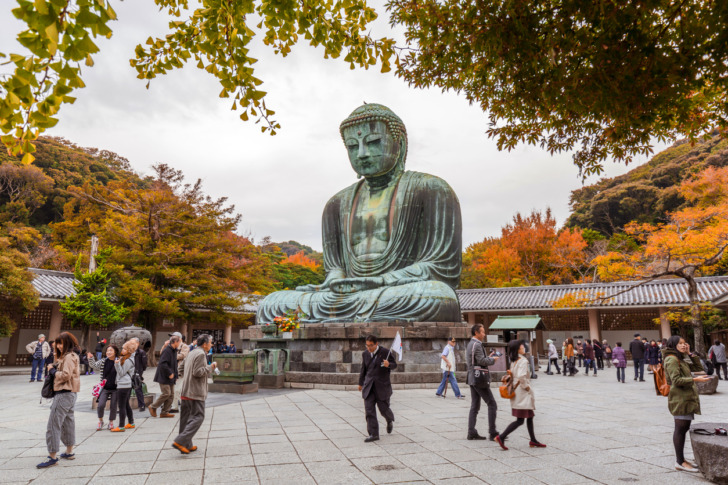
The Great Buddha at Kotoku-in is one of Japan’s most famous monuments and a very safe place to visit.
The temple grounds are organized, calm, and popular with travelers.
The main risks are crowds, summer heat, and slippery paths after rain.
Visit earlier in the day if you want a quieter experience and better photos.
Hase-dera Temple
Hase-dera is a beautiful hillside temple known for gardens, sea views, statues, caves, and seasonal flowers.
It is safe and well managed, but there are stairs and slopes throughout the grounds.
The views are worth it, but visitors with mobility issues should take their time.
In hydrangea season, expect crowds and slower movement.
Komachi-dori
Komachi-dori is Kamakura’s main shopping street and one of the liveliest places in town.
It is full of snacks, sweets, souvenir shops, cafés, and restaurants.
It is safe, but it can become packed on weekends.
Keep phones and wallets secure, follow pedestrian flow, and avoid stopping suddenly in the middle of the street for photos or snacks.
Yuigahama Beach
Yuigahama Beach is a popular and generally safe coastal area, especially during the day and in summer when more people are around.
It is good for walking, relaxing, and enjoying the sea breeze.
Swimming conditions vary, so pay attention to signs, lifeguards, and weather.
Avoid the beach during storms, rough seas, or tsunami warnings.
Places to Avoid in Kamakura
Coastal Areas During Tsunami or Storm Warnings
Kamakura is beautiful because it sits by the sea, but that also means coastal hazard awareness matters.
If there is a tsunami warning, storm warning, or dangerous surf advisory, leave beach areas immediately and follow evacuation signs to higher ground.
Do not stay near the water for photos.
Forest Trails After Dark
Kamakura has excellent hiking routes, including trails through wooded hills between temples and viewpoints.
These are safe during the day, but they are not ideal after dark.
Paths can be uneven, muddy, poorly lit, and confusing.
Start hikes early enough to finish before sunset.
Overcrowded Komachi-dori at Peak Times
Komachi-dori is not dangerous, but it can become uncomfortably crowded on weekends, holidays, and during peak sightseeing hours.
Crowds make it easier to lose belongings, get separated from companions, or simply move slowly.
Visit early, or use quieter side streets if the main route feels too packed.
Beaches Late at Night
Kamakura’s beaches are generally safe, but quiet beach areas late at night are not the best place to linger alone.
The risk of crime is low, but poor lighting, water, alcohol, and fewer people around create unnecessary vulnerability.
If you want evening coastal views, stay near active streets or well-lit areas.
Slippery Temple Steps in Rain
Many temples and shrines in Kamakura have stone steps, mossy paths, wooden walkways, and slopes.
These can become slippery during rain or after typhoons.
Avoid rushing, hold railings where available, and wear shoes with decent grip.
The temples are peaceful, but the steps can be sneaky little villains.
Safety Tips for Traveling to Kamakura
- Learn basic earthquake and tsunami awareness. Kamakura is a safe city, but it is coastal and located in Japan, where earthquake preparedness matters. When near the beach, notice tsunami evacuation signs and higher-ground routes. If you feel a strong earthquake or hear an official warning, move away from the coast and follow local instructions. Do not wait around to see what happens.
- Start early on weekends. Kamakura is a popular day trip from Tokyo and Yokohama, so weekends and holidays can be very crowded. Starting early gives you calmer trains, quieter temples, better photos, and less stress. By late morning, Komachi-dori, Hase, the Great Buddha, and the Enoden train can become packed. Morning Kamakura is the superior Kamakura.
- Wear comfortable shoes. Kamakura looks like an easy town, but sightseeing can involve a lot of walking, stairs, slopes, temple paths, beach sand, and forest trails. Good shoes make the day much safer and more enjoyable. If you plan to hike or visit several temples, avoid flimsy sandals. Your feet will already be negotiating with history.
- Be careful on the Enoden train. The Enoden is scenic and charming, but it can get crowded, especially between Kamakura, Hase, and Enoshima. Keep bags close, stand back from platform edges, and allow extra time if trains are packed. Pickpocketing is rare, but lost items and crowd stress are more common when everyone is squeezing into the same cute little train.
- Respect temple and shrine etiquette. Kamakura’s temples and shrines are active religious sites, not just photo sets. Speak quietly, follow signs, do not enter restricted areas, and avoid touching objects unless allowed. Wash hands where appropriate, remove shoes if requested, and be respectful during ceremonies. Good manners are part of safe travel in Japan.
- Watch the weather before hiking. Kamakura’s hiking trails are beautiful, but rain can make them muddy and slippery. Typhoons or heavy rain can also cause closures or unsafe conditions. Check the forecast before taking forest trails, wear proper shoes, and avoid starting late. If the weather is bad, choose temples, cafés, museums, or beach walks instead.
- Carry cash. Japan is increasingly card-friendly, but smaller shops, temples, food stalls, coin lockers, and local buses may still require cash. Carry yen in small bills and coins. This prevents small logistical problems, especially if you want snacks on Komachi-dori, temple entry, vending machine drinks, or bus rides.
- Stay hydrated in summer. Kamakura summers can be hot and humid. Walking between temples, stations, hills, and beaches can drain you quickly. Use vending machines, convenience stores, and cafés to keep water handy. Wear sunscreen, a hat, and breathable clothing. Heat exhaustion is a more realistic risk than crime for many summer visitors.
- Do not swim in unsafe conditions. Kamakura’s beaches are popular, but the ocean deserves respect. Pay attention to flags, lifeguards, waves, currents, and weather changes. Avoid swimming during rough seas, storms, or after drinking. If local warnings are posted, follow them. The beach is beautiful, but the Pacific does not care about your itinerary.
- Plan your route instead of rushing. Kamakura has many temples, shrines, cafés, trails, and coastal stops, but trying to see everything in one day can become exhausting. Group sights by area, such as station and shrine area, Hase and Great Buddha, or beach and Enoden route. A slower plan is safer, calmer, and much more enjoyable.
So... How Safe Is Kamakura Really?
Kamakura is one of the safest and easiest destinations in Japan for travelers.
Violent crime is very rare, public behavior is orderly, transport is reliable, and the city has a calm, welcoming atmosphere.
Families, couples, solo travelers, older visitors, hikers, beachgoers, and first-time visitors to Japan can all feel comfortable here.
The main risks are not crime-based.
Kamakura’s coastal location means visitors should understand basic earthquake and tsunami safety.
Summer heat can be intense, especially when walking between temples and beaches.
Forest trails can become slippery or confusing in bad weather.
Crowds can make trains and shopping streets stressful on weekends and holidays.
Beaches are enjoyable but require attention to surf and warnings.
I would rate Kamakura as low risk overall, with medium risk for natural hazards, beach conditions, and crowded weekend travel.
Stay aware of weather, wear proper shoes, carry water, respect temple etiquette, and know where to go if coastal warnings are issued.
Do that, and Kamakura is a safe, peaceful, and deeply rewarding escape from Tokyo.
How Does Kamakura Compare?
| City | Safety Index |
|---|---|
| Kamakura |
91 |
| Osaka |
88 |
| Nikko |
91 |
| Tokyo |
90 |
| Kanazawa |
83 |
| Sapporo |
92 |
| Hiroshima |
80 |
 Council Grove Council Grove | 87 |
| Kenosha | 74 |
| Racine | 70 |
 Santa Teresa Santa Teresa | 72 |
| Laurel | 76 |
 Chengdu Chengdu | 74 |
Useful Information

Visas
Kamakura is in Japan. Many travelers can visit Japan visa-free for short tourism stays, while others need a visa before arrival. Entry rules depend on nationality and trip length, so check requirements before traveling. Make sure your passport is valid and keep accommodation and return travel details available.

Currency
Kamakura uses the Japanese yen. Cards are accepted in many hotels, larger restaurants, and shops, but cash is still useful for temples, buses, small eateries, vending machines, coin lockers, and local stalls. ATMs are available at convenience stores and banks. Carry small bills and coins for easy sightseeing.

Weather
Kamakura has hot, humid summers, mild spring and autumn weather, and cool winters. Summer is good for beach visits but can be tiring because of heat and humidity. Spring and autumn are best for walking and temple visits. Pack comfortable shoes, sunscreen, water, and rain protection during wet or typhoon seasons.

Airports
Kamakura does not have an airport. Most international travelers arrive through Tokyo's Haneda or Narita airports, then continue by train. Kamakura is commonly reached from Tokyo, Yokohama, or Ofuna by rail. The journey is straightforward, but trains can be crowded on weekends and holidays.

Travel Insurance
Travel insurance is recommended for Kamakura, especially if your Japan trip includes flights, trains, prepaid hotels, hiking, beach time, or multiple cities. Good coverage should include medical care, cancellations, theft, lost luggage, delays, weather disruption, and emergency assistance. If visiting during typhoon season, cancellation and delay coverage is especially useful.
Kamakura Weather Averages (Temperatures)
Average High/Low Temperature
| Temperature / Month | Jan | Feb | Mar | Apr | May | Jun | Jul | Aug | Sep | Oct | Nov | Dec |
|---|---|---|---|---|---|---|---|---|---|---|---|---|
| High °C |
10 | 11 | 14 | 19 | 23 | 25 | 29 | 30 | 27 | 22 | 18 | 13 |
| Low °C |
3 | 4 | 7 | 11 | 15 | 19 | 22 | 24 | 20 | 15 | 10 | 6 |
| High °F |
50 | 52 | 57 | 66 | 73 | 77 | 84 | 86 | 81 | 72 | 64 | 55 |
| Low °F |
37 | 39 | 45 | 52 | 59 | 66 | 72 | 75 | 68 | 59 | 50 | 43 |
Japan - Safety by City
| City | Safety Index |
|---|---|
| Fukuoka | 90 |
| Hakone | 92 |
| Hiroshima | 80 |
| Kamakura | 91 |
| Kanazawa | 83 |
| Kyoto | 83 |
| Nagasaki | 96 |
| Nara | 88 |
| Nikko | 91 |
| Osaka | 88 |
| Sapporo | 92 |
| Sendai | 88 |
| Tokyo | 90 |
| Yokohama | 87 |